
การพัฒนารูปแบบการให้ความรู้ด้านสุขภาพและให้คำปรึกษาด้านสุขภาพผ่านแอปพลิเคชันไลน์ออฟฟิเชียลแอคเคานท์สำหรับผู้ปกครองในการดูแลเด็กวัยเรียน
คำสำคัญ:
ความรู้ด้านสุขภาพ, คำปรึกษาด้านสุขภาพ, แอปพลิเคชันไลน์ออฟฟิเชียลแอคเคานท์, การดูแลเด็กวัยเรียนบทคัดย่อ
การวิจัยและพัฒนานี้มีวัตถุประสงค์เพื่อพัฒนารูปแบบการให้ความรู้และให้คำปรึกษาด้านสุขภาพผ่านแอปพลิเคชัน LINE Official Account สำหรับผู้ปกครองในการดูแลเด็กวัยเรียน และเปรียบเทียบความมั่นใจของผู้ปกครองในการดูแลบุตรหลาน รวมถึงศึกษาความพึงพอใจของผู้ปกครองและพยาบาลวิชาชีพต่อรูปแบบที่พัฒนาขึ้น มีการดำเนินการ 4 ขั้นตอน ได้แก่ 1) วิเคราะห์ปัญหา 2) ออกแบบและพัฒนารูปแบบ 3) ทดลองใช้รูปแบบที่พัฒนา กับกลุ่มตัวอย่างคือ ผู้ปกครอง 27 คน และพยาบาลวิชาชีพ 5 คน และ 4) ประเมินผลการใช้รูปแบบที่พัฒนา เครื่องมือที่ใช้ ได้แก่แบบประเมินความมั่นใจของผู้ปกครอง และแบบประเมินความพึงพอใจของผู้ปกครองและพยาบาลวิชาชีพ ผ่านการตรวจสอบคุณภาพจากผู้เชี่ยวชาญด้านเนื้อหา 3 ท่าน ได้ค่าดัชนีความตรงเชิงเนื้อหา .86 และค่าสัมประสิทธิ์แอลฟาของครอนบาค .86 วิเคราะห์ข้อมูลด้วยสถิติเชิงพรรณนาและการทดสอบทีแบบจับคู่
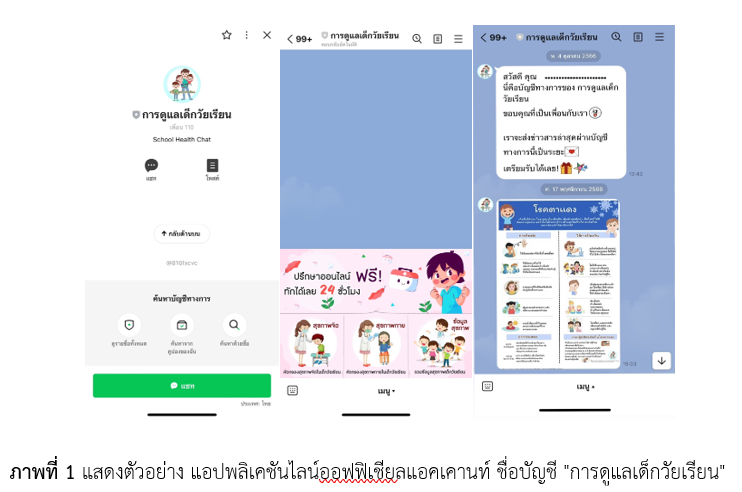
ผลการวิจัยพบว่า 1) รูปแบบการให้ความรู้ด้านสุขภาพและให้คำปรึกษาด้านสุขภาพผ่านแอปพลิเคชัน LINE OA ชื่อบัญชี "การดูแลเด็กวัยเรียน" มีการนำเสนอความรู้ผ่านภาพอินโฟกราฟิกส์และเปิดช่องทางให้ซักถามข้อสงสัยผ่านทางกล่องข้อความ 2) ภายหลังการใช้ แอปพลิเคชัน LINE OA ผู้ปกครองมีความมั่นใจในการดูแลเด็กวัยเรียนสูงขึ้นอย่างมีนัยสำคัญทางสถิติ (t = 9.93, p < 0.001) และความพึงพอใจของผู้ปกครองเด็กวัยเรียนและพยาบาลวิชาชีพ โดยรวมอยู่ในระดับมาก(M = 4.40, S.D. = 0.54; M = 4.54, S.D. = 0.51 ตามลำดับ) ผลการวิจัยครั้งนี้แสดงให้เห็นว่า บุคลากรด้านสุขภาพที่มีหน้าที่ให้การดูแลเด็กวัยเรียนควรนำแอปพลิเคชัน LINE OA มาใช้ในการให้ความรู้และคำปรึกษาด้านสุขภาพ เนื่องจากเป็นอีกช่องทางที่สะดวก ง่าย ทันยุคสมัย และผู้ปกครองสามารถเข้าไปเรียนรู้ซ้ำได้ด้วยตนเองตลอดเวลาเมื่อต้องการ
เอกสารอ้างอิง
กิตติยา สังฆศรีสมบัติ, ชรินทร์พร มะชะรา, มนัสนันท์ พรมศรี และนิรันดร ผานิจ. (2565). การพัฒนารูปแบบการให้ความรู้และให้คำปรึกษาผ่านแอปพลิเคชันไลน์ออฟฟิเชียลแอคเคานท์ สำหรับมารดาในการดูแลทารกเกิดก่อนกำหนด. วารสารศูนย์อนามัยที่ 9, 16(2), 623–641.
เนติ์ ภู่ประสม. (2565). สถานการณ์ภาวะสุขภาพนักเรียนในประเทศไทย พ.ศ. 2564. (รายงานการวิจัย). สำนักส่งเสริมสุขภาพ กรมอนามัย.
วนิสา หะยีเซะ, นุจรี ไชยมงคล, อัจฉราวดี ศรียะศักดิ์ และมยุรี ยีปาโล๊ะ. (2564). การพัฒนาแอปพลิเคชันบนแอนดรอยด์: ผลของการให้ความรู้ผ่านแอปพลิเคชันในการดูแลทารกเกิดก่อนกำหนดหลังจำหน่ายอออกจากโรงพยาบาลตามวิถีมุสลิม. วารสารมหาวิทยาลัยนราธิวาสราชนครินทร์, 13(1), 39–55.
วรางคณา โสมะนันทน์, คาลอส บุญสุภา และพลอยไพลิน กมลนาวิน. (2564). การให้บริการการปรึกษาเชิงจิตวิทยาแบบออนไลน์ : มิติใหม่ของการให้บริการ ปรึกษาเชิงจิตวิทยา. วารสารบัณฑิตศึกษา มหาวิทยาลัยราชภัฏวไลยอลงกรณ์ ในพระบรมราชูปถัมภ์, 15(1), 247–260.
สมศรี ใจดี. (2560). ผลของการใช้แอปพลิเคชันให้ข้อมูลสุขภาพต่อความมั่นใจในการดูแลตนเองของผู้ป่วยโรคเบาหวาน (วิทยานิพนธ์ปริญญามหาบัณฑิตที่ไม่มีการตีพิมพ์). มหาวิทยาลัยสงขลานครินทร์.
สำนักสาธารณสุขและสิ่งแวดล้อมเทศบาลนครยะลา. (2566). ผลการตรวจสุขภาพนักเรียน ภาคเรียนที่ 1 ปีการศึกษา 2566. [รายงาน].
สำนักส่งเสริมสุขภาพ กรมอนามัย กระทรวงสาธารณสุข. (2560). แนวทางการส่งเสริมสุขภาพป้องกันโรคเด็กวัยเรียนและเยาวชน. https://hp.anamai.moph.go.th/web-upload/4xceb3b571ddb70741ad132d75876bc41d/tinymce/OPDC/OPDC2565-F/IDC1_14/opdc_2565_idc1-14_11.pdf
สุมนกาญจน์ ลาภกิตติเจริญชัย. (2563). ผลของโปรแกรมการให้คำปรึกษาผ่านไลน์แอปพลิเคชั่นที่มีต่อความเครียดและความเชื่อมั่นในศักยภาพของตนเองของผู้ดูแลผู้ป่วยล้างไตทางช่องท้อง. วารสารกรมการแพทย์, 45(3), 42–50.
Bandura, A. (1997). Self-efficacy: The exercise of control. W.H. Freeman.
Chan-Olmsted, S., & Wang, R. (2020). Understanding podcast users: Consumption motives and behaviors. New Media & Society. Advance online publication. https://doi.org/10.1177/1461444820963776
Golan, M., Benifla, S., Samo, A., Alon, N., & Mozeikov, M. (2022). Feasibility and effect of adding a concurrent parental component to a school-based wellness program using two modes of mobile-based technology – mixed methods evaluation of RCT. BMC Public Health, 22(1), Article 297. https://doi.org/10.1186/s12889-022-12581-7
LINE for Business. (2566). LINE Official Account. https://lineforbusiness.com/th/service/line-oa-features
Yam-Ubon, U. & Thongseiratch, T. (2023). Using a design thinking approach to develop a social media–based parenting program for parents of children with attention deficit/hyperactivity disorder: Mixed methods study. JMIR Pediatrics and Parenting, 6(1), e48201. https://doi.org/10.2196/48201
ดาวน์โหลด
เผยแพร่แล้ว
รูปแบบการอ้างอิง
ฉบับ
ประเภทบทความ
สัญญาอนุญาต
ลิขสิทธิ์ (c) 2025 วารสารพยาบาลศาสตร์ มหาวิทยาลัยสยาม

อนุญาตภายใต้เงื่อนไข Creative Commons Attribution-NonCommercial-NoDerivatives 4.0 International License.
เนื้อหาและข้อมูลที่เผยแพร่ในวารสารพยาบาลศาสตร์ มหาวิทยาลัยสยามถือเป็นข้อคิดเห็นและความรับผิดชอบของผู้นิพนธ์บทความโดยตรง
บทความ เนื้อหา ข้อมูล รูปภาพ ฯลฯ ที่ได้รับการเผยแพร่ในวารสารพยาบาลศาสตร์ มหาวิทยาลัยสยาม ถือเป็นลิขสิทธิ์ของวารสารพยาบาลศาสตร์ มหาวิทยาลัยสยาม หากบุคคลหรือหน่วยงานใดต้องการนำทั้งหมดหรือส่วนหนึ่งส่วนใดไปเผยแพร่หรือเพื่อกระทำการใด ๆ จะต้องอ้างอิงวารสารพยาบาลศาสตร์ มหาวิทยาลัยสยามทุกครั้ง

