
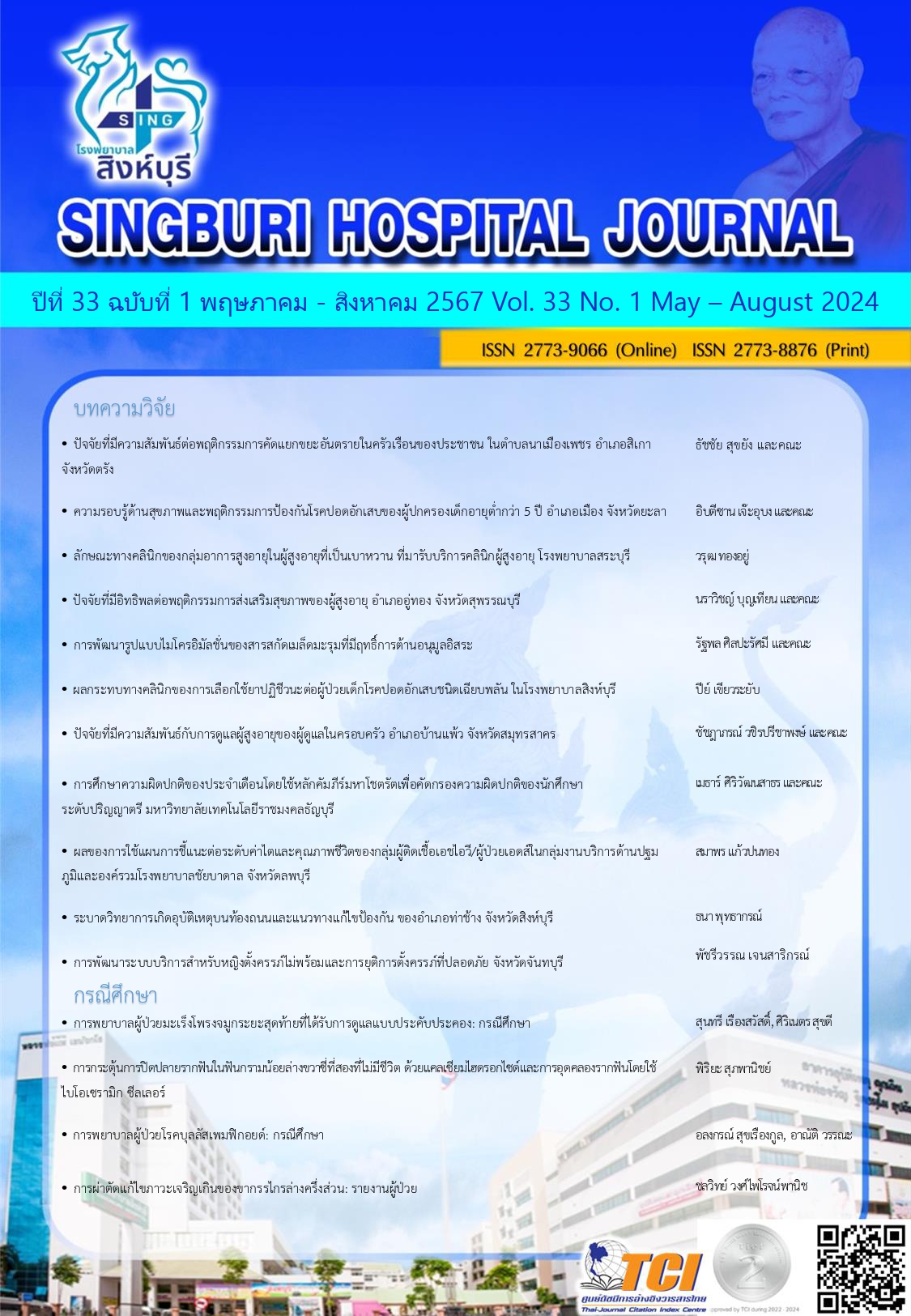
การศึกษาความผิดปกติของประจำเดือนโดยใช้หลักคัมภีร์มหาโชตรัตเพื่อคัดกรองความผิดปกติ ของนักศึกษาระดับปริญญาตรี มหาวิทยาลัยเทคโนโลยีราชมงคลธัญบุรี
คำสำคัญ:
ความผิดปกติของประจำเดือน, คัมภีร์มหาโชตรัต, การแพทย์แผนไทย, พฤติกรรมสุขภาพบทคัดย่อ
การศึกษาครั้งนี้เป็นการศึกษาเชิงสำรวจมีวัตถุประสงค์เพื่อศึกษาความผิดปกติของประจำเดือนและการดูแลตนเองโดยใช้ทฤษฎีจากคัมภีร์มหาโชติรัต ในนักศึกษาระดับปริญญาตรี คณะการแพทย์บูรณาการ มหาวิทยาลัยเทคโนโลยีราชมงคลธัญบุรี จำนวน 214 คน โดยใช้แบบสอบถามที่ผู้วิจัยออกแบบเอง แบบสอบถามมีค่าความตรงเชิงเนื้อหาเท่ากับ 0.92 และความเที่ยงของเครื่องมือเท่ากับ 0.70
ผลการศึกษาพบว่า ความผิดปกติเกี่ยวกับการมีประจำเดือนที่พบมากที่สุด คือสีของเลือดประจำเดือน อาการที่สัมพันธ์กับการมีประจำเดือน ปริมาณเลือดประจำเดือน ระยะห่างระหว่างรอบเดือน และจำนวนวันที่มีรอบเดือน ร้อยละ 89.72, 84.58, 21.03, 20.56, และ 2.34 ตามลำดับ พบชนิด Metrorrhagia มากที่สุด อาการผิดปกติที่สัมพันธ์กับการมีประจำเดือนมากที่สุดคืออาการปวดท้องน้อย และมักไม่ใช้ยาในการบรรเทาอาการ ร้อยละ 71.96 เมื่อใช้หลักทฤษฎีการแพทย์แผนไทยพบความผิดปกติจำนวน 212 คน ร้อยละ 99.06 เป็นโลหิตเกิดแต่กองธาตุมากที่สุด คำนวณค่าพยากรณ์ความถูกต้องของผลบวก (Positive predictive value) พบว่าทฤษฎีการแพทย์แผนไทยกับทางการแพทย์แผนปัจจุบัน มีโอกาสในการพยากรณ์ความผิดปกติของการมีประจำเดือนได้ใกล้เคียงกัน (92.00% PPV)
โดยสรุปการศึกษานี้ให้ข้อมูลเชิงลึกที่มีคุณค่าในการพัฒนาเครื่องมือประเมินเพื่อคัดกรองความผิดปกติของประจำเดือน โดยบูรณาการหลักการทั้งการแพทย์แผนไทยและการแพทย์แผนปัจจุบัน นอกจากนี้ยังวางรากฐานสำหรับการวิจัยเชิงลึกในอนาคต
Downloads
เอกสารอ้างอิง
Eun-Kyung J, Seok-Won K, Sun-Myeong O, Kyu-In J, Chan-Hee S. Prevalence and related factors of irregular menstrual cycles in Korean women: the 5th Korean National Health and Nutrition Examination Survey (KNHANES-V, 2010–2012). J Psychosom Obstet Gynaecol. 2018;39(3):196-202.
Toffol E, Koponen P, Luoto R, Partonen T. Pubertal timing, menstrual irregularity, and mental health: results of a population-based study. Arch Womens Ment Health. 2014;17(2):127-35.
Harlow SD, Campbell OM. Epidemiology of menstrual disorders in developing countries: a systematic review. BJOG. 1996;103(1):16-25.
Ju H, Jones M, Mishra G. The prevalence and risk factors of dysmenorrhea. Epidemiol. Rev. 2014;36(1):104-13.
Ortiz MI, Rangel-Flores E, Carrillo-Alarcón LC, Veras-Godoy HA. Prevalence and impact of primary dysmenorrhea among Mexican high school students. Int J Gynaecol Obstet. 2009;107(3):240-3.
Kwak Y, Kim Y, Baek KA. Prevalence of irregular menstruation according to socioeconomic status: A population-based nationwide cross-sectional study. PLoS One. 2019;14(3).
Odongo E, Byamugisha J, Ajeani J, Mukisa J. Prevalence and effects of menstrual disorders on quality of life of female undergraduate students in Makerere University College of health sciences, a cross-sectional survey. BMC Womens Health. 2023;23(1):152.
American College of Obstetricians and Gynecologists. Dysmenorrhea: Painful Periods. 2019 [cited 2024 Aug 1]. Available from: https://www.acog.org
Yamane T. Statistics: an introductory analysis. New York, NY: Harper & Row; 1973.
กิติรัตน์ เตชะไตรศักดิ์, ประสงค์ ตันมหาสมุทร, มงคล เบญจาภิบาล, อรรถพล ใจชื่น, ธันยารัตน์ วงศ์วนานุรักษ์, บรรณาธิการ. ตำรานรีเวชวิทยา ฉบับเรียบเรียงครั้งที่ 4. กรุงเทพมหานคร: ภาควิชาสูติศาสตร์ นรีเวชวิทยา คณะแพทยศาสตร์ ศิริราชพยาบาล มหาวิทยาลัยมหิดล; 2560.
Sutthibut K, Itharat A, Singchungchai P, Wanichsetakul P, Pipatrattanaseree W, Ooraikul B, Davies NM. Development of an Assessment Tool of Menstrual-Cycle-Related Signs and Symptoms Based on Thai Traditional Medicine Principles for Evaluation of Women's Health. J Evid Based Complementary Altern Med. 2021;2021:9977773.
พนิดา กมุทชาติ, ศิริลักษณ์ บุญตาวัน, อินทิรา เรืองนุช. กลุ่มอาการปวดประจำเดือน (โลหิตปกติโทษ) ตามคัมภีร์มหาโชตรัต. วารสารหมอยาไทยวิจัย. 2562;2:53-67.
Dwivedi D, Singh N, Gupta U. Prevalence of Menstrual Disorder in Women and Its Correlation to Body Mass Index and Physical Activity. J Obstet Gynaecol India. 2024;74:80-87.
รัชตสิทธิกูล ธัญชนก. ความชุกและปัจจัยที่เกี่ยวข้องกับกลุ่มอาการก่อนมีระดู และภาวะอารมณ์แปรปรวนก่อนมีระดู ในนักศึกษาฝึกงานกายภาพบำบัดระดับปริญญาตรี ในกรุงเทพมหานครและปริมณฑล [วิทยานิพนธ์]. จุฬาลงกรณ์มหาวิทยาลัย; 2022.
Kamonmooneechote T, Kaewrudee S, Soontrapa S, Chongsomchai C, Chumworathayi B, Temtanakitpaisan T. Menstrual Patterns Among Upper Secondary School Students, Khon Kaen, Thailand. TJOG. 2014;22:52-58.
จีราภา ศรีท่าไฮ และคณะ. การศึกษาความชุกวิธีการจัดการอาการและผลลัพธ์ของวิธีการจัดการอาการกับการปวดประจำเดือนชนิดปฐมภูมิของนักเรียนประถมศึกษาตอนปลาย ในเขตอำเภอเมือง จังหวัดจันทบุรี. วารสารการพยาบาล สุขภาพ และการศึกษา. 2565;3:1-12.
Buddhabunyakan N, Kaewrudee S, Chongsomchai C, Soontrapa S, Somboonporn W, Sothornwit J. Premenstrual syndrome (PMS) among high school students. Int J Womens Health. 2017;9:501-505.
Butsripoom B, Tengkiattrakul S. The Relationship between Dysmenorrhea and Shift Work in Thai Nurses. Rama Med J. 2011;34(2):97-106.
กชนิภา สุทธิบุตร, อรุณพร อิฐรัตน์, เพชรน้อย สิงห์ช่างชัย. กลุ่มอาการก่อนมีประจำเดือนและตำรับยาสมุนไพรที่ใช้รักษา ซึ่งระบุในคัมภีร์มหาโชตรัต. วารสารธรรมศาสตร์เวชสาร. 2562;19(1):46-60.
นววรรณ ชนะชัย, นาฏอนงค์ ดาพะธิก, นุชนาฏ พันธุลี, นุสรา ประเสริฐศรี. ความปวดประจำเดือนและการดูแลตนเองในการจัดการความปวดของนักศึกษาพยาบาล. วารสารวิทยาศาสตร์สุขภาพ วิทยาลัยพยาบาลบรมราชชนนี สรรพสิทธิประสงค์. 2560;1:61-74.
ดาวน์โหลด
เผยแพร่แล้ว
รูปแบบการอ้างอิง
ฉบับ
ประเภทบทความ
สัญญาอนุญาต
ลิขสิทธิ์ (c) 2024 โรงพยาบาลสิงห์บุรี

อนุญาตภายใต้เงื่อนไข Creative Commons Attribution-NonCommercial-NoDerivatives 4.0 International License.
บทความที่ได้รับการตีพิมพ์เป็นลิขสิทธิ์ของโรงพยาบาลสิงห์บุรี
ข้อความที่ปรากฏในบทความแต่ละเรื่องในวารสารวิชาการเล่มนี้เป็นความคิดเห็นส่วนตัวของผู้เขียนแต่ละท่านไม่เกี่ยวข้องกับโรงพยาบาลสิงห์บุรี และบุคคลากรท่านอื่นๆในโรงพยาบาลฯ แต่อย่างใด ความรับผิดชอบองค์ประกอบทั้งหมดของบทความแต่ละเรื่องเป็นของผู้เขียนแต่ละท่าน หากมีความผิดพลาดใดๆ ผู้เขียนแต่ละท่านจะรับผิดชอบบทความของตนเองแต่ผู้เดียว