
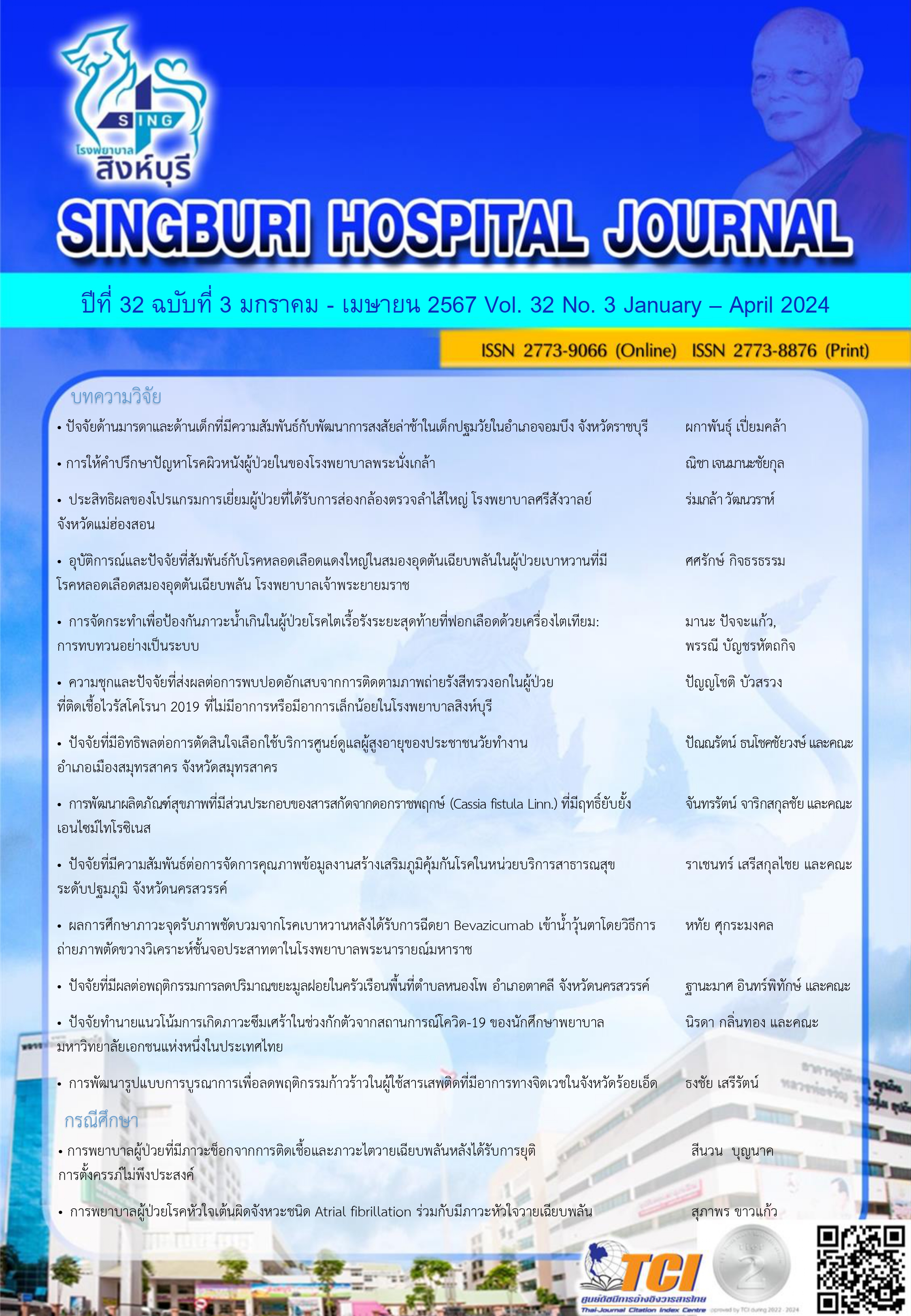
Interventions in the Prevention of Volume Overload in Patients with End-stage Chronic Kidney Disease by Hemodialysis: A Systematic Review
Keywords:
Volume overload, Patients with end-stage chronic kidney disease, Systematic reviewAbstract
End-stage chronic kidney disease is an important public health problem throughout the world, including Thailand. The incidence and trend of prevalence is continually increasing every year. If not properly treated, complications can lead to death. About 1 out of 3 people die prematurely under 60 years of age. One of the most important complications in patients receiving hemodialysis is volume overload, which is found in as many as 41.6-60 percent. To study the interventions in preventing volume overload in end-stage chronic kidney disease patients by hemodialysis, this study focused on systematic literature review using the Joanna Briggs Institute's systematic literature review guidelines, including 1) determining topics for the review, 2) determining criteria for research selection, 3) searching research articles, 4) selecting research articles, 5) assessing research quality, 6) extracting data, 7) analyzing and synthesizing the research results, and 8) presenting research review results. Related literature was obtained from the electronic databases Google Scholar, Thailis, Thai Journal online and Pub Med from 2017 to 2023 using Thai and English keywords: end–stage renal disease, volume overload, and hemodialysis.
From the systematic review, it was found that those undergoing hemodialysis were found to lose weight during dialysis days decreased significantly.
Interventions by hemodialysis could reduce volume overload in patients with end-stage chronic kidney disease.
Downloads
References
Ishigami J, Matsushita K. Clinical epidemiology of infectious disease among patients with chronic kidney disease. Clin ExpNephrol 2019;23(4):437–47.
ศุภดีวัน พิทักษ์แทน. การพยาบาลผู้ป่วยไตวายเรื้อรังระยะสุดท้ายที่ได้รับยาระงับความรู้สึกเพื่อผ่าตัดปลูกถ่ายไต: กรณีศึกษา. วารสารวิชาการแพทย์ 2562;33(3):589–600.
ดวงกมล อมรลักษณ์ปรีชา. การเปรียบเทียบต้นทุนทางตรงและทางอ้อมระหว่างการรักษาด้วยวิธีฟอกเลือดด้วยเครื่องไตเทียม (HD) และวิธีช่องท้องด้วยน้ำยาอย่างต่อเนื่อง (CAPD) ของผู้ป่วยโรคไตระยะ สุดท้าย: การประเมินทางคณิตศาสตร์ประกันภัย. สถาบันพัฒนาบริหารศาสตร์; 2561.
Thussabut N, Siriwatanamethanon J, Buatee S. Model for prevention volume overload of end stage renal disease among hemodialysis patients. Journal of Nurses Association of Thailand, North-Eastern division 2013;31(4):89-96.
ชัยรัตน์ ฉายากุล. ข้อแนะนำเวชปฏิบัติการฟอกไตด้วยเครื่องไตเทียม พ.ศ. 2557. กรุงเทพฯ: โรงพิมพ์ เดือนตุลา; 2557.
Christopher W. Mclntyre & Fabio R Salerno. Diagnosis and Treatment of Intradialytic Hypotension in Maintenance Hemodialysis Patients. Clin J Am Nephorl 2018;13:486–89.
Dahdaleh, S., & Malhotra, P. Treatment of Central Nervous System Complications of Renal Dialysis and Transplantation. Current treatment options in neurology 2019; 21(3):13.
Ying Liu et.al. The profile of Timing Dialysis Initiation in Patients with End–stage rena Disease in China: A Cohort Study. Kidney Blood Pressure Research 2020;45:180–93.
ศรินยา พลสิงห์ชาญ, มวัฒน์ รุ่งเรือง.ปัจจัยที่มีความสัมพันธ์กับพลังสุขภาพจิตของผู้ป่วยไตวายเรื้อรังระยะสุดท้ายที่ได้รับการฟอกเลือดด้วยเครื่องไตเทียม โรงพยาบาลสุรินทร์.วารสารวิทยาลัยพยาบาลบรมราชชนนี อุตรดิตถ์ 2561;10(1):129-41.
ธนันดา ตระการวานิช, อรอัชฌา ศิรมงคลชัยกุล. คู่มือสำหรับประชาชน ทำอย่างไรไตไม่วาย.กรุงเทพฯ: บี.เอ็น.เอส.แอดวานซ์; 2560.
จุฑามาศ เทียนสะอาด, สุชิรา ชัยวิบูลย์ธรรม, นพวรรณ พินิจขจรเดช. การรับรู้ภาระจากอาการภาระค่าใช้จ่ายกับคุณภาพชีวิต ในผู้ป่วยไตเรื้อรังระยะสุดท้ายที่ได้รับการฟอกเลือดด้วยเครื่องไตเทียม. รามาธิบดีพยาบาลสาร 2560;23(1):6077.
ณัฐวรา ทัศบุตร. รูปแบบการป้องกันภาวะน้ำเกินในผู้ป่วยไตเรื้อรังระยะสุดท้ายที่ฟอกเลือดด้วยเครื่องไตเทียม. วารสารสมาคมพยาบาลภาคตะวันออกเฉียงเหนือ 2556;31(4):89–96.
ธิดารัตน์ เพชรชัย, ศรีสุดา มิ่งแก้ว, เยาว์ลักษณ์ นนทภา, วไลพร คำทอง, พรทิพา โฮมราช, อัญชลี ปิยลังกาและคณะ ผลของการใช้แนวคิดการจัดการตนเองต่อพฤติกรรมการดูแลตนเองในการควบคุมภาวะน้ำเกินของผู้ป่วยโรคไตเรื้อรังที่เข้ารับการบำบัดทดแทนไตโดยการฟอกเลือดด้วยเครื่องไตเทียมโรงพยาบาลสมเด็จพระนางเจ้าสิริกิติ์..วารสารแพทย์นาวี 2561;45(1):106-20.
รัตนา เสือสุ่ม, รัชนี นามชูจันทรา. ผลของโปรแกรมการส่งเสริมสมรรถนะแห่งตนในการควบคุมน้ำต่อ พฤติกรรมการควบคุมน้ำและการเปลี่ยนแปลงน้ำหนักตัวในผู้ป่วยโรคไตระยะสุดท้ายที่ได้รับการฟอกเลือด ด้วยเครื่องไตเทียม. วารสารพยาบาลสภากาชาดไทย 2562;11(2):188–203.
ธนัยรัตน์ รุ้งพราย, ทัศนา ชูวรรธนะปกรณ์. ผลของโปรแกรมการจัดการตนเองของบุคคลและครอบครัว ต่อภาวะน้ำเกินในผู้สูงอายุโรคไตวายเรื้อรังที่รับการฟอกเลือดด้วยเครื่องไตเทียม. วารสารพยาบาลศาสตร์ จุฬาลงกรณ์วิทยาลัย 2563;30(1):96–107.
ฐิติกา พุทธิผล. การพัฒนาโปรแกรมการจัดการตนเองต่อพฤติกรรมควบคุมภาวะน้ำเกินของผู้ดููแลและผู้สูงอายุโรคไตเรื้อรังที่ได้รับการฟอกเลือดด้วยเครื่องไตเทียม : การศึกษานำร่อง. การประชุมวิชาการเสนอผลงานวิจัยระดับบัณทิตศึกษาแห่งชาติ ครั้งที่ 20, มหาวิทยาลัยขอนแก่น; 2562.
ทิพย์ ลือชัย, พิกุล พรพิบูลย์, มพูนุท ศรีรัตน์. ผลของโปรแกรมการเสริมสร้างสมรรถนะแห่งตนต่อพฤติกรรมการควบคุมโรค น้ำหนักที่เพิ่มขึ้นระหว่างรอบของการฟอกเลือดและความดันโลหิตก่อนการฟอกเลือด. วารสารพยาบาลสาร มหาวิทยาลัยเชียงใหม่ 2565;49(4):140-50.
วิชชุณี ศรีทอง, นงลักษณ์ เมธากาญจนศักดิ์. ผลของโปรแกรมการจัดการตนเองร่วมกับการกระตุ้นเตือนผ่านระบบไลน์เพื่อป้องกันภาวะน้ำเกินในผู้ป่วยฟอกเลือดด้วยเครื่องไตเทียม.วารสารพยาบาลศาสตร์และสุขภาพ 2564;44(4):1-16.
Başer E, Mollaoğlu M. The efect of a hemodialysis patient education program on fluid control and dietary compliance. Hemodial Int 2019;23:392–401.
Valsaraj BP, Bhat SM, Prabhu R, Kamath A. Follow-Up Study on the Efect of Cognitive Behaviour Therapy on Haemodialysis Adherence: A randomised controlled trial. Sultan Qaboos Univ Med J 2021;21:e58–65.
Griva K, Nandakumar M, Ng JH, Lam KFY, McBain H, Newman SP. Hemodialysis Self-management intervention randomized trial (HED-SMART): A practical low-intensity intervention to improve adherence and clinical markers in patients receiving hemodialysis. Am J Kidney Dis 2018;71:371–81.
Bandura, A. Self-efficacy: The exercise of control. New York: W. H. Freeman and company; 1997.
Wagner EH, Brian AT, Davis C, MikenHindmarsh, Schaefer J, Bonomi A. Improving chronic illness care: translating evidence into action. Health Aff (Millwood) 1999;20(6):64-78.
Downloads
Published
How to Cite
Issue
Section
License
Copyright (c) 2024 Singburi Hospital Journal

This work is licensed under a Creative Commons Attribution-NonCommercial-NoDerivatives 4.0 International License.
The published articles are copyrighted by Singburi Hospital.
The statements appearing in each article in this academic journal are the personal opinions of each author and are not related in any way to Singburi Hospital or other hospital personnel. Each author is solely responsible for all contents of their article. If there are any errors, each author alone will be responsible for their own article.