Causal Factors Influencing Professional Ethics among Nursing Students in the Digital Era: Evidence from Rajabhat Universities in Thailand
Keywords:
Causal Factors, Nursing Professional Ethics, Nursing Students, Digital Era, Rajabhat UniversitiesAbstract
This mixed-methods research aimed to: (1) examine factors related to professional ethics, (2) develop a causal relationship model influencing professional ethics, and (3) propose policy recommendations for strengthening professional ethics among nursing students in the digital era at Rajabhat Universities in Thailand. The study involved 530 nursing students selected through stratified random sampling, along with 10 professional nurses from clinical training sites, academics, and experts in professional ethics. Data were collected using questionnaires and structured interviews. The research instruments demonstrated high reliability (Cronbach’s alpha = .991). Quantitative data were analyzed using descriptive statistics and structural equation modeling, while qualitative data were analyzed through content analysis. Findings revealed as follows.
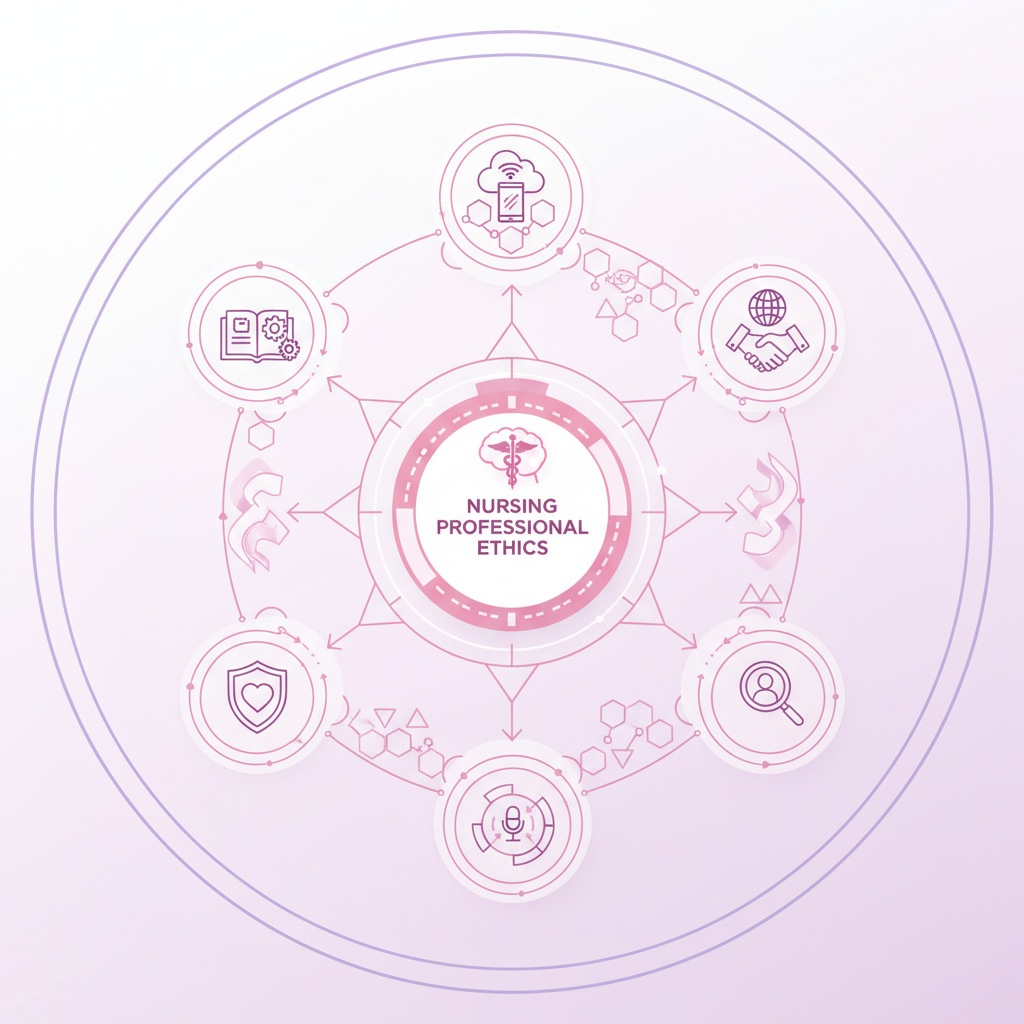
1. Six key factors associated with professional ethics among nursing students: personal attributes, foundations of nursing ethics, moral consciousness for the public good, promotion of ethics within the education system, cultivation and transmission of professional ethics, and digital competence in nursing practice.
2. The causal relationship model demonstrated good fit with empirical data (c2= 713.196, df = 224, GFI = 0.891, AGFI = 0.850, NFI = 0.950, CFI = 0.970, RMSEA = 0.066). Among these, digital competence in nursing practice exerted the strongest overall influence on professional ethics, followed by cultivation and transmission of professional ethics, and promotion of ethics within the education system.
3. Policy recommendations emphasized the development of professional ethics in the digital era through a “digital ethics ecosystem,” integrating policies, curricula, learning management, role-model educators, and digital competence development. This integration aims to foster responsible, transparent, and patient-rights–respecting professional behavior in the context of digital society.
Therefore, systematic and sustainable policies and measures should be established to strengthen professional ethics among nursing students at Rajabhat Universities.
References
กระทรวงศึกษาธิการ. (2560). ประกาศกระทรวงศึกษาธิการ เรื่อง มาตรฐานคุณวุฒิระดับปริญญาตรี สาขาพยาบาล-ศาสตร์ พ.ศ. 2560. ราชกิจจานุเบกษา, 135(ตอนพิเศษ 1 ง), 7. สืบค้นเมื่อ 29 กันยายน 2567 จาก https://www.ratchakitcha.soc.go.th/DATA/PDF/2561/E/001/7.PDF
จิรัชญา เหล่าคมพฤฒาจารย์, ธิติรัตน์ เหล่าคมพฤฒาจารย์, เขมิกา เสียงเพราะ, จิรภา วิลาวรรณ, ยุวดี บุญเนาว์ และ แสมฤทัย ผดุงพล. (2563). การพัฒนาตัวบ่งชี้สมรรถนะด้านจริยธรรม จรรยาบรรณและกฎหมายวิชาชีพของนักศึกษาพยาบาล. วารสารการแพทย์รพ อุดรธานี, 28(3), 284-294. https://he02.tci-thaijo.org/index.php/udhhosmj/article/view/248506
บุญชม ศรีสะอาด. (2560). การวิจัยเบื้องต้น (พิมพ์ครั้งที่ 10). กรุงเทพมหานคร: สุวีริยาสาส์น.
บุรีรัตน์ สือพัฒธิมา และภูมิพิพัฒน์ รักพรมงคล. (2565). การพัฒนาชุมชนแห่งการเรียนรู้ทางวิชาชีพเพื่อการนิเทศในโรงเรียนมัธยมศึกษาขนาดเล็กในเขตภาคเหนือตอนล่างของประเทศไทย. วารสาร International Journal of Social Sciences: Current and Future Research Trends, 13(1), 15–27. https://ijsscfrtjournal.isrra.org/index.php/Social_Science_Journal/article/view/935
รัฐยา คิมูระ, พาพิรุณ น้อยตาแสง, และพงศ์ธารา วิจิตเวชไพศาล. (2566) ปัญญาประดิษฐ์ นวัตกรรมในงานการพยาบาล. วารสารพยาบาลทหารบก, 24(3), 15-22. https://he01.tci-thaijo.org/index.php/JRTAN/article/view/263603
วีณา จีระแพทย์, เพ็ญพักตร์ อุทิศ และสายสมร เฉลยกิตติ. (2563). การสังเคราะห์ความรู้จากคำร้องเรียนผู้ประกอบวิชาชีพการพยาบาลต่อสภาการพยาบาล. วารสารพยาบาลตำรวจ, 12(2), 290–300. https://he01.tci-thaijo.org/index.php/policenurse/article/view/246068
สภาการพยาบาล. (2567). คู่มือส่งเสริมจริยธรรมสำหรับองค์การพยาบาล: กลไกและการปฏิบัติ. กรุงเทพมหานคร: สภาการพยาบาล.
สุรพงษ์ กันทะชมภู และภูมิพิพัฒน์ รักพรมงคล. (2568). รูปแบบการบริหารงานวิชาการสู่ความเป็นเลิศในยุคดิจิทัลของสถานศึกษาประถมศึกษา สังกัดสำนักงานคณะกรรมการการศึกษาขั้นพื้นฐานในเขตภาคเหนือ. วารสารการบริหารการปกครองและนวัตกรรมท้องถิ่น, 9(1), 255–272. https://doi.org/10.14456/jlgisrru.2025.16
Anderson, J. C., & Gerbing, D. W. (1988). Structural equation modeling in practice: A review and recommended two-step approach. Psychological Bulletin, 103(3), 411–423. https://doi.org/10.1037/0033-2909.103.3.411
Bandura, A. (1986, May). The explanatory and predictive scope of self-efficacy theory. Journal
of Social and Clinical Psychology, 4, 359-373. https://doi.org/10.1521/jscp.1986.4.3.359
Bayram, A., Bal, B., Chiappinotto, S., & Palese, A. (2026). Digital ethics in nursing: A scoping review. International nursing review, 73(1), e70141. https://doi.org/10.1111/inr.70141
Brenan, M. (2023). Nurses Retain Top Ethics Rating in U.S., but Below 2020 High. Gallup. Retrieved
September 29, 2024 from https://news.gallup.com/poll/467804/nurses-retain-top-ethics-rating-below-2020-high.aspx
Boozaripour, M., Abbaszadeh, A., Shahriari, M., & Borhani, F. (2018). Ethical values in nursing education: A literature review. Electronic Journal of General Medicine, 15(3), em19. https://doi.org/10.29333/ejgm/85500
Dehkordi, L. M., Kianian, T., & Nasrabadi, A. N. (2024). Nursing students’ experience of moral distress in clinical settings: A phenomenological study. Nursing Open, 11(3), e2141. https://doi.org/10.1002/nop2.2141
Fornell, C., & Larcker, D. F. (1981). Evaluating structural equation models with unobservable variables and measurement error. Journal of Marketing Research, 18(1), 39–50. https://doi.org/10.2307/3151312
Hair, J. F., Black, W. C., Babin, B. J., & Anderson, R. E. (2019). Multivariate Data Analysis (8th ed.).
Boston, MA: Cengage Learning.
Hariyati, R. T. S., Handiyani, H., & Zaharany, T. A. (2024). Digital nursing promotion has increased ethics digital literacy: Program improvement. F1000Research, 13, 366. https://doi.org/10.12688/f1000research.139211.1
International Council of Nurses. (2021). The ICN Code of Ethics for Nurses. Geneva: ICN. Retrieved September 29, 2024 from https://www.icn.ch/system/files/2021-10/ICN_Code-of-Ethics_EN_Web_0.pdf
Kirm, M. R., & Hong, B. (2022) Nursing ethical considerations in the AI-based technologies. J-Institute, 7(2), 10–21. https://doi.org/10.22471/ai.2022.7.2.10
Kline, R. B. (2023). Principles and Practice of Structural Equation Modeling (5th ed.). New York, NY: Guilford Press.
Kohlberg, L. (1981). Essays on Moral Development: Vol. 1. The Philosophy of Moral Development. San Francisco, CA: Harper & Row. Retrieved September 29, 2024 from https://www.worldcat.org/oclc/7544994
Krathwohl, D. R., Bloom, B. S., & Masia, B. B. (1964). Taxonomy of Educational Objectives: The Classification of Educational Goals: Handbook II: The Affective Domain. New York, NY: David McKay.
Nightingale, F. (1969). Notes on Nursing: What It is, and What It is not. New York, NY: Dover Publications. Retrieved September 29, 2024 from https://www.gutenberg.org/ebooks/17366
Poorchangizi, B., Borhani, F., Abbaszadeh, A., Mirzaee, M., & Farokhzadian, J. (2019). The importance of professional values from nursing students’ perspective. BMC Nursing, 18, 26. https://doi.org/10.1186/s12912-019-0351-1
Reinhart, R. J. (2020). Nurses Continue to Rate Highest in Honesty, Ethics. Gallup. Retrieved September 29, 2024, from http://news.gallup.com/poll/274673/nursescontinue-rate-highest-honesty-ethics.aspx
Rest, J. R. (1986). Moral development: Advances in Research and Theory. New York, NY: Praeger. Retrieved September 29, 2024 from https://www.worldcat.org/oclc/12550064
Waller, R. E., Smith, J. T., & Johnson, L. M. (2019). Higher Education in the Age of VUCA: Challenges and Strategic Responses. In J. A. Miller (Ed.), Global Perspectives on 21st Century Education (pp. 73–83). New York, NY: Global Education Press. Retrieved September 29, 2024 from https://doi.org/10.20849/jed.v3i2.613
Wiisak, J., Stolt, M., Igoumenidis, M., Chiappinotto, S., Gastmans, C., Keogh, B., et al. (2024). Factors contributing to the promotion of moral competence in nursing. Nursing ethics, 31(8), 1367–1388. https://doi.org/10.1177/09697330241235305
Yang, Y. (2024). Influences of digital literacy and moral sensitivity on artificial intelligence ethics awareness among nursing students. Healthcare, 12, 2172. https://doi.org/10.3390/healthcare12212172
Downloads
Published
Issue
Section
License
Copyright (c) 2026 The Southern College Network Journal of Nursing and Public Health

This work is licensed under a Creative Commons Attribution-NonCommercial-NoDerivatives 4.0 International License.
1. บทความหรือข้อคิดเห็นใด ๆ ที่ปรากฏในวารสารเครือข่าย วิทยาลัยพยาบาลและการสาธารณสุขภาคใต้ ที่เป็นวรรณกรรมของผู้เขียน บรรณาธิการหรือเครือข่ายวิทยาลัยพยาบาลและวิทยาลัยการสาธารณสุขภาคใต้ ไม่จำเป็นต้องเห็นด้วย
2. บทความที่ได้รับการตีพิมพ์ถือเป็นลิขสิทธิ์ของ วารสารเครือข่ายวิทยาลัยพยาบาลและการสาธารณสุขภาคใต้