
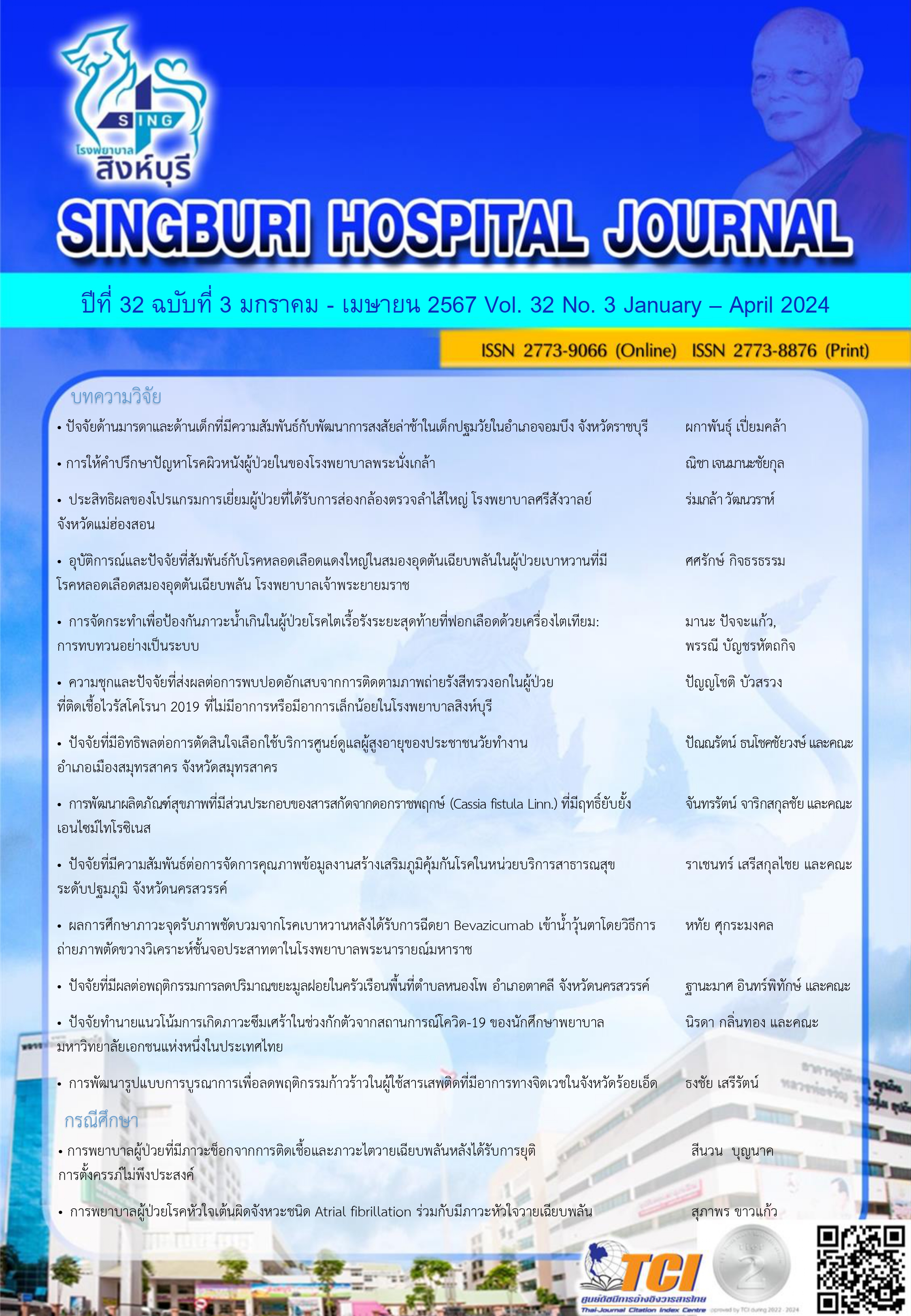
ปัจจัยทำนายแนวโน้มการเกิดภาวะซึมเศร้าในช่วงกักตัวจากสถานการณ์โควิด-19 ของนักศึกษาพยาบาล มหาวิทยาลัยเอกชนแห่งหนึ่งในประเทศไทย
คำสำคัญ:
ภาวะซึมเศร้า, สัมพันธภาพภายในครอบครัว, ความเข้มแข็งทางใจ, การตระหนักรู้ทางสังคม, สถานการณ์ระบาดเชื้อไวรัสโควิด–19บทคัดย่อ
การศึกษาแบบพรรณนาเชิงทำนายมีวัตถุประสงค์เพื่อศึกษาปัจจัยทำนายแนวโน้มการเกิดภาวะซึมเศร้าในช่วงกักตัวจากสถานการณ์โควิด-19 ของนักศึกษาพยาบาลชั้นปีที่ 1-4 ที่มีประสบการณ์ถูกกักตัวจากสถานการณ์การระบาดของโรคติดเชื้อไวรัสโควิด–19 จำนวน 145 คน เครื่องมือวิจัยประกอบด้วยแบบสอบถามข้อมูลส่วนบุคคล แบบสอบถามสัมพันธภาพภายในครอบครัว.แบบสอบถาม การตระหนักรู้ทางสังคม แบบประเมินความเข้มแข็งทางใจ แบบประเมินความเครียดในสถานการณ์ระบาดเชื้อไวรัสโควิด-19 แบบคัดกรองภาวะซึมเศร้า 2Q และแบบประเมินภาวะซึมเศร้า 9Q มีค่าความตรงเชิงเนื้อหาเท่ากับ 0.84, 0.87, 0.97, 1, 0.82 และ 0.89 ตามลำดับ และมีค่าความเที่ยงเท่ากับ 0.89, 0.94, 0.80, 0.97, 0.89 และ 0.71 ตามลำดับ ใช้สถิติการถดถอยพหุคูณแบบขั้นตอน
ผลการวิจัย พบว่า ส่วนใหญ่มีแนวโน้มของการเกิดภาวะซึมเศร้า ร้อยละ 28.3 และมีอาการของภาวะซึมเศร้าอยู่ในระดับเล็กน้อย ร้อยละ 47.5 ความเครียดในสถานการณ์ระบาดของเชื้อไวรัสโควิด-19 และสัมพันธภาพภายในครอบครัวสามารถร่วมกันทำนายแนวโน้มการเกิดภาวะซึมเศร้าได้ ร้อยละ 24.7 (R2 = 0.247, p < .001)
สามารถใช้เป็นแนวทางในการวางแผนจัดกิจกรรมที่ช่วยพัฒนาสัมพันธภาพในครอบครัว การป้องกันและรับมือกับความเครียด ในสถานการณ์อื่น ๆ เพื่อลดแนวโน้มการเกิดภาวะซึมเศร้าและควรมีการจัดให้ความรู้เรื่องการดูแลตนเองโดยเฉพาะอย่างยิ่งการดูแลทางด้านจิตใจในระหว่างการกักตัว
Downloads
เอกสารอ้างอิง
ยงยุทธ วงศ์ภิรมย์ศานติ์. การดำเนินงานสุขภาพจิตภายใต้วิกฤตโควิด19 ของประเทศไทย. วารสารสุขภาพจิตแห่งประเทศไทย 2563;4:280-291.
กรมควบคุมโรค กระทรวงสาธารณสุข. รายงานสถานการณ์โรคติดเชื้อไวรัสโคโรนา 2019 ฉบับ 485 [อินเทอร์เน็ต]. 2564 [เข้าถึงเมื่อ 16 มิ.ย. 2564]. เข้าถึงได้จาก https://ddc.moph.go.th/viralpneumonia/file/situation/situation-no485-020564.pdf
กรมควบคุมโรค กระทรวงสาธารณสุข. รายงานสถานการณ์โรคติดเชื้อไวรัสโคโรนา 2019 ฉบับ 483 [อินเทอร์เน็ต]. 2564 [เข้าถึงเมื่อ 16 มิ.ย. 2564]. เข้าถึงได้จาก https://ddc.moph.go.th/viralpneumonia/file/situation/situation-no483-300464.pdf
พัฒนี ศรีโอษฐ์, ภาสินี โทอินทร์, สิริอร ข้อยุ่น. ภาวะซึมเศร้าของนักศึกษาพยาบาล และปัจจัยที่เกี่ยวข้องในสถานการณ์การแพร่ระบาดของโควิด-19. วารสารโรงพยาบาลสกลนคร 2566;26:91-102.
สุหทัย โตสังวาลย์, ทยาวีร์ จันทรวิวัฒน์. ความเครียด ภาวะซึมเศร้า กลยุทธ์การรับมือกับปัญหา และความแข็งแร่งในชีวิตของนักศึกษาพยาบาลในสถาบันแห่งหนุ่งในภาคตะวันออกเฉียงเหนือระหว่างการระบาดของโรคติดเชื้อไวรัสโคโรนา2019. วารสารการพยาบาลจิตเวชและสุขภาพจิต 2566;37: 92-113.
โชติกา หาญมนตรี, ณิชากร กันเนียม, อัจฉรา ทุมเที่ยง, อาภัสรา ผลเลิศ, นงค์นภัส คำจันทร์, อรจิรา สุขบันเทิง, และคณะ. ปัจจัยที่มีอิทธิพลต่อภาวะซึมเศร้าของครอบครัวนักศึกษาพยาบาลศาสตร์ชั้นปีที่ 4 มหาวิทยาลัยหัวเฉียวเฉลิมพระเกียรติในสถานการณ์การแพร่ระบาดโรคโควิด-19. วารสารการพยาบาลและสุขภาพ สสอท. 2564;3:1-16.
Li D, Zou L, Zhang Z, Zhang Z, Fu W, et al. The Psychological Effect of COVID-19 on Home-Quarantined Nursing Students in China. Frontiers in Psychiatry. 2021;12:1-8.
Diaz M, Mosteiro C, Baptista P, Fernandez A, Correia S. Anxiety and depression among nursing students during the COVID-19 lockdown: A cross-sectional correlational study. J Clin Nurs. 2023;32:5065-75.
ตฏิลา จำปาวัลย์, แนวคิดและทฤษฎีภาวะซึมเศร้าทางจิตวิทยา. วารสารพุทธจิตวิทยา. 2560;2:1-11.
Krejcie RV, Morgan DW. Determining sample size for research activities. Educational and Psychological Measurement. 1970; 30:607-10.
กรมกิจการสตรีและสถาบันครอบครัว กระทรวงการพัฒนาสังคมและความมั่นคงของมนุษย์. คู่มือการสำรวจสถานการณ์ความเข้มแข็งของครอบครัว ประจำปี 2565 [อินเทอร์เน็ต]. (ม.ป.ท.). [เข้าถึงเมื่อ 16 มิ.ย. 2564]. เข้าถึงได้จาก: https://stat.thaifamily.in.th/Questionnaire_01/ไฟล์แบบประเมิน/คู่มือการใช้งานระบบฯ.pdf
สำนักส่งเสริมและพัฒนาสุขภาพจิต กรมสุขภาพจิต. แบบประเมินความเข้มแข็งทางใจ [อินเทอร์เน็ต]. 2562 [เข้าถึงเมื่อ16 มิถุนายน 2564]. เข้าถึงได้จาก: https://mhc8.dmh.go.th/รายละเอียดสื่อสุขภาพจิตphp?MentalhealthID=30
สุริยเดว ทรีปาตี. แบบประเมินความเครียดในสถานการณ์เชื้อไวรัสโควิด Covid 19 [อินเทอร์เน็ต]. 2563 [เข้าถึงเมื่อ 16 มิถนายน 2564]. เข้าถึงได้จาก https://form.jotform.com/200847899727070
World Medical Association. World Medical Association Declaration of Helsinki: ethical principles for medical research involving human subjects. JAMA. 2013;310(20):2191-4.
ดวงใจ วัฒนสิทธุ์, สิริพิมพ์ ชูปาน, ภาคิณี เดชชัยยศ, การแก้ปัญหาทางสังคมและภาวะซึมเศร้าของนักศึกษาพยาบาล. วารสารพยาบาลกระทรวงสาธารณสุข 2562;29:87-99.
อังคณา ศิริอำพันธ์กุล. ภาวะซึมเศร้ากับพฤติกรรมการใช้สื่อโซเชียล. วารสารปัญญาภิวัฒน์ 2561;10:327-37.
ธนพล บรรดาศักดิ์, นฤมล จันทรเกษม, อลิษา ทรัพย์สังข์, วรรณา ชัยชนะรุ่งเรือง. การป้องกันภาวะซึมเศร้าในนักศึกษาพยาบาล. วารสารวิทยาลัยพยาบาลบรมราชชนนี อุตรดิตถ 2564;13:62-70.
ปิยธิดา กระฉอดนอก, ฟ้าลิดา บุญชาญ, เสาวนีย์ ทองนพคุณ. ความรอบรู้ด้านสุขภาพจิตและปัจจัยที่สัมพันธ์กับภาวะซึมเศร้าในสถานการณ์โรคติดเชื้อไวรัสโคโรนา 2019 (โควิด-19) ของนิสิตระดับปริญญาตรีมหาวิทยาลัยแห่งหนึ่งในจังหวัดชลบุรี. วารสารการแพทย์และสาธารณสุข มหาวิทยาลัยอุบลราชธานี 2565;5:125-35.
ลักษิกา พิสุทธิไพศาล, จารุพร ตั้งพัฒนกิจ. ปัจจัยที่ส่งผลต่อการเกิดภาวะซึมเศร้าของวัยรุ่นในจังหวัดชลบุรี. วารสารมนุษยศาสตร์และสังคมศาสตร์ มหาวิทยาลัยอุบลราชธานี 2564;12:45-65.
ดาวน์โหลด
เผยแพร่แล้ว
รูปแบบการอ้างอิง
ฉบับ
ประเภทบทความ
สัญญาอนุญาต
ลิขสิทธิ์ (c) 2024 โรงพยาบาลสิงห์บุรี

อนุญาตภายใต้เงื่อนไข Creative Commons Attribution-NonCommercial-NoDerivatives 4.0 International License.
บทความที่ได้รับการตีพิมพ์เป็นลิขสิทธิ์ของโรงพยาบาลสิงห์บุรี
ข้อความที่ปรากฏในบทความแต่ละเรื่องในวารสารวิชาการเล่มนี้เป็นความคิดเห็นส่วนตัวของผู้เขียนแต่ละท่านไม่เกี่ยวข้องกับโรงพยาบาลสิงห์บุรี และบุคคลากรท่านอื่นๆในโรงพยาบาลฯ แต่อย่างใด ความรับผิดชอบองค์ประกอบทั้งหมดของบทความแต่ละเรื่องเป็นของผู้เขียนแต่ละท่าน หากมีความผิดพลาดใดๆ ผู้เขียนแต่ละท่านจะรับผิดชอบบทความของตนเองแต่ผู้เดียว