การพัฒนาสื่อการให้ความรู้หุ่นจำลองใส่สายล้างไตสำหรับผู้ป่วยโรคไตเรื้อรัง
คำสำคัญ:
สื่อการให้ความรู้ , หุ่นจำลองใส่สายล้างไต, ผู้ป่วยโรคไตเรื้อรัง , การตัดสินใจเพื่อบำบัดทดแทนไตบทคัดย่อ
การวิจัยและพัฒนานวัตกรรมมีวัตถุประสงค์เพื่อพัฒนาและศึกษาผลของสื่อการให้ความรู้หุ่นจำลองใส่สายล้างไตสำหรับผู้ป่วยโรคไตเรื้อรัง โดยดำเนินการวิจัยเป็น 2 ระยะ คือ ระยะที่ 1 พัฒนานวัตกรรม ประยุกต์ใช้แนวคิดการออกแบบ Design Thinking ผู้ทดลองใช้งานเป็นพยาบาลไตเทียมผู้ให้คำปรึกษาเพื่อให้การบำบัดทดแทนไต และผู้ป่วยโรคไตเรื้อรังและญาติที่เข้ารับคำปรึกษาเพื่อการบำบัดทดแทนไตณ หน่วยไตเทียม ระยะที่ 2 ศึกษาผลของการใช้นวัตกรรมสื่อการให้ความรู้หุ่นจำลองใส่สายล้างไตกลุ่มตัวอย่าง เป็นผู้ป่วยโรคไตเรื้อรังระยะสุดท้ายที่ยังไม่ตัดสินใจเลือกวิธีบำบัดทดแทนไตที่มารับคำปรึกษาบำบัดทดแทนไต ณ โรงพยาบาล จำนวน 17 คน เลือกแบบเฉพาะเจาะจง เครื่องมือที่ใช้ในการเก็บรวบรวมข้อมูล ประกอบด้วย แบบสอบถาม แบบประเมินการตัดสินใจเลือกวิธีบำบัดทดแทนไต เครื่องมือที่ใช้ในทดลอง ประกอบด้วย ชุดข้อมูลการให้คำปรึกษาบำบัดทดแทนไต และสื่อการให้ความรู้หุ่นจำลองใส่สายล้างไต วิเคราะห์ใช้สถิติพรรณนาโดยการแจกแจงความถี่ ร้อยละ ผลการวิจัยพบว่า
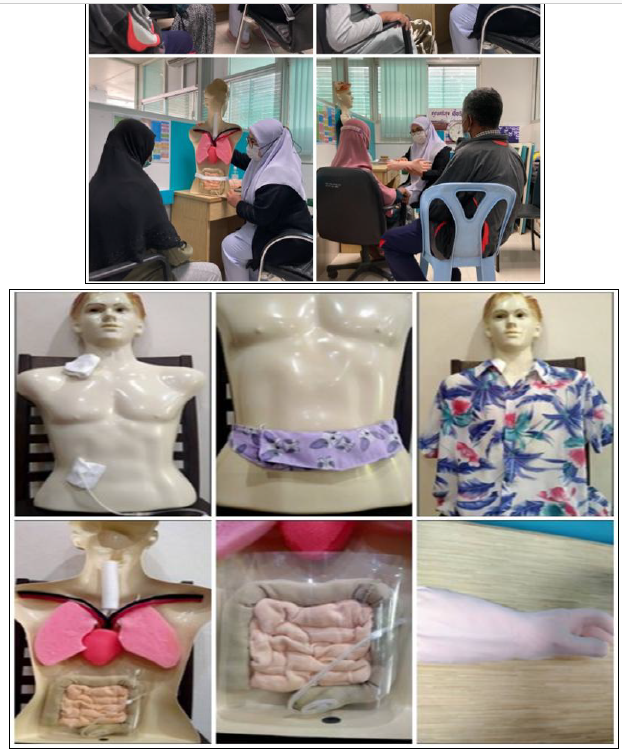
1. สื่อมีลักษณะเป็นหุ่นจำลองท่อนบนของร่างกายมนุษย์ โดยด้านหลังของหุ่นจำลองแสดงลักษณะของอวัยวะภายในร่างกายที่เกี่ยวข้องกับการใส่สายล้างไต และด้านหน้าของหุ่นจำลองแสดงตำแหน่งต่าง ๆ ของท่อระบายที่เกิดจากการใส่สายล้างไต
2. ภายหลังการใช้สื่อการให้ความรู้หุ่นจำลองใส่สายล้างไต ผู้ป่วยโรคไตเรื้อรังมีการตัดสินใจเลือกรับการบำบัดทดแทนไตร้อยละ 88.24
ดังนั้นสื่อการให้ความรู้หุ่นจำลองใส่สายล้างไตนี้จึงเป็นนวัตกรรมทางการพยาบาลที่ใช้ประกอบการให้คำปรึกษาของพยาบาลเพื่อการบำบัดทดแทนไตที่ช่วยให้ผู้ป่วยและญาติเห็นภาพได้อย่างชัดเจนมากขึ้น ลดความกลัวความวิตกกังวลในการใส่สายล้างไต และยังช่วยให้ผู้ป่วยและญาติเลือกวิธีการบำบัดทดแทนไตได้อย่างเหมาะสมกับบริบทของตนเอง
เอกสารอ้างอิง
Apiwatnakorn, A., & Ruengorn, C. (2018). Factors affecting rejection of dialysis in end-stage renal disease patients under universal health coverage in Uttaradit province. Boromarajonani College of Nursing, Uttaradit Journal, 10(2), 29-43. (in Thai)
Best, J. W. (1977). Research in Education (3rd ed.). Prentice Hall, Inc.
Brown, T. (2009). Change by Design: How Design Thinking Creates New Alternatives for Business and Society. Harper Business.
Daengsibua, A., Topark-ngarm, A., Tatiyanupanwong, S., Limwattananont, C. (2015). Following up of stage 5 chronic kidney disease patients managed with non-dialytic treatment. Journal of Health Systems Research, 9(2), 181-192. (in Thai)
Isarasena, P., & Treerattanaphan, C. (2018). Design Thinking: Learning by Doing. Retrieved March 25, 2023 from https://resource.tcdc.or.th/ebook/Design.Thingking.Learning.by.Doing.pdf. (in Thai)
Lindberg, J., Johansson, M., & Broström, L. (2019). Temporising and respect for patient self- determination. Journal of Medical Ethics, 45(3), 161–167. doi.org/10.1136/medethics-2018-104851
Naradhiwas Rajanagarindra Hospital. (2023). Hemodialysis Unit Registry, 2023. Naradhiwas Rajanagarindra Hospital.
Park, J. I., Kim, M., Kim, H., An, J. N., Lee, J., Yang, S.H., et al. (2015). Not early referral but planned dialysis improves quality of life and depression in newly diagnosed end stage renal disease patients: a prospective cohort study in Korea. PLoS One, 10(2), 1-11. doi.org/10.1371/journal.pone.0117582
Plattner, H., Meinel, C., & Leifer, L. (2011). Design Thinking: Understand, Improve, Apply. Springer.
Saeed, F., Muhammad, S., Khalid, R., Raza, N., Ronald, E., Sarah, D., et al. (2020). Dialysis decision-making and preferences for end-of-life care: perspectives of Pakistani patients receiving maintenance dialysis. Journal of Pain and Symptom Management, 59(3), 1-8. doi.org/10.1016/j.jpainsymman.2020.03.009
Song, M. K., Lin, F. C., Gilet, C. A., Arnold, R. M., Bridgman, J. C., & Ward, S. E. (2013). Patient perspectives on informed decision-making surrounding dialysis initiation. Nephrol Dial Transplant, 28(11), 2815-2823. doi.org/10.1093/ndt/gft238
Sudee, P., Komany, K., U-Pachitakul, S., Musikpodok, D., & Penreabroy, O. (2021). Medical model making for peritoneal dialysis. Srinagarind Med Journal, 36(2), 217-221. (in Thai)
Thanakitcharu, P. (2015). Current situation of chronic kidney disease in Thailand. Journal of the Department of Medical Services, 2(5), 5-17. (in Thai)
ดาวน์โหลด
เผยแพร่แล้ว
ฉบับ
ประเภทบทความ
สัญญาอนุญาต
ลิขสิทธิ์ (c) 2025 วารสารเครือข่ายวิทยาลัยพยาบาลและการสาธารณสุขภาคใต้

อนุญาตภายใต้เงื่อนไข Creative Commons Attribution-NonCommercial-NoDerivatives 4.0 International License.
1. บทความหรือข้อคิดเห็นใด ๆ ที่ปรากฏในวารสารเครือข่าย วิทยาลัยพยาบาลและการสาธารณสุขภาคใต้ ที่เป็นวรรณกรรมของผู้เขียน บรรณาธิการหรือเครือข่ายวิทยาลัยพยาบาลและวิทยาลัยการสาธารณสุขภาคใต้ ไม่จำเป็นต้องเห็นด้วย
2. บทความที่ได้รับการตีพิมพ์ถือเป็นลิขสิทธิ์ของ วารสารเครือข่ายวิทยาลัยพยาบาลและการสาธารณสุขภาคใต้