The Effects of a Self-efficacy Enhancement Program on Self-care Behaviors among Lung Cancer Patients Receiving Chemotherapy
Keywords:
Self-efficacy Enhancement Program, Self-care Behaviors, Lung Cancer Patients, ChemotherapyAbstract
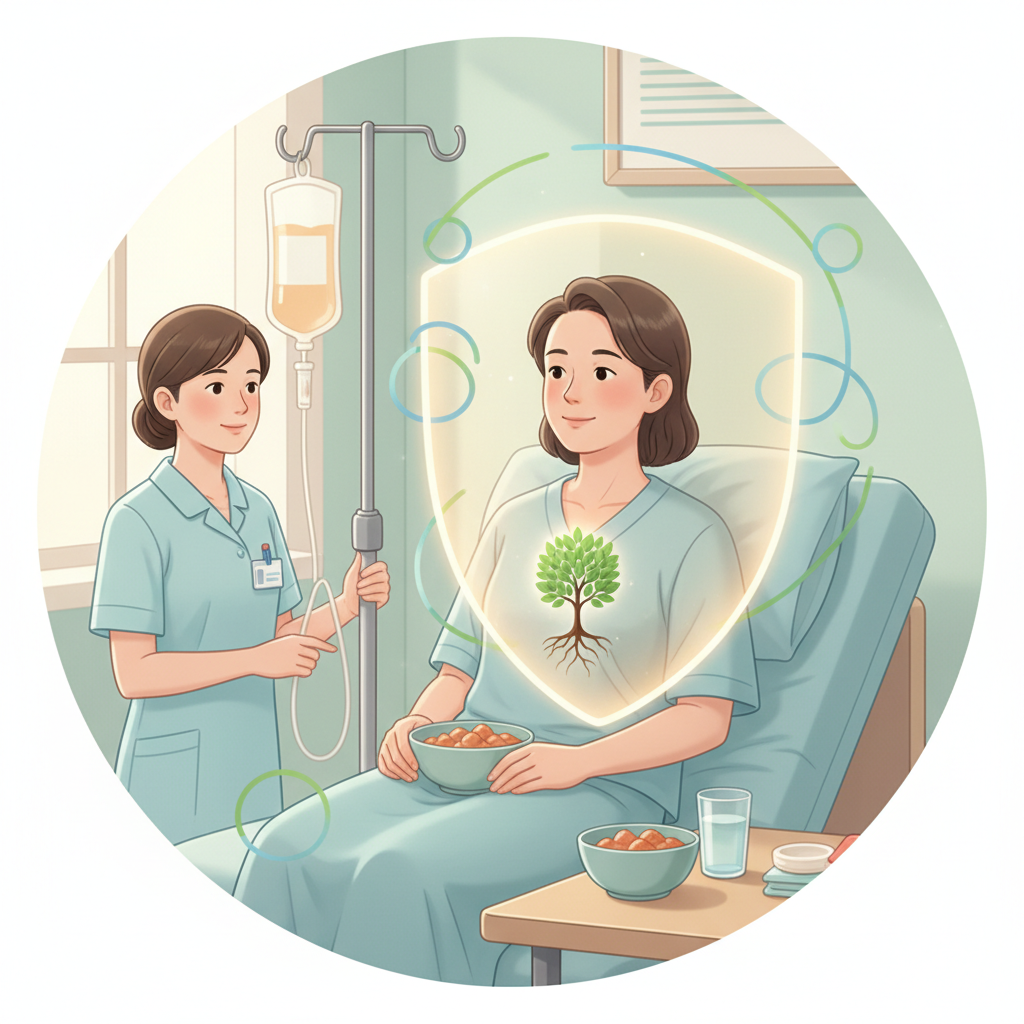
This randomized controlled trial study aimed to examine the effects of a self-efficacy enhancement program on self-care behaviors among patients with lung cancer receiving chemotherapy. Bandura’s concept of self-efficacy was applied to develop a program encompassing mastery experiences, vicarious learning, verbal persuasion, and management of emotional states. The sample consisted of 60 patients with lung cancer receiving chemotherapy who met the specified eligibility criteria. Participants were randomly allocated to an experimental (n = 30) or control group (n = 30), using random permuted block allocation. The experimental group received the self-efficacy enhancement program for 8 weeks, whereas the control group received usual nursing care in accordance with standard guidelines. Data were collected using a demographic questionnaire and a self-care behavior assessment scale. Data were analyzed using descriptive statistics, the chi-square test, Fisher’s exact test, paired t-test, and independent t-test. The results were as follows.
1. Within-group comparison: Following the intervention, the experimental group demonstrated a statistically significant increase in mean self-care behavior scores compared with baseline (t = 27.255, p-value < .001). In contrast, no statistically significant difference was found between the pre- and post-intervention mean self-care behavior scores in the control group (t = .399, p-value = .699).
2. Between-group comparison: At baseline, there was no statistically significant difference in mean self-care behavior scores between the experimental and control groups (t = .100, p-value = .911). However, following the intervention, the experimental group had significantly higher mean self-care behavior scores than the control group (t = -27.777, p-value < .001).
These results suggest that the self-efficacy enhancement program may be used as an initial approach for nurses and other healthcare professionals to provide education, support, and follow-up regarding self-care behaviors through the LINE application, thereby promoting continuity of self-care among patients with lung cancer receiving chemotherapy.
References
ปรารถนา กันทอน และเกษร สำเภาทอง. (2564). ประสิทธิผลของโปรแกรมส่งเสริมพฤติกรรมการดูแลผู้ป่วยมะเร็งที่ได้รับยาเคมีบำบัดของผู้ดูแล. วชิรสารการพยาบาล, 23(2), 14-29. https://he02.tci-thaijo.org/index.php/vnj/article/view/252697/173674
มานิตย์ แซ่เตียว. (2562). โรคมะเร็งปอด. อุบลราชธานี: คณะเภสัชศาสตร์ มหาวิทยาลัยอุบลราชธานี.
สถาบันมะเร็งแห่งชาติ กรมการแพทย์ กระทรวงสาธารณสุข. (2563). คู่มือมาตรฐานการทำงานเกี่ยวกับยาเคมีบำบัดและการดูแลผู้ป่วยหลังได้รับยา. กรุงเทพมหานคร: นิวธรรมดาการพิมพ์.
สมปอง พะมุลิลา, อรุณ กลิ่นบัว, จมร เมาะลาษี, วรรษมน ปาพรม, และชลิยา วามะลุน. (2567). ผลของโปรแกรมส่งเสริมการรับรู้สมรรถนะแห่งตนต่อพฤติกรรมการดูแลตนเองของผู้ป่วยโรคมะเร็งท่อน้ำดี. วารสารพยาบาลทหารบก, 25(3), 320-328.
https://he01.tci-thaijo.org/index.php/JRTAN/article/view/271844/184871
สุจิตรา เทียนสวัสดิ์. (2563). การพัฒนาเครื่องมือสำหรับการวิจัยทางการพยาบาล. กรุงเทพมหานคร: สำนักพิมพ์จุฬาลงกรณ์มหาวิทยาลัย.
อนุชิต มะรอปิ, ฟาอิส วาเลาะแต, และสุรวุฒิ ดอเลาะ. (2567). ประสบการณ์ชีวิตตามมุมมองโลก 5 ใบ ของผู้ป่วยมะเร็งต่อมน้ำเหลืองที่ได้รับการรักษาด้วยยาเคมีบำบัดในพื้นที่สามจังหวัดชายแดนภาคใต้. วารสารเครือข่ายวิทยาลัยพยาบาลและการสาธารณสุขภาคใต้, 11(3), e271806. https://he01.tci-thaijo.org/index.php/scnet/article/view/271806/184191
Abu El-Kass, S., Ragheb, M. M., Hamed, S. M., Turkman, A. M., & Zaki, A. T. (2021). Needs and self-care efficacy for cancer patients suffering from side effects of chemotherapy. Journal of Oncology, 2021(1), e8880366. doi.org/10.1155/2021/8880366
Artino, A. R., Jr. (2012). Academic self-efficacy: from educational theory to instructional practice. Perspectives on Medical Education, 1(2), 76-85. doi.org/10.1007/s40037-012-0012-5
Bandura, A. (1977). Self-efficacy: Toward a unifying theory of behavioral change. Psychological Review, 84(2), 191–215. doi.org/10.1037/0033-295X.84.2.191
Best, J. W. (1977). Research in Education (3rd ed.). Englewood Cliffs, NJ: Prentice-Hall.
Borson, S., Scanlan, J. M., Chen, P., & Ganguli, M. (2003). The Mini-Cog as a screen for dementia: Validation in a population-based sample. Journal of the American Geriatrics Society, 51(10), 1451–1454. doi.org/10.1046/j.1532-5415.2003.51465.x
Carnio, S., Di Stefano, R. F., & Novello, S. (2016). Fatigue in lung cancer patients: symptom burden and management of challenges. Lung Cancer: Targets and Therapy,7(1), 73-82. doi.org/10.2147/lctt.S85334
Chen, X., Qin, Y., & Chaimongkol, N. (2024). Effectiveness of a phone-based support program on self-care self-efficacy, psychological distress, and quality of life among women newly diagnosed with breast cancer: A randomized controlled trial. European Journal of Oncology Nursing, 71(1), 102-110. doi.org/10.1016/j.ejon.2024.102643
Cohen, J. (1988). Statistical Power Analysis for the Behavioral Sciences (2nd ed.). Hillsdale, NJ: Lawrence Erlbaum Associates.
Cohen, J. (1992). A power primer. Psychological Bulletin, 112(1), 155–159. https://doi.org/10.1037/0033-2909.112.1.155
Faul, F., Erdfelder, E., Lang, A. G., & Buchner, A. (2007). G*Power 3: A flexible statistical power analysis program for the social, behavioral, and biomedical sciences. Behavior Research Methods, 39(2), 175-191. doi.org/10.3758/BF03193146
International Agency for Research on Cancer. (2024). Thailand Fact Sheet. Global Cancer Observatory. Retrieved June 29 from https://gco.iarc.who.int/media/globocan/factsheets/ populations/764-thailand-fact-sheet.pdf
Liang, S. Y., Chao, T. C., Tseng, L. M., Tsay, S. L., Lin, K. C., & Tung, H. H. (2016). Symptom-management self-efficacy mediates the effects of symptom distress on the quality of life among Taiwanese oncology outpatients with breast cancer. Cancer Nursing, 39(1), 67-73. doi.org/10.1097/ncc.0000000000000244
Lim, D. S. C., Kwok, B., Williams, P., & Koczwara, B. (2023). The impact of digital technology on self-management in cancer: Systematic review. JMIR Cancer, 9(1), 145-155. doi.org/10.2196/45145
Sakpal, T. V. (2010). Sample size estimation in clinical trial. Perspectives in Clinical Research, 1(2), 67–69. doi.org/10.4103/2229-3485.71856
Sirisomboon, A., Tayanun, G., Tanskul, N., Puedtapongpaphanij, S., Sirisoonthornphibul, T., Teerakomolwit, C., et al. (2024). A review: Epidemiology and risk factors of lung cancer patients in Thailand. SciTech Research Journal, 7(2), 155–168. https://ph02.tci-thaijo.org/index.php/jstrmu/article/view/253034/171084
Tuominen, L., Leino-Kilpi, H., Poraharju, J., Cabutto, D., Carrion, C., Lehtiö, L., et al. (2024). Interactive digital tools to support empowerment of people with cancer: A systematic literature review. Supportive Care in Cancer, 32(6), 396–405. doi.org/10.1007/s00520-024-08545-9
Tuominen, L., Stolt, M., Meretoja, R., & Leino-Kilpi, H. (2018). Effectiveness of nursing interventions among patients with cancer: An overview of systematic reviews. Journal of Clinical Nursing, 28(1), 135-148. doi.org/10.1111/jocn.14762
World Health Organization. (2025). Cancer. [Fact Sheet]. Retrieved June 29, 2025, from https://www.who.int/news-room/fact-sheets/detail/cancer
Zhang, Y., Kwekkeboom, K., & Petrini, M. (2015). Uncertainty, self-efficacy, and self-care behavior in patients with breast cancer undergoing chemotherapy in China. Cancer Nursing, 38(3), 19-26. doi.org/10.1097/ncc.0000000000000165
Downloads
Published
Issue
Section
License
Copyright (c) 2026 The Southern College Network Journal of Nursing and Public Health

This work is licensed under a Creative Commons Attribution-NonCommercial-NoDerivatives 4.0 International License.
1. บทความหรือข้อคิดเห็นใด ๆ ที่ปรากฏในวารสารเครือข่าย วิทยาลัยพยาบาลและการสาธารณสุขภาคใต้ ที่เป็นวรรณกรรมของผู้เขียน บรรณาธิการหรือเครือข่ายวิทยาลัยพยาบาลและวิทยาลัยการสาธารณสุขภาคใต้ ไม่จำเป็นต้องเห็นด้วย
2. บทความที่ได้รับการตีพิมพ์ถือเป็นลิขสิทธิ์ของ วารสารเครือข่ายวิทยาลัยพยาบาลและการสาธารณสุขภาคใต้