การดูแลผู้ป่วยระยะกลางตามกรอบแนวคิดนวัตกรรมการดูแลภาวะเรื้อรังขององค์การอนามัยโลก โดยการมีส่วนร่วมของชุมชน เขตเทศบาลเมืองเขารูปช้าง จังหวัดสงขลา
คำสำคัญ:
การมีส่วนร่วมในชุมชน, การดูแลผู้ป่วยระยะกลาง , การดูแลภาวะเรื้อรังองค์การอนามัยโลกบทคัดย่อ
การวิจัยแบบผสมวิธีนี้เพื่อศึกษาสถานการณ์การดูแลผู้ป่วยระยะกลางตามกรอบแนวคิดนวัตกรรมการดูแลภาวะเรื้อรังขององค์การอนามัยโลกจากการมีส่วนร่วมจาก 3 ระดับ ที่มีความเชื่อมโยงกัน ในเขตเทศบาลเมืองเขารูปช้าง จังหวัดสงขลา ดำเนินการ 2 วิธีคือ วิธีเชิงปริมาณ ประชากรที่ศึกษาเป็นผู้ป่วยหรือผู้ดูแลในเขตเทศบาลเมืองเขารูปช้างที่ผ่านเกณฑ์คัดเข้าได้กลุ่มตัวอย่างจำนวน 63 คน ใช้เครื่องมือบบสอบถามความคิดเห็นการได้รับการดูแลระยะกลาง ทำการวิเคราะห์ข้อมูลหาค่าเฉลี่ย ส่วนวิธีเชิงคุณภาพ ผู้ให้ข้อมูลคือ กลุ่มผู้ให้บริการทางสุขภาพ 15 คน เครือข่ายในชุมชน 9 คน และผู้บริหาร 8 คน ใช้วิธีเลือกแบบเจาะจง ใช้ข้อคำถามแบบมีโครงสร้างเก็บข้อมูลด้วยการสนทนากลุ่ม การสัมภาษณ์เชิงลึก และการสังเกตแบบมีโครงสร้าง ผลการวิจัยพบว่า
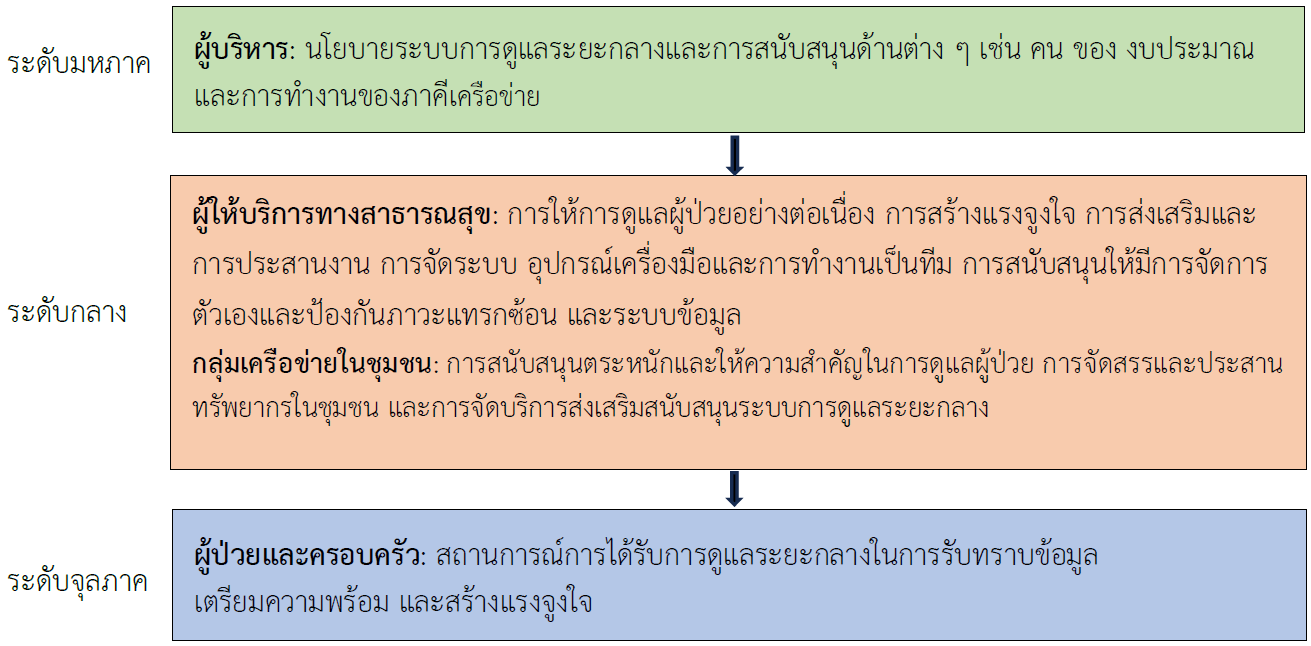
สถานการณ์การดูแลผู้ป่วยระยะกลาง คือ ผู้ดูแลได้รับทราบข้อมูลและการสร้างแรงจูงใจอยู่ในระดับสูง ส่วนการเตรียมความพร้อมอยู่ในระดับปานกลาง ผู้เกี่ยวข้องในการดูแลระยะกลางแต่ละระดับมีบทบาทที่ส่งเสริมกัน โดยผู้ป่วยและครอบครัวต้องรับรู้ข้อมูลที่เกี่ยวข้อง ยอมรับความจริง ไม่สิ้นหวัง กล้าแสดงความคิดเห็น เตรียมความพร้อมและฝึกทักษะ โดยมีผู้ให้บริการ เครือข่ายในชุมชน และผู้บริหารเห็นความสำคัญและสนับสนุน ภายใต้หน่วยงานและชุมชนที่มีระบบการดูแลผู้ป่วยระยะกลางอย่างต่อเนื่อง ผู้บริหารสร้างแรงจูงใจผ่านภาวะผู้นำ รับฟังปัญหาของผู้ป่วย ครอบครัว ทีมงาน และชุมชน เพื่อนำไปกำหนดนโยบาย ออกระเบียบ จัดสรรงบประมาณ และสร้างสิ่งแวดล้อมที่ดี เพื่อให้ทุกภาคส่วนสามารถบูรณาการทำงานร่วมกันได้อย่างครอบคลุมและมีประสิทธิภาพ
ดังนั้นหน่วยบริการทางสาธารณสุขและองค์กรปกครองส่วนท้องถิ่นควรร่วมกันจัดทำแนวทางการดูแลผู้ป่วยระยะกลาง โดยชุมชนเข้ามามีส่วนร่วมให้ชัดเจน เพื่อให้แต่ละภาคส่วนรับรู้บทบาทหน้าที่และเข้ามามีส่วนร่วมได้เหมาะสม หวังผลให้เกิดสุขภาวะที่ดี ลดภาระการดูแลทางสุขภาพ
เอกสารอ้างอิง
Choengsa-ard, N. (2019). Development of quality for IMC by participation of Atsamat network Roi-Et province. Journal of Research and Health Innovative Development, 1(1), 89-98. (in Thai)
Department of Empowerment Persons with Disabilities. (2022). Situation Regarding People with Disabilities: Department of Empowerment of Persons with Disabilities. Retrieved March 20, 2023 from https://dep.go.th/th/law-academic/knowledge/disabled-person-situation. (in Thai)
Hirunkhro, B. (2018). Development of a service system by participation of the community and multidisciplinary team through the home-based rehabilitation nursing program for patients with stroke. Journal of Humanities and Social Sciences Nakhon Phanom University, 25th Anniversary Academic Conference Edition, 36–45. (in Thai)
Hsieh, H., & Shannon, S. (2005) Three approaches to qualitative content analysis. Qualitative Health Research, 15(9), 1277-1286.
International Health Policy Development Office. (2010). Burden of Disease Research Program Thailand. Retrieved March 20, 2023 from http://bodthai.net/download/ (in Thai)
Jannoi, N., Jansook, N., & Wimonmook, R. (2020). A model of IMC in stroke patients, Uthai Thani province. Journal of Preventive Medicine Association of Thailand, 10(3), 438-456. (in Thai)
Khiewchaum, R., Ngamkhum, S., & Makha, K. (2013). The effects of using a clinical nursing guideline for caregivers’ preparation in caring for patients with traumatic brain injury. Nursing Journal of The Ministry of Public Health, 23(1), 15-29. (in Thai)
Krejcie, R.V., & Morgan, DW. (1970). Determining sample size for research activities. Educational and Psychological Measurement, 30, 607-610.
Kvael, L. A. H., Debesay, J., Bye, A., & Bergland, A. (2019). Health-care professionals' experiences of patient participation among older patients in intermediate care-At the intersection between profession, market and bureaucracy. Health expectations : An international journal of public participation in health care and health policy, 22(5), 921–930. doi.org/10.1111/hex.12896
Limvingsiriwong, A., & Nima, S. (2020). Situation of health risk management from alcohol, tobacco and substance abuse of the community using the innovative chronic care conditions framework in Surat Thani province. Journal of Health and Health Science, 4(1), 1-15. (in Thai)
Nuño, R., Coleman, K., Bengoa, R., & Sauto, R. (2012). Integrated care for chronic conditions: The contribution of the ICCC Framework. Health Policy, 105(1), 55–64. Retrieved March 20, 2023 from doi.org/10.1016/j.healthpol.2011.10.006
Pisanbut S. (2012). Business Research. 2nd Printing. Bangkok: S. Asia Press. Office of Agricultural Economics. Retrieved March 20, 2023 from http://mslib.kku.ac.th/elib/multim/book/. (in Thai)
Public Health Administration Division Ministry of Public Health. (2012). Manual for Intermediate Rehabilitation of Patients for Medical Personnel According to the Health Service System Development Plan. Retrieved March 20, 2023 from http://www.snmri.go.th/. (in Thai)
Songkhla Hospital. (2022). Documents for Inspection and Supervision of Normal Cases Round 2, fiscal year 2022, from https://www.skhospital.go.th/. (in Thai)
Songkhla Hospital. (2023). Report from the Songkhla Hospital Database. Retrieved September 9, 2023, from https://www.skhospital.go.th/. (in Thai)
Sutin, U., Paluangrit, T., Dangkrajang, S., Sutthinarakorn, W., Prasert, V.(2022). Problems and needs when caring for stroke patient at homes. International Journal of Public Health Science. 11(2), 695-705.
Thiemmanee, R., Sanadisai, S., & Maneesriwongkul, W. (2011). The role of local government organizations in supporting continued treatment for elderly people with chronic diseases: A case study. Nursing Research and Innovation Journal, 17(3), 520-532. (in Thai)
Tyagi, S., Koh, G. C. H., Luo, N., Tan, K. B., Hoenig, H,, Matchar, D. B, et al. (2019). Dyadic approach to post-stroke hospitalizations: role of caregiver and patient characteristics. BMC Neurol. 19(1), 267. doi.org/10.1186/s12883- 019-1510-4.
World Health Organization [WHO]. (2002). Innovative Care for Chronic Conditions: Building Blocks for Actions : Global Report (WHO/MNC/CCH/02.01). World Health Organization. Retrieved March 20, 2023 form https://iris.who.int/bitstream/handle/10665/42500/.
ดาวน์โหลด
เผยแพร่แล้ว
ฉบับ
ประเภทบทความ
สัญญาอนุญาต
ลิขสิทธิ์ (c) 2025 วารสารเครือข่ายวิทยาลัยพยาบาลและการสาธารณสุขภาคใต้

อนุญาตภายใต้เงื่อนไข Creative Commons Attribution-NonCommercial-NoDerivatives 4.0 International License.
1. บทความหรือข้อคิดเห็นใด ๆ ที่ปรากฏในวารสารเครือข่าย วิทยาลัยพยาบาลและการสาธารณสุขภาคใต้ ที่เป็นวรรณกรรมของผู้เขียน บรรณาธิการหรือเครือข่ายวิทยาลัยพยาบาลและวิทยาลัยการสาธารณสุขภาคใต้ ไม่จำเป็นต้องเห็นด้วย
2. บทความที่ได้รับการตีพิมพ์ถือเป็นลิขสิทธิ์ของ วารสารเครือข่ายวิทยาลัยพยาบาลและการสาธารณสุขภาคใต้