ผลลัพธ์ของการพัฒนาระบบเพื่อเพิ่มการเข้าถึงความรู้และบริการอนามัยเจริญพันธุ์รอบด้าน สำหรับแรงงานข้ามชาติสตรีในจังหวัดสมุทรสาคร
คำสำคัญ:
การเข้าถึงระบบบริการ, บริการอนามัยเจริญพันธุ์รอบด้าน, แรงงานข้ามชาติสตรีบทคัดย่อ
การวิจัยและพัฒนานี้ มีวัตถุประสงค์เพื่อศึกษาสถานการณ์ พัฒนาระบบและประเมินผลลัพธ์การพัฒนาระบบเพื่อเพิ่มการเข้าถึงความรู้ และบริการอนามัยเจริญพันธุ์รอบด้าน สำหรับแรงงานข้ามชาติสตรี ดำเนินการเป็น 3 ขั้นตอน ดังนี้ 1) อธิบายสถานการณ์ความรู้ ทัศนคติ และการเข้าถึงระบบบริการอนามัยเจริญพันธ์ จากแรงงานข้ามชาติสตรี ในจังหวัดสมุทรสาคร จำนวน 538 คน เครื่องมือที่ใช้เป็นแบบสอบถามได้ค่าความสอดคล้องของข้อคำถามระหว่าง .67-1.00 ค่าความเชื่อมั่นฉบับภาษาเมียนมาเท่ากับ .92 ลาวเท่ากับ .89 และกัมพูชาเท่ากับ .91 วิเคราะห์ข้อมูลเชิงปริมาณด้วยสถิติเชิงพรรณนา 2) พัฒนาระบบการเข้าถึงบริการ และ 3) ประเมินผลลัพธ์ของการพัฒนา ใช้วิธีการวิจัยแบบกึ่งทดลองชนิดหนึ่งกลุ่มวัดก่อนและหลังการทดลอง กลุ่มตัวอย่างเป็นแรงงานข้ามชาติสตรี จำนวน 101 คน วิเคราะห์ข้อมูลโดยใช้สถิติเชิงพรรณนา และสถิติ Paired t-test ผลการวิจัยพบว่า
1. สถานการณ์ด้านความรู้ พบว่า กลุ่มตัวอย่างมีคะแนนค่าความรู้อยู่ในระดับต่ำ (M =3.24, SD=1.33) ส่วนใหญ่มีทัศนคติเกี่ยวกับอนามัยการเจริญพันธุ์ที่ไม่ถูกต้อง โดยเฉพาะเรื่องการเท่าเทียมกันทางเพศ และสิทธิสตรี ด้านการเข้าถึงบริการ พบว่า ส่วนใหญ่ไม่เคยรับบริการตรวจสุขภาพทางเพศ และไม่เคยใช้บริการจากสถานบริการของรัฐบาล (ร้อยละ 60.78) หรือเอกชน (ร้อยละ 63.38)
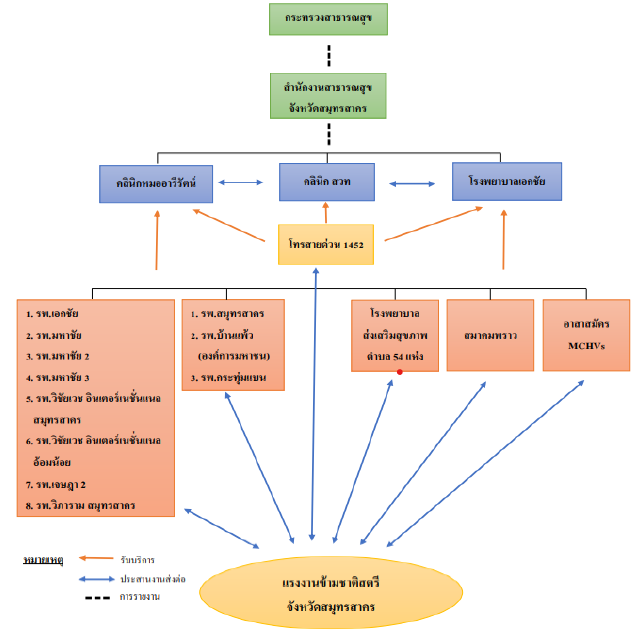
2. การพัฒนาระบบประกอบด้วย 1) การสร้างกลไกในการเข้าถึงบริการ 2) พัฒนาศักยภาพอาสาสมัครสุขภาพชุมชนข้ามชาติ 3) จัดอบรมกลุ่มย่อยให้แก่แรงงานข้ามชาติและครอบครัว 4) พัฒนาสื่อความรู้ และให้คำปรึกษาใน Hotline สายด่วน 1452 และ 5) จัดกิจกรรมรณรงค์
3. หลังการพัฒนาระบบความรู้ ทัศนคติ และการปฏิบัติตัวของแรงงานสตรีข้ามชาติเพิ่มขึ้นอย่างมีนัยสำคัญที่ระดับ .001
เพื่อให้แรงงานสตรีข้ามชาติมีความรู้ ตระหนักและสามารถเข้าถึงบริการอนามัยการเจริญพันธุ์ที่ถูกต้อง ควรพัฒนาระบบการเข้าถึงบริการโดยการสื่อสารผ่านเจ้าของภาษา ปรับทัศนคติด้านอนามัยการเจริญพันธุ์ ลดข้อจำกัดด้านภาษาและวัฒนธรรม รวมทั้งการฝึกอบรมอาสาสมัครสาธารณสุขข้ามชาติ และจัดการบริการที่เป็นมิตร
เอกสารอ้างอิง
Division of Labor Economics. (2021). Economic Situation Report: International Labor and International Labor Movement Quarter 2/2021. Bangkok: Division of Labor Economics. (in Thai)
Gao, X., Xu, L., Lu, C., Wu, J., Wang, Z., Decat, P., et al. (2015). Effect of improving the knowledge, attitude, and practice of reproductive health among female migrant workers: a worksite-based intervention in Guangzhou, China. Sexual Health, 12(1), 13–21. doi.org/10.1071/SH14061
Health Education Division. (2014). Health Literacy Scale for Unwanted Pregnancy Prevention of Thai Female Adolescents. Nonthaburi: Ministry of Public Health. (in Thai)
Jaeger, F. N., Pellaud, N., Laville, B., & Klauser, P. (2019). The migration-related language barrier and professional interpreter use in primary health care in Switzerland. BMC Health Services Research, 19, 429. doi.10.1186/s12913-019-4164-4
Khamthanet, R., & Suthutvoravut. (2020). Comparison of knowledge, attitude, and behavior of reproductive health between Thai and immigrant women workers in factories in Samut Sakhon Thailand. Rama Med J, 43(1), 25-34. doi.org/10.33165/rmj.2020.43.1.238367
Kosiyaporn, H., Julchoo, S., Phaiyarom, M., Sinam, P., Kunpeuk, W., Pudpong, N., Suphanchaimat, R. (2020). Strengthening the migrant-friendliness of thai health services through interpretation and cultural mediation: A system analysis. Global Health Research and Policy, 5, 53. doi.10.1186/s41256-020-00181-0
Labour Department Samut Sakhon Province. (2020). Labor Situation Report in Samut Sakhon Province Quarter 2 Year 2020. Labour Department Samut Sakhon Province. (in Thai)
Loganathan, T., Chan, Z. X., de Smalen, A. W., & Pocock, N. S. (2020). Migrant women's access to sexual and reproductive health services in Malaysia: A qualitative study. International journal of environmental research and public health, 17(15), 1-18. doi.org/10.3390/ijerph17155376
Puthoopparambil, S. J., Phelan, M., & MacFarlane, A. (2021). Migrant health and language barriers: Uncovering macro level influences on the implementation of trained interpreters in healthcare settings. Health Policy, 125(8), 1085-1091. doi.org/10.1016/j.healthpol.2021.05.018
Sawasdipanich, N., & Sujitra, T. (2011). Instrument translation for cross-cultural research: technique and issue to be considered. Thai Journal of Nursing Council, 26(1), 19-28. (in Thai)
Sharma, P. K., & Lawrence, S. (2019). Complaint and treatment for vaginal discharge attending by gynecology nurses in rajasthan: An analysis. International Journal of Research in Medical and Basic Sciences, 5(9), 29-37.
Thongmixay, S., Essink, D. R., Greeuw, T., Vongxay, V., Sychareun, V., & Broerse, J. E. W. (2019). Perceived barriers in accessing sexual and reproductive health services for youth in Lao People's Democratic Republic. PLoS One, 14(10), e0218296. doi.10.1371/journal.pone.0218296
Thongpan, S. (2020). Body of knowledge about translational migrant and health: the result of research synthesis of translational migrant labour in Thailand. Thai Journal of Health Education, 43(2), 1-17. (in Thai)
United Nations of Population Fund. (2021). My Body is My Own.UNFPA Division for Communications and Strategic Partnerships.
United Nations Development Programme. (2015). The Right to Health Right to Health for Low-skilled Labour Migrants in ASEAN Countries. Bangkok: United Nations Development Programme Bangkok Regional Hub.
ดาวน์โหลด
เผยแพร่แล้ว
ฉบับ
ประเภทบทความ
สัญญาอนุญาต
ลิขสิทธิ์ (c) 2024 วารสารเครือข่ายวิทยาลัยพยาบาลและการสาธารณสุขภาคใต้

อนุญาตภายใต้เงื่อนไข Creative Commons Attribution-NonCommercial-NoDerivatives 4.0 International License.
1. บทความหรือข้อคิดเห็นใด ๆ ที่ปรากฏในวารสารเครือข่าย วิทยาลัยพยาบาลและการสาธารณสุขภาคใต้ ที่เป็นวรรณกรรมของผู้เขียน บรรณาธิการหรือเครือข่ายวิทยาลัยพยาบาลและวิทยาลัยการสาธารณสุขภาคใต้ ไม่จำเป็นต้องเห็นด้วย
2. บทความที่ได้รับการตีพิมพ์ถือเป็นลิขสิทธิ์ของ วารสารเครือข่ายวิทยาลัยพยาบาลและการสาธารณสุขภาคใต้