Health Risk Assessment of Contracting a Legionella Infection from Dental Water Lines of Dental Practitioners in Sub-district Health Promoting Hospitals, Phuket Province
Keywords:
Health Risk Assessment, Legionellosis, Legionella sp., Dental Water System, Sub-District Health Promotion HospitalAbstract
This survey study of health risks of contracting legionella disease from dental equipment water systems in 16 sub-district health promoting hospitals in Phuket Province aimed to 1) investigate Legionella spp. and Acanthamoeba spp. by culture techniques as well as report of results as detected and not detected with descriptive statistics including percentage, mean, and report at species level, 2) assess the health risks of 18 dental practitioners to Legionella disease by using a health risk questionnaire that was checked for content validity by 3 experts with a content validity index (CVI) equal to .92. The reliability was tested. The Cronbach alpha coefficient was equal to .97. The research results were as follows.
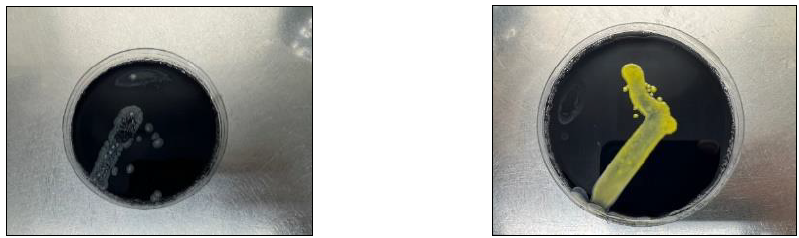
1. The Legionella spp. was detected in 2 swabs, PK-7 samples. The colony count of 180 CFU/swab was found at 6.25 % from the oral rinsing cup. The triple syringe swab found the colony count of 36 CFU/swab at 6.25%. The species results confirmed L. pneumophilla serogroup 1, which is a pathogenic species but did not found Acanthamoeba spp. which may be a source of confirmed L. pneumophilla.
2. The workers' health risk assessment regarding Legionella disease found that the risk level was at a high level or unacceptable that required risk management, including standing water in the pipes bending into automatic cups, and mouthwash basins often having standing water. If water is not removed, it is a source of Legionnaires' disease transmission. The moderate risk level or acceptable but it must be controlled including cold/humid conditions and ventilation in the dental room, affecting the survival of L. pneumophilla and at risk of developing respiratory infection.
The results of this research provided information on the detection of Legionnaires' disease pathogens, threats and health risk levels that can be used as the basic information for planning and controlling environmental health in the workplace to reduce the risk of illness among health workers in sub-district health promotion hospitals.
References
American Dental Association.(2020). Dental Unit Waterlines. Retrieved September 9, 2020 from https://www.ada.org/en/member-center/oral-health-topics/dental-unit-waterlines.
Ampornaramveth, R. (2017). Air quality in dental clinic. Journal of the Dental Association of Thailand, 67(1), 1-14.
Bureau of Occupational and Environmental Diseases. (2014). Workplace Risk Assessment form for Personnel in Sub-district Health Promotion Hospital. Retrieved September 9, 2020 from http://rajpracha.ddc.moph.go.th/occupational/download/form_RAH01.pdf. (in Thai)
Dobrowsky, P. H., Khan, S., Cloete, T. E., & Khan, W. (2016). Molecular detection of Acanthamoeba spp., Naegleria fowleri and Vermamoeba (Hartmannella) vermiformis as vectors for Legionella spp. in untreated and solar pasteurized harvested rainwater. Parasites & vectors, 9(1), 539. doi.org/10.1186/s13071-016-1829-2
European Centre for Disease Prevention and Control. (2021). Surveilance Repost Legionnaires’ disease Annual Epidemiological Report for 2019. Retrieved December 19, 2020 from https://www.ecdc.europa.eu/sites/default/files/documents/AER-legionnaires-2019.pdf
Gorman, G. W., Feeley, J. C., & Steigerwalt, A. (1985). Legionella anisa: a new species of Legionella isolated from potable waters and a cooling tower. Appl EnvironMicrobiol. 49(2), 305-309.
Graham, F. F., Hales, S., White, P. S., & Baker, M. G. (2020). Review Global seroprevalence of Legionellosis - a systematic review and meta-analysis. Scientific Reports, 10. doi.org/10.1038/s41598-020-63740-y
Information Center for Infectious Diseases and Vectors. (2020). Legionella. Retrieved September 9, 2020 from http://webdb.dmsc.moph.go.th. (in Thai)
Muder, R. R., Yu, V. L., & Fang, G. D. (1989). Community-acquired Legionnaires' disease. Seminars in Respiratory Infections, 4(1), 32–39.
Pederson, E. D., Stone, M. E., Regain, C. Jr. & Simecek, J. W. (2000). Waterline biofilm and dental treatment facility. A Review General Dentistry, 50, 190-195.
Pediatric Infectious Diseases Association. (2011). Legionellosis. Retrieved November 20, 2021 from https://www.pidst.or.th/userfiles/f4.pdf
Rajavithi Hospital. (2021). Legionnaires in air conditioner. Retrieved November 9, 2021 from https://www.rajavithi.go.th/rj/?p=4108 (in Thai)
Saowana, T. (2009). Legionella And other Bacterial Evaluation of Dental Water System. Retrieved November 9, 2021 from http://sutir.sut.ac.th:8080/jspui/bitstream/123456789/3964/1/ Fulltext%20SUT1-104-51-24-28.pdf (in Thai)
Sakunkoo, P. & Tangmuang, K. (2021). Quantities and type of bacteria in airborne from the main service activities in the dental clinic;Case study of community hospital. Journal of the Office of DPC 7 Khon Kaen, 25(1), 12-22. (in Thai)
Szymanska, J. (2002). Risk of exposure to Ligionella in dental practice. Annual Agricultural Environmental Environmental Medicine. 11, 9-12.
The Dental Association of Thailand under the Royal Patronage. (2020). Guidelines for the Control and Prevention of Dental Infection in the Situation of COVID-19. Retrieved November 20, 2021 from https://www.thaidental.or.th/main/download/upload/upload-204211344051371.pdf (in Thai)
Downloads
Published
Issue
Section
License
Copyright (c) 2023 The Southern College Network Journal of Nursing and Public Health

This work is licensed under a Creative Commons Attribution-NonCommercial-NoDerivatives 4.0 International License.
1. บทความหรือข้อคิดเห็นใด ๆ ที่ปรากฏในวารสารเครือข่าย วิทยาลัยพยาบาลและการสาธารณสุขภาคใต้ ที่เป็นวรรณกรรมของผู้เขียน บรรณาธิการหรือเครือข่ายวิทยาลัยพยาบาลและวิทยาลัยการสาธารณสุขภาคใต้ ไม่จำเป็นต้องเห็นด้วย
2. บทความที่ได้รับการตีพิมพ์ถือเป็นลิขสิทธิ์ของ วารสารเครือข่ายวิทยาลัยพยาบาลและการสาธารณสุขภาคใต้