Development of Alarm Equipment for Perioperative Nurses in Songklanagarind Hospital: Prototype Testing
Keywords:
Design and Development, Specimen Delivery Notification Device, Perioperative Nurses, Prototype TestingAbstract
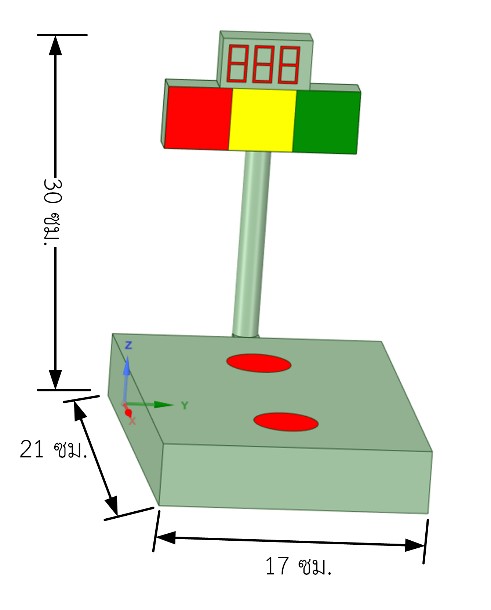
This design and development research aimed to develop and evaluate the specimen delivery notification device for perioperative nurses in Songklanagarind Hospital.Twenty subjects were included in the study. Data collection was carried out using two research instruments including user satisfaction survey for specimen delivery notification device and the specimen delivery notification device record. The first tool was validated by three experts with CVI of 1.0 and its reliability was examined using Cronbach’s alpha coefficient of 0.97. The data were analyzed using descriptive statistics.
The study finding revealed the overall level of satisfaction was high (M=3.71, SD=0.72). The satisfaction of performance domain at the highest score was easy to use and not complex (M=3.85, SD=0.67). Safety domain (M=3.95, SD=0.76) and costless domain (M=3.65, SD=0.93) also had high scores. In addition, design domain was appropriate for the size, shape and weight with the highest score (M=3.75, SD=0.85). The specimen delivery notification device was tested 20 times, and alarm and color were 100% correctly related to timing.
The results of this study were for prototype testing of the specimen delivery notification device, which still has limitations in use, such the warning signaling system efficiency, and the small device size. Therefore, it should be further developed to make the specimen delivery notification device consistent with its uses to provide the best results.
References
Altman, M., Huang, T. T. K. & Breland, J. Y. (2018). Design Thinking in Health Care. Preventing Chronic Disease, 15, E117. doi.org/10.5888/pcd15.180128
Bhumisirikul, P. & Chiannilkulchai, N. (2018). Development of a RAMA Gallbladder Retrieval Bag for Improved Patient Safety: A Nursing Innovation. Pacific Rim International Journal of Nursing Research, 22(3), 264-277.
Chanprasert, K. (2017). Development of the Obstacle Warning Instruments. Thai Science and Technology Journal, 25(1), 137147. (In Thai)
Jidjawan, N. (2018). Design Thinking Process: New Perspective in Thai Healthcare System. Thai Journal of Nursing Council, 33(1), 5-14. (In Thai)
Kelly, C. J. & Young, A. J. (2017). Promoting Innovation in Healthcare. Future Healthcare Journal, 4(2), 121–125. https://doi.org/10.7861/futurehosp.4-2-121
Laha, W., Hiruntrakul, A. & Ninprapan, A. (2018). The Satisfaction of User in the Isometric Leg Strength Dynamometer in Setting Position for Field Test. KKU Research Journal (Graduate Studies), 18(2), 32-43. (In Thai)
Lang, A. R., Martin, J. L., Sharples, S. & Crowe, J. A. (2013). The Effect of Design on the Usability and Real World Effectiveness of Medical Devices: A case Study with Adolescent Users. Appl Ergon, 44(5), 799-810. doi:10.1016/j.apergo.2013.02.001
Nopparatana, C. (2020). Manual Transmissions Lab. Pathology Department, Medical Faculty, Prince of Songkla University. (In Thai)
Roddy, L. & Polfuss, M. (2020). Employing Design Thinking Methods in Nursing to Improve Patient Outcomes. Nursing Forum, 55(4), 553–558. https://doi.org/10.1111/nuf.12461
Sangyun, S. (2019). To Create and Performance Pads Waring Changing Diaper High-Tec. Vocational Education Central Region Journal, 3(2), 54-60. (In Thai)
Surma-aho, A., Hölttä-Otto, K., Nelskylä, K. & Lindfors, N. C. (2021). Usability Issues in the Operating Room-Towards Contextual Design Guidelines for Medical Device Design. Applied Ergonomics, 90, 103221.doi: https://doi.org/10.1016/j.apergo.2020.103221
The Thai Perioperative Nurse Association. (2013). The Thai Perioperative Nurse Association: Perioperative Nurse Competencies. (2nd ed.). Bangkok: Bangkok Medical Publisher. (In Thai)
Downloads
Published
Issue
Section
License
Copyright (c) 2023 The Southern College Network Journal of Nursing and Public Health

This work is licensed under a Creative Commons Attribution-NonCommercial-NoDerivatives 4.0 International License.
1. บทความหรือข้อคิดเห็นใด ๆ ที่ปรากฏในวารสารเครือข่าย วิทยาลัยพยาบาลและการสาธารณสุขภาคใต้ ที่เป็นวรรณกรรมของผู้เขียน บรรณาธิการหรือเครือข่ายวิทยาลัยพยาบาลและวิทยาลัยการสาธารณสุขภาคใต้ ไม่จำเป็นต้องเห็นด้วย
2. บทความที่ได้รับการตีพิมพ์ถือเป็นลิขสิทธิ์ของ วารสารเครือข่ายวิทยาลัยพยาบาลและการสาธารณสุขภาคใต้