Palliative Care to Cancer Patients: The Effects of a Systematic Advance Care Planning on the Refusal of End of Life-Sustaining Treatment
Keywords:
End-of-Life, Cancer Patients, Systematic Advance Care Planning, Palliative Care, Refusal of Life-Sustaining TreatmentAbstract
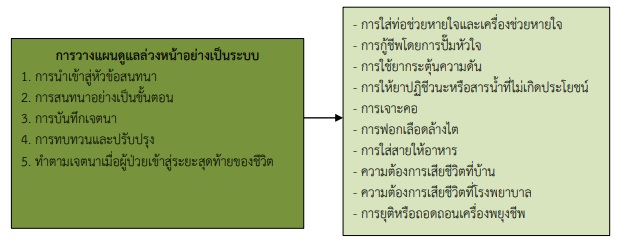
The objectives of this quasi-experimental research were: 1) to compare the decision-making to refuse life-sustaining treatment between cancer patients who had received conventional palliative care and cancer patients who had received palliative care along with a systematic advance care planning, and 2) to compare the refusal of life-sustaining equipment/medication between experimental group and control group. The purposive sample was 60 cancer patients who received palliative care at Hatyai hospital from August 2019, to September 2020. The instruments were: 1) a questionnaire on end-of-life care needs, 2) a systematic advance care planning manual. Content validity was examined by 3 experts. Test-retest reliability was assessed in 20 palliative cancer patients, yielding a correlation coefficient of 0.91.
The results were as follows.
1. The cancer patients who received palliative care along with systematic advance care planning had statistically significant higher average scores on the refusal of life-sustaining treatment than patients who received the conventional care plan (t=-7.07 p<.001).
2. Participants from the experimental group refused higher than the control group, with statistical significance (p<.01 and p<.001), the endotracheal tube, isotropy medication, non-beneficial antibiotics or fluids, and inserting nasogastric tube. In addition, most of the participants from the experimental group statistically significantly expressed the desire to withdrawal life-sustaining treatment and to die at home, higher than the control group (p<.05 and p<.001, respectively).
Systematic care planning might be implemented with the agreement and collaboration from patients, so to avoid therapeutic obstinacy and, therefore, to improve quality of the end-of-life among cancer patients in palliative care units.
References
Akkadechanunt, T., & Phornphibul, P. (2018). Effectiveness of Implementing Clinical Practice Guideline for Palliative Care in Cancer Patients. Nursing Journal, 45(3), July-September: 68-82. (in Thai).
Boonchalermvipas, S. (2015). End of Patients’ Life: A Medical Fact with Legal Limits. Public Health & Health Laws Journal, 1(3), September-December. (in Thai)
Charkaeow, P. (2013). Advance Care Planning and Living will. In Chanvej, L. (Eds), The Dawn of Palliative Care in Thailand. (pp189-198). Nonthaburi: Beyond Enterprise Company Limited. (in Thai).
Kunsongkeit, W. (2013). Good Death as Perceived by the Cancer Patients. The Journal of Faculty of Nursing Burapha University, 21(4), October-December. (in Thai)
Kosolnanakorn, P. (2016). Factors Associated with Preferences for Place of Terminal Care and Death among Cancer Patients at King Chulalongkorn Memorial Hospital. Chula Med Journal, 60(3), 355-364. (in Thai).
Manasurakarn, J., Chaowalit, A., Suttharangsee, W., Isaramalai, S., & Geden, E. (2008). Values Underlying end of Life Decisions of Thai Buddhist Patients and Their Families. Songkla Med Journal, 26(6), 549-559. (in Thai)
Morkchareonpong, C. (2017). Medical Futility. In Atsawathirakul, N., Sriakkpokin, P., & Svangkul, P. (Eds). Klam Tong Kan Krang Sudtay: Living and Palliative Care. Nonthaburi: October Printing. (in Thai).
Nagaviroj, K., (2017). Living will and Advance Care Planning. Atsawathirakun. (Eds). Sukh Sudthy Thi Teuy di. (pp104-111). Bangkok: 3D Printing Equipment co.,LTD. (in Thai).
National Health Omission Office. (2017). Handbook Medical Personal Laws and Guideline in End of Life Care. (7th Ed.). Bangkok: 3D Printing Equipment co.,LTD. (in Thai).
National Health Omission Office. (2020). Operational Definition of Word Use in Palliative Care in Thailand. 2020 B.E. (in Thai).
Pairojkul, S. (2017). Training of the Trainers in Palliative Care: Communication in Palliative Care Module 5, Khonkaen: Klungnana Vitthaya Press. (in Thai).
Pairojkul, S. (2017). Training of the Trainers in Palliative Care: Goal Setting and Advance Care Planning Module 9, Khonkaen: Klungnana Vitthaya Press. (in Thai).
Pairojkul, S. (2020). Palliative Care in Thailand: The Quality of Care. Siraprapasiri, P., & Horatanarung, D. (Eds). Palliative Care Handbook and End of Life (for Medical Personnel). Nonthaburi: The War Veterans Affairs Office Printing. (in Thai).
Phetcharat, T., Kongpitee, K., Sansuktawee, D., Duangmun, S., Phromloungsri, R., Supanpasuch, S., et al., (2017). Need in End of Life Care of Surgical and Orthopedic Patients. Srinagarind Med Journal, 32(3). (in Thai).
Pokpermdee, P. (2020). Twenty-Year National Strategic Plan for Public Health (B.E.2018-2037). Journal of Health Science, 29(1), 73-86. (in Thai).
Polit, D. F., & Beck, C. T. (2017). Nursing Research: Generating and Assessing Evidence for Nursing Practice. (10th Ed.) Philadelphia: Wolters Kluwer Health/Lippincott Williams & Wilkins.
Pukpaijit, R., Usathaporn, S., Prutipinyo, C., & Sirichotiratana, N. (2018). Decision Making to Refuse Medical Intervention in Living Will among Veteran Patients. Public Health & Health Laws Journal, 4(1), January-April. (in Thai).
Raetong, P. (2016). Experience of Surrogate Decision Makers in Withdrawing Life-sustaining Traetment: Type of Health Needs from Physicial and Nurses. Thai Journal of Nursing Council, 31(4), 122-133. (in Thai).
Sanguanraksa, D. (2019). Molecular Biology Breast Cancer and Utilization. In O-Charoenrat, P., Yenbutra, P., Praert,W., Lohsiriwat, V., & Sanguanraksa, D. (Eds.), Breast Cancer. (pp 27). Bangkok: Bangkok Medical Publisher LTD., Part. (in Thai).
Sriratanaban, P. (2018). Ban Sudthay Khang Chiwit: The Sociology of Illness, Dying and Death, (3rd Ed.). Nonthaburi: Otober Printing. (in Thai).
Siriloadjanamanee, K., Soivong, P., & Phornphibul, P. (2019). Breaking Bad News in Palliative Care: Integrative Review. Nursing Journal, 46(3), 71-85. (in Thai).
Suwannil, L. (2012). Preferences of Patients and Their Surrogates for Advance Directives at the End of Life, A Thesis Submitted Fulfillment of the Requirement for the Degree of Master of Nursing Prince of Songkla University. (in Thai).
Thaniwattananon, P., Isaramalai, S., Naka, K., & Supansathit, J. (2016). The Living Will and Health of Elders with Chronic Illness at the End of Life. Journal of Nursing Science & Health, 39(2). (in Thai).
Tipkanjanaraykha, K., Saleekul, S., Apisitwasana, N., & Thiammok, M. (2017). Advance Care Planning for Peaceful Death. Journal of Boromarajonani College of Nursing, 33(3). (in Thai).
Vasmalenon, W. (2015). Pthanukrum Khwam Tay. (2nd Ed.). Bahgkok: 3 Lada Limited Partnership. (in Thai)
Vattanaprasan, P., Kongsuwan, W., & Nilmanat. (2019). The Lived Experiences of Thai Buddhist Family Members in Decision Making for Withholding or Withdrawing Life Sustaining Treatment for Critical Ill Patient in Terminal Stage. Songklanagarind Journal of Nursing, 39(4), 51-62. (in Thai).
Downloads
Published
Issue
Section
License
Copyright (c) 2021 The Southern College Network Journal of Nursing and Public Health

This work is licensed under a Creative Commons Attribution-NonCommercial-NoDerivatives 4.0 International License.
1. บทความหรือข้อคิดเห็นใด ๆ ที่ปรากฏในวารสารเครือข่าย วิทยาลัยพยาบาลและการสาธารณสุขภาคใต้ ที่เป็นวรรณกรรมของผู้เขียน บรรณาธิการหรือเครือข่ายวิทยาลัยพยาบาลและวิทยาลัยการสาธารณสุขภาคใต้ ไม่จำเป็นต้องเห็นด้วย
2. บทความที่ได้รับการตีพิมพ์ถือเป็นลิขสิทธิ์ของ วารสารเครือข่ายวิทยาลัยพยาบาลและการสาธารณสุขภาคใต้