How to Improve Quality of Life among Patients with End-Stage Renal Disease Who Received Hemodialysis: A Systematic Review
Keywords:
Interventions to Improve Quality of Life, End Stage Renal Disease Patients Receiving Hemodialysis, Systematic ReviewAbstract
The objective of this systematic review was to summarize the effectiveness of program interventions to enhance the quality of life among end-stage renal disease patients receiving hemodialysis. The systematic search strategy focused on randomized controlled trials (RCTs) and quasi-experimental, published, or unpublished research studies in Thai or English, reported between 2003 and 2020. Statistic instruments were: 1) inclusion criteria and exclusion criteria form, 2) critical appraisal form, and 3) data extraction form. Sources of queries included PubMed, CINAHL, ProQuest Medical Library, Wiley Online Library, Science Direct, Cochrane library, Springer Link, Scopus, Google Scholar, Web of Science, and ThaiLis.
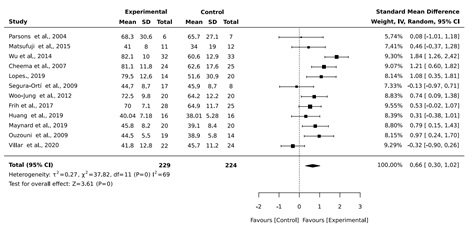
The results of the study showed that the interventions to improve quality of life were: 1) exercise, 2) education, 3) psychological interventions, 4) visual imagery, 5) occupational therapy, 6) physical therapy, 7) complementary medicine, and 8) nursing interventions. Meta-analysis results indicated that exercise can improve quality of life in the physical health domain, with an SMD of 0.66 (95% CI 0.30-1.02, p<.0001). Resistance exercise improved the quality of life in the physical domain (SMD 0.77, 95% CI 0.22-1.33, p=.006). While a combination of aerobic and resistance exercise did not improve the quality of life in the physical and mental health domain. In addition, moderate heterogeneity was found. Education did not improve quality of life and other interventions could not summarize because few studies were included.
These systematic review results suggest that exercise improves the quality of life regarding physical health. The use of this intervention should be monitored periodically. Other interventions should be conducted to summarize their effectiveness.
References
*Baraz, S., Zarea, K., & Dashtbozorgi, B. (2014). Comparing the Effect of Two Educational Programs on the Quality of Life of Hemodialysis Patients in Iran. Iranian Red Crescent Medical Journal, 16(8), 1-7. doi: 10.5812/ircmj.19368
Bayoumi, M. M., & Al Wakeel, J. S. (2015). Impacts of Exercise Programs on Hemodialysis Patients' Quality of Life and Physical Fitness. Quality in Primary Care, 23(4), 192-200.
Bikbov, B., Purcell, C. A., Levey, A. S., Smith, M., Abdoli, A., Abebe, M., et al. (2020). Global, Regional, and National Burden of Chronic Kidney Disease, 1990–2017: a Systematic Analysis for the Global Burden of Disease Study 2017. The Lancet, doi:10.1016/s0140-6736(20)30045-3
Chan, J., McBurney, H., & Bell, L. (2014). A Pilot Study to Assess the Efficacy of the Flinders Program of Chronic Condition Self-Management on the Health and Wellbeing of Haemodialysis Patients. Renal Society of Australasia Journal, 10(2), 66-74.
Elsheikh, N., Sherif, N., Zeid, S. A., Eldamarawy, M., Ali, A., & Sabry, A. I. (2016). The Link Between Bone Disease and Cardiovascular Complications in Hemodialysis Patients. Electronic Physician, 8(6), 2483-2488. doi: 10.19082/2483
Hall, R. K., Luciano, A., Pieper, C., & Colón-Emeric, C. S. (2018). Association of Kidney Disease Quality of Life (KDQOL-36) with Mortality and Hospitalization in Older Adults Receiving Hemodialysis. BMC Nephrology, 19(1), 11. doi: 10.1186/s12882-017-0801-5
Hewitt, N. A., O’Connor, A. A., O’Shaughnessy, D. V., & Elder, G. J. (2013). Effects of Cholecalciferol on Functional, Biochemical, Vascular, and Quality of Life outcomes in Hemodialysis Patients. Clinical Journal of the American Society of Nephrology, 8(7), 1143–1149. doi: 10.2215/CJN.02840312
Joanna Briggs Institute for Evidence Based Nursing & Midwifery. (2017). Joanna Briggs Institute Reviewers’ Manual: 2014 edition. Retrieved from https://reviewersmanual.joannabriggs.org/
Kim, K., Kang, G. W., & Woo, J. (2018). The Quality of Life of Hemodialysis Patients is Affected Not Only by Medical But Also Psychosocial Factors: A Canonical Correlation Study. Journal of Korean Medical Science, 33(14), e111. doi: 10.3346/jkms.2018.33.e111
Lowney, A. C., Myles, H. T., Bristowe, K., Lowney, E. L., Shepherd, K., Murphy, M., et al. (2015). Understanding What Influences the Health-Related Quality of Life of Hemodialysis Patients: A Collaborative Study in England and Ireland. Journal of Pain & Symptom Management, 50(6), 778-785. doi:10.1016/j.jpainsymman.2015.07.010
Moattari, M., Ebrahimi, M., Sharifi, N., & Rouzbeh, J. (2012). The Effect of Empowerment on the Self-Efficacy, Quality of Life and Clinical and Laboratory Indicators of Patients Treated with Hemodialysis: a Randomized Controlled Trial. Health & Quality of Life Outcomes, 10(1), 115-124. doi: 10.1186/1477-7525-10-115
Moeinzadeh, F., Shahidi, S., Mortazavi, M., Dolatkhah, S., Kajbaf, M., Haghjooy Javanmard, S., et al. (2016). Effects of Omega-3 Fatty Acid Supplementation on Serum Biomarkers, Inflammatory Agents, and Quality of Life of Patients on Hemodialysis. Iranian Journal of Kidney Diseases, 10(6), 381-387.
Mushi, L., Marschall, P., & Fleßa, S. (2015). The Cost of Dialysis in Low and Middle-Income Countries: A Systematic Review. BMC Health Services Research, 15(1), 1-10. doi: 10.1186/s12913-015-1166-8
Shafipour, V., Alhani, F., & Kazemnejad, A. (2015). A Survey of the Quality of Life in Patients Undergoing Hemodialysis and its Association with Depression, Anxiety and Stress. Journal of Nursing & Midwifery Sciences, 2(2), 29-35. doi: 10.7508/jnms.2015.02.004
Silva, K. A. L., Cargnin, M. C. S., Ventura, J., de Paula, S. F., & Groos, J. V. (2017). Quality of Life of Patients with Renal Failure in Hemodialytic Treatment. Journal of Nursing UFPE/Revista De Enfermagem UFPE, 11, 4663-4670. doi:10.5205/reuol.11138-99362-1-SM.1111sup201716
United States Renal Data System, National Institute of Diabetes and Digestive and Kidney Diseases. (2016). 2016 USRDS annual data Report: Epidemiology of kidney disease in the United States. volume 2: ESRD in the United States. Retrieved from https://www.usrds.org/2016/view/v2_01.aspx
Van Loon, I., Hamaker, M. E., Boereboom, F. T. J., Grooteman, M. P. C., Blankestijn, P. J., Van Den Dorpel, R. M. A., et al. (2017). A Closer Look at the Trajectory of Physical Functioning in Chronic Hemodialysis. Age and Ageing, 46(4), 594-599. doi: 10.1093/ageing/afx006
*Woo-Jung, S., & Kyeong-Yae, S. (2012). Effects of Progressive Resistance Training on Body Composition, Physical Fitness and Quality of Life of Patients on Hemodialysis. Journal of Korean Academy of Nursing, 42(7), 947-956. doi: 10.4040/jkan.2012.42.7.947
Zhou, X., Xue, F., Wang, H., Qiao, Y., Liu, G., Huang, L., & Li, R. (2017). The Quality of Life and Associated Factors in Patients on Maintenance Hemodialysis–a Multicenter Study in Shanxi Province. Renal Failure, 39(1), 707-711. doi: 10.1080/0886022x.2017.1398095
หมายเหตุ * หมายถึง งานวิจัยที่นำมาทบทวนอย่างเป็นระบบ
Downloads
Published
Issue
Section
License
Copyright (c) 2022 The Southern College Network Journal of Nursing and Public Health

This work is licensed under a Creative Commons Attribution-NonCommercial-NoDerivatives 4.0 International License.
1. บทความหรือข้อคิดเห็นใด ๆ ที่ปรากฏในวารสารเครือข่าย วิทยาลัยพยาบาลและการสาธารณสุขภาคใต้ ที่เป็นวรรณกรรมของผู้เขียน บรรณาธิการหรือเครือข่ายวิทยาลัยพยาบาลและวิทยาลัยการสาธารณสุขภาคใต้ ไม่จำเป็นต้องเห็นด้วย
2. บทความที่ได้รับการตีพิมพ์ถือเป็นลิขสิทธิ์ของ วารสารเครือข่ายวิทยาลัยพยาบาลและการสาธารณสุขภาคใต้