พฤติกรรมการเตรียมความพร้อมรับมือภัยพิบัติ: ปัจจัยเชิงสาเหตุ ข้อเสนอแนะในการทำวิจัย
คำสำคัญ:
พฤติกรรมการเตรียมความพร้อมรับมือภัยพิบัติ, ปัจจัยเชิงสาเหตุ, ข้อเสนอแนะในการทำวิจัยบทคัดย่อ
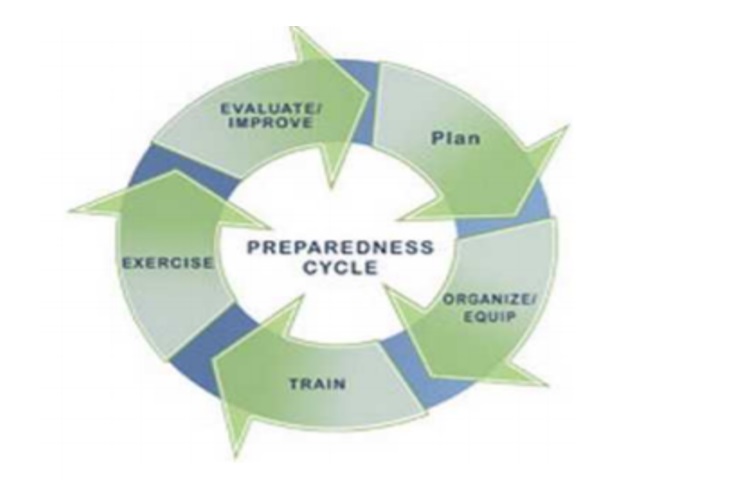
บทความนี้มีวัตถุประสงค์เพื่อนำเสนอแนวคิดพฤติกรรมการเตรียมความพร้อมรับมือภัยพิบัติ องค์ประกอบ ปัจจัยเชิงสาเหตุที่ส่งผลต่อพฤติกรรมการเตรียมความพร้อมรับภัยพิบัติ และข้อเสนอแนะในการทำวิจัยพฤติกรรมการเตรียมความพร้อมรับมือภัยพิบัติ โดยพฤติกรรมการเตรียมความพร้อมรับภัยพิบัติเป็นการแสดงการแสดงออกด้านของบุคคลทางด้านการกระทำ ความคิด ความรู้สึก ทัศนคติ เพื่อให้เกิดความสนใจและกระตือรือร้น ที่จะปฏิบัติในการเตรียมตัวเพื่อให้เกิดความพร้อมที่จะเรียนรู้หรือกระทำสิ่งต่าง ๆ หรือการวางแผนก่อนที่จะดำเนินการ ทำกิจกรรม ให้เกิดความพร้อมทั้งด้านร่างกายและจิตใจ สำหรับกระทำหรือการปฏิบัติกิจกรรมของบุคคลที่ได้ดำเนินการก่อนเกิดภัยพิบัติจะเกิดขึ้น เพื่อสร้างความแน่ใจว่าตนเองจะมี การตอบสนองที่มีประสิทธิภาพมากเพียงพอต่อผลกระทบ สามารถลดผลกระทบและอันตรายจากภัยพิบัติได้ เพื่ออำนวยความสะดวกในการตอบสนองที่มีประสิทธิภาพในกรณีฉุกเฉินเกิดขึ้น โดยบุคคลพร้อมที่จะทำหน้าที่และเตรียมการป้องกันล่วงหน้าหรือทันทีก่อนเกิดภัยคุกคาม ในการแบ่งองค์ประกอบการเตรียมพร้อมรับมือภัยพิบัติ มี 5 องค์ประกอบ คือ การวางแผน การจัดระบบหรือจัดหา การฝึกอบรม การฝึกซ้อม การประเมินและปรับปรุง สำหรับปัจจัยเชิงสาเหตุของพฤติกรรมการเตรียมความพร้อมรับมือกับภัยพิบัติ ยังมีข้อเสนอแนะที่ค้นพบหลายประการประกอบด้วย ความรู้เกี่ยวกับภัยพิบัติและการเตรียมความพร้อม การรับรู้ความรุนแรงและผลกระทบจากภัยพิบัติ ประสบการณ์รับมือภัยพิบัติ การรับรู้ความเสี่ยงและการลดผลกระทบ โดยหน่วยงานที่เกี่ยวข้องต้องมีการถ่ายทอดความรู้ กระตุ้นเตือนผ่านช่องทางสื่อสารเพื่อให้ประชาชนมีความพร้อมในการรับมือภัยพิบัติ
เอกสารอ้างอิง
Allender, J. A., Rector, C. & Warner, K. D. (2010). Community Health Nursing Promoting & Protecting the Public’s Health (7th ed.). China: Lippincott Williams & Wilkins Health.
Beach, M. (2010). Disaster Preparedness and Management. FA Davis.
Cohen, J. M., & Uphoff, N. T. (1980). Participation's Place in Rural Development: Seeking Clarity Through Specificity. World Development, 8(3), 213-235. doi:10.1016/0305-750X(80)90011-X
Coppola, D. P. (2011). Introduction to International Disaster Management (2nded.). Butterworth-Heinemann.
Department of Disaster Prevention and Mitigation. (2012). Strategic Plan, Department of Disaster Prevention and Mitigation 2012-2016. Bangkok. (in Thai)
Department of Disaster Prevention and Mitigation. (2017). Prevention and Mitigation Plan Drill Guide Public Disaster. Bangkok. (in Thai).
Dillon, R. L., Tinsley, C. H., & Burns, W. J. (2014). Near-Misses and Future Disaster Preparedness. Risk Analysis, 34(10), 1906-1922.
Espina, E. (2015). A Social Cognitive Approach to Disaster Preparedness. Philippine Journal of Psychology, 48(2), 161-174.
Federal Emergency Management Agency. (2012). Principles of Emergency Management. Retrieved from http://www.rn.org/courses/coursematerial-80.pdf
Glik, D. C., Eisenman, D. P., Zhou, Q., Tseng, C., & Asch, S. M. (2014). Using the Precaution Adoption Process Model to Describe a Disaster Preparedness Intervention among Low-Income Latinos. Health Education Research, 29(2), 272-283. doi:10.1093/her/cyt109
Goddard, S., Sheppard, M., Thompson, K., & Konecny, L. (2018). Disaster Preparedness Knowledge, Beliefs, Risk-Perceptions, and Mitigating Factors of Disaster Preparedness Behaviors of Undergraduate Students at a Large Midwest. A.T. Still University. Journal of Public Health Issues and Practices, 2, 1-7.
Goldstein, I. L. (1993). Training in Organizations: Need Assessment Development and Evaluation (3rd ed.). Pacific Grove, CA: Brooks/ Cole
Hossain, B. (2020). Role of Organizations in Preparedness and Emergency Response to Flood Disaster in Bangladesh. Geoenvironmental Disasters, 7(33), 1-30. doi.org/10.1186/s40677-020-00167-7
Hossain, S. R. (2009). Household Preparedness among Flood Affected Area of keraniganj Sub-District Dhaka Bangladesh. Master Degree, Mahidol. University, salaya.
Houston, J. B., & Franken, N. J. (2014). Disaster Interpersonal Communication and Posttraumatic Stress Following the 2011 Joplin, Missouri, Tornado. Journal of Loss and Trauma, 20(3), 1-12. doi:10.1080/15325024.2013.848614
Inthonhongpai, S. (2011). Nursing Process: Tools for Holistic Health Management for Primary Health Development (5th edition). Maha Sarakham: Mahasarakham University Press. (in Thai).
Kamolvej, T. (2011). Manual for Local Disaster Management. Bangkok: King Prajadhipok's Institute. (in Thai)
Khlaisuk, U. (2014). Relationship Between Knowledge Attitude and Behavior of Flood Preparedness of People in Pa Tan Subdistrict, Mueang District, Lop Buri Province. Journal of Public Health Nursing, 28(3), 41-55. (in Thai)
Kokpol, O. (2009). Companion to the Public Engagement Handbook for Local Administrators. Bangkok: Charansanitwong Publication. (in Thai)
Kron, W. (2015). Flood Disasters-a Global Perspective. Water Policy, 17(S1), 6-24. doi:10.2166/wp.2015.001
Lindell, M. K., & Hwang, S. N. (2008). Households' Perceived Personal Risk and Responses in a Multihazard Environment. Risk Analysis, 28(2), 539-556. doi:10.1111/j.1539-6924.2008.01032.x
Mala, T., Chomyot, S., & Phromphithakkul, P. (2014). Guideline for Food Management : Case Study from Nonthaburi Municipllity. King Prajadhipok's Institute Journal, 12(2), 77-105. (in Thai).
Miceli, R., Sotgiu, I., & Settanni, M.. (2008). Disaster Preparedness and Perception of Flood Risk: A Study in an Alpine Valley in Italy. Journal of Environmental Psychology, 28(2), 164-173. doi:10.1016/j.jenvp.2007.10.006
Nazli, N., Nadian N., Sapora, S., Zumrah, A. R., & Abdullah, S. (2015). The Factors that Influence the Transfer of Training in Disaster Preparedness Training: A Review. Procedia - Social and Behavioral Sciences, 192(C), 54-58. doi:10.1016/j.sbspro.2015.06.008
Office of the National Economic and Social Development Board. (2011). National Economic and Social Development Plan No. 11. Office of the National Economic and Social Development Board. Bangkok. (in Thai)
Panitkitkosolkul, S. (2013). Factors Relating to Responsible Work Behaviors of Staff in Department of Disaster Prevention and Mitigation, Ministry of Interior. Academic Journal Graduate school Suan Dusit University, 9(2), 141-150. (in Thai)
Paton, D., Smith, L., & Johnston, D. (2005). When Good Intentions Turn Bad: Promoting Natural Hazard Preparedness. Australian Journal of Emergency Management, 20(1), 25-30.
Perez-Acosta, Andres M. (2008). APA Dictionary of Psychology. Revista Latinoamericana de Psicologia, 40(2), 381.
Perry, R. W. (2006). What is a Disaster? In: Rodríguez H, Quarantelli EL and Dynes RR (eds) Handbook of Disaster Research. New York: Springer, 1-15.
Perry, R. W., & Lindell, M. K. (2008). Volcanic Risk Perception and Adjustment in a Multi-Hazard Environment. Journal of Volcanology and Geothermal Research, 172(3), 170-178. doi:10.1016/j.jvolgeores.2007.12.006
Promsri, C. (2014). Natural Disaster Preparedness Awareness: Literature Review. Executive journal. 34(2), 92-115.
Ranke, U. (2016). Natural Disaster Risk Management: Geosciences and Social Responsibility. Switzerland Springer International.
Schmidlin, T. W. (2014). Risk Factors and Social Vulnerability. Kent State USA.
Sukpor, P. & Sekkhunthod, K. (2016). Factors Affecting the Operation on the Disaster on the Disaster Prevention and Mitigration of the Sub-District Municipalities in Prachinburi Province. Community Research Journal, 10(3), 96-104. (in Thai)
Tanyaratsrisaku, A., Sarakshetrin, A., & Ekkara, C. (2013). The Preparation for Flooding of Residents in Suratthani Province. Nursing Journal of the Ministry of Public Health, 22(1), 76-84. (in Thai)
Thipyuth, T. (2017). Human Resource Development for the National Disaster Management in the Ministry of Defence. Journal of Social Academic, 10(1), 41-55. (in Thai)
Thomas, T., Leander-Griffith, M., Harp, V., & Cioffi, J. (2015). Influences of Preparedness Knowledge and Beliefs on Household Disaster Preparedness. MMWR. Morbidity and Mortality Weekly Report, 64(35), 965-971. doi:10.15585/mmwr.mm6435a2
Wasee, P. (2011). Public Policy Process. Bangkok: National Health Foundation. (in Thai)
ดาวน์โหลด
เผยแพร่แล้ว
ฉบับ
ประเภทบทความ
สัญญาอนุญาต
ลิขสิทธิ์ (c) 2021 วารสารเครือข่ายวิทยาลัยพยาบาลและการสาธารณสุขภาคใต้

อนุญาตภายใต้เงื่อนไข Creative Commons Attribution-NonCommercial-NoDerivatives 4.0 International License.
1. บทความหรือข้อคิดเห็นใด ๆ ที่ปรากฏในวารสารเครือข่าย วิทยาลัยพยาบาลและการสาธารณสุขภาคใต้ ที่เป็นวรรณกรรมของผู้เขียน บรรณาธิการหรือเครือข่ายวิทยาลัยพยาบาลและวิทยาลัยการสาธารณสุขภาคใต้ ไม่จำเป็นต้องเห็นด้วย
2. บทความที่ได้รับการตีพิมพ์ถือเป็นลิขสิทธิ์ของ วารสารเครือข่ายวิทยาลัยพยาบาลและการสาธารณสุขภาคใต้