Components and Indicators of Readiness for Interprofessional Learning among Undergraduate Nursing Students
Keywords:
Interprofessional Learning, Components and Indicators, Undergraduate StudentsAbstract
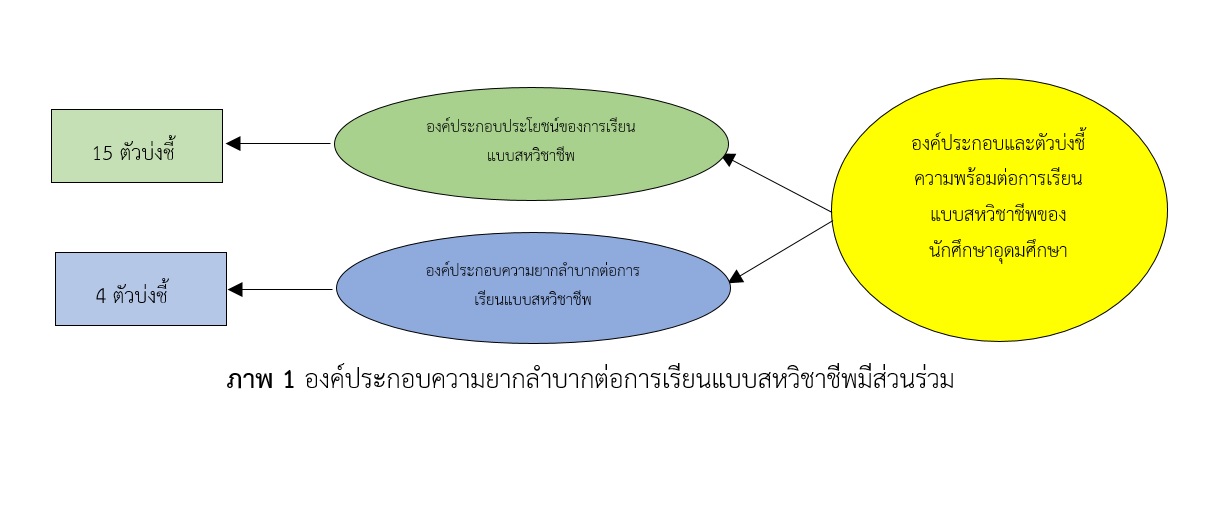
This study aimed to determine components and indicators of readiness for interprofessional learning among undergraduate nursing students. Samples were 380 undergraduate students who were on their first semester in the 2019 Academic year in Surin Province. Participants were composed of: 1) nursing students from Boromarajonani College of Nursing in Surin, 2) public health students from Surindra Rajabhat University (faculty of science and technology), 3) engineering students from Surin campus of Rajamangala University (faculty of agriculture and technology), and 4) diploma students from Surin Vocational College. used in Instrument this study was the Thai-Readiness Questionnaire for Interprofessional Learning Scale (RIPLS). It was tested for reliability, yielding a Cronbach’s alpha coefficient value of .91. Readiness for interprofessional learning among undergraduate students had 2 components and 19 indicators. Benefits of interprofessional learning had 15 indicators. And barriers of interprofessional learning had 4 indicators. Data were analyzed using exploratory factor analysis with principle component analysis, and using orthogonal rotation by varimax method.
Results were found as follows; Readiness for interprofessional learning among undergraduate students had 2 components and 19 indicators including 1) benefits of interprofessional learning had 15 indicators and 2) barriers of interprofessional learning had 4 indicators
Suggestions from this study are that readiness for interprofessional learning among students should be determined prior to any interprofessional class. Thus, the benefits of interprofessional learning can be strengthened, and barriers of interprofessional can be reduced.
References
Barr, H. (2009). An Anatomy of Continuing Interprofessional Education. J ContinEduc Health Prof, 29, 147–150.
ChuenKongkaew, W. (2016). Interprofessional Education. Bangkok: P. A. Living. (in Thai)
ChuenKongkaew, W. (2018). Interprofessional Education. (2nd Edition). Bangkok: P. A. Living. (in Thai)
Daly, G. (2004). Understanding the Barriers to Multiprofessional Collaboration. Nursing Times, 100(9), 78–79.
Hair, Black, Babin, & Anderson. (2010). Multivariate Data Analysis. (7th Edition). New Jersey: Pearson Education.
Hammick, M., Freeth, D., Koppel, I., & Reeves, S. (2007). A Best Evidence Systematic Review of Interprofessional Education: BEME Guide no.9. Med Teach, 29, 735-751.
Illingworth, P., & Chelvanayagam, S. (2007). Benefits of Interprofessional Education in Iieaith Care. British Journal of Nursing, 16(2), 121-124.
Illingworth, P., & Chelvanayagam, S. (2017). The Benefits of Interprofessional Education 10 Years on. British Journal of Nursing, 26(14), 814-817.
McFadyen, A. K. (2005). The Readiness for Interprofessional Learning Scale: a Possible Morestable Sub-Scale Model for the Original Version of RIPLS. J Interprof Care, 19(6), 595-603.
Patricia, A. (2019). The Benefits of Interprofessional Learning and Teamwork in Primary Care Aambulatory Training Settings. Journal of Interprofessional Education & Practice, 15, 119–126.
Rakrung, K. (2017). Readiness for Interprofessional Learning of Sophomore and Junior Nursing Students at Boromarajonani College of Nursing, Suratthani. The 6th Active Learning Conference: How Active Learning answer Thailand 4.0 (pp.220-233). Suratthani, Walailak University. 2018. (in Thai)
Sethasathien, S. (2015). A Model of Interprofessional Education (IPE) in Department of Physical Medicine and Rehabilitation, Udonthani Hospital. J Thai Rehabil Med, 25(2), 65-70. (in Thai)
Tanglakmankhong, K., Khammathit, A., Thammawongsa, N., & Ardpara, A. (2019). The Effectiveness of the Nursing Innovation Course, Using Transprofessional Education Approach on Readiness for Transprofessional Skill and the 21st Century Skill. The Southern College Network Journal of Nursing and Public Health, 6(2), 126-139. (in Thai)
Wannakrairote, P. (2016). The Suggestions on the Development of Specific Health Professional Education for Reform of Educational and Teaching Institutions. Nonthaburi: The National Health Professions Education Foundation. (in Thai)
World Health Organization. (1987). Learning Together to Work Together for Health. Report of a WHO study Group on Multiprofessional Education of Health Personnel: The Team Approach, Technical Report Series 769; 1987 October 12-16; Geneva. Geneva: World Health Organization.
Zhewei, Li., Yihan, Sun., & Yang Zhang. (2018). Adaptation and Reliability of the Readiness for Interprofessional Learning Scale (RIPLS) in the Chinese Health Care Students Setting. BMC Medical Education, 18,309. doi.org/10.1186/s12909-018-1423-8.
Downloads
Published
Issue
Section
License
1. บทความหรือข้อคิดเห็นใด ๆ ที่ปรากฏในวารสารเครือข่าย วิทยาลัยพยาบาลและการสาธารณสุขภาคใต้ ที่เป็นวรรณกรรมของผู้เขียน บรรณาธิการหรือเครือข่ายวิทยาลัยพยาบาลและวิทยาลัยการสาธารณสุขภาคใต้ ไม่จำเป็นต้องเห็นด้วย
2. บทความที่ได้รับการตีพิมพ์ถือเป็นลิขสิทธิ์ของ วารสารเครือข่ายวิทยาลัยพยาบาลและการสาธารณสุขภาคใต้