การพัฒนาประสิทธิภาพการใช้เครื่องมือ TaWai for Health ในการคุ้มครองผู้บริโภค : กรณีศึกษาพื้นที่อำเภอวารินชำราบ จังหวัดอุบลราชธานี
คำสำคัญ:
TaWai for Health, งานคุ้มครองผู้บริโภค, ผลิตภัณฑ์สุขภาพ, คณะกรรมการพัฒนาคุณภาพชีวิตบทคัดย่อ
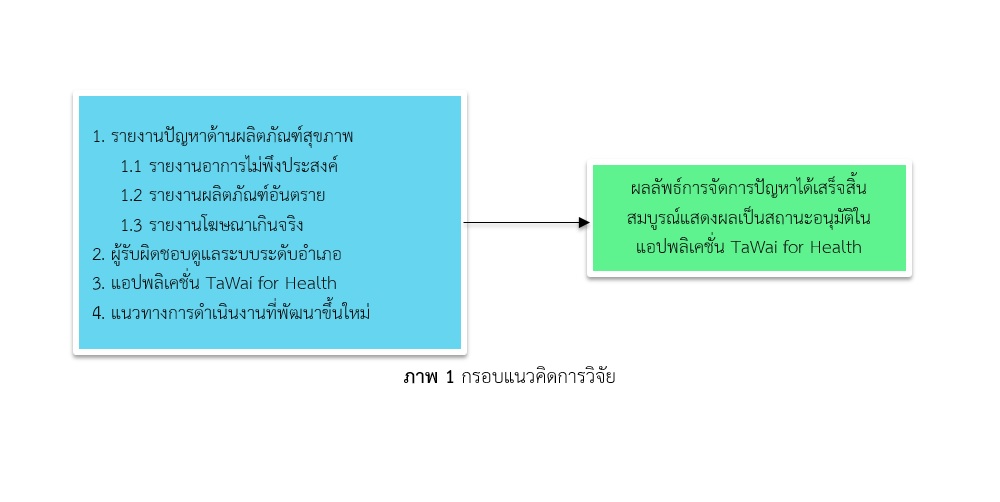
การวิจัยและพัฒนานี้มีวัตถุประสงค์เพื่อศึกษาสถานการณ์การใช้เครื่องมือ TaWai for Health และพัฒนาประสิทธิภาพการใช้เครื่องมือดังกล่าวในการคุ้มครองผู้บริโภค โดยดำเนินการ 2 ขั้นตอน ได้แก่ 1) วิเคราะห์รายงานปัญหาและการจัดการปัญหาในฐานข้อมูล TaWai for Health โดยใช้เครื่องมือแอปพลิเคชั่น TaWai for Health และแบบสัมภาษณ์ผู้รับผิดชอบดูแลระบบระดับอำเภอ จำนวน 2 คน นำเสนอผลวิเคราะห์ข้อมูลในรูปแบบร้อยละและเชิงเนื้อหา 2) พัฒนาประสิทธิภาพการใช้เครื่องมือ TaWai for Health ในการคุ้มครองผู้บริโภค โดยข้อมูลจากการสัมภาษณ์เชิงลึกผู้เชี่ยวชาญ จำนวน 6 คน และการรับฟังความคิดเห็นจากผู้มีส่วนได้เสียในการปฏิบัติงาน จำนวน 33 คน ได้นำไปทดลองและพัฒนาเป็นแนวทางปฏิบัติงานจริงในพื้นที่อำเภอวารินชำราบ จังหวัดอุบลราชธานี ในระหว่าง เดือนตุลาคม 2561-มกราคม 2562 ผลการวิจัยพบว่า
รายงานปัญหาด้านงานคุ้มครองผู้บริโภคด้านสุขภาพในฐานข้อมูล TaWai for Health จำนวนทั้งสิ้น 2,266 รายงาน แบ่งเป็นปัญหาผลิตภัณฑ์อันตราย 1,366 รายงาน อาการไม่พึงประสงค์ 611 รายงาน และโฆษณาเกินจริง 289 รายงาน ซึ่งมีเพียง 636 รายงานหรือร้อยละ 28 เท่านั้นที่แสดงสถานะว่ามีการแก้ไขปัญหาเรียบร้อย สาเหตุเกิดจากผู้ดูแลระบบระดับอำเภอไม่ได้แก้ไขสถานะรายงานในฐานข้อมูลให้เป็นปัจจุบันเนื่องจากขาดความเข้าใจในการใช้งานระบบดังกล่าวและยังไม่มีผู้รับผิดชอบที่ชัดเจนตรวจสอบรายงานประจำวัน ทั้งนี้เครือข่ายต้องการสื่อสำหรับเรียนรู้วิธีการใช้งานแอปพลิเคชั่น TaWai for Health ด้วยตนเองที่เข้าใจง่ายและปฏิบัติได้
การพัฒนาประสิทธิภาพการใช้เครื่องมือ TaWai for Health ในการคุ้มครองผู้บริโภคด้านผลิตภัณฑ์สุขภาพ ผู้วิจัยได้ประยุกต์ใช้แนวคิดการทำงานทีมเฝ้าระวังสอบสวนเคลื่อนที่เร็ว ซึ่งผ่านการตรวจสอบโดยผู้เชี่ยวชาญและเป็นที่ยอมรับของผู้มีส่วนได้เสีย หลังจากได้ทดลองปฏิบัติในสถานการณ์จริง 4 ครั้ง ร่วมกับทีมเครือข่ายในพื้นที่ พบว่าแนวทางที่พัฒนาขึ้นสามารถปฏิบัติได้จริงและแก้ไขปัญหาได้ในเวลาที่กำหนด โดยแนวทางที่พัฒนาขึ้น ประกอบด้วย 5 ขั้นตอน ดังนี้ 1) รายงานเหตุการณ์ 2) ตรวจสอบรายงานและจัดลำดับความสำคัญ 3) จัดการปัญหาตามความเร่งด่วน 4) สรุปผลและป้อนข้อมูลสถานการณ์จัดการแก้ไขปัญหาในระบบให้เป็นปัจจุบัน 5) ติดตามและประเมินผล
ดังนั้น คณะกรรมการพัฒนาคุณภาพชีวิตระดับอำเภอประกาศแนวทางดังกล่าวเป็นแนวทางการดำเนินงานคุ้มครองผู้บริโภคอำเภอวารินชำราบ และควบคุมติดตามผลการดำเนินงานอย่างต่อเนื่อง
เอกสารอ้างอิง
Bureau of Epidemiology, Department of Disease Control. (2012 A). Standards and Guidelines of Surveillance and Rapid Response Team. Bangkok: The Agricultural Cooperative Federation of Thailand. Limited. (In Thai)
Bureau of Epidemiology, Department of Disease Control. (2012 B). Event Surveillance Guidelines of SRRT for Sub-District Networks. Bangkok: The Agricultural Cooperative Federation of Thailand. Limited. (In Thai)
Cosmetic Control Group, Food and Drug Administration. (2019). Dangerous Cosmetics. Retrieved May 29, 2019 from http://www.fda.moph.go.th/sites/Cosmetic/ SitePages/Dangerous_Cosmetics.aspx
Department of Medical Sciences. (2019). Alarm System Database for Quality and Safety of Healthcare Products. Retrieved May 29, 2019 from http://alert.dmsc.moph.go.th/ drug_alert_show_guest.php
Food and Drug Administration. (2016). Management Guideline for Adverse Health Care Product Problems for Public Health Officer. Retrieved May 25, 2019 from http://thaihpvc.fda.moph.go.th/thaihvc/Public/NewsAdr/uploads/hpvc_747.pdf
Kongwong, R. (2013). Screening of Non-Indication Steroidal Drug Use in Non-Communicable Disease Patients Projects in Warinchamrab, Ubon Ratchathani. (In Thai)
Laihakhot, P. (2016). Development of Surveillance Prevention and Control of Dengue Fever in the Village by SRRT District Level Ban Nong Ya Plong Tambon Bo Yai Borabue Mahasarakham. Mahasarakham Hospital Journal, 13(3), 43-50.
Mengchuay, W., & Sutheravut, P. (2010). Development Study of Customer Protection Procedures in Subdistrict Administration Organization: a Case Study of Pak Phun, Nakhon Si Thammarat. Retrieved May 25, 2019 from https://www.consumersouth.org/paper/727
Rajatanavin, R., Thakkinstian, A., Chailuekkit, L., Savanga-riyasakul, A., Sooksriwong, C., Silakawut, P., et al. (2007). Prevalence of Overt Manifestation of Steroid Abuse Without Medical Indication. Bangkok: Thailand Research Fund. (In Thai)
ดาวน์โหลด
เผยแพร่แล้ว
ฉบับ
ประเภทบทความ
สัญญาอนุญาต
1. บทความหรือข้อคิดเห็นใด ๆ ที่ปรากฏในวารสารเครือข่าย วิทยาลัยพยาบาลและการสาธารณสุขภาคใต้ ที่เป็นวรรณกรรมของผู้เขียน บรรณาธิการหรือเครือข่ายวิทยาลัยพยาบาลและวิทยาลัยการสาธารณสุขภาคใต้ ไม่จำเป็นต้องเห็นด้วย
2. บทความที่ได้รับการตีพิมพ์ถือเป็นลิขสิทธิ์ของ วารสารเครือข่ายวิทยาลัยพยาบาลและการสาธารณสุขภาคใต้