ผลของโปรแกรมการส่งเสริมความรอบรู้ด้านสุขภาพต่อพฤติกรรมการป้องกันภาวะโลหิตจางจากการขาดธาตุเหล็กในหญิงตั้งครรภ์
คำสำคัญ:
ความรอบรู้ด้านสุขภาพ , ภาวะโลหิตจางจากการขาดธาตุเหล็ก , หญิงตั้งครรภ์บทคัดย่อ
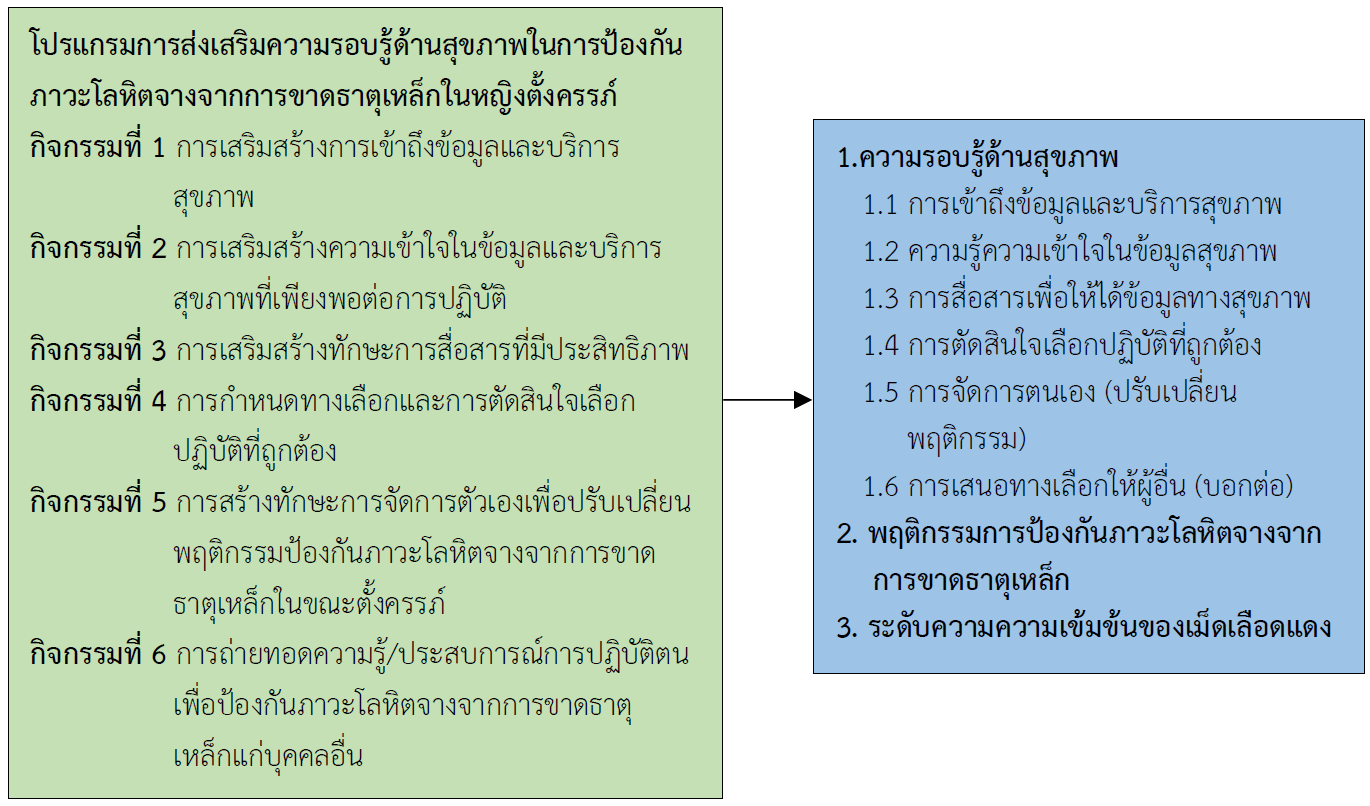
การวิจัยกึ่งทดลองแบบสองกลุ่มวัดก่อนและหลังการทดลองนี้ เพื่อศึกษาผลของโปรแกรมการส่งเสริมความรอบรู้ด้านสุขภาพต่อพฤติกรรมการป้องกันภาวะโลหิตจางจากการขาดธาตุเหล็กในหญิงตั้งครรภ์ กลุ่มตัวอย่างคือหญิงตั้งครรภ์ที่แผนกฝากครรภ์ โรงพยาบาลพัทลุง จำนวน 68 คน สุ่มเข้ากลุ่มทดลองและกลุ่มเปรียบเทียบ ด้วยวิธีการจับฉลาก กลุ่มละ 34 คน เครื่องมือที่ใช้ในการวิจัย ประกอบด้วย1) โปรแกรมการส่งเสริมความรอบรู้ด้านสุขภาพในการป้องกันภาวะโลหิตจางจากการขาดธาตุเหล็กในหญิงตั้งครรภ์ ประกอบด้วย 6 กิจกรรม ระยะเวลาดำเนินกิจกรรม 8 สัปดาห์ ประชุมกลุ่มในสัปดาห์ที่ 1 และ 8 โดยแบ่งกลุ่มทดลองเป็น 3 กลุ่ม ๆ 10 – 12 คน ติดตามรายบุคคลในสัปดาห์ที่ 4 และในสัปดาห์ที่ 7 ติดตามทางแอปพลิเคชันไลน์ 2) แบบประเมินความรอบรู้ด้านสุขภาพ และ 3) แบบประเมินพฤติกรรมการป้องกันภาวะโลหิตจางจากการขาดธาตุเหล็กในขณะตั้งครรภ์ นำเครื่องมือไปหาค่าความตรงเชิงเนื้อหา ได้ค่า CVI เท่ากับ .97 .91 และ .91 ตามลำดับ และ ได้ค่าสัมประสิทธิ์แอลฟาของครอนบราค เท่ากับ .95 และ .80 ตามลำดับ วิเคราะห์ข้อมูลด้วยสถิติเชิงพรรณนา Chi-Square, Mann-Whitney U Test, Paired t-test, Independent t-test, และ Wilcoxon Signed Ranks Test ผลการวิจัยพบว่า
1. หญิงตั้งครรภ์ที่ได้รับโปรแกรมการส่งเสริมความรอบรู้ด้านสุขภาพต่อพฤติกรรมการป้องกันภาวะโลหิตจางจากการขาดธาตุเหล็ก มีค่าเฉลี่ยคะแนนความรอบรู้ด้านสุขภาพ พฤติกรรมการป้องกันภาวะโลหิตจางสูงขึ้น อย่างมีนัยสำคัญทางสถิติที่ระดับ .001 ส่วนระดับความเข้มข้นของเลือดลดลงอย่างมีนัยสำคัญทางสถิติที่ระดับ .001
2. หญิงตั้งครรภ์ที่ได้รับโปรแกรมการส่งเสริมความรอบรู้ด้านสุขภาพ มีค่าเฉลี่ยคะแนนความรอบรู้ด้านสุขภาพ และพฤติกรรมการป้องกันภาวะโลหิตจางจากการขาดธาตุเหล็กสูงกว่ากลุ่มที่ไม่ได้รับโปรแกรมอย่างมีนัยสำคัญทางสถิติที่ระดับ .05 และ .001 ตามลำดับ ส่วนระดับความเข้มข้นของเลือดทั้งสองกลุ่มไม่แตกต่างกัน
เห็นได้ว่า โปรแกรมการส่งเสริมความรอบรู้ด้านสุขภาพจะทำให้หญิงตั้งครรภ์มีความรอบรู้ด้านสุขภาพเพิ่มขึ้น และมีพฤติกรรมการป้องกันภาวะโลหิตจางจากการขาดธาตุเหล็กถูกต้องเหมาะสม
เอกสารอ้างอิง
Anusornteerakul, S., Ounkaew, A., & Chaiwan, W. (2024). Nurse's role in caring for pregnant women with iron deficiency anemia. Udonthani Hospital Medical Journal, 32(3), 453-463. (in Thai)
Beckert, R. H., Baer, R. J., Anderson, J. G., Jelliffe-Pawlowski, L. L., & Rogers, E. E. (2019). Maternal anemia and pregnancy outcomes: a population-basedstudy. Thai Journal of Obstetrics and Gynaecology, 39(9), 11-19.
Boonyaprapapan, T., Sangin, S., & Siriarunrat, S. (2018). Effects of the educative supportive program on self-care behavior and hematocrit level among pregnant women with iron deficiency anemia. The Journal of Faculty of Nursing Burapha University, 26(4), 40-48. (in Thai)
Cohen, J. (1977). Statistical Power Analysis for the Behavioral Sciences. (rev. ed.). Hillsdale, NJ: Erlbaum.
Cho, Y. I., Lee, S. Y., Arozullah, A. M., & Crittenden, K. S. (2008). Effects of health literacy on health status and health service utilization among the elderly. Social Science & Medicine, 66(8), 1809-1816.
Department of Health Ministry of Public Health. (2025). Health and Environmental Health Promotion Surveillance Data List 2025. Retrieved April 20th, 2025 from https://planning.anamai.moph.go.th/th/surveillance handbook/5113#wow-book/
Department of Health Ministry of Public Health. (2025). Action Plan 2025. Retrieved April 20th, 2025 from https://planning.anamai.moph.go.th/th/government-action-plan/download?id=124471&mid=35347 &mkey=m_document&lang=th&did=28679
Faul, F., Erdfelder, E., Lang, A. G., & Buchner, A. (2007). G*Power 3: a flexible statistical power analysis program for the social, behavioral, and biomedical sciences. Behavior Research Methods, 39(2), 175-191.
Health Education Division, Ministry of Public Health. (2019). Health Education Program to Promote Health Literacy Concerning the Prevention of Tuberculosis in the Community. Retrieved November 7, 2025 from http://hed.go.th/linkHed/396
Ingkaprasert, M., & Neelasamith, S. (2024). The effects of an online anemia education program with family support on anemic perception, food and iron supplement consumption behaviors among adolescent pregnancy in the community hospital. Nursing, Health, and Education Journal, 7(2), 42-54. (in Thai)
Nesari, M., Olson, J. K., Nasrabadi, A. N., & Norris, C. (2019). Registered nurses' knowledge of and experience with health literacy. Health Literacy Research and Practice, 3(4), e268-e279. doi.org/10.3928/24748307-20191021-01
Nutbeam D. (2000). Health literacy as a public health goal: a challenge for contemporary health education and communication strategies into the 21st century. Health Promotion International, 15(3), 259-267. doi: 10.1093/heapro/15.3.259.
Nutbeam, D. (2008). The evolving concept of health literacy. Social Science & Medicine, 67(12), 2072-2078.
Pengchan, W. (2017). Health Literacy in the Document for Department of Personnel Capacity Development Workshop, Health Department, Ministry of Public Health. Nonthaburi, Thailand: Ministry of Public Health.
Pillitteri, A. (2018). Maternal & Child Health Nursing: Care of the Childbearing & Childrearing Family (8th ed.). Wolters Kluwer Health: Lippincott Williams & Wilkins.
Sorensen, K., Van den Broucke, S., Pelikan, J. M., Fullam, J., Doyle G., Slonska, Z., et al. (2013). Measuring health literacy in populations: illuminating the design and development process of the European Health Literacy Survey Questionnaire (HLS-EU-Q). BMC Public Health, 10(13), doi: 10.1186/1471-2458-13-948. PMID: 24112855; PMCID: PMC4016258.
Suabjakdee, S., & Phetsindechakul, R. (2024). The effects of a self-care literacy promotion program for pregnant women with iron-deficiency anemia attending antenatal care at the health promotion hospital, regional health center 3. Regional Health Promotion Center 10 Journal, 12(2), 88-103. (in Thai)
Suratemeekul, S., & Saranrittichai, K. (2021). The effects of health literacy development and social support program on behaviors and hematocrit levels among pregnant women with Iron deficiency anemia. Journal of Nursing Science & Health, 44(4), 41-54. (in Thai)
Wanjaroen, M., Sonklin, J., Suramanit, C., & Maprajak, A. (2023). The effects of health literacy development program to improve anemia in pregnancy. Research and Development Health System Journal, 16(3), 253-267, 12(2), (in Thai)
ดาวน์โหลด
เผยแพร่แล้ว
ฉบับ
ประเภทบทความ
สัญญาอนุญาต
ลิขสิทธิ์ (c) 2025 วารสารเครือข่ายวิทยาลัยพยาบาลและการสาธารณสุขภาคใต้

อนุญาตภายใต้เงื่อนไข Creative Commons Attribution-NonCommercial-NoDerivatives 4.0 International License.
1. บทความหรือข้อคิดเห็นใด ๆ ที่ปรากฏในวารสารเครือข่าย วิทยาลัยพยาบาลและการสาธารณสุขภาคใต้ ที่เป็นวรรณกรรมของผู้เขียน บรรณาธิการหรือเครือข่ายวิทยาลัยพยาบาลและวิทยาลัยการสาธารณสุขภาคใต้ ไม่จำเป็นต้องเห็นด้วย
2. บทความที่ได้รับการตีพิมพ์ถือเป็นลิขสิทธิ์ของ วารสารเครือข่ายวิทยาลัยพยาบาลและการสาธารณสุขภาคใต้