การพัฒนาแบบประเมินผลการเรียนรู้ และผลการเรียนรู้ตามกรอบมาตรฐานคุณวุฒิระดับอุดมศึกษาแห่งชาติของนักศึกษาพยาบาล วิชาปฏิบัติการพยาบาลครอบครัว และชุมชน 1
คำสำคัญ:
การพัฒนาแบบประเมิน, ผลลัพธ์การเรียนรู้, นักศึกษาพยาบาล, การศึกษาพยาบาลบทคัดย่อ
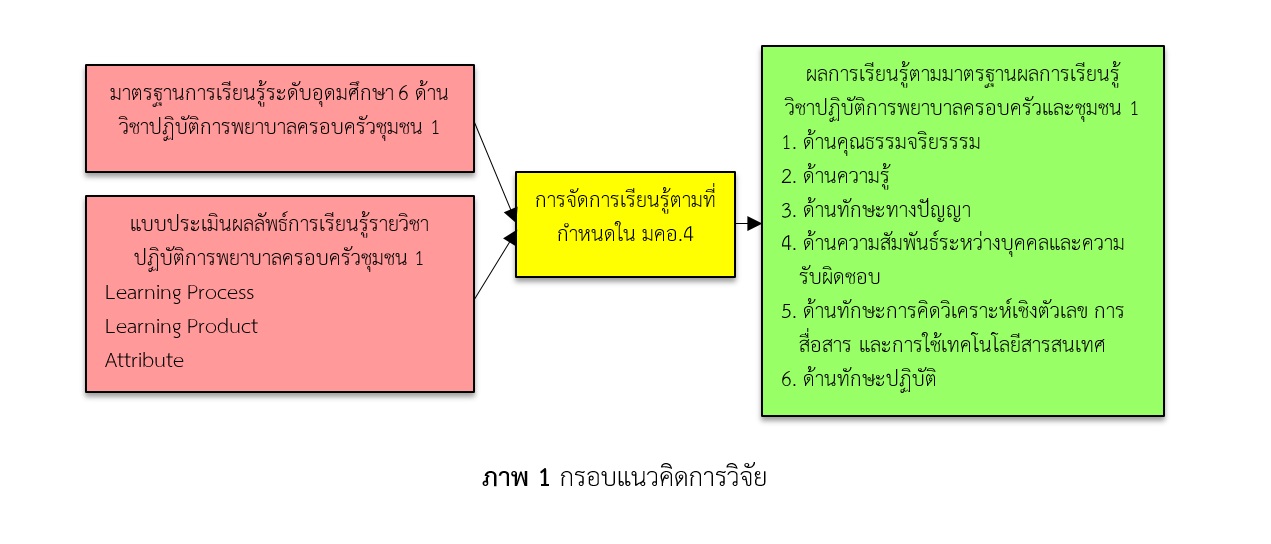
การวิจัยและพัฒนานี้มีวัตถุประสงค์เพื่อพัฒนาแบบประเมินผลลัพธ์การเรียนรู้ตามมาตราฐานผลการเรียนรู้ของนักศึกษาพยาบาล และศึกษาผลการพัฒนาผู้เรียนตามมาตรฐานผลการเรียนรู้ในวิชาปฏิบัติการพยาบาลครอบครัวและชุมชน 1 ในนักศึกษาพยาบาลศาสตร์ชั้นปีที่ 3 ปีการศึกษา 2559- 2561 จำนวน 437 คน เครื่องมือที่ใช้คือแบบประเมินผลการพัฒนามาตรฐานการเรียนรู้ 6 ด้าน วิเคราะห์ข้อมูลโดยวิเคราะห์หาค่าเฉลี่ย และค่าร้อยละของมาตราฐานผลลัพธ์การเรียนรู้ในแต่ละด้าน และโดยรวมทั้งหมด 6 ด้าน ผลการวิจัยพบว่า
1. แบบประเมินผลลัพธ์การเรียนรู้ตามมาตรฐานการเรียนรู้ทั้ง 6 ด้านที่ครอบคลุมกิจกรรมการฝึกภาคปฏิบัติวิชาปฏิบัติการพยาบาลครอบครัวชุมชน 1 ได้แก่ แบบประเมินทักษะการพยาบาลครอบครัว ทักษะการบริการอนามัยโรงเรียน ทักษะการบริการอาชีวอนามัย รายงานการพยาบาลครอบครัว รายงานการบริการอนามัยโรงเรียน รายงานการบริการอาชีวอนามัย และ แบบประเมินการอภิปรายกลุ่ม ที่มีความตรงเชิงโครงสร้างครบทุกข้อ และมีค่าความเชื่อมั่นสัมประสิทธิ์แอลฟาของครอนบาค มีค่าตั้งแต่ .87 - .96 ซึ่งมีค่าอยู่ในระดับสูงถึงสูงมาก
2. ผลการประเมินผู้เรียนในปีการศึกษา 2561 โดยการใช้แบบประเมินผลลัพธ์การเรียนรู้ที่พัฒนาขึ้น พบว่าผลการพัฒนาผู้เรียนตามมาตรฐานผลการเรียนรู้ในรายวิชาปฏิบัติการพยาบาลครอบครัวและชุมชน 1 มีคะแนนเฉลี่ยเท่ากับ 78.27 คิดเป็นร้อยละ 78.27 และมาตรฐานผลการเรียนรู้ที่มีคะแนนเฉลี่ยมากที่สุด คือ ด้านคุณธรรมจริยธรรมเท่ากับ 12.59 จากคะแนนเต็ม 14 คะแนน โดยคิดเป็นร้อยละ 89.93 และมาตรฐานผลการเรียนรู้ที่มีคะแนนเฉลี่ยน้อยที่สุด คือ ด้าน ทักษะปัญญา เท่ากับ 18.05 จากคะแนนเต็ม 25 คะแนนโดยคิดเป็นร้อยละ 72.21 ผลการประเมินความพึงพอใจของอาจารย์ผู้สอนภาคปฏิบัติซึ่งเป็นผู้ใช้แบบประเมินอยู่ในระดับมากที่สุด (M=4.57, SD =0.46)
แบบประเมินผลลัพธ์การเรียนรู้ที่พัฒนาขึ้น สามารถนำไปใช้เป็นแบบประเมินมาตรฐานในรายวิชาปฏิบัติการพยาบาลครอบครัวชุมชน 1 และ ประยุกต์ใช้ในการประเมินผลลัพธ์การเรียนรู้ในรายวิชาปฏิบัติการพยาบาลอื่น ๆ โดยปรับรายการให้เหมาะสมกับกิจกรรมการฝึกภาคปฏิบัติทั้งนี้จะช่วยให้ทราบผลลัพธ์การเรียนรู้รายด้านของนักศึกษาในด้านที่ควรส่งเสริม และพัฒนาได้ชัดเจนมากขึ้น
เอกสารอ้างอิง
Dechakoop,P. & Yindeesook, P. (2015). Learning Management in 21st Century (2nd ed). Bangkok: Chulalongkorn University. (In Thai)
DeVellis, R.F. (2017) Scale development theory and applications. USA: University of North Carolina, Chapel Hill.
Dyson, S.E. (2017). Critical Pedagogy in Nurse Education: Transformational Approaches to Nurse Education in a Globalized World. London: Palgrave: McMillan
Intaranongpai, S. & Kotchakot, J. (2017). The Learning Outcome Under the Qualifications Framework for Higher Education (TQF) in Community Nursing Practicum subject, Bachelor of Nursing Science. Journal of Police Nurse, 9(2),104-113.
Kemmis, S. (1988). Action Research. In J.P. Keeves (Ed.), Education research methodology and measurement: An international handbook, (pp.42-49). Oxford: Pergamon Press.
Lile, R. & Bran, C. (2014). The assessment of Learning Outcomes. Procedia - Social and Behavioral Science, 163, 125-131.
Office of the Education Commission. (2001). Happily Learning theory. Bangkok: Wattanapanich (in Thai)
Prachanban,P & Choomeka, L. (2018). The Research and Development of the Happiness Learning Management Assessment Instruments of the Students Teachers in the 21st Century. Journal of Education Naresuan University, 20 (4), 118-128. (In Thai).
Reeves, D. (2010). A Framework for Assessing 21st century Skills. In J. Bellanca & R. Brandt (Eds.), 21st century Skills: Rethinking how students learn. Bloomington : Solution Tree Press.
Suwannoi, P. (2515). The Evaluation of Learning Outcome and the development of Learning outcome assessment tools by using Rubric scoring. Handout for participant participating in Learning outcome assessment workshop at BCNC: ChaingMai (In Thai)
The Ministry of Education. (2008). The Basic Education Core Curriculum B.E. 2551. BangKok: The Publisher of Agricultural Cooperative Federation of Thailand. (In Thai)
Ulfvarson, J. & Oxelmark, L. (2012). Developing an assessment tools for intended learning outcomes in clinical practice for nursing students. Nurse Education Today, 32,703-708.
WHO. (2009). Global Standards for the Initial Education of Professional Nurses and Midwives. Geneva: World Health Organization
ดาวน์โหลด
เผยแพร่แล้ว
ฉบับ
ประเภทบทความ
สัญญาอนุญาต
1. บทความหรือข้อคิดเห็นใด ๆ ที่ปรากฏในวารสารเครือข่าย วิทยาลัยพยาบาลและการสาธารณสุขภาคใต้ ที่เป็นวรรณกรรมของผู้เขียน บรรณาธิการหรือเครือข่ายวิทยาลัยพยาบาลและวิทยาลัยการสาธารณสุขภาคใต้ ไม่จำเป็นต้องเห็นด้วย
2. บทความที่ได้รับการตีพิมพ์ถือเป็นลิขสิทธิ์ของ วารสารเครือข่ายวิทยาลัยพยาบาลและการสาธารณสุขภาคใต้