รูปแบบการดำเนินงานเพื่อเร่งรัดกำจัดไข้มาลาเรียในพื้นที่มีปัญหาความไม่สงบ จังหวัดยะลา
คำสำคัญ:
กำจัดโรคไข้มาลาเรีย, พื้นที่มีปัญหาความไม่สงบบทคัดย่อ
การวิจัยแบบผสมผสานวิธี นี้ มีวัตถุประสงค์เพื่อ 1) ประเมินผลการดำเนินงานกำจัดโรคไข้มาลาเรียในปี พ.ศ. 2560 - 2567 ของจังหวัดยะลา 2) ถอดบทเรียนการดำเนินงานกำจัดมาลาเรียของจังหวัด ดำเนินการ 3 ขั้นตอนคือ 1) สืบค้นข้อมูลด้านผลผลิตและผลกระทบจากฐานข้อมูลมาลาเรียของกองโรคติดต่อ นำโดยแมลง 2) ศึกษาผลลัพธ์ด้วยการศึกษาเชิงปริมาณในด้านความรู้และพฤติกรรมป้องกัน ในประชากร 558 ราย ใน 5 อำเภอของจังหวัดยะลาที่ได้ดำเนินโครงการ และ 3) ศึกษาปัจจัยนำเข้าและกระบวนการด้วยวิธีการเชิงคุณภาพ โดยใช้แบบสัมภาษณ์กึ่งโครงสร้างกับจากเจ้าหน้าที่สาธารณสุข และสนทนากลุ่มกับผู้ปฏิบัติงานของหน่วยงานภาคีรวม 49 ราย วิเคราะห์ข้อมูลเชิงปริมาณโดยใช้สถิติเชิงพรรณนาและเชิงคุณภาพ โดยการวิเคราะห์เชิงเนื้อหา เปรียบเทียบผลสัมฤทธิ์ของจังหวัดกับเป้าหมายของกรมควบคุมโรค ผลการวิจัยพบว่า
1. ในภาพรวมการกำจัดโรคไข้มาลาเรียมีความก้าวหน้ามาก ตัวชี้วัดส่วนใหญ่ได้ผลสูงกว่าเป้าของประเทศ ผู้ป่วยมาลาเรียได้รับการรักษาตามแนวทางของประเทศร้อยละ 100 ประชากรในพื้นที่เสี่ยงนอนในมุ้งชุบสารเคมีร้อยละ 86.70 ในคืนก่อนการสำรวจ อัตราการเกิดโรคต่อประชากรพันคน ลดลงจาก 6.74 ในปี 2560 เหลือเพียง 0.12 แต่ยังไม่บรรลุผลในการหยุดการแพร่เชื้อในพื้นที่ครบ 3 ปี
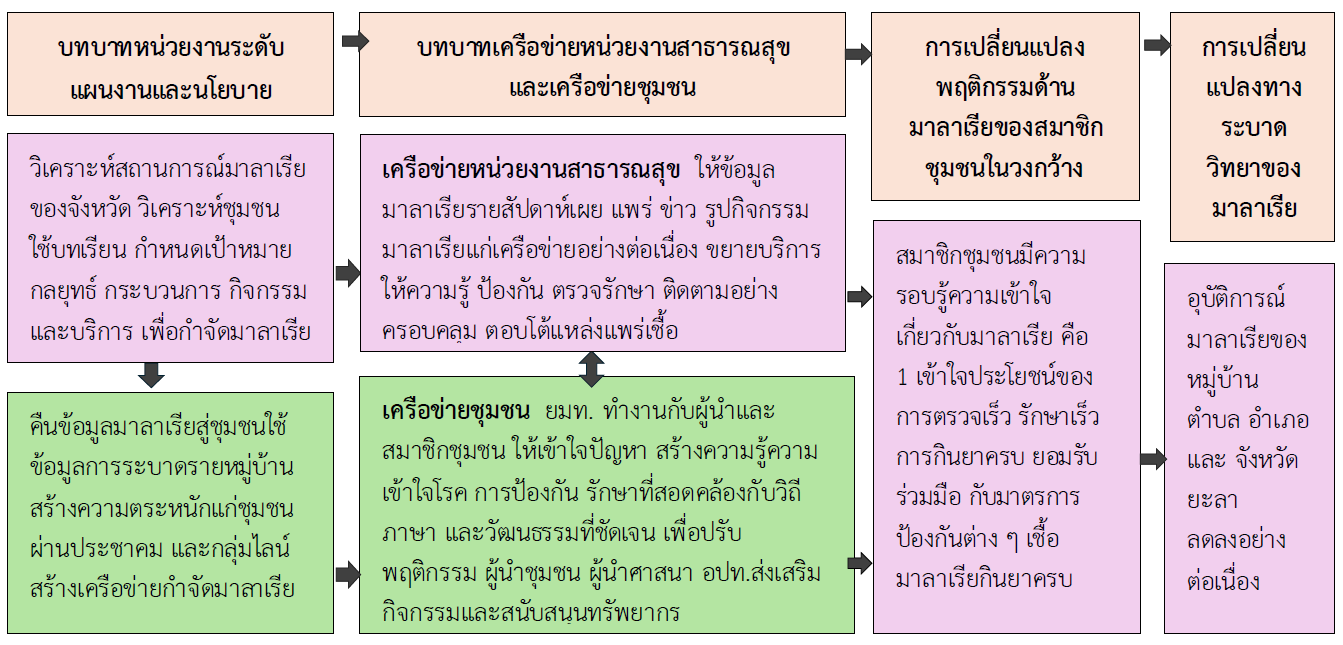
2. บทเรียนของการดำเนินงาน พบว่าหน่วยงานสาธารณสุขใช้กลยุทธ์คืนข้อมูลจำนวนผู้ป่วยแต่ละหมู่บ้านแก่ชุมชนเพื่อสร้างความตระหนักต่อปัญหา ทำให้งานกำจัดโรคไข้มาลาเรียเป็นเป้าหมายร่วมของหน่วยงานสาธารณสุขและชุมชน ขยายบริการป้องกัน ตรวจวินิจฉัย รักษา นักสื่อสารของสมาคมยุวมุสลิมได้ทำงานกับผู้นำชุมชน ผู้นำศาสนาอิสลาม และสมาชิกชุมชน สร้างความรู้ความเข้าใจเกี่ยวกับโรคที่สอดคล้องกับภาษาและวัฒนธรรมของชุมชนเพื่อปรับพฤติกรรมและการมีส่วนร่วม
หน่วยงานสาธารณสุขที่เกี่ยวข้องควรจัดให้มีช่องทางการสื่อสารสองทางเพื่อรายงานกรณีผู้ป่วยอย่างรวดเร็ว และเพื่อบรรลุเป้าหมายการกำจัดโรคไข้มาลาเรียของจังหวัด หน่วยงานที่รับผิดชอบต้องวางแผนการดำเนินงานในระยะต่อไปด้วยทรัพยากรภายในประเทศ
เอกสารอ้างอิง
กรมควบคุมโรค กระทรวงสาธารณสุข. (2563). รายงานการสำรวจมาลาเรียประเทศไทย พ.ศ. 2563. นนทบุรี: กระทรวงสาธารณสุข.
กองโรคติดต่อนำโดยแมลง กรมควบคุมโรค กระทรวงสาธารณสุข. (2564). แผนปฏิบัติการกำจัดโรคไข้ มาลาเรีย พ.ศ. 2564–2568. สืบค้นเมื่อ 20 พฤษภาคม 2568 จาก https://malaria.ddc.moph.go.th/downloadfiles/Elimination_malaria_y2564-2568_plan.PDF
กองโรคติดต่อนำโดยแมลง กรมควบคุมโรค กระทรวงสาธารณสุข. (2565). คู่มือประเมินรับรองจังหวัดปลอดไข้มาลาเรียปี 2565. (พิมพ์ครั้งที่1). กรุงเทพมหานคร: สำนักพิมพ์อักษรกราฟิกแอนด์ดีไซน์
กองโรคติดต่อนำโดยแมลง กรมควบคุมโรค กระทรวงสาธารณสุข. (2567). แนวทางการดำเนินงานโครงการกำจัดเชื้อมาลาเรียที่ดื้อยาในภูมิภาคลุ่มแม่น้ำโขง พ.ศ. 2567-2569. (พิมพ์ครั้งที่ 1) กรุงเทพมหานคร: สำนักพิมพ์อักษรกราฟิกแอนด์ดีไซน์
กองโรคติดต่อนำโดยแมลง กรมควบคุมโรค กระทรวงสาธารณสุข. (2567). POR (Prevention of Re-establishment of Malaria Transmission) แนวทางการป้องกันการกลับมาแพร่เชื้อใหม่โรคไข้มาลาเรีย ประเทศไทย. กรุงเทพมหานคร: สำนักพิมพ์อักษรกราฟิกแอนด์ดีไซน์
ชีวนันท์ เลิศพิริยสุวัฒน์, ประทิน ธรรมรักษ์, ประยุทธ สุดาทิพย์, ณัฐวุฒิ พรมดา, ประภารัตน์ พรมเอี้ยง, เจิดสุดา กาญจนสุวรรณ และคณะ. (2567). บทเรียนและรูปแบบความร่วมมือของหน่วยงานสาธารณสุขและองค์กรปกครองส่วนท้องถิ่นระดับตำบลเพื่อกำจัดโรคไข้มาลาเรีย. วารสารควบคุมโรค, 50(1), 87-97.
นิรัชรา ลิลละฮ์กุล และปัทมา สุพรรณกุล. (2561). วิถีชีวิตของชาวไทยมุสลิมจังหวัดชายแดนภาคใต้กับพฤติกรรมการสร้างเสริมสุขภาพตามหลัก 6 อ. วารสารเครือข่ายวิทยาลัยพยาบาลและการสาธารณสุขภาคใต้, (5)2, 302-312.
พรรณี ปานเทวัญ. (2560). โมเดลเชิงนิเวศวิทยาการเปลี่ยนแปลงพฤติกรรมสุขภาพ. วารสารพยาบาลทหารบก, 18(2), 7–15.
มาดีอะห์ มะเก็ง, ปิยะนุช จิตตนุนท์ และอาภรณ์ทิพย์ บัวเพชร์. (2561). ผลของโปรแกรมการปรับเปลี่ยน พฤติกรรมสุขภาพตามวิถีมุสลิมต่อพฤติกรรมการควบคุมโรคเบาหวานและระดับน้ำตาลในเลือดใน ผู้ป่วยเบาหวานมุสลิมที่ควบคุมระดับน้ำตาลในเลือดไม่ได้และไม่มีโรคร่วม. วารสารพยาบาลสงขลา นครินทร์, 38(1), 48-62.
รัถยานภิศ รัชตะวรรณ, ธมลวรรณ แก้วกระจก, วรรณรัตน์ จงเขตกิจ, ปิยะพร พรหมแก้ว, ดาลิมา สำแดงสาร, และดลปภัฏ ทรงเลิศ. (2561). กระบวนการมีส่วนร่วมของชุมชนในการพัฒนาสุขภาวะ. วารสารเทคโนโลยีภาคใต้, 11(1), 1–13.
รัถยานภิศ พละศึก, เบญจวรรณ ถนอมชยธวัช, และดลปภัฎ ทรงเลิศ. (2561). การวิจัยเชิงปฏิบัติการแบบมีส่วนร่วม: กระบวนการพัฒนาการสร้างเสริมสุขภาพชุมชนอย่างมีส่วนร่วม. วารสารเครือข่ายวิทยาลัยพยาบาลและการสาธารณสุขภาคใต้, (5)1, 211-223.
สุชญา สีหะวงษ์, วิริยา ลิมปิทีปราการ, วิลาวัลย์ สุขยา, วิภารัตน์ คำภา, และสุรจิต เติมวงษ์. (2565). การประเมินผลมาตรการ 1–3–7 เร่งรัดกำจัดไข้มาลาเรียเขตสุขภาพที่ 10 อุบลราชธานี ปีงบประมาณ 2563. วารสารสำนักงานป้องกันควบคุมโรคที่ 10, 20(1), 9-21.
สุนันทา กาญจนพงศ์. (2566) การพัฒนารูปแบบการสร้างสุขภาพดี วิถีใหม่ วิถีธรรม วิถีไทย วิถีเศรษฐกิจพอเพียงสำหรับผู้ป่วยโรคเบาหวานที่นับถือศาสนาอิสลาม. วารสารวิชาการสาธารณสุข, 32(ฉบับเพิ่มเติม 1), S86-S100.
องค์การบริหารส่วนจังหวัดยะลา. (2568). ข้อมูลทั่วไปจังหวัดยะลา. สืบค้นเมื่อ 10 พฤษภาคม 2568 จาก https://yalapao.go.th/th/general-info/
Ashton, R., Prosnitz, D., Andrada, A., Herrera, S., & Ye, Y. (2020) Evaluating malaria programmes in moderate and low transmission settings: practical ways to generate robust evidence. Malaria Journal, 19(75), 1-14. doi.org/10.1186/s12936-020-03158-z
Creswell, J. W., & Plano Clark, V. L. (2018). Designing and Conducting Mixed Methods Research. (3rd ed.). Thousand Oaks, CA: Sage.
Evaluation Task Force of Roll Back Malaria’s Monitoring and Evaluation Reference Group. (2019). Framework for Evaluating National Malaria Programs in Moderate and Low Transmission Settings. Chapel Hill, NC, USA: MEASURE Evaluation, University of North Carolina.
Lertpiriyasuwat, C, Sudathip, P., Kitchakarn, S., Areechokchai, D., Naowarat, S., Shah, J., et al, (2021). Implementation and success factors from Thailand’s 1-3-7 surveillance strategy for malaria elimination. Malaria Journal, 20(201), 1-12. doi.org/10.1186/s12936-021-03740-z
Pley, C., Gibbs, H., Sudathip, P., Huy, R., Nguyen, T. Q,. Whittaker, M., et al. (2025). Impact of the Global Fund Regional Artemisinin-resistance Initiative on malaria control and elimination in the Greater Mekong subregion of southeast Asia. The Lancet Infectious Diseases, 25(6), e353–e359. doi.org/10.1016/S1473-3099(25)00013-1
Yamane, T. (1973). Statistics: An Introductory Analysis. (3rd ed.). New York: Harper and Row
ดาวน์โหลด
เผยแพร่แล้ว
ฉบับ
ประเภทบทความ
สัญญาอนุญาต
ลิขสิทธิ์ (c) 2025 วารสารเครือข่ายวิทยาลัยพยาบาลและการสาธารณสุขภาคใต้

อนุญาตภายใต้เงื่อนไข Creative Commons Attribution-NonCommercial-NoDerivatives 4.0 International License.
1. บทความหรือข้อคิดเห็นใด ๆ ที่ปรากฏในวารสารเครือข่าย วิทยาลัยพยาบาลและการสาธารณสุขภาคใต้ ที่เป็นวรรณกรรมของผู้เขียน บรรณาธิการหรือเครือข่ายวิทยาลัยพยาบาลและวิทยาลัยการสาธารณสุขภาคใต้ ไม่จำเป็นต้องเห็นด้วย
2. บทความที่ได้รับการตีพิมพ์ถือเป็นลิขสิทธิ์ของ วารสารเครือข่ายวิทยาลัยพยาบาลและการสาธารณสุขภาคใต้