การรับรู้บทบาทหน้าที่และการปฏิบัติตามกฎหมายด้านการคุ้มครองผู้บริโภคของสาธารณสุขอำเภอ
คำสำคัญ:
การรับรู้บทบาทหน้าที่, การบังคับใช้กฎหมาย, การคุ้มครองผู้บริโภค, สาธารณสุขอำเภอบทคัดย่อ
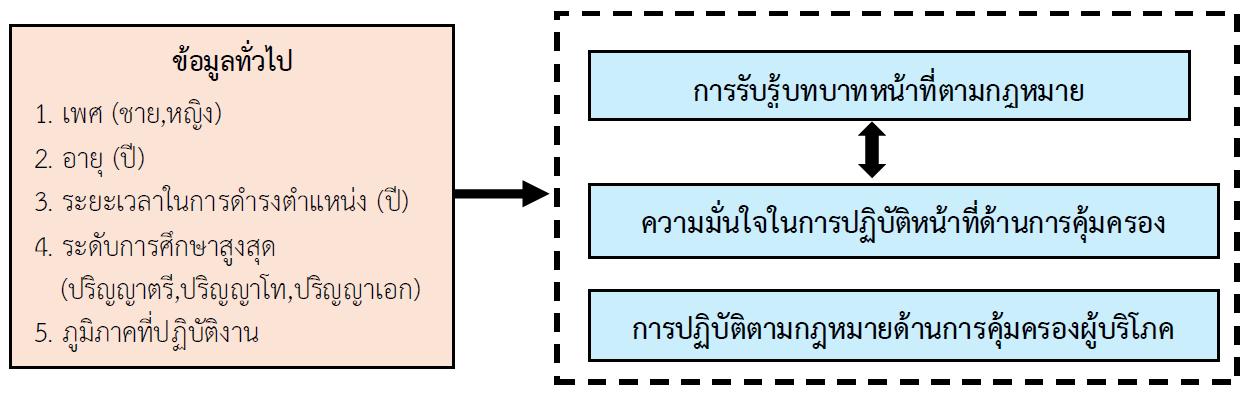
การศึกษาแบบภาคตัดขวางครั้งนี้มีวัตถุประสงค์เพื่อศึกษาการรับรู้บทบาทหน้าที่ การปฏิบัติตามกฎหมาย ความมั่นใจในการปฏิบัติงานด้านการคุ้มครองผู้บริโภคของสาธารณสุขอำเภอ รวมถึงการเปรียบเทียบการรับรู้บทบาทหน้าที่และความมั่นใจในการปฏิบัติงานด้านการคุ้มครองผู้บริโภคของสาธารณสุขอำเภอและศึกษาความสัมพันธ์ระหว่างระดับการรับรู้บทบาทหน้าที่และระดับความมั่นใจในการปฏิบัติงานด้านการคุ้มครองผู้บริโภคของสาธารณสุขอำเภอ กลุ่มตัวอย่างคือสาธารณสุขอำเภอ จำนวน 298 คน ใช้วิธีการสุ่มแบบหลายขั้นตอน เครื่องมือที่ใช้เป็นแบบสอบถามอิเล็กทรอนิกส์ ประกอบด้วย 3 ส่วน ได้แก่ ข้อมูลทั่วไป การรับรู้บทบาทหน้าที่ตามกฎหมาย และการปฏิบัติตามกฎหมายฯ เครื่องมือมีค่าดัชนีความสอดคล้องอยู่ระหว่าง .67 – 1.00 และค่าความเที่ยงตรง เท่ากับ .73 วิเคราะห์ข้อมูลด้วยสถิติเชิงพรรณนา ได้แก่ จำนวน ร้อยละ ค่าเฉลี่ย ส่วนเบี่ยงเบนมาตรฐาน และสถิติเชิงอนุมาน ได้แก่ Independent t-test, One-way ANOVA และ Pearson’s Correlation ที่ระดับนัยสำคัญ .05 ผลการวิจัยพบว่า
1. สาธารณสุขอำเภอมีการรับรู้บทบาทหน้าที่ในระดับมาก แต่ยังไม่เคยปฏิบัติหน้าที่ด้านการทำลายยาตามพระราชบัญญัติยา พ.ศ. 2510 และมีการปฏิบัติหน้าที่นอกอำนาจตามกฎหมาย เช่น การสั่งให้กระทำหรือระงับการกระทำใด ๆ ตามพระราชบัญญัติผลิตภัณฑ์สมุนไพร พ.ศ. 2562 ร้อยละ 12.13 ทั้งนี้สาธารณสุขอำเภอไม่มีบัตรประจำตัวพนักงานเจ้าหน้าที่ตามกฎหมายใด ๆ ร้อยละ 33.45 การดำเนินงานตามกฎหมายมักดำเนินการร่วมกับหน่วยงานอื่น และมีระดับความมั่นใจในการปฏิบัติตามกฎหมายด้านการคุ้มครองผู้บริโภคในระดับปานกลาง
2. ปัจจัยด้านเพศ อายุ ระยะเวลาในการดำรงตำแหน่ง ระดับการศึกษา และภูมิภาคของสาธารณสุขอำเภอ มีการรับรู้บทบาทหน้าที่และระดับความมั่นใจในการปฏิบัติตามกฎหมายด้านการคุ้มครองผู้บริโภคไม่แตกต่างกัน
3. สาธารณสุขอำเภอมีการรับรู้บทบาทหน้าที่สัมพันธ์ทางบวกในระดับต่ำกับความมั่นใจในการปฏิบัติตามกฎหมายด้านการคุ้มครองผู้บริโภคอย่างมีนัยสำคัญทางสถิติที่ระดับ .001
ดังนั้นควรกำหนดบทบาทหน้าที่ ระหว่างสำนักงานสาธารณสุขจังหวัด สำนักงานสาธารณสุขอำเภอ และหน่วยงานที่เกี่ยวข้องอื่น ๆ ว่าจะต้องปฏิบัติอย่างไรในพื้นที่รับผิดชอบให้ชัดเจน รวมถึงจัดทำคู่มือและฝึกอบรมเพิ่มเติม และจัดทำบัตรพนักงานเจ้าหน้าที่ให้ครบถ้วนตามกฎหมาย
เอกสารอ้างอิง
กฎกระทรวงแบ่งส่วนราชการสำนักงานปลัดกระทรวงสาธารณสุข พ.ศ. 2567. (2567). ราชกิจจานุเษกษา, เล่มที่ 141 ตอนที่ 12 ก, หน้า 18.
กองส่งเสริมงานคุ้มครองผู้บริโภคด้านผลิตภัณฑ์สุขภาพในส่วนภูมิภาคและท้องถิ่น. (2567). คู่มือสำนักงานสาธารณสุขจังหวัดว่าด้วยการมอบอำนาจและมอบหมายภารกิจงานคุ้มครองผู้บริโภคด้านผลิตภัณฑ์สุขภาพให้แก่ส่วนภูมิภาคและท้องถิ่น. นนทบุรี: สำนักงานคณะกรรมการอาหารและยา กระทรวงสาธารณสุข.
จารีลักษณ์ หินซุย และเพ็ญนภา ศรีหริ่ง. (2563). ความต้องการในการฝึกอบรมและความสามารถในการปฏิบัติงาน คุ้มครองผู้บริโภคด้านผลิตภัณฑ์สุขภาพในระดับอำเภอของประเทศไทย. วารสารเภสัชศาสตร์อีสาน, 16(1), 26-36.
ณธิป วิมุตติโกศล, กมลรัตน์ นุตยกุล, ศรีสุดา ฉ่าทรัพย์, เพลิน จำแนกพล, สุชัญญา พลเพชร, อรัญญา เทพพิทักษ์, และบรรจบ จันทร์เจริญ. (2562). คู่มือการดำเนินงานคุ้มครองผู้บริโภคด้านผลิตภัณฑ์สุขภาพ (อาหารและเครื่องสำอาง) สำหรับพนักงานเจ้าหน้าที่องค์กรปกครองส่วนท้องถิ่น (พิมพ์ครั้งที่ 1). นนทบุรี: สำนักงานคณะกรรมการอาหารและยา กระทรวงสาธารณสุข.
นภชา สิงห์วีรธรรม, ปิยะ หาญวรวงศ์ชัย, พัลลภ เซียวชัยสกุล, สันติชัย สุขราษฎร์, พิสิษฐ์ ศรีอัคคโภคิน, วิไลลักษณ์ เรืองรัตนตรัย และคณะ. (2568). การพัฒนาข้อเสนอเชิงนโยบายเรื่องบทบาทและโครงสร้างของสำนักงานสาธารณสุขจังหวัดและสำนักงานสาธารณสุขอำเภอหลังการถ่ายโอนโรงพยาบาลส่งเสริมสุขภาพตำบลไปยังองค์การปกครองส่วนท้องถิ่น. นนทบุรี: กองยุทธศาสตร์และแผนงาน สำนักงานปลัดกระทรวงสาธารณสุข
บุญชม ศรีสะอาด. (2560). การวิจัยเบื้องต้น (พิมพ์ครั้งที่ 10 ฉบับปรับปรุงใหม่). กรุงเทพฯ: สุวีริยาสาส์น.
ปิยะ หาญวรวงศ์ชัย, จุรีรัตน์ กิจสมพร, จุฬารัตน์ ห้าวหาญ, สุรศักดิ์ สุนทร, และวิไลลักษณ์ เรืองรัตนตรัย. (2558). การวิเคราะห์งาน การจัดอัตรากำลัง และความก้าวหน้าของบุคลากรในระดับบริหารในหน่วยงานบริหารสาธารณสุขในส่วนภูมิภาค. นนทบุรี: สถาบันวิจัยระบบสาธารณสุข
เพ็ญนภา ศรีหริ่ง และสุกัณฑา หมวดทอง. (2564). การรับรู้ความสามารถของตนเอง การสนับสนุน และ ความตั้งใจในการดำเนินงานคุ้มครองผู้บริโภคด้านผลิตภัณฑ์สุขภาพของสาธารณสุขอำเภอ. วารสารเภสัชศาสตร์อีสาน, 17(2), 54-67.
ระพีพรรณ ฉลองสุข. (2560). แนวคิดงานคุ้มครองผู้บริโภคด้านสุขภาพ. Thai Bull Pharm Sci, 12(1), 77-89.
Bloom, B. S. (1956). Taxonomy of Education Objectives : The Classification of Education Goal. New York : Longman.
Bruner, J. S., & Postman, L. (1949). On the perception of incongruity: A paradigm. Journal of Personality, 18(2), 206-223.
Krejcie, R. V., & Morgan, D. W. (1970). Determining sample size for research activities. Educational and Psychological Measurement, 30(3), 607-610.
Wiersma, W., & Jurs, S. G. (2009). Research Methods in Education. Massachusetts: Pearson.
ดาวน์โหลด
เผยแพร่แล้ว
ฉบับ
ประเภทบทความ
สัญญาอนุญาต
ลิขสิทธิ์ (c) 2025 วารสารเครือข่ายวิทยาลัยพยาบาลและการสาธารณสุขภาคใต้

อนุญาตภายใต้เงื่อนไข Creative Commons Attribution-NonCommercial-NoDerivatives 4.0 International License.
1. บทความหรือข้อคิดเห็นใด ๆ ที่ปรากฏในวารสารเครือข่าย วิทยาลัยพยาบาลและการสาธารณสุขภาคใต้ ที่เป็นวรรณกรรมของผู้เขียน บรรณาธิการหรือเครือข่ายวิทยาลัยพยาบาลและวิทยาลัยการสาธารณสุขภาคใต้ ไม่จำเป็นต้องเห็นด้วย
2. บทความที่ได้รับการตีพิมพ์ถือเป็นลิขสิทธิ์ของ วารสารเครือข่ายวิทยาลัยพยาบาลและการสาธารณสุขภาคใต้