ความสัมพันธ์ระหว่างความรอบรู้ด้านสุขภาพ กับพฤติกรรมป้องกันภาวะน้ำเกินและภาวะน้ำเกินของผู้ป่วยที่มีภาวะหัวใจล้มเหลว คลินิกอายุรกรรมหัวใจล้มเหลว โรงพยาบาลลำปาง
คำสำคัญ:
ความรอบรู้ด้านสุขภาพ , พฤติกรรมป้องกันภาวะน้ำเกิน , ภาวะน้ำเกิน , ภาวะหัวใจล้มเหลวบทคัดย่อ
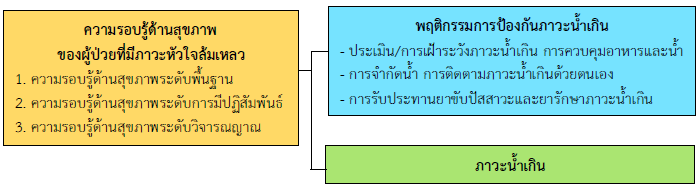
การวิจัยเชิงพรรณนาแบบหาความสัมพันธ์นี้ มีวัตถุประสงค์เพื่อศึกษา 1) ระดับความรอบรู้ด้านสุขภาพ 2) ระดับพฤติกรรมป้องกันภาวะน้ำเกิน 3) ภาวะน้ำเกิน และ 4) ความสัมพันธ์ระหว่างความรอบรู้ด้านสุขภาพ กับพฤติกรรมป้องกันภาวะน้ำเกิน และภาวะน้ำเกินของผู้ป่วยที่มีภาวะหัวใจล้มเหลวกลุ่มตัวอย่างเป็นผู้ป่วยภาวะหัวใจล้มเหลว จำนวน 84 ราย ที่มารับการรักษาที่คลินิกอายุรกรรมหัวใจล้มเหลว โรงพยาบาลลำปาง ระหว่างเดือนกันยายน พ.ศ. 2566 ถึง พฤษภาคม พ.ศ. 2567 โดยใช้การคัดเลือกแบบเจาะจงตามเกณฑ์ที่กำหนด เครื่องมือที่ใช้ในการวิจัยประกอบด้วย 3 ฉบับ ได้แก่ แบบสอบถามความรอบรู้ด้านสุขภาพ แบบสอบถามพฤติกรรมป้องกันภาวะน้ำเกิน และแบบสอบถามภาวะน้ำเกิน ซึ่งมีค่าดัชนีความตรงตามเนื้อหาเท่ากับ .80, .99, และ 1.00 ตามลำดับ และมีค่าความเชื่อมั่นสัมประสิทธิ์แอลฟาของครอนบาคเท่ากับ .95, .86 และ .90 ตามลำดับ วิเคราะห์ข้อมูลโดยสถิติเชิงพรรณนาและวิเคราะห์ความสัมพันธ์ด้วยสถิติสัมประสิทธิ์สหสัมพันธ์เชิงอันดับของสเปียร์แมน ผลการวิจัยพบว่า
1. ความรอบรู้ด้านสุขภาพ ส่วนใหญ่อยู่ในระดับสูง ได้แก่ ด้านสุขภาพขั้นพื้นฐาน (ร้อยละ 53.58) ด้านสุขภาพขั้นการสื่อสาร (ร้อยละ 51.19) และด้านสุขภาพขั้นการมีวิจารณญาณ (ร้อยละ 67.86)
2. พฤติกรรมป้องกันภาวะน้ำเกิน ส่วนใหญ่อยู่ในระดับสูง (ร้อยละ 70.20)
3. ภาวะน้ำเกิน ส่วนใหญ่อยู่ในระดับต่ำ (ร้อยละ 57.14)
4. ความรอบรู้ด้านสุขภาพมีความสัมพันธ์ทางบวกระดับต่ำกับพฤติกรรมป้องกันภาวะน้ำเกินอย่างมีนัยสำคัญทางสถิติ (𝑟𝑠 = .27, p-value < .05) และมีความสัมพันธ์ทางลบระดับปานกลางกับภาวะน้ำเกินอย่างมีนัยสำคัญทางสถิติ (𝑟𝑠= -.44, p-value < .01)
พยาบาลวิชาชีพควรส่งเสริมความรอบรู้ด้านสุขภาพเกี่ยวกับภาวะหัวใจล้มเหลว เพื่อให้ผู้ป่วยมีพฤติกรรมการดูแลตนเองที่เหมาะสม และลดความเสี่ยงของการเกิดภาวะน้ำเกินซ้ำในผู้ป่วยภาวะหัวใจล้มเหลวได้
เอกสารอ้างอิง
จิตตวดี เหรียญทอง. (2565). ปัจจัยที่มีความสัมพันธ์กับความร่วมมือในการใช้ยาในผู้สูงอายุที่มีภาวะหัวใจล้มเหลว. พยาบาลสาร, 49(3), 149-161.
ชมรมหัวใจล้มเหลวแห่งประเทศไทย. (2562). แนวทางเวชปฏิบัติเพื่อการวินิจฉัยและการดูแลรักษาผู้ป่วยภาวะหัวใจล้มเหลว พ.ศ. 2562. เนคสเปต ดีไซน์.
ธนาพร คุ้มสว่าง. (2563). การจัดการภาวะน้ำเกินและการปรับยาขับปัสสาวะด้วยตนเองของผู้ป่วยภาวะหัวใจล้มเหลว. วารสารเภสัชกรรมโรงพยาบาล, 30(3), 213-226.
พิสมัย อันพันลำ, ภัทรพงษ์ มกรเวส และวาสนา รวยสูงเนิน. (2564). ปัจจัยทำนายพฤติกรรมป้องกันภาวะน้ำเกินในผู้ป่วยหัวใจล้มเหลว. วารสารพยาบาลศาสตร์, 39(3), 47-59.
วันเพ็ญ ยินดี. (2565). ปัจจัยที่มีความสัมพันธ์กับความรอบรู้ด้านสุขภาพในการป้องกันการเกิดโรคไม่ติดต่อเรื้อรัง ของประชากรกลุ่มวัยทำงานในเขตสุขภาพที่ 4 กระทรวงสาธารณสุข. วารสารโรงพยาบาลสิงห์บุรี, 31(2), 193-206.
วริศรา ปั่นทองหลาง, ปานจิต นามกลกรัง และวินัฐ ดวงแสนจันทร์. (2561). ปัจจัยที่มีอิทธิพลต่อพฤติกรรมสุขภาพของผู้ป่วยโรคความดันโลหิตสูงที่ควบคุมไม่ได้. วารสารพยาบาลสงขลานครินทร์, 38(4), 152-165.
ไวยพร พรมวงค์ และจรูญศรี มีหนองหว้า. (2564). ความรู้ ทัศนคติ และการรับรู้สมรรถนะแห่งตนในการดูแลผู้ป่วยที่มีภาวะหัวใจล้มเหลวของนักศึกษาพยาบาลศาสตรบัณฑิต ชั้นปีที่ 4 วิทยาลัยพยาบาลบรมราชชนนี สรรพสิทธิประสงค์. วารสารศูนย์อนามัยที่ 9 วารสารส่งเสริมสุขภาพและอนามัยสิ่งแวดล้อม, 15(37), 377-391.
สุมาลี สามัคคานนทการ, สุภาภรณ์ ด้วงแพง, และวัลภา คุณทรงเกียรติ. (2560). ปัจจัยที่มีอิทธิพลต่อการปฏิบัติหน้าที่ในผู้ป่วยภาวะหัวใจล้มเหลว. วารสารพยาบาลโรคหัวใจและทรวงอก, 28(2). 68-81.
แสงเดือน กิ่งแก้ว และนุสรา ประเสริฐศรี. (2559). ความสัมพันธ์ระหว่างความฉลาดทางสุขภาพและพฤติกรรมสุขภาพของผู้สูงอายุที่เป็นโรคเรื้อรังหลายโรค. วารสารพยาบาลกระทรวงสาธารณสุข, 25(3), 43-54.
อนุรักษ์ แสงจันทร์ และศิรินันท์ ฉลวยแสง (2568). ปัจจัยทำนายการกลับเข้ารักษาซ้ำในโรงพยาบาลของผู้ป่วยหัวใจล้มเหลวในระยะ 1 ปี หลังจำหน่ายจากโรงพยาบาล. วารสารสภากาชาดไทย, 18(1), 96-111.
เอกพลพลเดช เดชแก้ว, นิภาวรรณ สามารถกิจ และเขมารดี มาสิงบุญ. (2566) ความสัมพันธ์ระหว่างการรับรู้สมรรถนะแห่งตน ความเครียดในการดำเนินชีวิต และการสนับสนุนทางสังคม กับพฤติกรรมสุขภาพในผู้ใหญ่ที่มีภาวะหัวใจขาดเลือดเฉียบพลัน ภายหลังได้รับการขยายหลอดเลืิอดหัวใจ. วารสารคณะพยาบาลศาสตร์ มหาวิทยาลัยบูรพา, 29(2), 71-80.
Alspach, J. G. (2015). Heart failure and low health literacy: Mitigating this lethal combination. Critical Care Nurse, 35(5), 10-14.
Baliga, R., & Haas, G. (2015). Management Of Heart Failure (2nd). Department of Internal Medicine, the Ohio State University Wexner Medical Center Columbus USA.
Cajita, M. I., Cajita, T. R., & Han, H. R. (2016). Health literacy and heart failure: a systematic review. Journal of Cardiovascular Nursing, 31(2), 121-130.
Centers for Disease Control and Prevention. (2020). Heart disease and stroke statistics 2020 update: A report from the American Heart Association. Circulation, 141(9), e139–e596.
Choeisuwan, V. (2017). Health literacy : Concept and application for nursing practice. Royal Thai Navy Medical Journal, 44(3), 183-197.
Cohen, J. (1988). Statistical Power Analysis for the Behavioral Sciences. (2nd). Hillsdale, NJ: Lawrence Erlbaum Associates, Publishers.
Faul, F., Erdfelder, E., Lang, A. G., & Buchner, A. (2007). G*power 3: A flexible statistical power analysis program for the social, behavioral, and biomedical sciences. Behavior Research Methods, 39(2), 175-191.
Intarakamhang, U., Khammungkul, J., & Boocha, P. (2022). General health literacy scale for Thais and comparison between age groups. Heliyon, 8(5).
Lippi, G., & Sanchis-Gomar, F. (2020). Global epidemiology and future trends of heart failure. AME Medical Journal, 3(1), 7-11.
Melin, M., Hägglund, E., Ullman, B., Persson, H., & Hagerman, I. (2018). Effects of a tablet computer on self-care, quality of life, and knowledge: a randomized clinical trial. Journal of Cardiovascular Nursing, 33(4), 336-343.
Nutbeam, D. (2008). The evolving concept of health literacy. Social Science & Medicine, 67(12), 2072-2078.
Rouse, G. W., Albert, N. M., Butler, R. S., Morrison, S. L., Forney, J., Meyer, J., et al. (2016). A comparative study of fluid management education before hospital discharge. Heart & Lung, 45(1), 21-28.
Son, Y. J., Shim, D. K., Seo, E. K., & Seo, E. J. (2018). Health literacy but not frailty predict self-care behaviors in patients with heart failure. International journal of environmental research and public health, 15(11), 2474.
Wiersma, W. & G. Jurs, S. (2009). Research Method in Education an Introduction. (9th ed). Massachusetts: Pearson .
Williams, B. A., Doddamani, S., Troup, M. A., Mowery, A. L., Kline, C. M., Gerringer, J. A., et al. (2017). Agreement between heart failure patients and providers in assessing New York Heart Association functional class. Heart & Lung, 46(4), 293-299.
World Health Organization. (2013). World Health Statistics 2013. Geneva, Switzerland: Author. Retrieved March 10, 2025, from https://www.who.int/publications/i/item/9789241564588.
ดาวน์โหลด
เผยแพร่แล้ว
ฉบับ
ประเภทบทความ
สัญญาอนุญาต
ลิขสิทธิ์ (c) 2025 วารสารเครือข่ายวิทยาลัยพยาบาลและการสาธารณสุขภาคใต้

อนุญาตภายใต้เงื่อนไข Creative Commons Attribution-NonCommercial-NoDerivatives 4.0 International License.
1. บทความหรือข้อคิดเห็นใด ๆ ที่ปรากฏในวารสารเครือข่าย วิทยาลัยพยาบาลและการสาธารณสุขภาคใต้ ที่เป็นวรรณกรรมของผู้เขียน บรรณาธิการหรือเครือข่ายวิทยาลัยพยาบาลและวิทยาลัยการสาธารณสุขภาคใต้ ไม่จำเป็นต้องเห็นด้วย
2. บทความที่ได้รับการตีพิมพ์ถือเป็นลิขสิทธิ์ของ วารสารเครือข่ายวิทยาลัยพยาบาลและการสาธารณสุขภาคใต้