การวิจัยเชิงปฏิบัติการเสริมสร้างความรอบรู้ทางสุขภาพด้านการป้องกันโรคไข้เลือดออก ตำบลหนองตรุด อำเภอเมือง จังหวัดตรัง
คำสำคัญ:
การวิจัยเชิงปฏิบัติการ, ความรอบรู้ด้านสุขภาพ , โรคไข้เลือดออก , ยุงลาย, ดัชนีลูกน้ำบทคัดย่อ
การวิจัยเชิงปฏิบัติการนี้เพื่อศึกษาสถานการณ์และผลการเสริมสร้างความรอบรู้ทางสุขภาพด้านการป้องกันโรคไข้เลือดออกแก่ประชาชน กลุ่มเป้าหมายเป็นตัวแทนครัวเรือนที่พบภาชนะที่มีลูกน้ำยุงลายอย่างน้อย 1 ภาชนะ จำนวน 266 คน เลือกแบบเจาะจง โดยดำเนินกิจกรรมเสริมสร้างความรอบรู้ทางสุขภาพในผู้สมัครใจ จำนวน 85 คน ดำเนินการระหว่างเดือนกันยายนถึงธันวาคม พ.ศ. 2562 รวบรวมข้อมูลจากการสังเกตและสัมภาษณ์ เครื่องมือที่ใช้ในการวิจัย ประกอบด้วย แบบสอบถามข้อมูลส่วนบุคคล แบบประเมินความรอบรู้ด้านสุขภาพ และแบบบันทึกค่าดัชนีลูกน้ำยุงลาย ได้แก่ ดัชนีบ้าน (HI) และดัชนีภาชนะ (CI) กิจกรรมเพื่อเสริมสร้างความรอบรู้ด้านสุขภาพ ได้ค่าความเที่ยงตรง (CVI) เท่ากับ .87 แบบสอบถามได้ค่า KR-20 และค่าสัมประสิทธิ์แอลฟาของครอนบาคได้เท่ากับ .84 และ .97 ตามลำดับ วิเคราะห์ข้อมูลโดยใช้สถิติเชิงพรรณนา ได้แก่ ร้อยละ ค่าเฉลี่ย ส่วนเบี่ยงเบนมาตรฐาน และสถิติ Paired t-test ผลการวิจัยพบว่า
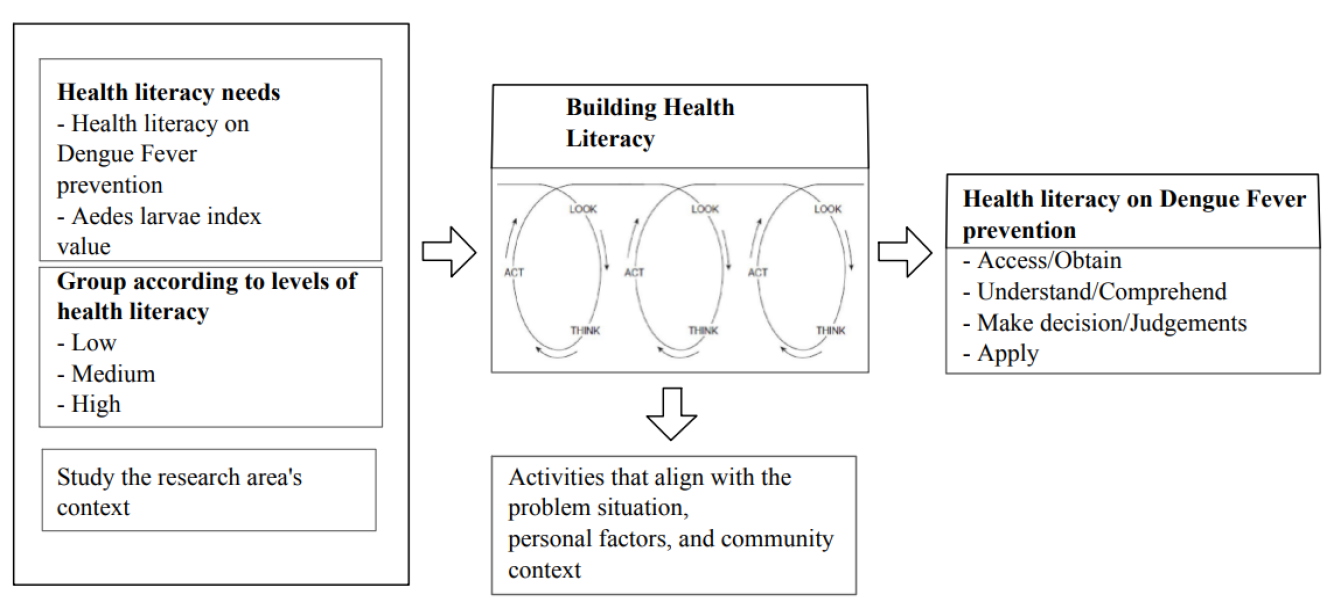
1. สถานการณ์เกี่ยวกับระดับความรอบรู้ทางสุขภาพด้านการป้องกันโรคไข้เลือดออกของประชาชนส่วนใหญ่อยู่ในระดับต่ำและระดับปานกลาง ร้อยละ 80.45 ด้านปัญหาอุปสรรคต่อความรอบรู้ทางสุขภาพด้านการป้องกันโรคไข้เลือดออก ได้แก่ ปัจจัยส่วนบุคคล เช่น ระดับการศึกษา และอาชีพ ส่วนปัจจัยสนับสนุน ได้แก่ การมีบุคลากรของโรงพยาบาลส่งเสริมสุขภาพตำบล และทีมอาสาสมัครสาธารณสุขประจำหมู่บ้านที่เข้มแข็ง มีที่ปรึกษาด้านวิชาการจากวิทยาลัยพยาบาล รวมทั้งการได้รับงบประมาณสนับสนุนในการดำเนินงานอย่างต่อเนื่องจากกองทุนหลักประกันสุขภาพถ้วนหน้าและองค์การบริหารส่วนตำบล
2. หลังจากเข้าร่วมกิจกรรม 4 เดือน พบว่า 1) ผู้เข้าร่วมสามารถเข้าถึงแหล่งข้อมูลต่าง ๆ และได้รับข้อมูลมากขึ้น (Obtain) 2) คะแนนความรู้หลังเข้าร่วมกิจกรรมฯสูงกว่าก่อนเข้าร่วมกิจกรรมฯ (Understand) 3) ผู้เข้าร่วมกิจกรรมฯ มีความสามารถในการตัดสินใจเพื่อควบคุมและป้องกันโรคไข้เลือดออกมากขึ้น (Decide) และ 4) ผู้เข้าร่วมกิจกรรมฯ สามารถนำความรู้ไปใช้ในการควบคุมแหล่งเพาะพันธุ์ลูกน้ำยุงลาย (Apply) หนึ่งเดือนหลังการดำเนินกิจกรรม ไม่พบค่าดัชนี HI, CI หรือผู้ป่วยโรคไข้เลือดออก
ดังนั้นควรใช้การดำเนินงานเชิงรุกให้ครอบคลุมทุกหลังคาเรือน โดยเฉพาะกลุ่มที่มีระดับความรอบรู้อยู่ในระดับปานกลางและพบแหล่งเพาะพันธุ์ลูกน้ำยุงลาย เพื่อให้สามารถควบคุมและป้องกันโรคไข้เลือดออกได้อย่างมีประสิทธิภาพในพื้นที่
เอกสารอ้างอิง
Aninlabon, W. & Maithongngam, K. (2020). Factors associated with the prevention and control of communicable diseases caused by Aedes mosquitoes in Langsuan District, Chumphon. The Office of Disease Prevention and Control 9th Nakhon Ratchasima Journal, 26(2), 62–71. (in Thai)
Chantarintrakorn. A. (2014). Relationship between Health Literacy and Dengue Hemorrhagic Fever Prevention and Control Behaviors of Public Health Volunteers in Suanluang Sub-district Municipality, Krathum Baen District, Samut Sakhon Province. Graduate School, Kasetsart University. (in Thai)
Chayyaphong, A. & Onmasen, P. (2020). Factors related to health literacy for the prevention of Dengue of school-age children in Nadee District, Prachin Buri Province. Disease Control Journal, 46(2), 152-161. (in Thai)
Department of Disease Control, Ministry of Public Health. (2020). Annual Report on the Prognosis of Dengue Hemorrhagic Fever 2020. Retrieved 24 September 2020 from https://ddc.moph.go.th/uploads/ckeditor/6f4922f45568161a8cdf4ad2299f6d23/files/Dangue/Prophecy/2562.pdf?fbclid=IwAR0RmXg7Tv8aL2BkIs6XWJyw0YXWfiCFrhdSMJi8NWNWv8cPBFzzRDHn6Zo.
European Health Literacy Consortium. (2012). Comparative Report on Health Literacy in Eight EU Member States. The European Health Literacy Survey HLSEU; 2012. Retrieved July 26, 2020 from www.HEALTH-LITERACY.EU.
Kaeodumkoeng, K. (2019). Health Literacy: Access, Understanding, and Application. Bangkok, Amarin Printing & Publishing Public Company Limited. (in Thai)
Kitterawuttiwong, N. (2015). Translate health literacy in providing public health activities. KKU Journal for Public Health Research, 8(2), 68-75. (in Thai)
Konsnan, W. & Poum, A. (2020). Health literacy associated with preventing and controlling the behavior of dengue among village health volunteers in Nong Yai sub-district, Prasat district, Surin province. Journal of Health Science and Community Public Health, 3(1), 35-44. (in Thai)
Labkosa, T., Pansili, W., & Sripugdee, S. (2016). The prevention model of dengue hemorrhagic fever by the participation of community health leaders, Muangboa sub-district, Chumphonburi district, Surin province. Thaksin Journal, 19(1), 44-54.
Nong Trud Sub-District Health Promoting Hospital, Trang Provicial Health Office. (2019). Health Statistics Report 2019. Trang Provicial Health Office. (in Thai)
Nutbeam, D. (2008). The evolving concept of health literacy. Social Science and Medicine, 67(12), 2072-2078.
Seedaket, S., Tantasit Y., Phajan, T., & Wasuwipa, J. (2019). Dengue hemorrhagic fever (DHF): Development of a prevention and control model in community, using appreciation influence control (AIC) process. The Southern College Network Journal of Nursing and Public Health, 6(1), 28-38. (in Thai)
Stringer, E.T. (2007). Action Research. Los Angeles: Sage Publications.
Suwanbamrung C, Saengsuwan B, Sangmanee T, Thrikaew N, Srimoung P, Maneerattanasak S. (2021). Knowledge, attitudes, and practices towards Dengue prevention among primary school children with and without experience of previous Dengue infection in southern Thailand. One Health, 13, 1-8.
Vector-Borne Disease. (2018). Annual Report 2018. Bangkok: Aksorn graphic & design.
Vector-Borne Disease Bureau, Department of Disease Control, Ministry of Public Health. (2020). Dengue Hemorrhagic Fever Situation at 35th Week, 2020. Retrieved August 14, 2020 from https://ddc.moph.go.th/uploads/ckeditor/6f4922f45568161a8cdf4ad2299f6d23/files/Dangue/Situation/2562/DENGUE%2035.pdf.
ดาวน์โหลด
เผยแพร่แล้ว
ฉบับ
ประเภทบทความ
สัญญาอนุญาต
ลิขสิทธิ์ (c) 2024 วารสารเครือข่ายวิทยาลัยพยาบาลและการสาธารณสุขภาคใต้

อนุญาตภายใต้เงื่อนไข Creative Commons Attribution-NonCommercial-NoDerivatives 4.0 International License.
1. บทความหรือข้อคิดเห็นใด ๆ ที่ปรากฏในวารสารเครือข่าย วิทยาลัยพยาบาลและการสาธารณสุขภาคใต้ ที่เป็นวรรณกรรมของผู้เขียน บรรณาธิการหรือเครือข่ายวิทยาลัยพยาบาลและวิทยาลัยการสาธารณสุขภาคใต้ ไม่จำเป็นต้องเห็นด้วย
2. บทความที่ได้รับการตีพิมพ์ถือเป็นลิขสิทธิ์ของ วารสารเครือข่ายวิทยาลัยพยาบาลและการสาธารณสุขภาคใต้