ผลของการใช้รูปแบบการเรียนการสอนตามแนวคิดการเรียนรู้ตามสภาพจริง เพื่อเสริมสร้างเหตุผลเชิงจริยธรรมของนักศึกษาพยาบาล วิทยาลัยพยาบาลบรมราชชนนี สงขลา
คำสำคัญ:
การเรียนรู้ตามสภาพจริง, เหตุผลเชิงจริยธรรม, นักศึกษาพยาบาลบทคัดย่อ
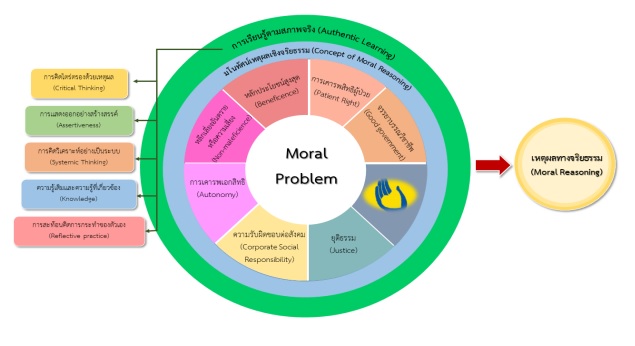
การวิจัยแบบผสมผสานนี้ เพื่อเปรียบเทียบเหตุผลเชิงจริยธรรมของนักศึกษาพยาบาลก่อนและหลังการจัดการเรียนการสอนตามแนวคิดการเรียนรู้ตามสภาพจริงเพื่อเสริมสร้างเหตุผลเชิงจริยธรรมของนักศึกษาพยาบาลและประเมินความคิดเห็นต่อการจัดการเรียนการสอนตามสภาพจริงเพื่อเสริมสร้างเหตุผลเชิงจริยธรรมของนักศึกษาพยาบาลชั้นปีที่ 3 จำนวน 78 คน เครื่องมือการวิจัยประกอบด้วย 1) รูปแบบการเรียนการสอนตามแนวคิดการเรียนรู้ตามสภาพจริงเพื่อเสริมสร้างเหตุผลเชิงจริยธรรม ประกอบด้วยการปรึกษาทางจริยธรรม การตรวจเยี่ยมทางด้านจริยธรรมรายงานการวิเคราะห์ทางจริยธรรม 2) แบบประเมินเหตุผลเชิงจริยธรรม 3) แบบประเมินความคิดเห็นต่อรูปแบบการเรียนการสอน ได้ค่าดัชนีความเที่ยงตรงทั้งฉบับ (S-CVI) เท่ากับ .86 ความเชื่อมั่นโดยสัมประสิทธิ์แอลฟ่าของครอนบาคเท่ากับ .93 การวิเคราะห์ข้อมูลใช้ความถี่ร้อยละ ค่าเฉลี่ยส่วนเบี่ยงเบนมาตรฐาน สถิติ Pair t-test และ การจัดกลุ่มคำ หาข้อสรุป ผลการวิจัยพบว่า
1. เหตุผลเชิงจริยธรรมของนักศึกษาพยาบาลเพิ่มขึ้นก่อนการใช้รูปแบบการเรียนการสอนตามแนวคิดการเรียนรู้ตามสภาพจริงเพื่อเสริมสร้างเหตุผลเชิงจริยธรรมอย่างมีนัยสำคัญทางสถิติที่ระดับ .001 (t=7.69, p<.001)
2. การประเมินความคิดเห็นต่อการจัดการเรียนการสอนตามสภาพจริงเพื่อเสริมสร้างเหตุผลเชิงจริยธรรมของนักศึกษาพยาบาล ประกอบด้วย 3 ประเด็น 1) ลดความผิดพลาดในการปฏิบัติงาน 2) ตระหนักรู้ถึงสิทธิของผู้ป่วย 3) มั่นใจในการปฏิบัติงานเพิ่มขึ้น
ดังนั้นผลของการใช้รูปแบบการเรียนการสอนตามแนวคิดการเรียนรู้ตามสภาพจริงเพื่อเสริมสร้างเหตุผลเชิงจริยธรรมของนักศึกษาพยาบาลสามารถนำไปใช้ได้จริงและช่วยเสริมสร้างเหตุผลเชิงจริยธรรมในนักศึกษาพยาบาล เพิ่มความสามารถในการเผชิญปัญหาหรือข้อขัดแย้งเชิงจริยธรรมระหว่างการปฏิบัติงานได้อย่างถูกต้องเหมาะสม
เอกสารอ้างอิง
Bisanjariyakorn, P. & Prawatdee, S. (2019). Morals: The Behavior Issues and the Thailand’s Society Managementin Present. Journal of MCU Humanities Review, 5(2), 1-16.
Chaiyaratana, C. & Pakdeto, R. (2018). The Effects of e-Learning Toward the Moral Reasoning and Ethical Attitude of Students Nurses. Thai Red Cross Nursing Journal, 11(2), 204-218.
Chanasith, K., Kittisaknawin, C. & Deesawadi, N. (2017). Ethical Decision Making and Organization Development. Journal of Humanities and Social Sciences Thonburi University, 11(26), 143-155.
Chaowalit, A. & Nasae, T. (2016). (2016). Ethics of Teaching in Baccalaureate Nursing Program. Songklanagarind Journal of Nursing, 36(3), 261-270.
Dupuis, J. & Ludwig-Palit, D. (2016). Simulation for Authentic Learning in Informal Education. J Mus Educ, 41(2), 1-12. Doi: 10.1080/10598650.2016.1169730
Harnyoot, O. (2018). Ethical Decision Making: Concept and Application. Journal of the Royal Thai Army Nurses, 19(2), 111-118.
Hembasat, P. & Pimpasalee, W. (2020). Moralty and Ethics Indactrination Guidelines in Thai Society. Journal of Public Administration and Politics, 17(2), 63-69.
Juntawong, P., Thongkamrod, R., Hingkanont, P. & Aungsuchoti, S. (2013). Factors Influencing Ethical Decision Making Behavior of Head Nurses at Regional and General Hospitals, Public Health Inspection Region 17 and 18. Journal of Nursing Health Sciences, 7(1), 75-89.
Karnjanapun, R. (2017). Ethical Leadership Development for Manager. Ph.D. in Social Sciences Journal, 7(3). 1-10.
Khiaolueang, D., Kaewurai, W., Hingkanon, P. & Viboonrangsum, S. (2013). The Development of the Thought Reflection Learning Model to Enhance Ethical Decision-Making in Nursing for Student Nurses. Journal of Education Naresuan University, 15(4), 9-21.
Killen, M. & Dahl, A. (2021). Moral Reasoning Enables Developmental and Societal Change. Perspect Psychol Sci, 16(6), 1209-1225. Doi: 10.1177/1745691620964076.
Klaykaew, K. K. & Prasittichok, P. (2021). Guideline for Learning Management in Morality and Ethics for Undergraduate Students. Journal of Research and Curriculum development, 11(1), 211-220.
Messick, K. J. & Aranda, B. E. (2020). The Role of Moral Reasoning & Personality in Explaining Lyrical Preferences. PLOS ONE, 1-19. Doi.org/10.137/journal.pone.0228057.
Nualkaew, T. & Relachati, C. (2018). Effect of Problem-Based Learning in Subject of Ethics and Law in Nursing Profession Learning Behavior and Ethical Decision Making Ability of Nursing Students. Mahasarakham Hospital Journal, 15(2), 57-68.
Nomnian, A. & Sirisunhirun, S. (2015). A Study of Moral Reasoning of Students in Royal Police Cadet Academy. Veridian E-Journal, Slipakorn University, 8(2), 2140-2154.
Pinpradit, N., Suwantamma, K. & Attatammarat, R. (2014). Level of Moral Reasoning Among Youts, And Testing The Effectiveness of The Moral Self-Learning Program to Enhance Moral Reasoning. Journal of Education Khon Kaen University, 37(4), 51-58.
Pakdeto, R. & Arpaichiraratana, C. (2016), An Application of Transformative Learning in Arranging Learning Experience Regarding Ethical Decision Making for Nursing Students. Thai Red Cross Nursing Journal, 9(1), 1-10.
Pancharean, S. (2010). The Relationships Between Professional Nursing Value and Psychosocial Environment with Moral Reasoning among Nursing Students at Boromrajonani College of Nursing, Sawanprachrak. Journal ofNursing and Education, 3(3), 2-11.
Poonkhwan, S. (2018). Ethical Dilemmas of Professional Nurses in an Emergency Department in Community Hospitals, Songkhla Province. Thai Jounal of Nursing, 70(2), 1-9.
Rukbanglaem, C., Sungtong, E., Kerdthip, C. & Churngchow, C. (2016). Ethical Leadership: The Power Driven Force to Leadership in Educational Institute. Princess of Naradhiwas University Journal, 8(1), 168-181.
Rongsawat, O., Trapsinsaree, D. & Leecharoen, P. (2020). Moral Courage in Nursing. The Southern College Network Journal of Nursing and Public Health, 7(3), 23-37.
Rongsawat, O., Wannawilai, P., Chotibun, P., Nasae, J., Chitviboon, A. & Kaewmahakan, O. (2021). Development of an Instructional Model based on Authentic Learning Approach to Enhance Ethical Sensitivity of Nursing Students. The Southern College Network Journal of Nursing and Public Health, 8(1), 198-212.
Sanprasarn, P. & Chaleoykitti, S. (2017). Ethical Judgment in Risks of Nursing Practice among Thai Nurses as Perceived by Nursing Administrators. Journal of The Royal Thai Army Nurses, 18(1), 194-205.
Sim, M, K. (2020). Ethical Decision-Making in Humanitarian Medicine: How Best to Prepare.Disaster Medicine and Public Health Preparedness, 1-5. Doi: org/10.1017/dmp.2020.85.
Singhanat, U. (2017). Ethical Concepts for Human Development, Era of Borderiess World to Support“Society 5.0”. Academic Journal Bangkok Thonburi University, 6(2), 1-14.
Sinsawad, P. & Swangwatanasade, O. (2017). Problem-Based Learning Foster Ethical Decision Making Ability of Nursing Student. Journal of The Police Nurses, 9(1), 59-70.
Thepnimit, S., Untaja, P. & Kanglee, K. (2018). Moral Development in Nursing Profession. Journal of The Royal Thai Army Nurses, 19(2), 136-142.
Totum, B., Kosonkittiumporn, S. & Kenaphoom, S. (2018). Synthesis of Theoretical Conceptual Framework of Ethical Behavior. Humanities and Social Sciences Journal, Ubon Ratchathani Rajabhat University, 9(2), 105-122.
Wicha, S. (2020). Nursing Students’ Perception of Ethical Dilemmas in the Ward. Journal of Health Sciences, 7(2), 1-15.
ดาวน์โหลด
เผยแพร่แล้ว
ฉบับ
ประเภทบทความ
สัญญาอนุญาต
ลิขสิทธิ์ (c) 2022 วารสารเครือข่ายวิทยาลัยพยาบาลและการสาธารณสุขภาคใต้

อนุญาตภายใต้เงื่อนไข Creative Commons Attribution-NonCommercial-NoDerivatives 4.0 International License.
1. บทความหรือข้อคิดเห็นใด ๆ ที่ปรากฏในวารสารเครือข่าย วิทยาลัยพยาบาลและการสาธารณสุขภาคใต้ ที่เป็นวรรณกรรมของผู้เขียน บรรณาธิการหรือเครือข่ายวิทยาลัยพยาบาลและวิทยาลัยการสาธารณสุขภาคใต้ ไม่จำเป็นต้องเห็นด้วย
2. บทความที่ได้รับการตีพิมพ์ถือเป็นลิขสิทธิ์ของ วารสารเครือข่ายวิทยาลัยพยาบาลและการสาธารณสุขภาคใต้