การศึกษาความเป็นไปได้ของการจัดการเรียนการสอนออนไลน์โดยใช้ PIC Model เพื่อรองรับมาตรการเว้นระยะห่างทางสังคม สำหรับนักศึกษาปริญญาโท หลักสูตรครุศาสตรมหาบัณฑิต สาขาการบริหารการศึกษา มหาวิทยาลัยราชภัฏยะลา
คำสำคัญ:
การจัดการเรียนการสอน, การเรียนออนไลน์, มาตรการเว้นระยะห่างทางสังคมบทคัดย่อ
การวิจัยเชิงสำรวจมีวัตถุประสงค์ 1) เพื่อศึกษาความเป็นไปได้ในการจัดการเรียนการสอนออนไลน์ฯ 2) เพื่อสร้างรูปแบบฯ และ 3) เพื่อประเมินความเป็นไปได้ของ PIC Model แบ่งออกเป็น 3 ขั้นตอน คือ 1) ขั้นการศึกษาความเป็นไปได้ ฯ ประชากร คือ นักศึกษาปริญญาโท สาขาการบริหารการศึกษา มหาวิทยาลัยราชภัฏยะลา จำนวน 29 คน เครื่องมือที่ใช้ คือ แบบสอบถามปลายเปิด ตรวจสอบความเที่ยงตรงเชิงเนื้อหาโดยผู้ทรงคุณวุฒิ 3 คน โดยการหาค่าดัชนีความเที่ยงตรงเชิงเนื้อหา ได้ค่าระหว่าง 0.67-1.00 วิเคราะห์ข้อมูลด้วยสถิติค่าร้อยละ 2) ขั้นการสร้างรูปแบบฯ โดยการนำข้อมูลที่ได้จากขั้นตอนที่ 1 มายกร่างรูปแบบ PIC Model และ 3) ขั้นการประเมินความเป็นไปได้ของ PIC Model ประชากร คือ นักศึกษาปริญญาโท สาขาการบริหารการศึกษา มหาวิทยาลัยราชภัฏยะลา จำนวน 29 คน เครื่องมือที่ใช้ คือ แบบสอบถามความเหมาะสมและความเป็นไปได้ของ PIC Model ตรวจสอบความเที่ยงตรงเชิงเนื้อหาโดยผู้ทรงคุณวุฒิ 3 คน โดยการหาค่าดัชนีความเที่ยงตรงเชิงเนื้อหา ได้ค่าระหว่าง 0.67-1.00 ค่าความเชื่อมั่นภาพรวมเท่ากับ .957 วิเคราะห์โดยสถิติเชิงพรรณนา ได้แก่ ค่าร้อยละ และค่าเฉลี่ย ผลการวิจัยพบว่า
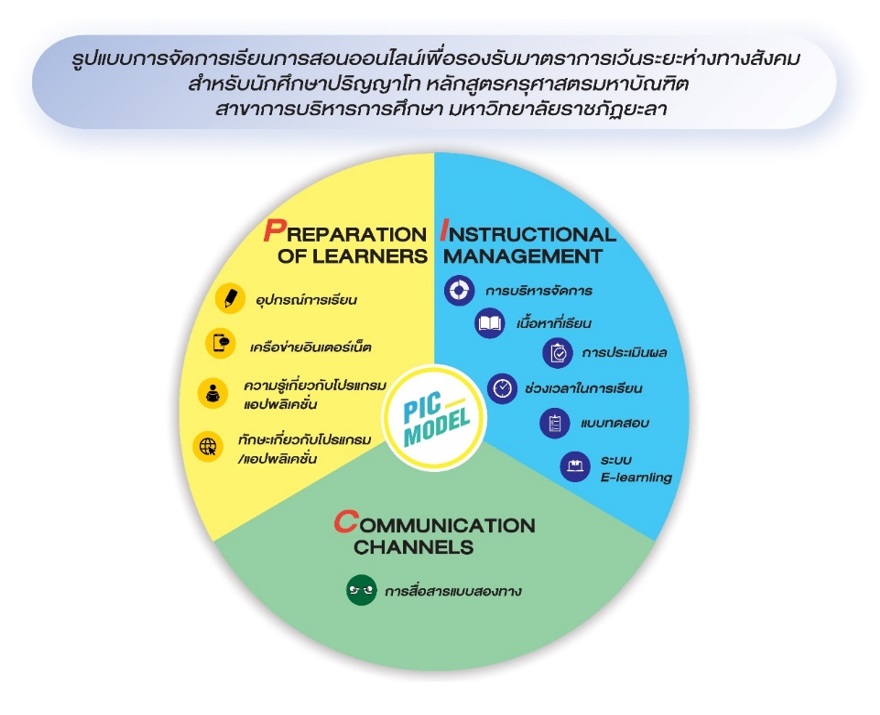
1. ความเป็นไปได้ในการจัดการเรียนการสอนออนไลน์ ด้านความจำเป็น พบว่ามีความจำเป็น ร้อยละ 100 ด้านความพร้อม ส่วนใหญ่มีความพร้อม ร้อยละ 75.86 ด้านการเตรียมความพร้อม พบว่า ความพร้อมอุปกรณ์การเรียน ร้อยละ 100 ด้านองค์ประกอบพื้นฐาน พบว่า การบริหารจัดการ ร้อยละ 86.21 ด้านช่องทางการสื่อสาร พบว่า การสื่อสารแบบสองทาง มีความเหมาะสม ร้อยละ 82.76
2. รูปแบบการจัดการเรียนการสอนออนไลน์เพื่อรองรับมาตรการเว้นระยะห่างทางสังคมสำหรับนักศึกษาปริญญาโท หลักสูตรครุศาสตรมหาบัณฑิต สาขาการบริหารการศึกษา มหาวิทยาลัยราชภัฏยะลา คือ PIC Model
ผลการประเมินความเป็นไปได้ของ PIC Model พบว่า ส่วนใหญ่มีความเหมาะสมในการนำมาจัดการเรียนการสอนออนไลน์ อยู่ในระดับมากและมากที่สุด ซึ่งการวิจัยครั้งนี้เป็นเพียงการประเมินความเป็นไปได้ของ PIC Model โดยยังไม่ได้นำ PIC Model มาทดลองใช้จริง
เอกสารอ้างอิง
Bill Pelz. (2003). (My) Three Principles of Effective Online Pedagogy. Journal of Asynchronous Learning Networks, 14(1), 103-116.
Buason, R. (2009). Research and Development of the Educational Process. Bangkok: Samai.
Dhammametha, T. (2014). E-Learning: from Theory to Practice. Bangkok: Office of the Higher Education Commission. (in Thai)
Mezirow, J. (2002). Learning to Think Like an Adult: Core Concepts of Transformation Theory. In: Mezirow J, ed. Learning as Transformation: Critical Perspectives on a Theory in Progress. Jossey Bass.
Ministry of Education. (2005). Learning and Teaching Management That Focuses on the Student Center. Bangkok: Ministry of Education. (in Thai)
Siritarungsri, B. (2020). The Management of Online Learning and Teaching: Towards the Professional Standards Framework for Teaching and Supporting Learning in Higher Education. The Journal of Chulabhorn Royal Academy, 2(3), 1-17. (in Thai)
Sriwachirangkoon, B. (2019). The Development Model of Praborommarajchanok Institute’s Massive Open Online Course (PI-MOOC). Journal of Health Science Boromarajonani College of Nursing Sunpasitthiprasong, 3(1), 33-51. (in Thai)
ดาวน์โหลด
เผยแพร่แล้ว
ฉบับ
ประเภทบทความ
สัญญาอนุญาต
1. บทความหรือข้อคิดเห็นใด ๆ ที่ปรากฏในวารสารเครือข่าย วิทยาลัยพยาบาลและการสาธารณสุขภาคใต้ ที่เป็นวรรณกรรมของผู้เขียน บรรณาธิการหรือเครือข่ายวิทยาลัยพยาบาลและวิทยาลัยการสาธารณสุขภาคใต้ ไม่จำเป็นต้องเห็นด้วย
2. บทความที่ได้รับการตีพิมพ์ถือเป็นลิขสิทธิ์ของ วารสารเครือข่ายวิทยาลัยพยาบาลและการสาธารณสุขภาคใต้