ประสิทธิภาพของการใช้สื่อวีดิทัศน์เรื่องการเช็ดตา ในรายวิชาปฏิบัติการพยาบาลบุคคลที่มีปัญหาสุขภาพ 2 วิทยาลัยพยาบาลบรมราชชนนี นครราชสีมา
คำสำคัญ:
ประสิทธิภาพ, สื่อวีดิทัศน์เรื่องการเช็ดตา, ฝึกภาคปฏิบัติบทคัดย่อ
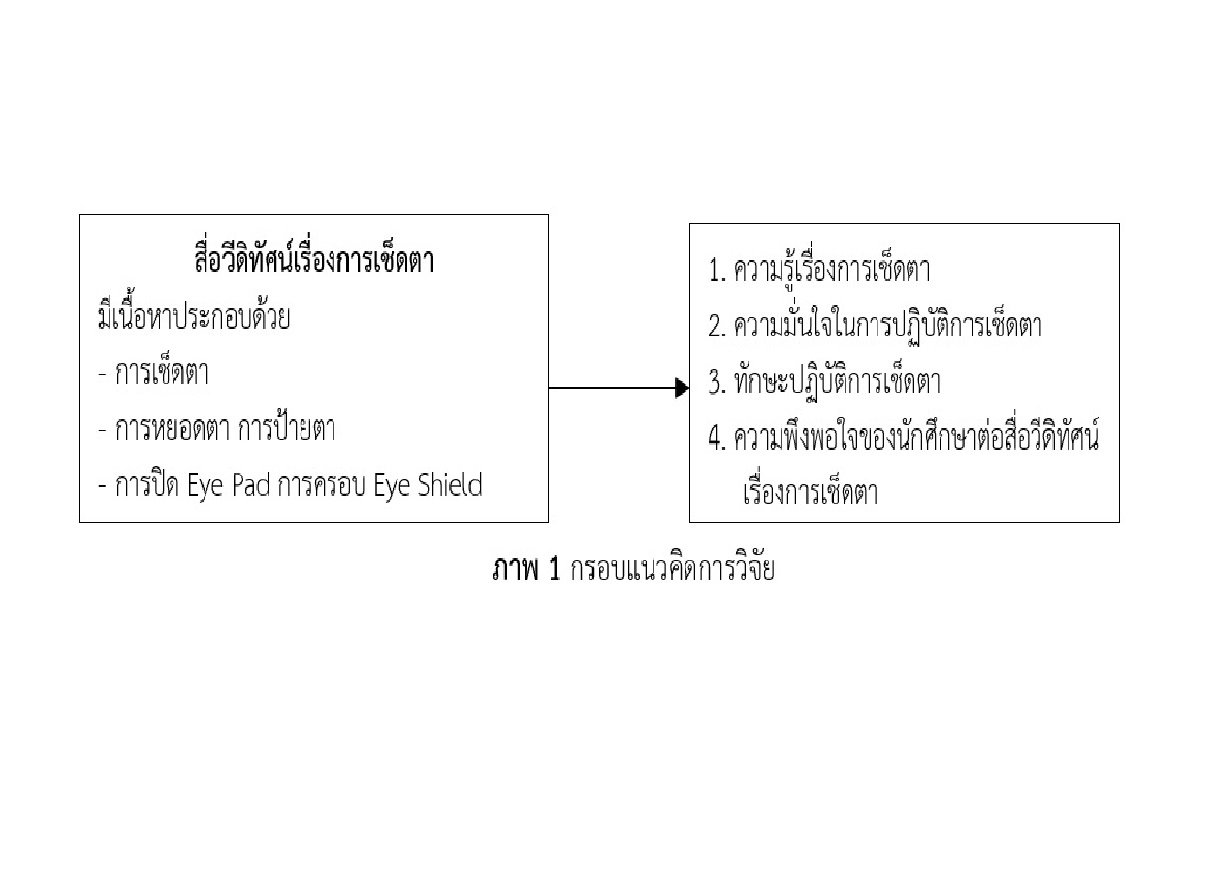
การวิจัยกึ่งทดลอง แบบสองกลุ่มวัดก่อนและหลังการทดลอง มีวัตถุประสงค์เพื่อ 1) เปรียบเทียบคะแนนความรู้เรื่องการเช็ดตา 2) เปรียบเทียบความมั่นใจในการปฏิบัติการเช็ดตา 3) ศึกษาคะแนนทักษะปฏิบัติการ เช็ดตา 4) ศึกษาความพึงพอใจของนักศึกษาต่อสื่อวีดิทัศน์เรื่องการเช็ดตา กลุ่มตัวอย่างคือนักศึกษาพยาบาลชั้นปีที่ 3 จำนวน 66 คน แบ่งเป็นกลุ่มควบคุมและกลุ่มทดลอง เครื่องมือที่ใช้ในการทดลองคือ 1) สื่อวีดิทัศน์เรื่องการเช็ดตา เครื่องมือที่ใช้ในการรวบรวมข้อมูลประกอบด้วย 1) แบบทดสอบความรู้เรื่องการเช็ดตา 2) แบบประเมินความมั่นใจในการปฏิบัติการเช็ดตา 3) แบบวัดการปฏิบัติการเช็ดตา 4) แบบประเมินความพึงพอใจของนักศึกษาต่อสื่อวีดิทัศน์ การตรวจสอบคุณภาพเครื่องมือโดยการหาค่าสัมประสิทธิ์อัลฟ่าของครอนบาค ได้ค่าความเที่ยงเท่ากับ .90 และ .82 ส่วนแบบทดสอบความรู้เรื่องการเช็ดตา ทดสอบได้ค่า p=.41, r=.56 วิเคราะห์ข้อมูลโดยใช้สถิติเชิงพรรณนา Paired t-test และ Independent t-test ผลการวิจัยพบว่า
1. กลุ่มที่ได้รับการสอนด้วยสื่อวีดิทัศน์มีคะแนนเฉลี่ยความรู้เรื่องการเช็ดตา สูงกว่ากลุ่มที่ได้รับการสอนแบบอธิบายปกติอย่างมีนัยสำคัญทางสถิติที่ระดับ .001 (t=-2.472)
2. กลุ่มที่ได้รับการสอนด้วยสื่อวีดิทัศน์มีคะแนนเฉลี่ยความมั่นใจในการปฏิบัติการเช็ดตาสูงกว่ากลุ่มที่ได้รับการสอนแบบอธิบายปกติอย่างมีนัยสำคัญทางสถิติที่ระดับ .05 (t= 2.833)
3. กลุ่มที่ได้รับการสอนด้วยสื่อวีดิทัศน์มีคะแนนเฉลี่ยทักษะปฏิบัติการเช็ดตาสูงกว่ากลุ่มที่ได้รับการสอนแบบอธิบายปกติอย่างมีนัยสำคัญทางสถิติที่ระดับ .001 (t=-8.321)
4. ความพึงพอใจโดยรวมของนักศึกษาต่อสื่อวีดิทัศน์เรื่องการเช็ดตา (ด้านเนื้อหา) เท่ากับ 4.48 (SD=.37) (ด้านคุณภาพ) เท่ากับ 4.43 (SD= .35)
ผู้สอนควรพัฒนาสื่อวีดิทัศน์ให้สอดคล้องกับความต้องการการเรียนรู้ของนักศึกษา เพื่อให้นักศึกษาสนใจศึกษาด้วยตนเองจึงเกิดองค์ความรู้ ความมั่นใจ และทักษะการปฏิบัติต่อไป
เอกสารอ้างอิง
Apisara, J., & Orachon, S. (2015). Effects of Using Daily Care Plan Video Teaching on Clinical Self-Confidence and Satisfaction of Nursing Students, Kuakarun Faculty of Nursing, Navamindradhiraj University. Kuakarun Journal of Nursing, 22(1), 17-34. (in Thai)
Burns, N., & Grove, S. (2009). The Practice of Nursing Research: Appraisal, Synthesis and Generation of Evidence. (6th ed.). Saunders Elsevier: St. Louis.
Chitraporn, C., & Noppadon, P. (2019). The Development of Instructional Video on Physical Examination in Health Assessment Course based on Flipped Classroom Concept. EAU Heritage Journal Science and Technology, 11(1), 249-258. (in Thai)
Knowles, M. (1984). The Adult Learner: A Neglected Species. (3rd ed.). Houston: Gulf.
Moon, Y., Yong, Y., & Hyejung, L. (2010). Nursing Student’s Self-Evaluation Using a Video Recording of Foley Catheterization: Effects on Students’ Competence, Communication Skills, and Learning Motivation. Journal of Nursing Education, 49(7), 402-405.
Patomporn, P., & Sawittree, W. (2017). Development of Video Media on Breathing Meditation Program for Nursing Students for Stress Relief during Examinations. EAU Heritage Journal Social Science and Humanity, 7(3), 70-80. (in Thai)
Piriyakorn, K., Thrngsuda, K., & Saranya, P. (2012). Satisfaction and Learning Outcomes of Nursing Students about Learning Media for Promote to Basic Nursing Skills. Retrieved October 9, 2018 from http://mis.cola.kku.ac.th/files/gs_attachment_files/files/465/HS_ 020.pdf?1402718961.
Polit, D., & Hungler, B. (1999). Nursing Research Principles and Methods. (6th ed.). Philadelphia: Lippincott.
Sakchai, W., & Kittichai, A. (2008). Ophthalmology Nursing Textbook. Bangkok: Good typing. (in Thai)
Suthisa, L., Thitima, S., & Preecha, L. (2019). Development of Pediatric Medication Administration Multimedia for Nursing students. Nursing Journal, 46(1), 109-120. (in Thai)
Wiyada, P. (2013). The Efficiency of Insructional Media of Vaginal Douche for Nursing Care of Persons with Health Problem Practicum III, Boromarajonani College of Nursing, Udonthani. Journal of Nurses Association of Thailand Northeastern Devision, 31(3), 99-106. (in Thai)
ดาวน์โหลด
เผยแพร่แล้ว
ฉบับ
ประเภทบทความ
สัญญาอนุญาต
1. บทความหรือข้อคิดเห็นใด ๆ ที่ปรากฏในวารสารเครือข่าย วิทยาลัยพยาบาลและการสาธารณสุขภาคใต้ ที่เป็นวรรณกรรมของผู้เขียน บรรณาธิการหรือเครือข่ายวิทยาลัยพยาบาลและวิทยาลัยการสาธารณสุขภาคใต้ ไม่จำเป็นต้องเห็นด้วย
2. บทความที่ได้รับการตีพิมพ์ถือเป็นลิขสิทธิ์ของ วารสารเครือข่ายวิทยาลัยพยาบาลและการสาธารณสุขภาคใต้