
Risk Incidence after the Usage of Guidelines for the Prediction of Cesarean Section due to Cephalo-Pelvic Disproportion
Keywords:
Risk Incidence, Guidelines for Predicting Cesarean Section, CephaloPelvic DisproportionAbstract
Cephalo Pelvic Disproportion (CPD) is a common obstetrics health problem, and one of the indictors for Cesarean section which causes the risks to mothers and their babies. Purposes of this study were: to explore the risk incidence caused from non-compliance with the guidelines, and to determine the perspectives of users of the guidelines. Both quantitative and qualitative methods were utilized in the study. Retrospective design was used to collect the data after the usage of the guidelines. Participants were 35 term-pregnant women who were admitted to Labor Room, Lampang Hospital with the risk of CPD, between November, 2015 and March, 2018. Qualitative data were obtained from providers who involved with the guidelines using in-depth interviews. Quantitative data were analyzed using descriptive statistics, and, qualitative data were analyzed using content analysis technique.
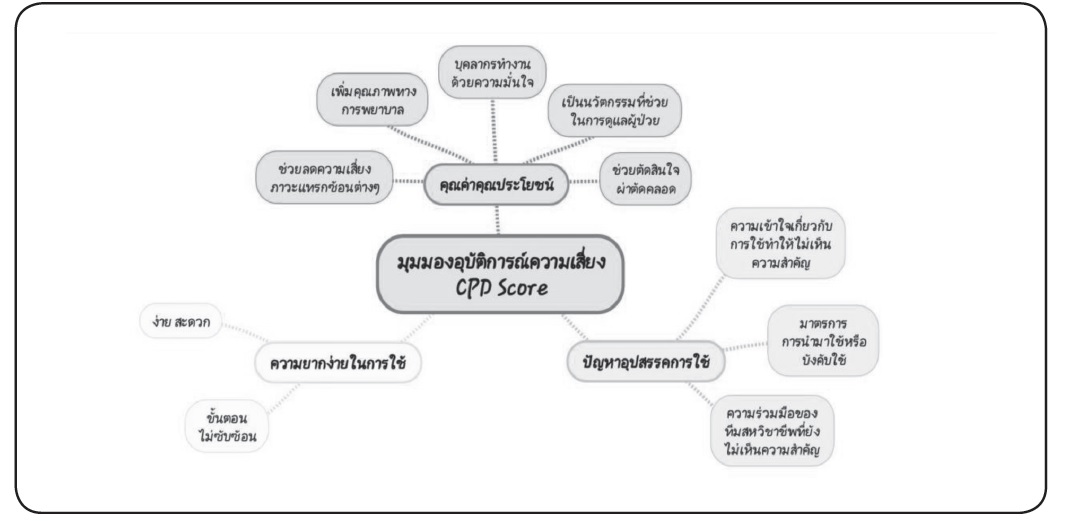
The Results showed that: the risk incidences of mothers; most mothers (71.42%) had risk scores for the Cesarean section at moderate level, there were one case of post- partum hemorrhage, and 2 cases of hysterectomy, which accounted to 2.85%, and 5.71%, respectively. The risk incidences of infants; there were 14 cases of infants with Birth Asphyxia, and 11 infants with hypoglycemia which accounted to 40.0%, and 31.43%, respectively. For providers’ perspectives on the usage of guidelines: in the aspect of values and benefit of the guidelines, it was found that the multidisciplinary team did not weigh value on the usage of the assessment tool for pregnant women with moderate risk, and high risk. The multidisciplinary team still used the existing guidelines.
Recommendations: enhancing awareness for using the guidelines and assessment tool among health providers, and providing the policy may help increase the quality of care and assure the safety of practice for mothers and their babies.
Downloads
Published
Issue
Section
License
Articles, information, images, etc., published in the Journal of Health Sciences Scholarship is the copyright of the Journal of Health Sciences Scholarship. If any person or entity wants to bring all or part of it to publish or to do any action must be authorized by a letter from the Journal of Health Sciences Scholarship. The content and information in the article published in the Journal of Health Sciences Scholarship is considered and the responsibility of the author of the article directly, which editorial journals, no need to agree or share any responsibility.
Messages and Comments The author of the article. This is not the opinion of the journal, and the journal does not need to agree with the text and any comments of the author. The magazine reserves the right to consider publication as appropriate include the correct or refine the language to meet the criteria.

