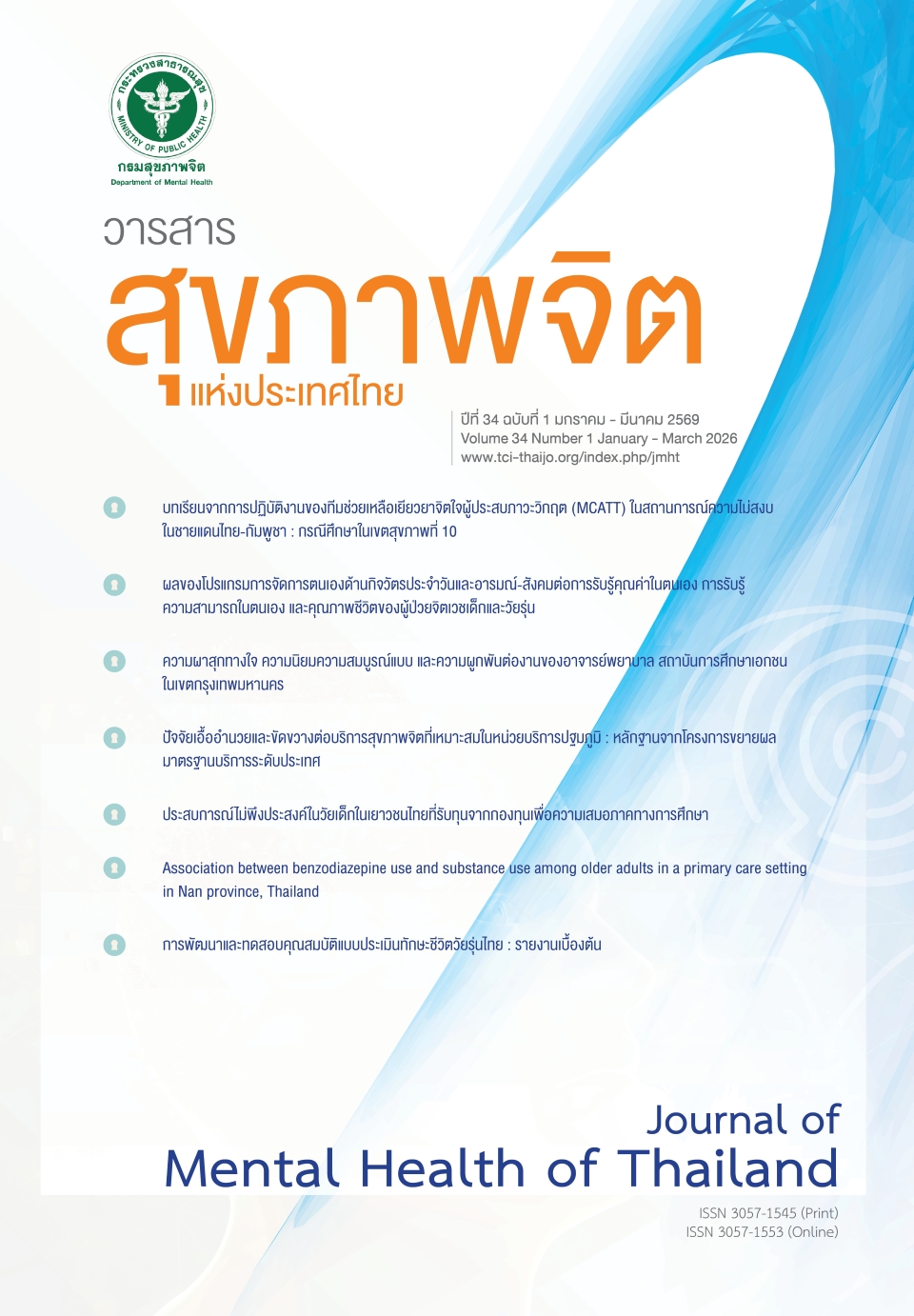
บทเรียนจากการปฏิบัติงานของทีมช่วยเหลือเยียวยาจิตใจผู้ประสบภาวะวิกฤต (MCATT) ในสถานการณ์ความไม่สงบในชายแดนไทย-กัมพูชา : กรณีศึกษาในเขตสุขภาพที่ 10
DOI:
https://doi.org/10.64838/jmht.2026.287274คำสำคัญ:
ความไม่สงบในชายแดน, ทีมช่วยเหลือเยียวยาจิตใจ, ไทย-กัมพูชา, ภาวะวิกฤตบทคัดย่อ
การถอดบทเรียนครั้งนี้วิเคราะห์ปัจจัยสำเร็จ อุปสรรค และประเด็นที่ควรเรียนรู้และได้รับการพัฒนา เพื่อปรับปรุงและยกระดับการทำงานของศูนย์ปฏิบัติการภาวะฉุกเฉิน (Emergency Operations Center: EOC) และทีมช่วยเหลือเยียวยาจิตใจผู้ประสบภาวะวิกฤต (Mental Health Crisis Assessment and Treatment Teams: MCATT) จากสถานการณ์ความไม่สงบในชายแดนไทย-กัมพูชาในเขตสุขภาพที่ 10 โดยใช้ข้อมูลจากการสัมภาษณ์เชิงลึกและการสนทนากลุ่มสหวิชาชีพรวม 149 คน
ผลการดำเนินงานพบว่า ทีม MCATT สามารถคัดกรองสุขภาพจิตในประชาชนที่ได้รับผลกระทบในพื้นที่สีแดงและสีส้มได้ครอบคลุมทุกคน โดยผู้ที่มีความเครียดสูงและเสี่ยงต่อการฆ่าตัวตายที่ต้องได้รับการติดตามต่อเนื่อง 3,437 คน การติดตามในระยะต่อเนื่องพบว่า หลังได้รับมาตรการเยียวยาจิตใจ ร้อยละ 94 - 95 มีความเสี่ยงลดลง ปัจจัยสำเร็จที่สำคัญ ได้แก่ ระบบบริหารจัดการภายใต้ศูนย์ EOC ที่เข้มแข็งและยืดหยุ่น การนำนวัตกรรมมาใช้อย่างเหมาะสมและมีประสิทธิภาพ เช่น ระบบจิตเวชทางไกลและการบริหารคลังยา และระบบการคัดกรองและส่งต่อที่ชัดเจนและสอดคล้องกับบริบทพื้นที่ ทั้งนี้ ข้อเสนอแนะสำคัญ ได้แก่ การจัดทำระบบฐานข้อมูลกลางที่สามารถเข้าถึงได้ทันทีเพื่อลดความซ้ำซ้อนของข้อมูล การยกระดับศักยภาพและสวัสดิการของผู้ปฏิบัติงาน และการวางแผนเชิงรุกเพื่อเตรียมความพร้อมสำหรับเหตุการณ์วิกฤตในอนาคต
Downloads
เอกสารอ้างอิง
Department of Mental Health. Operational manual for Mental Health Crisis Assessment and Treatment Team (MCATT). Revised ed. Nonthaburi: Department of Mental Health, Ministry of Public Health; 2024. (in Thai)
Kongsuk T, Arunpongpaisal S, Janthong S, Prukkanone B, Sukhawaha S, Leejongpermpoon J. Criterion-related validity of the 9 Questions Depression Rating Scale revised for Thai Central dialect. Journal of the Psychiatric Association of Thailand. 2018;63(4):321-34. (in Thai)
Panyawong W, Pavasuthipaisit C, Santitadakul R. Validation of the Thai version of the Patient Health Questionnaire for Adolescents (PHQ-A) in adolescent psychiatric patients. International Journal of Child Development and Mental Health. 2020;8(1):30-40.
Boonyamalik P. The establishment of the psychological impact scale for crisis events-10 (PISCES-10). Journal of Srithanya Hospital. 2014;15(1):8-21. (in Thai)
Ketumarn P, Piyasilpa V, Sitdhiraksa N, Pithayaratsathien N, Plubrukan R, Dumrongphol H, et al. Concurrent validity testing of CRIES-8 screening questionnaire for PTSD from the study of post-traumatic stress disorder in students, 23 months after tsunami. Journal of the Psychiatric Association of Thailand. 2008;53(2):177-86. https://www.psychiatry.or.th/JOURNAL/53-2/04-Panom.pdf (in Thai)
IASC Reference Group on Mental Health and Psychosocial Support in Emergency Settings. Interim briefing note addressing mental health and psychosocial aspects of COVID-19 outbreak [Internet]. Geneva: Inter-Agency Standing Committee; 2020 [cited 2026 Feb 24]. Available from: https://interagencystandingcommittee.org/sites/default/files/migrated/2020-04/IASC%20Interim%20Briefing%20Note%20on%20COVID-19%20Outbreak%20Readiness%20and%20Response%20Operations%20-%20MHPSS%20%28Thai%29.pdf (in Thai)
ดาวน์โหลด
เผยแพร่แล้ว
รูปแบบการอ้างอิง
ฉบับ
ประเภทบทความ
สัญญาอนุญาต
ลิขสิทธิ์ (c) 2026 วารสารสุขภาพจิตแห่งประเทศไทย

อนุญาตภายใต้เงื่อนไข Creative Commons Attribution-NonCommercial-NoDerivatives 4.0 International License.
- ผู้อ่านสามารถนำข้อความ ข้อมูล จากวารสารไปใช้ไปใช้ประโยชน์ทางวิชาการได้ เช่น เพื่อการสอน เพื่อการอ้างอิง แต่การนำไปใช้เพื่อวัตถุประสงค์อื่น เช่น เพื่อการค้า จะต้องได้รับอนุญาตเป็นลายลักษณ์อักษรจากกรมสุขภาพจิตก่อน
- ความคิดเห็น ข้อมูล และบทสรุปต่าง ๆ ที่ลงตีพิมพ์ในวารสารสุขภาพจิตแห่งประเทศไทยเป็นของผู้เขียนบทความและมิได้แสดงว่ากองบรรณาธิการหรือกรมสุขภาพจิตเห็นพ้องด้วย