Developing Model for the Prevention of Volume Overload of End Stage Renal Disease among Hemodialysis Patients in NongBua Lam Phu Hospital
Keywords:
Volume Overload, End Stage Renal Disease, Hemodialysis, Quality of lifeAbstract
An action research aimed to study the developing model for the prevention of volume overload of end stage renal disease among hemodialysis patients in NongBuaLam Phu Hospital. Data collection was done between March to June 2018. Research outcomes showed that more than half of patients were female (59.60%), married 75.60%, highest education was junior secondary school level (48.40%), Civil servant was 35.50% and a median of salary was 15,000 Thai Baht. There were four steps in Model for the Prevention of Volume Overload. First is Self management reflection with behavior evaluation and health education by Hemodialysis nurses and Multidisciplinary team. Second, volume overload control goal. Third, behavior plan such as food consumption control, drinking water control, medicine intake control and weight control. Final is an evaluation step, not only weight will be investigated when patients come back for hemodialysis also volume overload control and struggles will be assessed by patients and their family members, more than that taking note of food consumption and appropriate volume overload management will be supported by profession team. After participate the new model, patients can control their volume overload better than the past around 38.46%. Quality of life was appeared in a moderate level ( X ± S.D. :63.11 ± 13.26). In term of satisfaction dimension, patients and families were at the high level ( X ± S.D. :4.71 ± 0.34) and profession team was at the high level ( X ± S.D. :4.06 ± 0.31) Encouraging and raising ways will be continue for patients and families understand especially an insignificant volume overload control. This successful solution will sustain a normal volume.
References
โรงพยาบาลหนองบัวลำภู. รายงานผลการดำเนินงานหน่วยหน่วยไตเทียมโรงพยาบาลหนองบัวลำภู ปี 2561. หนองบัวลำภู: 2561.
สมาคมโรคไตแห่งประเทศไทย. แนวทางเวชปฏิบัติสำหรับโรคไตเรื้อรังก่อนการบำบัดทดแทนไต พ.ศ. 2552. กรุงเทพฯ: หจก.สำนักพิมพ์เบอริงเกอร์ อินเกลไฮม์ (ไทย).; 2552.
Creer LT. Self-management of chronic illness. Handbook of selfregulation. California: Academic; 2000. 601–629 p.
พัสมณฑ์ คุ้มทวีพร. การพยาบาลผู้ใหญ่และผู้สูงอายุ 2. กรุงเทพฯ: ฮายาบุสะ กราฟฟิก; 2550.
วลี กิตติรักษ์ปัญญา, นิภาวรรณ สามารถกิจ, เขมารดี มาสิงบุญ. ผลของโปรแกรมการจัดการตนเองร่วมกับการจัดการทางคลินิกต่อพฤติกรรมการจัดการตนเองน้ำหนักที่เพิ่มขึ้น และภาวะความดันโลหิตต่ำขณะฟอกเลือดในผู้ป่วยโรคไตเรื้อรังที่ได้รับการฟอกเลือดด้วยเครื่องไตเทียม. วารสารสภาการพยาบาล. 2556;28(2):109–22.
ชัชวาล วงค์สารี. ผลของโปรแกรมการให้ความรู้แบบเข้มข้นต่อความรู้เรื่องการจำกัดน้ำ ในผู้ป่วยโรคไตวายเรื้อรังระยะสุดท้ายที่ฟอกเลือดด้วยเครื่องไตเทียม. วิทยานิพนธ์ พยาบาลศาสตรมหาบัณฑิตสาขาการพยาบาลผู้ใหญ่ มหาวิทยาลัยหัวเฉียวเฉลิมพระเกียรติ, กรุงเทพฯ. 2557.
กิติมา เศรษฐ์บุญสร้าง. การเปรียบเทียบคุณภาพชีวิตของผู้ป่วยไตวายเรื้อรังระยะสุดท้ายที่รักษาโดยการฟอกเลือดและล้างไตทางช่องท้องโรงพยาบาลสมเด็จพระยุพราชเลิงนกทา. ยโสธรเวชสาร. 2557;16(1):18–24.
อมรรัตน์ ศรีวาณัติ, อรนันท์ หาญยุทธ. ความพึงพอใจต่อคุณภาพบริการของผู้ป่วยฟอกเลือดด้วยเครื่องไตเทียมในศูนย์ไตเทียมเอกชนในเขตกรุงเทพมหานครและปริมณฑล. 1. 2560;9(1):187–96.
นพมาศ ขำสมบัติ, กัญญดา ประจุศิลป. ผลของการใช้รูปแบบการพยาบาลเจ้าของไข้ของผู้ป่วยไตวายเรื้อรังต่อภาวะนำเกินและความพึงพอใจในบริการพยาบาล. 2014;15(2):405–13.
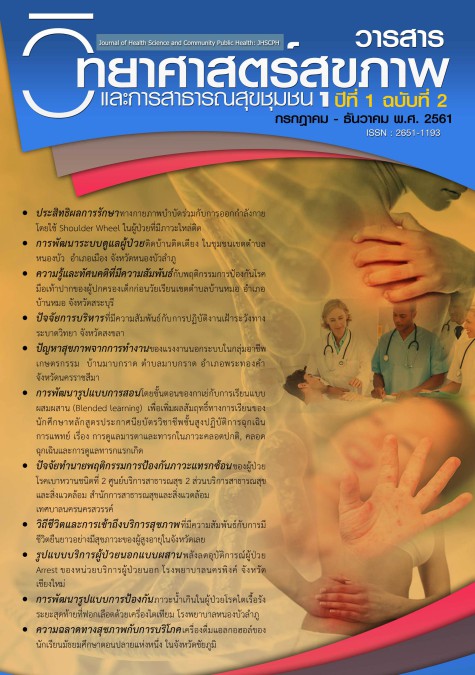
Downloads
Published
How to Cite
Issue
Section
License
บทความที่ได้รับการตีพิมพ์เป็นลิขสิทธิ์ของวารสารวิทยาศาสตร์สุขภาพและการสาธารณสุขชุมชน (Journal of Health Science and Community Public Health)
ข้อความที่ปรากฏในบทความแต่ละเรื่องในวารสารวิชาการเล่มนี้เป็นความคิดเห็นส่วนตัวของผู้เขียนแต่ละท่านไม่เกี่ยวข้องกับวิทยาลัยการสาธารณสุขสิรินธรจังหวัดขอนแก่น และคณาจารย์ท่านอื่นๆในวิทยาลัยฯ แต่อย่างใด ความรับผิดชอบองค์ประกอบทั้งหมดของบทความแต่ละเรื่องเป็นของผู้เขียนแต่ละท่าน หากมีความผิดพลาดใดๆ ผู้เขียนแต่ละท่านจะรับผิดชอบบทความของตนเองแต่ผู้เดียว