
Distancing Education: Master of Nursing Science Program; Nursing Administration, Sukhothai Thammathirat Open University
Keywords:
Distance Education, Nursing Administration Program, School of NursingAbstract
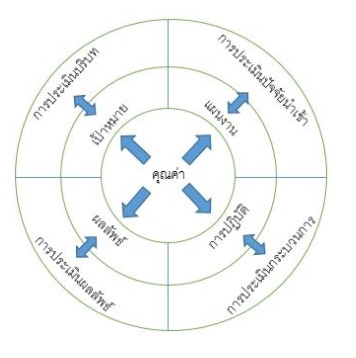
This evaluation research aimed to assess preliminary context factors, input factors, the course application process, and the course results of the Master of Nursing program in Nursing Administration, which underwent revision in 2018.
The study included a total of 256 populations, divided into two groups: 128 of a quantitative data group and 25 of a qualitative data group and represented in various stakeholders including external experts in nursing administration, curriculum instructors and full-time instructors, lecturers of nursing school, supportive staffs, graduated students, graduated colleagues, and graduated commanders. Data were collected from May to June 2022, using two sets of research instruments based on Stufflebeam's CIPP Model evaluation framework with group discussion questions and questionnaires about teaching and learning management of the curriculum. The content validity index ranged from 0.67 to 1.00 with a Cronbach's alpha coefficient between 0.95- 0.99.
The results highlighted on the preliminary context and input factors rated in a highly appropriateness. The teaching and learning process was also rated at the highest level. In terms of curriculum using results overall, it was at a high level. These were concluded that the Master of Nursing Administration Program underwent revision in 2018 has been reflected to all learning outcomes, and rated at a high to the highest level.
Therefore, it should be possibly adjusted the Master of Nursing program in Nursing Administration curriculum revision for 2023 to align with the evolving healthcare landscape with the current context and new normal health conditions.
References
References
Atiya Saraketrin, Daravan Rongmuang & Rungnapa Chantra. (2019). Nursing Education in the 21st Century: Competencies and Roles of Nursing Instructors. Journal of The Royal Thai Army Nurses, 20(1), 12-20. (In Thai)
Blake, N. (2022). Future of Nursing 2020-2030: Supporting the Health and Well-being of Nurses. AACN Advanced Critical Care, 33(1), 99-102.
De Prada E., Mareque M., and Pino-Juste M. (2022). Teamwork skills in higher education: is university training contributing to their mastery? Psicologia: Reflexão e Crítica, 35(5),1-13.
Jintana Artsanthia1 Sunan Leeissarapong2 Patchanee Tamwattananugul. (2022), Future Nursing Educationinthe VUCA World Changingfrom the 2019 Coronavirus Pandemic Situation. APHEIT Journal of Nursing and Health, 4(2), 1-11.
Kennan Foundation-Asia. (2020). 3 Consequences of COVID-19 on Thai Education. Rerived May 14, 2023 from https://www.kenan-asia.org/th/covid-19-education-impact/.
Ljungbeck, B., Sjogren, Sjogren Forss K., Finnbogadottir, H., & Carlson, E. (2021). Content in nurse practitioner education – A scoping review. Nurse Education Today ,98,1-10.
Ministry of Education. (2018). Announcement of Ministry of Education on Graduate Qualification standards Bachelor of Science in Nursing, 2017. Rerived November 15, 2023 from http://www.mua.go.th and http://www.tamanoon.com/eduact/PDF/Act/Education 2542. Pdf. (In Thai)
Office of the national Higher Education, Science Research, and Innovation. (2022) The Report on Thai Higher Education in the context of a Developed Country No. 1: Product and Development of Manpower according to National needs. Bangkok: Ministry of Higher Education, Science Research, and Innovation. (In Thai)
Pramote Thangkratok, Bussarin Lhimsoonthon, Natchaya Palacheewa, Arbkhanok Tongtham. (2021). Online Nursing Education during the Coronavirus-19 Pandemic: A Case Study of the Epidemiology Course. Journal of Thailand Nursing and Midwifery Council. 36 (3) July-September. P 31-44. (In Thai)
Saisamorn Chaleoykitti, Jintana Artsanthia & Magdalena Supaporn Daodee. (2020). The Effect of COVID-19 Disease: Teaching and Learning in Nursing. Journal of Health and Nursing Research, 36(2), 255-261. (In Thai)
School of Nursing. (2018). Master of Nursing Program in Nursing administration, revision 2018. Nonthaburi: Sukhothai Thammathirat Open University. (In Thai)
Sirichai Kanchanawasi. (2015). Curriculum assessment: principles and Practices. Retrived April 2, 2023 from http://www.edu.tsu.ac.th/major/eva/files/journal/scan1.pdf. (In Thai)
Stufflebeam, D.L. (2000). The CIPP Model for Evaluation. n D. L. Stufflebeam, G. F. Madaus, & T. Kellaghan (Eds.), Evalutaion Models: Viewpoints on Educational And Human Services Evaluation (2nd ed., pp. 280-317). Boston, MA: Kluwer Academic.
Sukhothai Thammathirat Open University. (2021). Sukhothai Thammathirat Open University Announcement on desirable Graduate Qualifications 2021. Retrived October 14, 2022 from https://vpn.stou.ac.th/+CSCO+00756767633A2F2F72667265697670722E666762682E6E702E6775++/main/reinventing2022/index.html# (In Thai)
Sukhothai Thammathirat Open University. (2022). STOU Reinventing Plan 2022-2026. Retrived November 27, 2022 from https://www.stou.ac.th/offices/opr/planning/pl_main_v2.1/up/(O4)%20-%20Reinventing%20Plan%202565-2569.pdf (In Thai)
Taba, H. (1962). Curriculum Development: Theory and practice (p.310) New York: Harcourt Brace and World.
Thailand Nursing and Midwifery Council. (2018). Announcement of the core competencies of graduates qualification standards in Bachelor of Science, Higher degree and Advanced practitioner in Nursing. Thailand Nursing Council. Retrived April 8, 2023 from https://www.tnmc.or.th/images/userfiles/files/004.pdf. (In Thai)
Thanin Auapithorn. (2017). “How will humans create new skills-learning o cope with future, changes?” Retrived Octoble 4, 2023 from https://thestandard.co/learning-for-change/. (In Thai)
Wattanaporn RaNguptook. (2020). Thai Learners’ Key Competencies in a VUCA World. Journal Of Teacher Professional Development, 1(1), 8-18. (In Thai)
Downloads
Published
Issue
Section
License
Copyright (c) 2023 Journal of Nursing and Education

This work is licensed under a Creative Commons Attribution-NonCommercial-NoDerivatives 4.0 International License.



