
The Family-Centered Approach to develop Nursing and Other Medical Students' Interprofessional Collaborative Competency in Patient Care
Keywords:
Interprofessional Education, Family-Centered Approach, Interprofessional Collaboration, Nursing Students, Medical StudentsAbstract
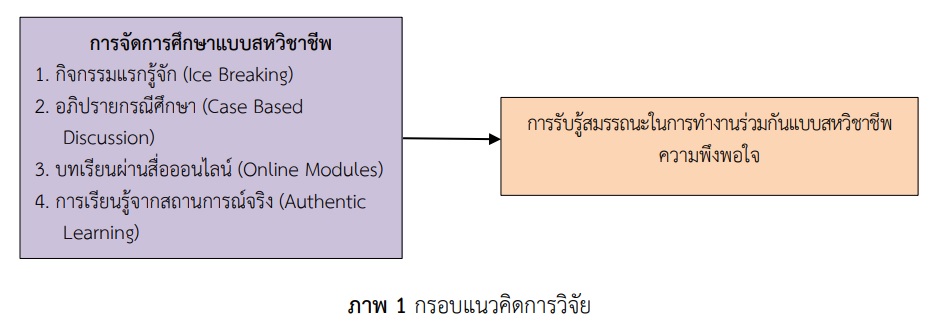
This one-group pretest-posttest quasi-experimental study, based on the family-centered approach, tried to measure the effects of interprofessional education on nursing and other medical students’ collaborative competency for patient care. The subjects were 54 nursing and other medical students, all selected by simple random sampling. Research instruments were an interprofessional education model, as well as an interprofessional collaborative competency questionnaire and some satisfaction questionnaire. Cronbach’s alpha reliability coefficient of instruments was equal to .81, and .86, respectively. The data were analyzed by using descriptive statistics, and average scores of students’ interprofessional collaborative competency for patient care were compared before and after the experiment using dependent t-test statistic.
The results showed that the student’s interprofessional collaborative competency for patient care was significantly higher than before at p<.05. The overall satisfaction scores were at a high level (M=3.93, SD=0.76).
Interprofessional education, using the family-centered approach, can develop the interprofessional collaborative competency for caring for patients.
References
Amédée-Manesme C-O, Barthélémy F, Maillard D. (2019). Computation of the corrected Cornish–Fisher expansion using the response surface methodology: application to VaR and CVaR. Annals of Operations Research, 281(1/2), 423–53.
Bosch, B. & Mansell, H. (2015). Interprofessional Collaboration in Health Care: Lessons to be Learned from Competitive Sports. Canadian Pharmacists Journal, 148(4), 176-179. doi: https://doi.org/10.1177/1715163515588106
Girard, M. A. (2021). Interprofessional Education and Collaborative Practice Policies and Law: an International Review and Reflective Questions. https://doi.org/10.1186/s12960-020-00549-w
Guraya, S. Y. & Barr, H. (2018). The Effectiveness of Interprofessional Education in Healthcare: A Systematic Review and Meta-Analysis. The Kaohsiung Journal of Medical Sciences, 34(3), 160-165. doi: https://doi.org/10.1016/j.kjms.2017.12.009
Petursdottir, A. B., Haraldsdottir, E. & Svavarsdottir, E. K. (2019). The Impact of Implementing an Educational Intervention to Enhance a Family-Oriented Approach in Specialised Palliative Home Care: A Quasi-Experimental Study. Scandinavian Journal of Caring Science, 33, 342–350. doi: 10.1111/scs.12628
Schmitz, C. C., Radosevich, D. M., Jardine, P., MacDonald, C. J., Trumpower, D., & Archibald, D. (2017). The Interprofessional Collaborative Competency Attainment Survey (ICCAS): A replication validation study. Journal of Interprofessional Care, 31(1), 28-34. https://doi.org/10.1080/13561820.2016.1233096
Sethasathie, S. (2015). A Model of Interprofessional Education (IPE) in Department of Physical Medicine and Rehabilitation, Udonthani Hospital. Journal of Thai Rehabilitation Medicine, 25(2), 65-70. doi:10.14456/jtrm.2015.12 (in Thai)
Sarakshetrin, A., Sriyasak, A., Ketin, V. & Rongmuang, D. (2019). A Development of Interprofessional Education Learning Model for Health Promotion among the Elderly in the Community. Journal of Health and Nursing Research, 35(2), 140-151. (in Thai)
Sarakshetrin, A., Sriyasak, A., Kunlaka, S., Kitsomporn, L., & Intongpan, O. (2019). The Effect of Collaboration in Multidisciplinary Teams, Learning the Roles of Multidisciplinary Team. Journal of Community Public Health, 6(1), 125-135.
Srisathidnarakool, B. (2020). G*Power: Effect Size, Power Analysis, Optimal Sample Size Calculations Using G*Power Software. Bangkok: Chulalongkorn University. (in Thai)
Suriyanimitsuk, T., Reunreang, T., Seubyart, E., Patnattee, K. & Yimyoung, A. (2020). Results of Interprofessional Education (IPE) on Health Promotion in Pregnancy for Interprofessional Collaborative Competency Attainment. Journal of The Police Nurses, 12(2), 380-387. (in Thai)
World Health Organization. (2010). Framework for Action on Interprofessional Education and Collaborative Practice. Geneva: Switzerland.
Wang, Y. K., Lee, M., Teh, N. K., & Tan, A. P. (2021). Nurse Teachers' Perceptions of Interprofessional Education for Health Professions Students. Singapore Nursing Journal, 48(2), 13-19.
Yuennan, C. (2017). A Concept of Family-Centered Nursing Care among Children with Critical and Chronic Illness. Journal of Nurses Association of Thailand Northern Region, 23(2), 59-69.
Downloads
Published
Issue
Section
License
Copyright (c) 2022 Journal of Nursing and Education

This work is licensed under a Creative Commons Attribution-NonCommercial-NoDerivatives 4.0 International License.



