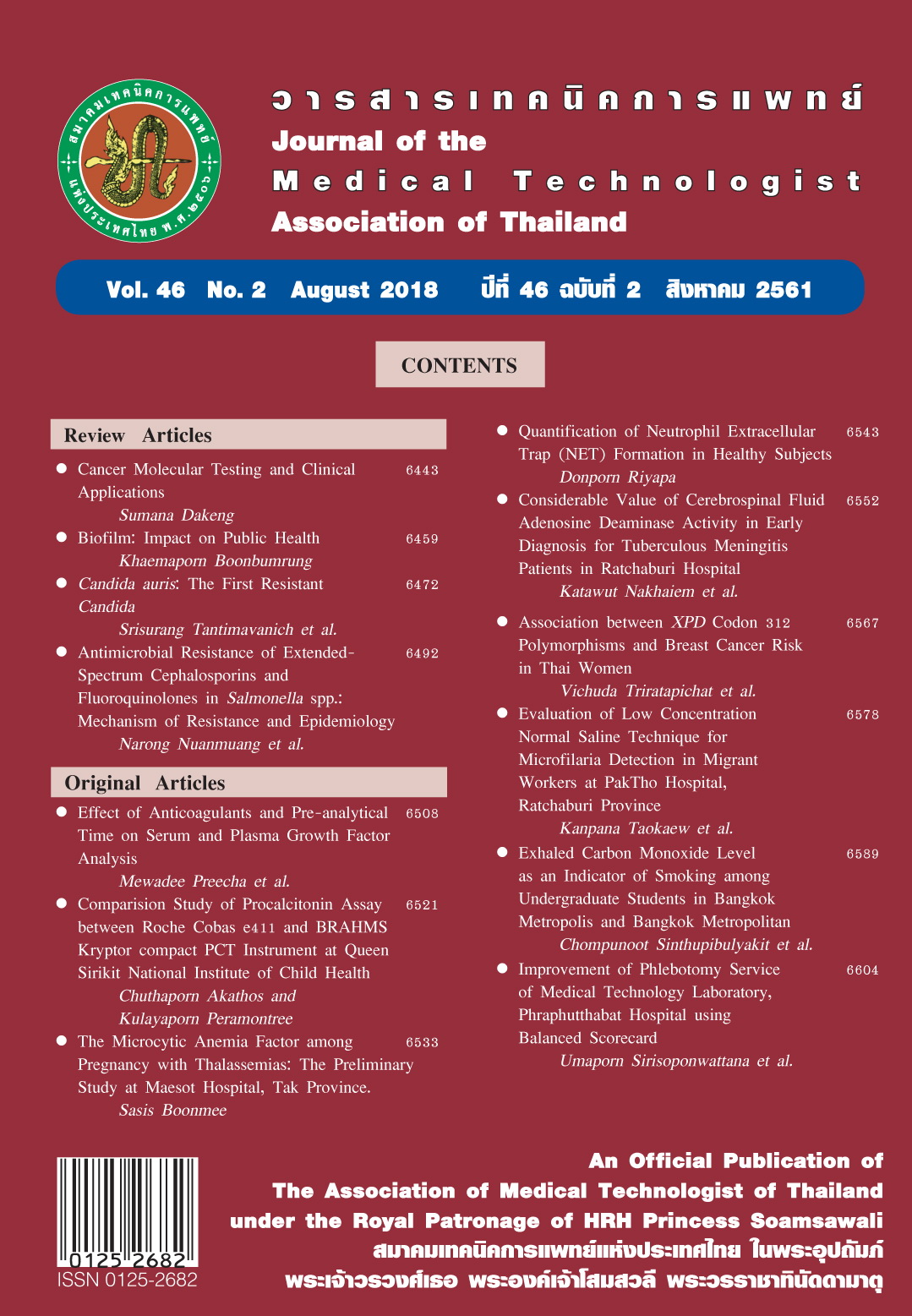
การประเมินผลวิธีการใช้น้ำาเกลือความเข้มข้นต่ำา ในการตรวจเชื้อไมโครฟิลาเรีย ในแรงงานต่างด้าว โรงพยาบาลปากท่อ จังหวัดราชบุรี
คำสำคัญ:
ไมโครฟิลาเรีย, วิธีการใช้น้ำาเกลือความเข้มข้นต่ำ, แรงงานอพยพบทคัดย่อ
โรคเท้าช้างเกิดจากเชื้อไมโครฟิลาเรีย ได้แก่ Wuchereria bancrofti และ Brugia malayi
ซึ่งพบการระบาดทั่วโลก รวมทั้งในกลุ่มแรงงานต่างด้าวในประเทศไทย การศึกษานี้มีวัตถุประสงค์เพื่อ
ประเมินผลวิธีการใช้น้ำาเกลือความเข้มข้นต่ำา (LNSS technique) ในการตรวจหาเชื้อไมโครฟิลาเรีย
ในแรงงานต่างด้าว รพ.ปากท่อ จ.ราชบุรี ประจำาปี พ.ศ. 2559 โดยการตรวจคัดกรองการติดเชื้อ
ไมโครฟิลาเรียในแรงงานต่างด้าว 1,967 ราย ด้วยวิธี thick smear, buffy coat capillary tube และ
LNSS technique ผลการศึกษาพบว่าวิธี LNSS technique สามารถตรวจพบเชอไมโครฟิลาเรียในตัวอย่าง
56 ราย (ร้อยละ 2.8) ขณะที่วิธี thick smear และ buffy coat capillary tube ไม่สามารถตรวจพบเชื้อ
เมอเปรียบเทียบประสิทธิภาพของวิธี LNSS technique กับวิธีการตรวจยืนยันการพบเชอไมโครฟิลาเรีย
คำานวณค่าความไวได้ร้อยละ 100 ความจำาเพาะร้อยละ 100 ค่าทำานายผลบวกร้อยละ 100 ค่าทำานาย
ผลลบร้อยละ 100 และความถูกต้อง ร้อยละ 100 สรุปว่าวิธี LNSS technique เป็นวิธีที่เหมาะสม คือ
ใช้งานง่าย ราคาถูก และมีประสิทธิภาพในการตรวจหาเชอไมโครฟิลาเรีย สามารถประยุกต์ใช้เป็นวิธีการ
ตรวจคัดกรองเชื้อไมโครฟิลาเรียในแรงงานต่างด้าวได้