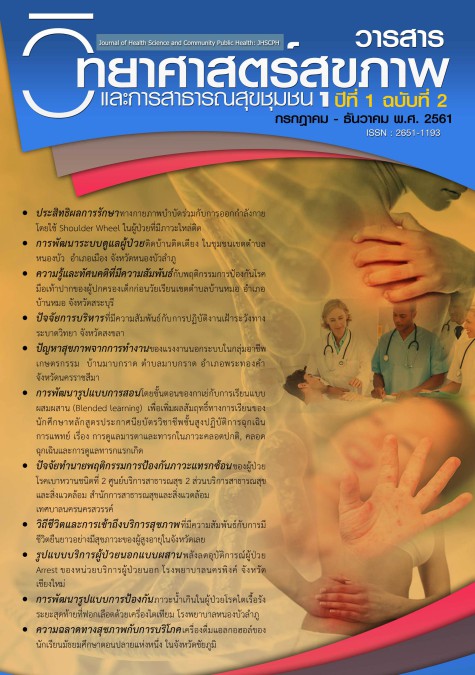
การพัฒนารูปแบบการสอนโดยขั้นตอนของกาเย่กับการเรียนแบบผสมผสาน (Blended learning) เพื่อเพิ่มผลสัมฤทธิ์ทางการเรียนของนักศึกษาหลักสูตรประกาศนียบัตรวิชาชีพชั้นสูงปฏิบัติการฉุกเฉินการแพทย์ เรื่องการดูแลมารดาและทารกในภาวะคลอดปกติ, คลอดฉุกเฉินและการดูแลทารกแรกเกิด
คำสำคัญ:
รูปแบบการเรียนการสอน, การเรียนรู้แบบผสมผสาน, การดูแลมารดาและทารกในภาวะคลอดปกติ คลอดฉุกเฉินและการดูแลทารกแรกเกิดบทคัดย่อ
การวิจัยนี้มีวัตถุประสงค์ 1) เพื่อพัฒนารูปแบบการเรียนการสอน โดยการใช้ขั้นตอนการจัดเรียน การสอนโดยขั้นตอนกาเย่กับการเรียนแบบผสมผสานสาหรับนักศึกษาหลักสูตรประกาศนียบัตรวิชาชีพชั้นสูง ปฏิบัติการฉุกเฉินการแพทย์ (ปวส.ฉพ.) ชั้นปีที่ 2 เรื่องการดูแลมารดาและทารกในภาวะคลอดปกติ คลอด ฉุกเฉินและการดูแลทารกแรกเกิด 2) เพื่อเปรียบเทียบผลสัมฤทธิ์ทางการเรียน 3) เพื่อศึกษาความพึงพอใจต่อ การเรียนการสอนฯ การวิจัยแบ่งเป็น 2 ระยะ คือ ระยะที่ 1 การพัฒนารูปแบบการสอนฯ กลุ่มตัวอย่าง อาจารย์ผู้สอนภาคปฏิบัติ 4 คน และนักศึกษาหลักสูตร ปวส.ฉพ. จานวน 30 คน ในภาคการศึกษาที่ 1 ปี การศึกษา 2559 พบว่า ใช้การเรียนการสอนแบบบรรยายในชั้นเรียนและเอกสารเป็นส่วนใหญ่ ระยะที่ 2 การ ตรวจสอบและปรับปรุงรูปแบบการเรียนการสอนฯ แบ่งเป็น 2 ขั้นตอน คือขั้นตอนที่ 1 การตรวจสอบความตรง ภายในรูปการสอนของเนื้อหาโดยผู้เชี่ยวชาญ จานวน 3 คนคือด้านเนื้อหา ด้านหลักสูตรรวมถึงการเรียนการ สอน และประเมินผล ขั้นตอนที่ 2 ตรวจสอบความตรงภายนอกรูปแบบการสอนใช้การวิจัยเชิงปฏิบัติการ ซึ่ง เป็นการศึกษากลุ่มเดียว ความสอดคล้อง 0.75 ค่าความความเชื่อมั่น 0.82 กลุ่มตัวอย่าง ได้แก่ นักศึกษา หลักสูตร ปวส.ฉพ. จานวน 30 คน ในภาคการศึกษาที่ 1 ปีการศึกษา 2560 ตั้งแต่เดือน กันยายน 2560 – ธันวาคม 2560 เครื่องมือที่ใช้ในการวิจัยได้แก่รูปแบบการเรียนการสอนฯ แบบทดสอบก่อนและหลังเรียน แบบสอบถามความพึงพอใจ สถิติที่ใช้ในการวิเคราะห์ข้อมูล ได้แก่ ค่าเฉลี่ย ค่าร้อยละ ส่วนเบี่ยงเบนมาตรฐาน, Paired t-test ผลการวิจัยพบว่า 1. รูปแบบการเรียนการสอน โดยการใช้ขั้นตอนการจัดเรียนการสอนฯ ประกอบด้วย 5 องค์ประกอบ ได้แก่ 1) หลักการ 2) วัตถุประสงค์ 3) เนื้อหา 4) กระบวนการจัดการเรียนการ สอน แบ่งเป็น 2 ขั้น ได้แก่ ขั้นเตรียมการก่อนจัดการเรียนการสอน และขั้นการจัดการเรียนการสอน ประกอบด้วย 9 ขั้นตอนของกาเย่ 5) การวัดและประเมินผล 2. นักเรียนมีผลสัมฤทธิ์ทางการเรียนสูงกว่าก่อน เรียน โดยค่าเฉลี่ยสูงกว่าก่อนเรียน 4.89 (95% CI: 4.33-5.46) อย่างมีนัยสาคัญทางสถิติ p<0.001 3. นักศึกษามีความพึงพอใจต่อกระบวนการจัดการเรียนการสอนฯ ในภาพรวมอยู่ในระดับสูง
เอกสารอ้างอิง
Holmes, K. A., & Prieto-Rodriguez, E. (2018). Student and Staff Perceptions of a Learning Management System for Blended Learning in Teacher Education. Australian Journal of Teacher Education, 43(3), 21-34.
ญดา ลือสัตย์ (2558). ผลการเรียนด้วยอีเลิร์นนิง โดย ใช้กิจกรรมการเรียนแบบวัฏจักรการเรียนรู้ 7E วิชาชีววิทยาที่มีต่อความสามารถในการคิดวิเคราะห์ของนักเรียนชั้นมัธยมศึกษาปีที่ 4. Veridian e-Journal ฉบับภาษาไทยสาขามนุษยศาสตร์ สังคมศาสตร์และศิลปะและฉบับ International Humanities, Social Sciences and arts, 8(2), 2369-2384.
สำนักงานสถิติแห่งชาติ National Statistical Office Thailand สำรวจมีการใช้เทคโนโลยีสารสนเทศและการสื่อสารในครัวเรือน พ.ศ.2550-2554 สืบค้นจากhttp://service.nso.go.th/nso/nsopublish/citizen/news/new_internet_teen.jsp
ศิณัฐนันท์ ศิริเจริญ, กมลรัฐ อินทรทัศน์, & ปิย ฉัตร ล้อมชวการ. รูปแบบการสื่อสารเพื่อการรู้เท่าทันสื่อและสารสนเทศจากสื่ออินเทอร์เน็ตของเยาวชนไทย. Sripatum Review of Humanities and Social Sciences, 15(1), 46-57.
Murray, M. C., Pérez, J., Geist, D., & Hedrick, A. (2012). Student interaction with online course content: Build it and they might come. Journal of Information Technology Education: Research, 11, 125-140.
Klobas, J. E., & McGill, T. J. (2010). The role of involvement in learning management system success. Journal of Computing in Higher Education, 22(2), 114-134.
Cottrell, D. M., & Robison, R. A. (2003). Case 4: Blended learning in an accounting course. Quarterly Review of Distance Education, 4(3), 261-69.
ดาวน์โหลด
เผยแพร่แล้ว
รูปแบบการอ้างอิง
ฉบับ
ประเภทบทความ
สัญญาอนุญาต
บทความที่ได้รับการตีพิมพ์เป็นลิขสิทธิ์ของวารสารวิทยาศาสตร์สุขภาพและการสาธารณสุขชุมชน (Journal of Health Science and Community Public Health) ข้อความที่ปรากฏในบทความแต่ละเรื่องในวารสารวิชาการเล่มนี้เป็นความคิดเห็นส่วนตัวของผู้เขียนแต่ละท่านไม่เกี่ยวข้องกับวิทยาลัยการ สาธารณสุขสิรินธรจังหวัดขอนแก่น และคณาจารย์ท่านอื่นๆในวิทยาลัยฯ แต่อย่างใด ความรับผิดชอบองค์ประกอบทั้งหมดของบทความแต่ละเรื่องเป็นของผู้เขียนแต่ละท่าน หากมีความผิดพลาดใดๆ ผู้เขียนแต่ละท่านจะรับผิดชอบบทความของตนเองแต่ผู้เดียว