Problems, Needs, and Burden of Care for Caregivers of Elderly People with Dementia
Keywords:
Dementia, Caregivers, Caregiver burden, Needs, Older adultsAbstract
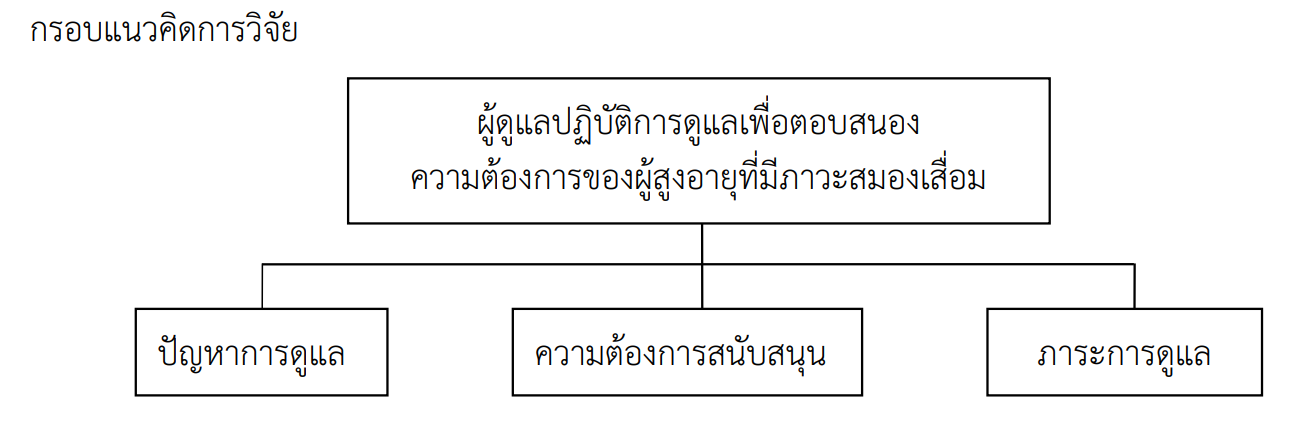
Thailand has a growing trend of elderly people with dementia, resulting in caregivers facing burdens and various impacts, making it necessary to study data that reflects the burdens, problems, and needs of caregivers. Truly, this research aims to study the burdens, problems, and needs of caregivers for elderly individuals with dementia by using a mixed-methods approach in a parallel design, collecting data from June to December. Prof. In 2024, the primary informants were specifically selected, consisting of 15 primary caregivers who care for dementia patients and utilize services at the elderly clinic. The research instruments included a 12-item short version of the caregiver burden assessment, in-depth interviews based on semi-structured questions focusing on issues/obstacles and care needs, content validity assessed by three experts, and the reliability of the assessment tool measured by the Cronbach's alpha coefficient, which was 0.88. The data were analyzed quantitatively using descriptive statistics and qualitatively through content analysis.
The research findings revealed that the caregiving burden of most caregivers was at a low level (M = 0.78 , SD = 0.71), particularly in terms of impact to life. However, some caregivers reported feelings of guilt, anxiety, and stress from continuous caregiving without assistance. Qualitative data revealed that the main issues caregivers face include emotional, time, economic, and healthcare access problems. The needs of caregivers encompass five main dimensions: Support from family, healthcare services, caregiver health, economy, and service coordination. The findings reflect the importance of supporting caregivers as they are also affected by dementia. Recommendation: There should be a continuous holistic care approach to empower and reduce the burden on caregivers in the long term.
References
กระทรวงสาธารณสุข, ศูนย์เทคโนโลยีสารสนเทศและการสื่อสาร. (2568ก). ตารางแสดง อัตราป่วยรายใหม่และความชุกของภาวะสมองเสื่อม (F00.xx หรือ G30.xx, F01.xx-F03.xx, G31.1) ปี พ.ศ. 2567. ระบบคลังข้อมูลด้านการแพทย์และสุขภาพ (HDC) กระทรวงสาธารณสุข. https://hdc.moph.go.th/center/public/standard-report-detail/hqu2chfi6d2oyqbm4vudk
กระทรวงสาธารณสุข, ศูนย์เทคโนโลยีสารสนเทศและการสื่อสาร. (2568ข). ตารางแสดง อัตราป่วยรายใหม่และความชุกของภาวะสมองเสื่อม (F00.xx หรือ G30.xx, F01.xx-F03.xx, G31.1) ปี พ.ศ. 2568. ระบบคลังข้อมูลด้านการแพทย์และสุขภาพ (HDC) กระทรวงสาธารณสุข. https://hdc.moph.go.th/center/public/standard-report-detail/hqu2chfi6d2oyqbm4vudk
กระทรวงสาธารณสุข, สำนักงานปลัดกระทรวงสาธารณสุข, กองยุทธศาสตร์และแผนงาน, กลุ่มบริหารจัดการข้อมูลขนาดใหญ่. (2566). สรุปรายงานการเจ็บป่วย ปี 2565. กองยุทธศาสตร์และแผนงาน สำนักงานปลัดกระทรวงสาธารณสุข กระทรวงสาธารณสุข. https://spd.moph.go.th/wp-content/uploads/2024/11/ill_2023_full_07112567.pdf
กระทรวงสาธารณสุข, สำนักงานปลัดกระทรวงสาธารณสุข, กองยุทธศาสตร์และแผนงาน, กลุ่มบริหารจัดการข้อมูลขนาดใหญ่. (2567). สรุปรายงานการเจ็บป่วย ปี 2566. กองยุทธศาสตร์และแผนงาน สำนักงานปลัดกระทรวงสาธารณสุข. https://spd.moph.go.th/wp-content/uploads/2025/08/ill_2024_full_18082568.pdf
ชัชวาล วงศ์สารี. (2560). ผลกระทบการเกิดภาวะสมองเสื่อมต่อผู้สูงอายุในประเทศไทย. วารสารมหาวิทยาลัยคริสเตียน, 23(4), 680-689.
ชัชวาล วงค์สารี. (2561). สถานการณ์ของผู้สูงอายุที่มีภาวะสมองเสื่อมในประเทศไทย: ประเด็นและแนวโน้มการดูแลทางการพยาบาล. วารสารวิชาการมหาวิทยาลัยอีสเทิร์นเอเชีย ฉบับวิทยาศาสตร์และเทคโนโลยี, 12(1), 47-58.
ดุจปรารถนา พิศาลสารกิจ, ปิติพร สิริทิพากร, และวีรศักดิ์ เมืองไพศาล. (2563). ผลของโปรแกรมการอบรมผู้ดูแลต่อคุณภาพชีวิตและความรู้สึกเป็นภาระของผู้ดูแลผู้ป่วยที่มีภาวะสมองเสื่อม. วารสารการพยาบาลและการดูแลสุขภาพ, 38(2), 63-72.
ปราโมทย์ ประสาทกุล, และภูษิต ประคองสาย. (2566). สถานการณ์ผู้สูงอายุุไทย พ.ศ. 2565. กรมกิจการผู้สูงอายุ. https://www.dop.go.th/download/statistics/th1738230377-2563_0.pdf
ปวริศา ศรีฉนวน, อรวรรณ หนูแก้ว, และวินีกาญจน์ คงสุวรรณ. (2666). ปัจจัยทำนายของผู้ดูแลผู้ป่วยสูงอายุสมองเสื่อมที่มีปัญหาพฤติกรรมและจิตใจ. ใน มหาวิทยาลัยภาคตะวันออกเฉียงเหนือ, การพัฒนางานวิจัยและนวัตกรรมเพื่อชุมชนที่ยั่งยืน รายงานสืบเนื่องการประชุมวิชาการและนำเสนอผลงานวิจัยระดับชาติ ครั้งที่ 10 และระดับนานาชาติ ครั้งที่ 8 (น. 319-331). มหาวิทยาลัยภาคตะวันออกเฉียงเหนือ. https://idcneu.com/neunic2023/file_article/hs/neunic2023-hs-03.pdf
ภาวดี เหมทานนท์, และกิตติพร เนาว์สุวรรณ. (2562). ปัจจัยที่ทำนายความรู้สึกเป็นภาระของผู้ดูแลผู้ป่วยสมองเสื่อมที่บ้าน. วารสารมหาจุฬานาครทรรศน์, 6(9), 4409-4424.
ภูษณิศา ยังอยู่, สุภัทรา จันทร์คำ, วีรศักดิ์ เมืองไพศาล, ปิติพร สิริทิพากร, ดุจปรารถนา พิศาลสารกิจ, นภาพร เพ็งสอน, และสุทิศา ปิติญาณ. (2560). ปัญหาและความต้องการของผู้ดูแลในการดูแลผู้ป่วยสมองเสื่อม. วารสารพฤฒาวิทยาและเวชศาสตร์ผู้สูงอายุ, 16(2-3), 57-69.
รัชนี หาญสมสกุล, และวัฒนา ชยธวัช. (2567). การพยากรณ์จำนวนผู้ป่วยในด้วยโรคสมองเสื่อมและโรคอัลไซเมอร์ในประเทศไทย. วารสารวิชาการสาธารณสุขชุมชน, 10(4), 74-85.
สํานักงานสถิติแห่งชาติ, กองสถิติสังคม, กลุ่มสถิติสุขภาพและภาวะทางสังคม. (2568). การสำรวจประชากรผู้สูงอายุในประเทศไทย พ.ศ. 2567. สํานักงานสถิติแห่งชาติ. https://www.nso.go.th/nsoweb/storage/survey_detail/2025/20241209145003_27188.pdf
อรวรรณ ศิลปกิจ, ชัชวาลย์ ศิลปกิจ, และรสสุคนธ์ ชมชื่น. (2558). คุณสมบัติทางจิตวิทยาของแบบประเมินภาระการดูแล Zarit ในผู้ป่วยจิตเวช. วารสารสุขภาพจิตแห่งประเทศไทย, 23(1), 12-24.
Anantapong, K., Wongpakaran, N., Setthawatcharawanich, S., Aphisitphinyo, S., Sirimaharaj, N., Rattanabannakit, C., Paholpak, P., Jiraphan, A., Wiwattanaworaset, P., Aunjitsakul, W., Buathong, N., Paholpak, P., Supanimitamorn, K., Thana-udom, K., Pariwatcharakul, P., Wongpakaran, T., & Wang, H. (2025). Family carers' knowledge and practices in dementia care for hospitalised older adults: A multi-centre cross-cectional ctudy in Thailand. Frontiers in Medicine, 12, 1710146. https://doi.org/10.3389/fmed.2025.1710146
Alzheimer’s Association. (2023, December, 18). 2023 Alzheimer’s disease facts and figures report: At a glance statistics. https://www.alz.org/getmedia/d6a072cf-ee7b-4b10-a4c6-068f4afc54db/facts-and-figures-2023-at-a-glance-stats-fact-sheet.pdf
Campione, J. R., & Zebrak, K. A. (2020). Predictors of unmet need among informal caregivers. The Journals of Gerontology. Series B, Psychological Sciences and Social Sciences, 75(10), 2181–2192. https://doi.org/10.1093/geronb/gbz165
Connors, M. H., Seeher, K., Teixeira-Pinto, A., Woodward, M., Ames, D., & Brodaty, H. (2020). Dementia and caregiver burden: A three-year longitudinal study. International Journal of Geriatric Psychiatry, 35(2), 250-258. https://doi.org/10.1002/gps.5244
Mongklam, P., Kraithaworn, P., & Piyatrakul, S. (2025). Exploring dementia care for community-dwelling older adults in Thailand: A qualitative descriptive study. Belitung Nursing Journal, 11(4), 459–467. https://doi.org/10.33546/bnj.3835
Shin, J. H., & Kim, J. H. (2022). Family caregivers of people with dementia associate with poor health-related quality of life: A nationwide population-based study. International Journal of Environmental Research and Public Health, 19(23), 16252. https://doi.org/10.3390/ijerph192316252
Zarit, S. H., Todd, P. A., & Zarit, J. M. (1986). Subjective burden of husbands and wives as caregivers: A longitudinal study. The Gerontologist, 26(3), 260-266. https://doi.org/10.1093/geront/26.3.260
Wangpitipanit, S., Kittipimpanon, K., & Chankollawee, N. (2025). Perceived Problems and Needs of the Family Caregivers Who Caregiving of Dependent Older Persons in an Urban Community: A Qualitative Descriptive Study. Clinical interventions in aging, 20, 2457–2466. https://doi.org/10.2147/CIA.S454136
World Health Organization. (2020, June 25). Dementia: Information for caregivers. https://www.who.int/news-room/questions-and-answers/item/dementia-information-for-caregivers
World Health Organization. (2026, July 3). Dementia. https://www.who.int/news-room/fact-sheets/detail/dementia
Downloads
Published
How to Cite
Issue
Section
License
Copyright (c) 2026 Journal of Boromarajonani College of Nursing, Surin

This work is licensed under a Creative Commons Attribution-NonCommercial-NoDerivatives 4.0 International License.
เนื้อหาและข้อมูลในบทความที่ตีพิมพ์ในราชาวดีสาร วิทยาลัยพยาบาลบรมราชชนนี สุรินทร์ ถือเป็นข้อคิดเห็นและความรับผิดชอบของผู้เขียนบทความโดยตรง ซึ่งกองบรรณาธิการวารสารไม่จำเป็นต้องเห็นด้วย หรือร่วมรับผิดชอบใดๆ
บทความ ข้อมูล เนื้อหา รูปภาพ ฯลฯ ที่ได้รับการตีพิมพ์ในราชาวดีสาร วิทยาลัยพยาบาลบรมราชชนนี สุรินทร์ หากบุคคลหรือหน่วยงานใดต้องการนำทั้งหมดหรือส่วนหนึ่งส่วนใดไปเผยแพร่หรือกระทำการใดๆ จะต้องได้รับอนุญาตเป็นลายลักษณ์อักษรจากราชาวดีสาร วิทยาลัยพยาบาลบรมราชชนนี สุรินทร์ ก่อนเท่านั้น