Author Guidelines
Author Guidelines
The Thailand Journal of Traditional Chinese Medicine publishes articles related to Traditional Chinese Medicine, including acupuncture, herbal medicine, tuina, and other relevant fields. The journal welcomes research, clinical studies, reviews, and other academic papers focusing on clinical services, medical management, medical education, quality improvement, integrative medicine, innovation, and technology related to traditional Chinese medicine. Manuscripts may be submitted in Thai, English or Chinese. Regardless of the submission language, each article must include the title, author name(s), institutional affiliation(s), abstract, keywords, and corresponding author information in all three languages (Thai, English and Chinese). If the author is unable to provide a translation in Thai or Chinese, the journal office will assist upon notification.
Guidelines for manuscript preparation can be found in the Manuscript Template.
Instructions for submission are available under Online Submission via the THAIJO system.
1. Article Types and Content for Publication
1.1 Editorial Note: An editorial note serves as a communication between the editor and readers. It provides information about news, featured articles, research reports, or other items presented in the journal. It may also include the editor’s perspectives, opinions, or reflections on academic situations, knowledge, or related issues that the editorial board wishes to convey to readers.
1.2 Letter to the Editor: A letter to the editor functions as a forum for academic exchange between scholars, readers, the editorial board, or the authors of previously published articles. Readers may express differing opinions, point out incomplete aspects, or identify errors in published reports. Additionally, this section may include preliminary reports or short communications, presenting early-stage research findings that require further study to complete.
1.3 Special Article: A special article presents academically oriented experiences or viewpoints in the field of traditional Chinese medicine (TCM) that are of interest and benefit to readers. Structure: title, author name(s), institutional affiliation(s), abstract and keywords, and corresponding author keywords in Thai, English, and Chinese; followed by an introduction, main content/opinions, references. Length: approximately 10–15 pages in A4 format.
1.4 Original Article: An original article is a scholarly research paper reporting the results of an investigation, study, or experiment, following standard academic structures. Structure: title, author name(s), institutional affiliation(s), abstract and keywords, and corresponding author in Thai, English, and Chinese; followed by an introduction, methodology, results, discussion, conclusion, acknowledgements, and references. Length: approximately 10–15 pages in A4 format.
1.5 Review Article: A review article is a scholarly article that compiles, synthesizes, and critically evaluates knowledge on a specific topic, based on journals, books, or other sources, both domestic and international. Structure: title, author name(s), institutional affiliation(s), abstract and keywords, and corresponding author in Thai, English, and Chinese; followed by an introduction, literature search method, review content, discussion, conclusion, and references. Length: approximately 10–15 pages in A4 format.
1.6 Case Report: A case report describes unusual disease, or uncommon patients, new diseases or syndromes not previously reported, or rare conditions, and must be supported by clear and complete evidence that is of academic value. The structure of a case report should include: the title, author name(s), institutional affiliation(s), abstract and keywords, and corresponding author in Thai, English, and Chinese; followed by an introduction, patient history, clinical course, diagnostic assessment, treatment, follow-up and outcomes, discussion, conclusion, and references. Length: approximately 10 pages in A4 format.
1.7 Viewpoints & Perspectives: This section provides a platform for academic exchange and learning regarding traditional Chinese medicine and herbal medicine, including new ideas and innovative approaches. Authors may express scholarly opinions on unresolved research topics, provide alternative interpretations differing from published results, or present perspectives that challenge existing concepts. The writing format is flexible, but it must include the title, author name(s), institutional affiliation(s), abstract and keywords, and corresponding author in Thai, English, and Chinese; and references. Length: approximately 10–15 pages in A4 format.
1.8 Miscellaneous: This section includes short articles that may or may not fit into the categories mentioned above, or articles expressing commentary on current events of particular public interest. The writing format is flexible, but it must include the title, author name(s), institutional affiliation(s), and corresponding author in Thai, English, and Chinese; and references. Abstract and keywords are not required. Length: approximately 5 pages in A4 format.
1.9 Journal Club: The journal club section introduces high-quality academic articles or research papers of particular interest. Authors provide short analyses and critiques to help readers gain insights, apply knowledge, or pursue further study. Structure: title, author name(s), institutional affiliation(s), and corresponding author in Thai, English, and Chinese. Abstract and keywords are not required. Length: approximately 3-5 pages in A4 format.
2. Preparation of the Original Manuscript
Since the Thailand Journal of Traditional Chinese Medicine is a trilingual journal (Thai, English, and Chinese), every manuscript must include the title, author name(s), institutional affiliation(s), abstract, keywords, and corresponding author in all three languages. If the author is unable to prepare the manuscript in either Thai or Chinese, this requirement may be waived by notifying the editorial office, which will provide assistance with translation. The main text of the manuscript, however, may be written in only one primary language, depending on the author’s preference.
2.1 Title (题目)
The title should be short, concise, and clearly convey the main objective of the study. Abbreviations should not be used. The title should not exceed 100 characters, including spaces. If the title is long, a subtitle may be added. The title must be provided in Thai, English, and Chinese. For the English title, only the first letter of the first word should be capitalized, while the remaining words should be in lowercase, except for proper nouns.
2.2 Author (作者)
Author names must be presented in Thai, English, and Chinese, using full names without abbreviations, titles, or professional designations. For Chinese authors, the name in the English abstract must be written in pinyin, with the surname appearing first, followed by a space, and then the given name. Only the first letter of each part should be capitalized. Example: Lin Lele
2.3 Affiliation (工作单位)
The institutional affiliation of each author must be provided in Thai, English, and Chinese (abbreviations are not allowed). In English, the first letter of each word should be capitalized, except for prepositions. If an author has more than one affiliation, only the primary affiliation should be listed. If multiple authors have different affiliations, superscript numbers should be placed after each author’s name and before each corresponding affiliation. The numbering must be consistent with the authors’ affiliations and listed in sequence. If several authors share the same affiliation, use the same number. If all authors share a single affiliation, numbering is not required.
2.4 Abstract (摘要)
The abstract must be written as a single paragraph, providing a concise summary of the article in accordance with its structure: background and objectives, methods, results, discussion, and conclusion. The length should not exceed 250 words or 15 lines. Sentences must be complete, concise, and self-contained, without requiring reference to the main text. The English abstract should be written in the past tense. Abbreviations should be avoided. Abstracts must be provided in Thai, English, and Chinese, and each abstract should be presented in only one language, without mixing languages.
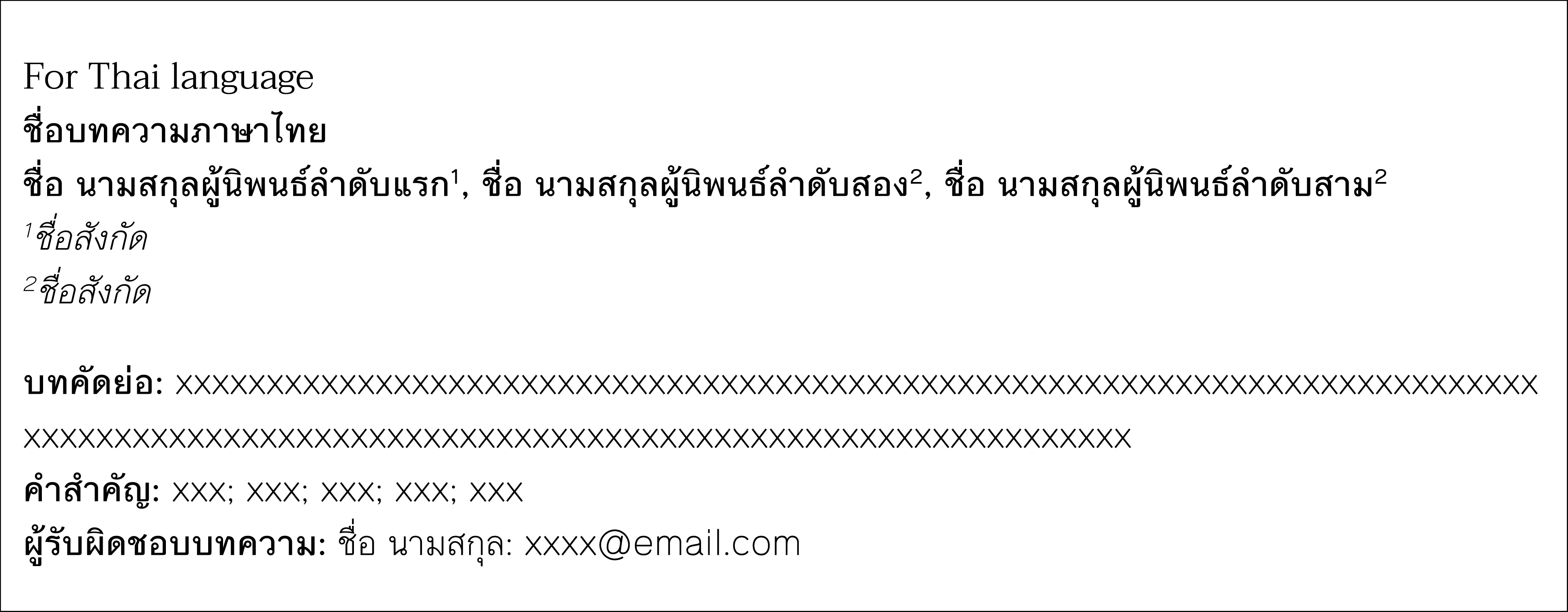
Abstract in Thai: The word “บทคัดย่อ” should be placed above the text.
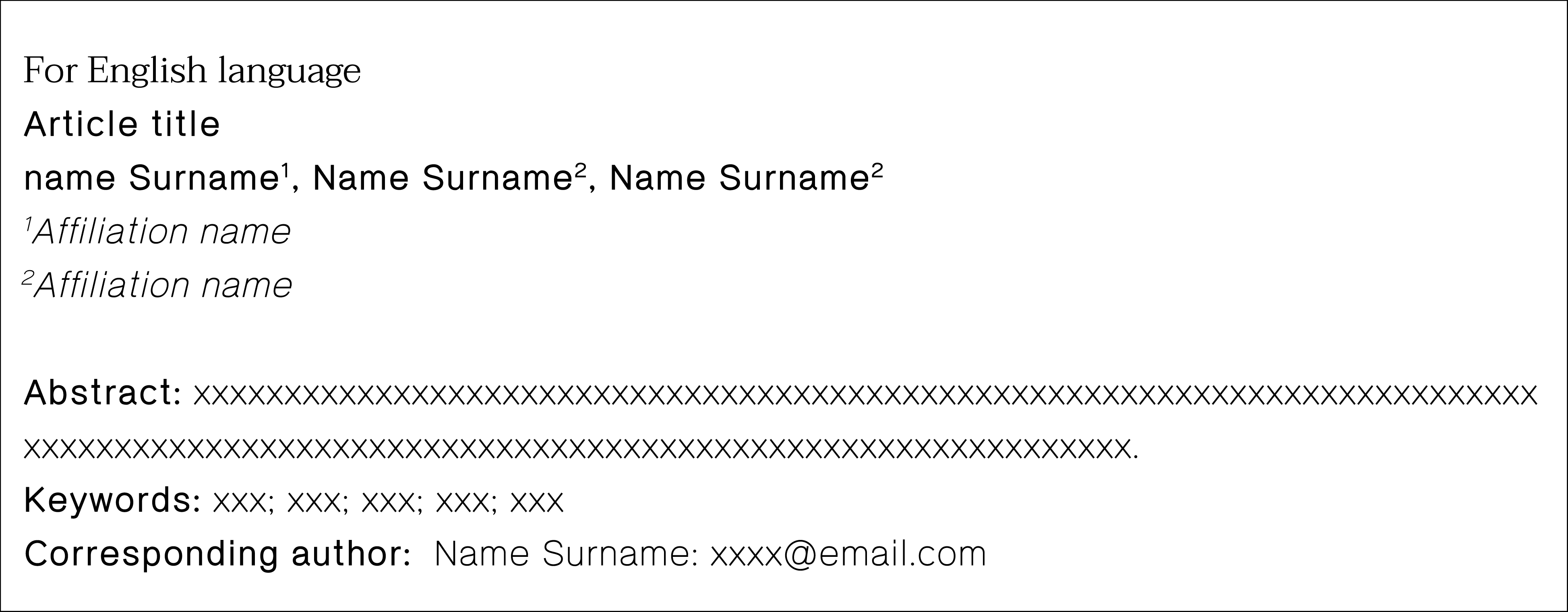
Abstract in English: The word “Abstract” should be placed above the text.
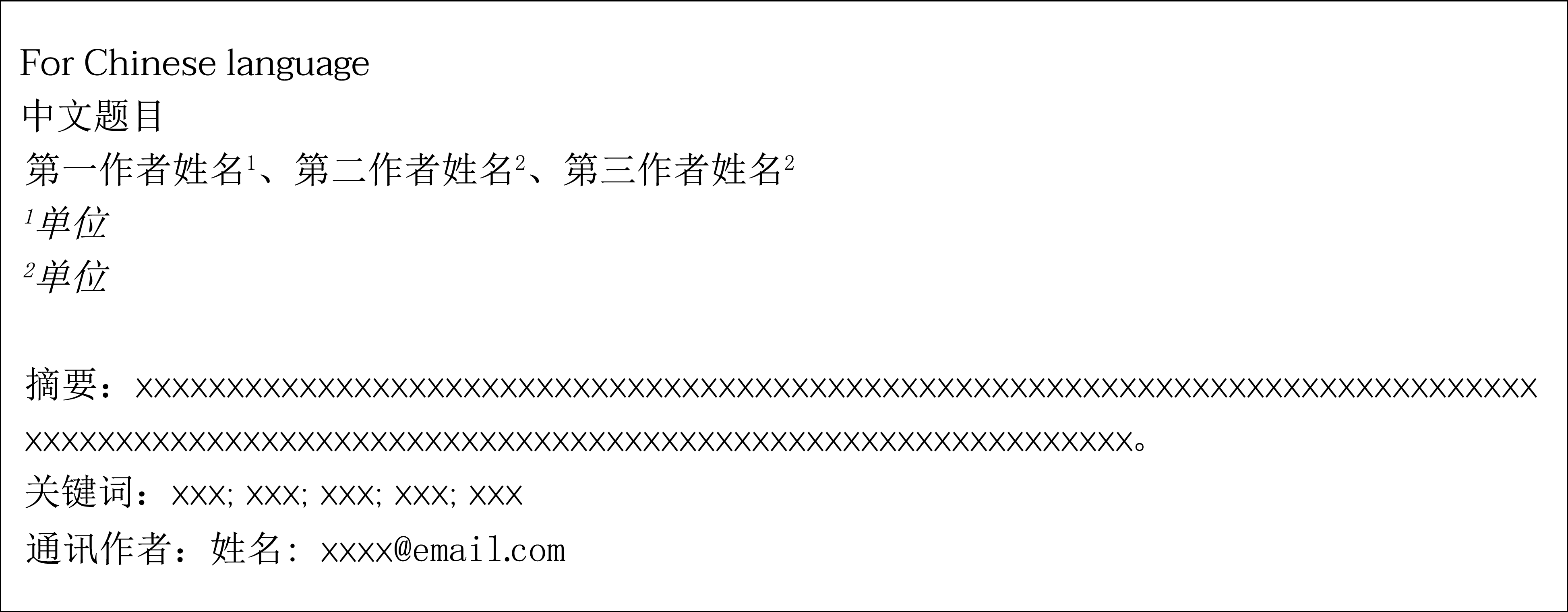
Abstract in Chinese: The word “摘要” should be placed above the text.
The order of abstracts must follow the primary language of the main article as the first, followed by Thai, and then the third language. If the main article is in Thai, the second language will be English, followed by Chinese.
2.5 Keywords (关键词)
Keywords must be provided in Thai, English, and Chinese, and should be placed at the end of each abstract in the corresponding language. Keywords help readers understand the scope of the article and facilitate article retrieval through various search systems, particularly internet-based databases. Keywords may include the scope of the study (e.g., health services, diseases, study population, setting, country, or primary methodology). They serve as subject headings for the journal’s annual keyword index and for indexing in databases such as Index Medicus. Authors are encouraged to use Medical Subject Headings (MeSH) terms of the U.S. National Library of Medicine as a guideline for selecting keywords. A total of 3–5 keywords should be provided, separated by semicolons (;). The same set of keywords must be used consistently across all three languages and listed in the same order.
Keywords in Thai: The word “คำสำคัญ” should be placed above the text.
Keywords in English: The word “Keywords” should be placed above the text.
Keywords in Chinese: The word “关键词” should be placed above the text.
2.6 Corresponding author (通讯作者)
The corresponding author refers to the author responsible for coordinating with all co-authors, serving as the primary contact for inquiries, comments, or critiques regarding the article.The name of the corresponding author must be clearly indicated. If the article has a single author, that author is automatically considered the corresponding author. The designation should be written as “Corresponding author:” followed by the author’s email address.
In Thai, the phrase “ผู้รับผิดชอบบทความ” must precede the information.
In English, the phrase “Corresponding author” must precede the information.
In Chinese, the phrase “通讯作者” must precede the information.
An example of an article preparation format, from title to article author, is shown below.
2.7 Manuscript Text
The main text of the article may be written in Thai, Chinese, or English in only one primary language, depending on the author’s preference. An example of the standard structure for an original article is as follows:
2.7.1 Introduction (前言)
The introduction should provide background information and a brief review of the literature to demonstrate the rationale and necessity of the study. It should present relevant academic knowledge and clearly indicate the research question(s) to be addressed. References should be cited appropriately. The final paragraph of the introduction must state the objective(s) of the study or research. The length of the introduction should not exceed two pages.
2.7.2 Methodology (研究方法)
This section should be divided into two main parts: Materials or subjects (材料) and Methods (方法).
1) Materials (材料)
Provide detailed information about the study subjects or materials, such as patients, healthy individuals, animals, or plants. Include the number of subjects and their characteristics (e.g., sex, age, weight). For studies involving humans or animals, details of consent and approval by the relevant ethics committee must be stated. For plant studies, voucher specimens from the plants used in the research should be documented and deposited in a recognized herbarium or institutional collection for reference. Information about any instruments or equipment used should also be provided.
2) Methods (方法)
Clearly describe the study design, such as randomized controlled trial, double-blind controlled trial, descriptive study, or quasi-experimental design. Specify the sampling method (e.g., simple random sampling, multistage sampling) and describe interventions or procedures in detail, including preparation of study drugs, types and dosages of drugs used. If commonly known methods are used, provide appropriate references. If new methods are applied, describe them in sufficient detail to allow replication. Explain the process of data collection, data analysis, and statistical methods used. If chemicals or drugs were purchased, specify their sources by providing the company name and country of origin.
Ethics Approval: For studies involving humans or animals, authors must clearly state that the research project was approved by the relevant institutional ethics review board, including the name of the committee and the approval code or reference number.
2.7.3 Results (结果)
The results section should clearly describe the findings of the study in accordance with the study plan and objectives, and should be presented in a manner that is easy to follow. If the results are straightforward and contain limited numerical data, they may be presented in prose. However, if there are large amounts of numerical data or multiple variables, tables or figures should be used as appropriate. Only the most relevant and important data should be displayed in the tables. Tables or figures should be placed close to the text where they are first mentioned.
2.7.4 Discussion (讨论)
The discussion is the most important section of an academic article and must be written separately from the results. It should demonstrate whether the study achieved its objectives and how it contributes new knowledge by addressing research gaps or extending previous findings. The discussion should compare the results with previous studies should be made in order to highlight these new contributions, which may take the form of new principles, theories, information, or relationships derived from the study. Authors should indicate whether the findings confirm or diverge from prior research and provide explanations for these outcomes. Unexpected results should not be concealed, but rather addressed directly, while attempting to interpret them from new perspectives that underscore the significance of the findings. Authors should explain how their results extend or enrich prior knowledge, or they may use findings from other studies to interpret their own results, and conversely, apply their findings to explain results reported elsewhere.
2.7.5 Conclusions (结论)
The conclusion should summarize the entire research study based on the results and discussion, indicating whether the findings aligned with the original objectives. Practical implications of the study should be provided at the policy level, institutional/operational level, or for local application. Recommendations for further research should be included, with suggested research questions or issues that warrant exploration. All recommendations must be directly related to the findings and conclusions of the study.
2.7.6 Acknowledgments (致谢)
Acknowledgments are optional. If included, they should be presented in a single, concise paragraph in the primary language of the manuscript. Authors should acknowledge only essential contributions, such as academic or technical assistance, financial support, or institutional backing. Avoid listing an excessive number of individuals, as this may reduce the scholarly weight of the article or create the impression that the work was largely conducted by others.
2.7.7 References (参考文献)
For details on reference formatting, please refer to the section Guidelines for References.
3. Preparation of Other Academic Manuscripts
For sections 3.1–3.6 and 3.10, please refer to the guidelines under Preparation of Original Articles.
3.1 Title (题目)
3.2 Author (作者)
3.3 Affiliation (工作单位)
3.4 Abstract (摘要)
3.5 Keywords (关键词)
3.6 Corresponding author (通讯作者)
3.7 Introduction (前言): The introduction should explain the significance of the article. It should briefly present the essential background information and highlight the main issue or focus of the article, demonstrating why this article is being presented. The writing must be concise, relevant, and clearly state the importance of the topic.
3.8 Main Content: Present the core content of the article according to the subject matter. The discussion points must be concise, focused, and free from unnecessary repetition.
3.9 Discussion (讨论): Provide the author’s critical perspectives on key issues of the article. This may include supporting arguments or interpretations based on references from relevant literature.
3.10 Conclusions (结论): (If applicable) A brief conclusion summarizing the main points of the article and suggesting potential applications or implications for further use.
3.11 Acknowledgments (致谢): (If applicable)
3.12 References (参考文献) Refer to the section Guidelines for References.
4. Formatting for Manuscript Text in the Journal
4.1 Referring to Names of Authors or Content Within the Main Text
1) When referring to an author’s name that appears in the references list
A superscript number should be placed immediately after the author’s name to indicate the corresponding reference. The format should follow these guidelines:
Single author:
Use the name and abbreviated surname as listed in the references, followed by a superscript citation number.
Example: Sririmongkhol S[1] reported that… or Zhang MY[1] reported that…
Two authors:
Write the first author’s name, followed by a comma, a space, then the second author’s name, and place the superscript citation number immediately after.
Example: Zhang MY, Zhang J[1] reported that…
More than two authors:
Write only the first author’s name, followed by a comma, a space, and then add “et al.” in English articles, “และคณะ” in Thai articles, or “等” in Chinese articles, followed by the superscript citation number.
Example: Zhang MY et al.[1] conducted the study…
2) When referring to a person’s name not listed among the authors in the references
A superscript citation number should be placed at the end of the sentence or after the punctuation mark (e.g., comma, colon, semicolon, period) where the reference is cited.
Example: The discovery of Johannes Kepler indicated that…[1]
4.2 Usage of Chinese Terminology
Authors must follow the transliteration and terminology standards specified in the Chinese Traditional Medicine Terminology Dictionary, Volumes 1–3, or the latest edition (link to Thai TCM dictionary: https://tcm.dtam.moph.go.th/images/2021/Book2021/DICOFTCMV35.pdf). If a specific term is not listed in the dictionary, transliteration should follow the Royal
Institute of Thailand’s guidelines for Chinese transliteration and Pinyin (link to the guidelines for the transliteration of Chinese and Hindi: http://legacy.orst.go.th/wp-content/uploads/2015/03/
2475_3398.pdf). Specialized English terms must always begin with a capital letter.
1) Titles of Classical Chinese Texts
If the main language of the article is Thai, transliterate the book title into Thai, followed by a space and the original Chinese title in guillemets 《》. Example: คัมภีร์หวงตี้เน่ยจิง《黄帝内经》
If the main language of the article is English, use Pinyin, followed by a space and the original Chinese title in guillemets 《》. Example: Huangdi Neijing《黄帝内经》
If the main language of the article is Chinese, write only the Chinese term. No need to add another language at the end of the sentence.
2) Acupuncture Points and Meridians
For acupuncture points, use the official names and point codes from the ICD-10-TM TCM Procedure Codes. If the main language of the article is Thai or English, write the point name in Pinyin, followed by the Chinese term and point code in parentheses, separated by a comma. Example: Yuzhen (玉枕, BL9). If no international code exists, provide only the Chinese name in parentheses, e.g., Kun (坤), Qian (乾).
If the main language of the article is Chinese, write the point name in Chinese, followed by the international code in parentheses. Example: 玉枕 (BL9)
For meridians, If the main language of the article is Thai, translate the meridian name into Thai or transliterate it if it is a proper noun, followed by the Chinese term in parentheses. Example: เส้นลมปราณเท้าไท่หยางกระเพาะปัสสาวะ (足太阳膀胱经); เส้นลมปราณตู (督脉)
If the main language of the article is English, translate into English or use transliteration if it is a proper noun, followed by the Chinese term in parentheses. Example: Bladder Meridian of Foot-Taiyang (足太阳膀胱经); Du Meridian (督脉)
If the main language of the article is Chinese, write only the Chinese term. No need to add another language at the end of the sentence.
3) Names of Herbal Medicines, Chinese Patent Medicines, and Prescriptions
If the main language of the article is Thai, transliterate the name into Thai, followed by the Chinese term in parentheses. Example: หมาหวง (麻黄); เซียวเหยาส่าน (逍遥散)
If the main language of the article is English, write the name in Pinyin with each syllable separated and capitalized, followed by the Chinese term in parentheses. Example: Xiao Yao San (逍遥散)
If the main language of the article is Chinese, write only the Chinese term. No need to add another language at the end of the sentence. Example: 逍遥散
4) Technical Terms or Procedures
If the main language of the article is Thai, transliterate the Chinese term, followed by the Chinese characters in parentheses. Example: กุ่นฝ่า (滚法); การฝังเข็มแบบผิงเหิงเจิน (平衡针)
If the main language of the article is English, write the Pinyin, leave one space between each syllable, with the first letter capitalized. Then leave one space and add the Chinese characters in parentheses. Example: Mang Zhen (芒针)
If the main language of the article is Chinese, write only the Chinese term. Example: 芒针
5) TCM Syndromes
If the main language of the article is Thai, transliterate the Chinese term into Thai, followed by the Chinese characters in parentheses. Example: กลุ่มอาการชี่และเลือดพร่อง (气血两虚型)
If the main language of the article is English, translate the symptom name into English, or use the transliteration if it is a proper name, followed by the Chinese characters in parentheses. Example: syndrome of Qi and blood deficiency (气血两虚型)
If the main language of the article is Chinese, write only the Chinese term. No need to add another language at the end of the sentence. Example: 气血两虚型
6) TCM Diseases
If the main language of the article is Thai, transliterate the Chinese disease name into Thai, followed by the Chinese characters in parentheses. Example: ปี้เจิ้ง (痹证)
If the main language of the article is English, write the Pinyin, leave one space between each syllable, with the first letter capitalized. Then leave one space and add the Chinese characters in parentheses. Example: Bi Zheng (痹证)
If the main language of the article is Chinese, write only the Chinese term. Example: 痹证
7) Modern Medical Terminology (e.g., Western drugs, anatomical terms, etc.)
If the main language of the article is Thai or English, modern medical terms should be written in English, lowercase. If the main language of the article is Chinese, use the Chinese term, followed by the English term in parentheses. Example: 华法林 (warfarin), 木犀草素 (luteolin)
5. Tables and Figures
Tables and figures that are well-prepared and appropriately presented can enhance reader interest and improve comprehension of the article. In many cases, readers will first look at the title, abstract, and then review the tables and figures before deciding whether to read the full text. Therefore, only essential tables and figures should be included, each accompanied by a concise and informative caption. Tables and figures must be prepared as separate files in addition to being embedded within the manuscript, and they must not infringe on the copyright of others. Each table or figure must be cited in the text (e.g., see Figure 1 or Table 1).
5.1 Tables: Tables should organize words, numbers, and symbols into columns and rows in a clear and logical manner, enabling the reader to fully understand the information without referring back to the text. The following guidelines apply:
1) Each table should be prepared separately, one per page. Tables should not be submitted as images. In the manuscript text, leave adequate space and indicate where the table should appear.
2) Tables must be numbered consecutively according to their appearance in the text, using “Table 1” (English), “表 1” (Chinese), or “ตารางที่ 1” (Thai), depending on the article’s main language. The table title should be short, descriptive, and placed above the table, aligned to the left. In the text, the table number should be clearly cited.
3) Column headings should clearly identify the information in each column, arranged in order of importance (e.g., time sequence of disease progression) from left to right. Row headings should be arranged from top to bottom.
4) Rows should contain information consistent with their corresponding columns.
5) Footnotes may be used for additional details not included within the table. Do not use numbers, as they may be confused with references. Instead, use the following sequence of symbols: * † ‡ § ¶ # **
6) Each article should contain no more than 3–5 tables, or approximately one table per 1,000 words. If authors have a large volume of data, only the most essential information should be presented in tables.
7) When data are reproduced or adapted from other sources, authors must obtain permission and acknowledge the original source in the table footnote or reference list.
5.2 Figures: Figures include photographs, drawings, graphs, diagrams, charts, line illustrations, and radiographic images. Figures should be clear, highlight key points, and effectively convey information. The following guidelines apply:
1) Each figure should be printed on a separate page, and sufficient blank space should be
left in the text to indicate its placement. The manuscript should clearly note the figure’s location.
2) Figures must be numbered consecutively according to their appearance in the text, using “Figure 1” (English), “图 1” (Chinese), or “ภาพที่ 1” (Thai), depending on the article’s primary language. The figure title (caption) should be short, descriptive, and placed below the figure, centered. The figure number must also be clearly cited in the text.
3) Figures must be of high quality, and attached as separate image files from the article files in .jpg or .png format, with a resolution of at least 300 dpi. File size should be no smaller than 600 KB and no larger than 10 MB, sufficient to ensure clarity for publication. Each figure file should be named appropriately to avoid confusion.
6. References
All references must be written in English. If the original work is in Thai or Chinese,
authors must provide an English translation of the reference and indicate the language of the original source at the end of the citation, using “(in Thai)” or “(in Chinese)” accordingly.
The Vancouver system must be used for in-text citations. References should be numbered consecutively in the order in which they are cited in the text. Numbers should be placed as superscripts within square brackets, either at the end of the cited sentence or immediately after the name of the person being cited (e.g., [1]). The first reference cited should be numbered [1], with subsequent references numbered sequentially. If a reference is cited more than once, the same number should be used. Abbreviations are not permitted in references, except for authors’ initials and journal abbreviations. Articles that have been accepted but not yet published should be marked as “in press”. Unpublished work should be indicated as “unpublished”. “Personal communication” should be avoided unless absolutely necessary when critical information cannot be obtained elsewhere. In such cases, include the name of the person and the date of communication in parentheses after the reference.
Journal names should follow the official abbreviations used by the U.S. National Library of Medicine (NLM) as listed in the Index Medicus. If a journal has no abbreviation, use its full title. Detailed reference formats are provided in the following subsections.
6.1 Author Names
Author names may be listed as individuals, groups, or institutions. Authors can be writers, editors, or compilers. Each name should be followed by a period (.).
1) Thai authors: For Thai names, list the surname first, followed by a space, then the initial of the given name and middle name (if any). Do not use punctuation between initials.
Examples:
สุวิมล ติรกานันท์ → Trirakanan S.
อำพา แก้วกำกง → Kaewkumkong A.
2) Foreign authors: For non-Thai authors, list the surname first, followed by a space, then the initial(s) of the given name and middle name (if any). No punctuation should separate the initials.
Examples:
Joffe JK.
Redfern SJ.
Zhang LM.
3) Multiple authors: If there are six or fewer authors, list all authors’ names, separated by commas. Insert a period after the final author’s name.
Example:
Lodish H, Baltimore D Jr, De Berk AE.
If there are more than six authors, list only the first six authors, followed by “et al.” and a period.
Example:
Choi HK, Won LA, Kontur PJ, Hammond DN, Fox AP, Wainer BH, et al.
4) Group, committee, or institutional authors: When the author is a group, committee, or institution, use the group’s official name. If both a parent organization and a sub-unit are listed, separate them with a comma and a space, followed by a period.
Examples:
Institute of Medicine (US).
American Occupational Therapy Association, Ad Hoc Committee on Occupational Therapy Manpower.
National Lawyer’s Guild AIDs Network (US), National Gay Rights Advocates (US).
5) No author is available: If no author is identified, begin the reference with the title of the book or article in the author position.
Examples:
Health promotion in nursing practice. Stamford: Appleton & Lange; 1996.
Malaria in Cambodia. Journal of Tropical Medicine and Hygiene. 1998;23(4):23.
6.2 Formatting References
6.2.1 Journal Articles
When citing journal articles, list the surname first, followed by the initial(s) of the given name(s) (without punctuation between initials). Within the text, author names should be abbreviated consistently with the format used in the reference list. All references must be written in English. Article titles should be written in sentence case: only the first word of the title, proper nouns, and abbreviations should be capitalized. Journal titles should follow the official abbreviations listed in the Index Medicus (U.S. National Library of Medicine). Abbreviations can be checked at: https://www.ncbi.nlm.nih.gov/nlmcatalog/journals. If no abbreviation exists, use the full journal title. If the original article is written in Thai or Chinese, translate the reference into English and indicate the original language at the end of the reference using.
When the original article is in Thai, the entire reference must be translated into English. At the end of the citation, add the phrase “(in Thai)” to indicate the original language. Format;
Author(s). Title of the article. Journal Title. Year;Volume(Issue):First page–Last page. (in Thai)
Example:
Mano P. The impact of digital disruption to the education. Journal of Industrial Education. 2019;18(1):1-6. (in Thai)
When the original article is in Englis. Format;
Author(s). Title of the article. Journal Title. Year;Volume(Issue):First page–Last page.
Example:
Solarat B, Perea L, Faner R, de La Rosa D, Martínez García MÁ, Sibila O. Pathophysiology of chronic bronchial infection in bronchiectasis. Arch Bronconeumol. 2023;59(2):101-8.
When the original article is in Chinese, the entire reference must be translated into English. At the end of the citation, add the phrase “(in Chinese)” to indicate the original language. Format;
Author(s). Title of the article. Journal Title. Year;Volume(Issue):First page–Last page. (in Chinese)
Example:
Zhu L, Luo SP. Re-recognition of the etiology and pathogenesis of premature ovarian failure. Journal of New Chinese Medicine. 2015;47(4):327-9. (in Chinese)
1) Articles in academic journals
Momungkhun K, Chaisuwan B. Process for communication and building acceptance of Thai traditional medicine. Journal of Communication and Management NIDA. 2015;1(3):37-58. (in Thai)
Prozialeck WC. Update on the pharmacology and legal status of Kratom. JAMA. 2016;116(12):802-9.
Zheng XH, Zhang PG. Analysis of the practical effect of early rehabilitation training combined with traditional Chinese acupuncture in postoperative patients with bone fracture. Chinese Practical Medicine. 2024;19(11):159-62. (in Chinese)
2) Organization as author
American Diabetes Association. Economic costs of diabetes in the US in 2017. Diabetes Care. 2018;41(5):917–28.
3) No author listed
Cancer in South Africa (editorial). S Afr Med J. 1994;84(12):15.
6.2.2 Books, Textbooks, or Reports
1) Book and textbook
- Entire book authored by individual(s)
Author(s). Title of the book. Edition. Place of publication: Publisher; Year of publication.
Examples:
Siriratratrekha A. Handbook on mental health care for children with learning problems. 3rd ed. Bangkok: The Agricultural Co-operative Federation of Thailand; 2022. (in Thai)
Ringsven MK, Bond D. Gerontology and leadership skills for nurses. 2nd ed. Albany (NY): Delmer Publishers; 1996.
Yang WJ. Lectures on Dong's acupuncture: points study—including illustration of points. 1st ed. Beijing: Ancient Chinese Medical Book Press; 1994. (in Chinese)
- Book with editors
Editor(s), editors. Title of the book. Place of publication: Publisher; Year of publication.
Example:
Norman IJ, Redfern SJ, editors. Mental health care for elderly people. New York: Churchill Livingstone; 1996.
2) Chapter in a book or textbook
Author(s). Title of the chapter. In: Editor(s), editors. Title of the book. Edition. Place of publication: Publisher; Year of publication. p. First page–Last page.
Example:
Mahathanan N, Rodpai S. Counselling for ranal replacement therapy. In: Eiam-Ong S, Susantitaphong P, Srisawat N, Tiranathanagul K, Praditpornsilpa K, Tungsan-ga K, editors, Textbook of hemodialysis. Nakhon Pathom: AI Press; 2007. p. 94-103. (in Thai)
Philpps SJ, Whisnant JP. Hypertension and stroke. In: Laragh JH, Brenner BM, editors, Hypertension: pathophysiology, diagnosis, and management. 2nd ed. New York: Raven Press; 1995. p. 465-78.
3) Conference Proceedings
Editor(s), editors. Title of the proceedings. Name of the conference; Year Month Day(s); Place of conference. Place of publication: Publisher; Year of publication. p. First page–Last page (if applicable).
Example:
Technical and Planning Division, Department of Thai Traditional and Alternative Medicine. Document for the 7/2012 meeting of the Department for Development of Thai Traditional and Alternative Medicine; 2012 Sep 19; Bonanza Resort Hotel, Khao Yai, Nakhon Ratchasima. Nonthaburi: Department of Thai Traditional and Alternative Medicine; 2012. (in Thai)
Kimura J, Shibasaki H, editors, Recent advances in clinical neurophysiology. Proceedings of the 10th International Congress of EMG and Clinical Neurophysiology; 1995 Oct 15-19, Kyoto, Japan. Amsterdam: Elsevier; 1996.
Bengtsson S, Solheim BG. Enforcement of data protection, privacy and secu-rity in medical informatics. In: Lun KC, Degoulet P, Piemme TE, Rienhoff O, editors, MEDINFO 92 Proceedings of the 7th World Congress on Medical Informatics; 1992 Sep 6-10; Geneva, Switzerland. Amsterdam: North-Holland; 1992. p. 1561-5.
4) Research Reports Published by Funding Agencies
Author(s). Title of the report. Place of publication: Publishing agency/Funding source; Year of publication. Report No: Report number. (Total pages, if available).
Example:
Smith P, Golladay K. Payment for durable medical equipment billed during skilled nursing facility stays. Final report. Dallas, TX: Dept. of Health and Human Services (US), Office of Evaluation and Inspections; 1994 Oct. Report No: HHSIGOEI69200860.
5) Theses and Dissertations
Author(s). Title [dissertation]. Department, Faculty. Place of publication: University; Year of degree.
Examples:
Sirisute K. Using local wisdom for developing local curriculum according to the primary education curriculum of 1978 (revised 1990) in participating schools under Suphan Buri Provincial Primary Education Office [dissertation]. Bangkok: Chulalongkorn University; 1995. (in Thai)
Kaplan SJ. Post-hospital home health care: the elderly’s access and utilization [dissertation]. St. Louis, MO: Washington University; 1995.
Chen L. Clinical study on antagonistic muscle penetration acupuncture for treatment of lower extremity spastic paralysis after stroke [dissertation]. Guangdong: Guangzhou University of Chinese Medicine; 2023. (in Chinese)
6.2.3 Other Publications
1) Newspaper Articles
Author(s). Title of the article. Newspaper Title. Year Month Day; Section: Page number (Column number). Available from: URL (if online).
Examples:
Lee G. Hospitalizations tied to ozone pollution: study estimates 50,000 admissions annually. The Washington Post. 1996 Jun 21; Sect. A:3 (col.5).
Reston J. Now, about my operation in Peking. New York Times. 1971 Jul 26; Sect. 1:1 (col.11). Available from: https://www.nytimes.com/1971/07/26/archives/now-about-my-operation-in-peking-now-let-me-tell-you-aboutmy.html
2) Laws and Legal Documents
Title of the Act. Country. Act number, Year (Gregorian). Official Gazette. Volume, Part. (Year Month Day).
Examples:
National Health Act B.E. 2550 (2007). Thai Royal Government Gazette. Vol. 124, Part 16A. (2007 Mar 19). (in Thai)
Medical Profession Act B.E. 2525 (1982). Thai Royal Government Gazette. Vol. 99, Part 111. (1982 Jul 28). (in Thai)
Preventive Health Amendments of 1993. Pub L No. 103-183, 107 Stat. 2226. (1993 Dec 14).
3) Dictionaries
Title of Dictionary. Edition. Place of publication: Publisher; Year. Word being defined; p. First page–Last page.
Examples:
The Royal Society Dictionary B.E. 2554. 2nd ed. Bangkok: Nanmeebooks; 2013. (in Thai)
Stedman’s medical dictionary. 26th ed. Baltimore: Williams & Wilkins; 1995. Apraxia; p. 119-20.
4) Media
Title (media). Place of production: Producer; Year.
Example:
HIV/AIDS: the facts and the future (videocassette). St. Louis, MO: Mosby-Year Book; 1995.
5) Electronic Sources and Other Online Academic Materials
Author(s). Title [Internet]. Year [cited Year Month Day]. Available from: URL
Examples:
Tracey L. The Chinese exclusion act: annotated [Internet]. 2022 [cited 2025 May 30]. Available from: https://daily.jstor.org/the-chinese-exclusion-act-annotated/
World Stroke Organization. WSO global stroke fact sheet 2022 [Internet]. 2022
[cited 2022 Jan 11]. Available from: https://www.worldstroke.org/news-and-blog/news/wso-globalstroke-fact-sheet-2022
TalktoMira. How much is a doctor's visit cost with and without insurance? [Internet]. Manhattan: Mira; 2024 [cited 2025 Jun 1]. Available from: https://www.talktomira.com/post/the-cost-of-a-doctor-visit-without-insurance
6.2.4 References from Other Sources
For reference formats not explicitly described in these guidelines, authors should follow the International Committee of Medical Journal Editors (ICMJE) Recommendations for the Conduct, Reporting, Editing, and Publication of Scholarly Work in Medical Journals: Sample References, available at: http://www.nlm.nih.gov/bsd/uniform_requirements.html
7. Manuscript Submission
Manuscripts must be submitted in Microsoft Word (.DOC) format for both the main text and tables. All figures must be submitted as separate files in either JPEG (.JPG) or PNG format, with each file named clearly (e.g., Figure 1) corresponding to the figure citation in the manuscript text. In addition, authors must also submit the manuscript as a PDF file to avoid formatting discrepancies that may arise due to different versions of Microsoft Word. A cover letter for manuscript submission must be attached, requesting consideration for publication. Manuscripts and related files should be submitted through the designated submission channel. For Thai and English text, use TH Sarabun PSK font (14 points), and for Chinese text, use SimSun font (12 points) throughout the manuscript. The font style is intended only to ensure neat and consistent formatting for submission. The journal will reformat and redesign the layout using professional typesetting software before publication.
Channel 1: Online submission register and submit your manuscript at: https://he01.tci-thaijo.org/index.php/TJTCM/announcement/view/2118
Authors can download and review the user guide for the submission website here: https://acrobat.adobe.com/id/urn:aaid:sc:AP:c77f275f-48f0-4619-88cc-59c9d4757ec0
Channel 2: Email submission, submit via the journal’s email: hctcm.journal@gmail.com
8. Contact Information
For inquiries, please visit: https://he01.tci-thaijo.org/index.php/TJTCM/about/contact or contact the journal via email: hctcm.journal@gmail.com
