
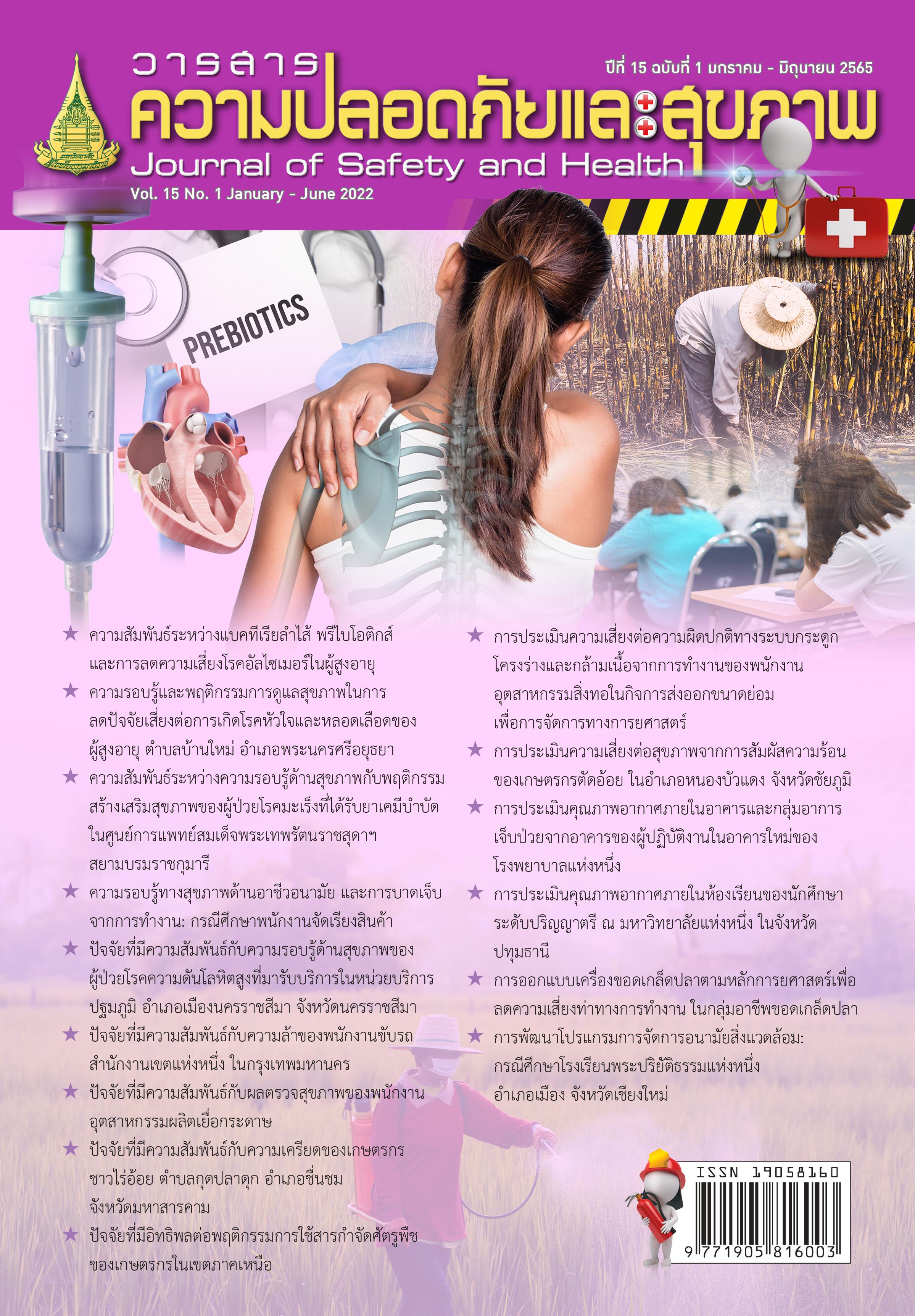
Relationships between Health Literacy and Health Promotion Behaviors of Cancer Patients Receiving Chemotherapy in HRH Maha Chakri Sirindhorn Medical Center
Article Sidebar
Main Article Content
Abstract
The purpose of this survey research was (1 ) to study the level of health literacy about health promotion behaviors of cancer patients receiving chemotherapy. (2) to study the relationship between personal factors and health literacy levels. (3) to study the relationship between health literacy and health promotion behaviors of cancer patients receiving chemotherapy in HRH Princess Maha Chakri Sirindhorn Medical Center. Data was collected from 216 people using a questionnaire developed by the researcher.
The results showed that cancer patients receiving chemotherapy had a good level of health literacy scores at 38.9 percent. Patients had the highest score of post receiving chemotherapy health promotion behavior at 98.60 percent. Personal factors were not related to the level of health literacy. Health literacy had a low positive relationship, with statistically significant, with health promotion behaviors of cancer patients receiving chemotherapy. (r=0.344, p=<0.001). Increasing opportunities for accessing information and health services help to improve level of health literacy. The health facilities should provide accessible information with effective communication processes, provide health education, and also develop accurate and reliable health media in order to promote healthy behaviors of cancer patients receiving chemotherapy.
Article Details
Journal of Safety and Health is licensed under a Creative Commons Attribution-NonCommercial-NoDerivatives 4.0 International (CC BY-NC-ND 4.0) licence, unless otherwise stated.
References
กองสุขศึกษา, กระทรวงสาธารณสุข. (2554). ความฉลาดทางสุขภาพ. กรุงเทพมหานคร: โรงพิมพ์นิวธรรมดาการพิมพ์ (ประเทศไทย) จำกัด.
ปัทมาพร ธรรมผล, นพวรรณ เปียซื่อและสุจินดา จารุพัฒนมารุโอ. (2559). ความแตกฉานด้านสุขภาพและผลลัพธ์ทางคลินิกของผู้ที่เป็นความดันโลหิตสูง ไขมันในเลือดผิดปกติ และเบาหวานชนิดที่ 2. วิทยานิพนธ์ปริญญาพยาบาลศาสตรมหาบัณฑิต, มหาวิทยาลัยมหิดล, กรุงเทพมหานคร.
สำนักงานสถิติแห่งชาติ, กระทรวงดิจิทัลเพื่อเศรษฐกิจและสังคม. (2563). สถิติประชากรศาสตร์ประชากรและเคหะ. สืบค้นเมื่อ 4 สิงหาคม 2563, จาก http://www.nso.go.th.
โสภิต ก่อพูนศิลปและทิพาพร พงษ์เมษา. (2560). คุณภาพชีวิตของผู้ป่วยมะเร็งเต้านมในช่วงการรักษาด้วยยาเคมีบำบัด. สงขลานครินทร์เวชสาร. 35(4), 14-25.
หน่วยงานหลังคลอดและนรีเวช. (2563). สถิติผู้ป่วยหลังคลอด. สืบค้นเมื่อ 4 สิงหาคม 2563, จาก http://www.med.swu.ac.th/msmc/w8-2.
อัญชลี จันทรินทรากร. (2557). ความสัมพันธ์ระหว่างความฉลาดทางสุขภาพกับพฤติกรรมการป้องกันและควบคุมโรคไข้เลือดออกของสาธารณสุข (อสม.) ในเขตเทศบาลตำบลสวนหลวง อำเภอกระทุ่มแบน จังหวัดสมุทรสาคร. วิทยานิพนธ์ปริญญาวิทยาศาสตรมหาบัณฑิต, มหาวิทยาลัยเกษตรศาสตร์, กรุงเทพมหานคร.
Yamane, T. (1970). Determining Sample Size for Research Activities. Educational and Psychological Measurement, 32(4), 567-574.