
Lactating Mothers with Cesarean Section: The Effectiveness of a New Electric Bra on Milk Ejection
Keywords:
Lactating Mothers, Breastfeeding, Cesarean Section, Electric Bra, Milk EjectionAbstract
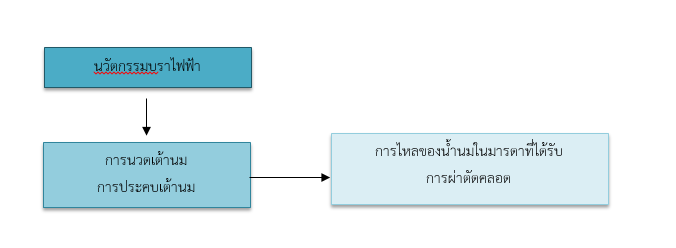
This quasi-experimental research on lactating mothers with cesarean section aimed to compare milk ejection scores among mothers using a new innovative electric bra, and those receiving normal nursing care. The samples were 50 mothers in the postnatal rehabilitation at Nakhon Phanom Hospital who had undergone cesarean section. They were equally assigned either to the control group or the experimental group. There research instruments were the following: 1) the innovative electric bra and its instruction manual, as well as 2) the personal data record form and the milk ejection assessment form. Those instruments were examined for content validity by 3 experts. The values of the content validity index (CVI) of the innovation and the personal data record were 0.98 and 0.90, respectively. The interrater reliability of the milk ejection assessment form was equal to 1. The data were analyzed by Mann-Whitney U test.
The results revealed that the milk ejection scores of the mothers who underwent
cesarean section using the innovative electric bra at 12, 24, 36, and 48 hours were higher than those of the group receiving normal nursing care with statistical significance (c2 =6.63, p<.001), (c2 =6.35, p<.001), (c2 =6.67, p<001), (c2 =6.93, p<.001), respectively.
It can be seen that the electric bra affects milk ejection. Therefore, nurses should apply
the innovative electric bras to mothers with caesarean section to have more milk ejection. This is a good starting point to encourage mothers to succeed in breastfeeding.
References
Anukoolprasert, P. (2007). Comparison Between Breast Massage Alone and Breast Massage Combined with a Warm Compress in Increasing Milk Production in Post-Partum Mothers. Journal of Public Health Systems, 1(3-5), 430-438. (in Thai)
Brown, C. R., Dodds, L., Legge, A., Bryanton, J., & Semenic, S. (2014). Factors Influencing the Reasons Why Mothers Stop Breastfeeding. Canadian Journal of Public Health, 105(3), 179-185.
Cetthkrikul, N., Topothai, C., Topotha, T., Pongutta, S., Kunpeuk, W., Prakongsai, P., et al. (2016). Situation of Breastfeeding among Mothers Receiving Services in Public Hospitals in Thailand. Journal of Health Science, 25(4), 657-663. (in Thai)
Chainok, C. (2017). Thai Herbal Compress Balls, Famous All Over the World. Med Herb Guru. Retrieved 30 November, 2017 from http://medherbguru.gpo.or.th/articles/ D16_prakop.pdf (in Thai)
Chanetiyoung, A. (2018). The Effects of Breast Massage and Hot Compress on Stimulating of Milk Flow in Postpartum Mothers at Phusing Hospital, Srisaket Province. Journal of Traditional Thai Medical Research, 4(1), 41-52. (in Thai)
Charoensungdej, K., Anuchitchanchai, J., Caroti, N., & Sunthorn, A. (2013). The Effectiveness of Breast Massage and Hot Compression with Herbs to Stimulate Breast Milk Ejection in First 72 Hours. Uttaradit Medical Journal, 28(3), 24-36.
Hill, P. D., & Humenick, S. S. (1989). Insufficient Milk Supply. The Journal of Nursing Scholarship, 21(3), 145-148.
Jeerasap, R., Phaiboonbunpot, N., & Panikom, S. (2010). Routes of Delivery and Onset of Lactation. Journal of Health Science, 19(2), 270-278. (in Thai)
Kanchana, S. (2020). “Breastfeeding: Scaling Up and Learning More. In Siraporn, S., Wittayasooporn, J.” The 7th National Breastfeeding Conference: Scaling Up & Learning More. Thai Breastfeeding Center Foundation. Retrieved August 5-7, 2020 from https://online.pubhtml5.com/xiid/kdjg/#p=222 (in Thai)
Kutlucan, L., Seker, I. S., Demiraran, Y., Ersoy, O., Karagoz, I., Sezen, G., et al. (2014). Effect of Different Anesthesia Protocols on Lactation in the Postpartum Period. Journal of Turkish-German Gynecological Association, 15(4), 233-238.
Lahukarn, B., Rattaya, M., Noonart, T., Marasri, N., & Rattanatavorn, K. (2021). Effect of Self-Breast Massage Program on Milk Ejection of Cesarean Mothers. Journal of Social Science and Buddhistic Anthropology, 6(8), 100-111. (in Thai)
Laksonowati, S. M., Runjati, R., Ta'adi, T., Mulyantoro, D. K., & Kholifah, K. (2021). Effectiveness of Warm Herbal Compress on Oxytocin Hormone and Breast Milk Production. Medisains, 19(3), 67-71.
Lawrence, R. A. & Lawrence, R. M. (2016). Breastfeeding: A Guide for the Medical Profession (8thed.). Philadelphia: Mosby.
Masae, M. & Chatchawet, W. (2019). Effect of Self-Breast Massage Program on Milk Ejection of First-Time Mothers. Princess of Naradhiwas University Journal, 11(3), 1-14. (in Thai)
National Statistical Office of Thailand. (2020). Thailand Multiple Indicator Cluster Survey 2019, Survey Findings Report. National Statistical Office of Thailand. Retrieved August, 2020 from https://www.unicef.org/thailand/media/5146/file/Multiple% 20Indicator%20Cluster%20 Survey%202019.pdf (in Thai)
Niwattayakul, R. (2005). Breastfeeding Optimization Program. In Thai Breastfeeding Conference Proceeding Book (pp. 210-214). Bangkok: Research Center for Family Support. (in Thai)
Panngam, N., Theerasopon, P., & Ungpansattawong, S. (2015). The Effect of Warm Moist Polymer Gel Pack Compression on the Onset of Milk Production in Primiparous Mothers. Journal of Phrapokklao Nursing College, 27(1), 28-37. (in Thai)
Phonngam, K., & Mankong, R. (2021). The Effects of Hot Moist Gel Pack Breast Compression Combined with Nipple Stimulation on The Onset of Milk Ejection and Milk Flow Among Cesarean Section Mothers with Sick Babies. Thai Red Cross Nursing Journal, 14(1), 156-169. (in Thai)
Tangcharoensathien, V. (2020). “Support Breastfeeding for the Healthier Planet. In Siraporn, S., Wittayasooporn, J.” The 7th National Breastfeeding Conference: Scaling Up & Learning More. Thai Breastfeeding Center Foundation. Retrieved August 5-7, 2020 from https://online.pubhtml5.com/xiid/kdjg/#p=222 (in Thai)
The Royal Thai College of Obstetricians and Gynaecologists. (2019). Position Statement for Cesarean Section. Hfocus. Retrieved August 24, 2019 from https://www.hfocus.org/content/2019/08/17586 (in Thai)
Trainapakul, C., Chaiyawattana, M., Kanavitoon, W., Tiumtaogerd, R., Naka, S., Mitrniyodom, W., et al. (2010). Effect of Milk Ejection Performance of Postpartum Mothers After Breasts Massage and Compression with Mini Hot Bag and Herbal Compress. Journal of Nursing and Education, 3(3), 75-91. (in Thai)
Voramongkol, N., Chetprayuk, I., & Sakulitsariyaphon, S. (2011). Breastfeeding Situation in Thailand 2009-2010. Journal of Health Science, 20(5), 721-731. (In Thai)
Wansri, U., & Ketkaew, S. (2017). Yu Fai : An Alternative Postpartum Care. Journal of Health Science Boromarajonani College of Nursing Sunpasitthiprasong, 1(3), 1-11. (In Thai)
World Health Organization [WHO]. (2019). Global Breastfeeding Scorecard, 2019: Increasing Commitment to Breastfeeding Through Funding and Improved Policies and Programmes. World Health Organization. Retrieved July, 2019 from https://apps.who.int/iris/handle/10665/326049
World Health Organization [WHO]. (2021). Infant and Young Child Feeding. World Health Organization. Retrieved June 9, 2021 from https://www.who.int/news-room/fact-sheets/detail/infant-and-young-child-feeding
Downloads
Published
Issue
Section
License
Copyright (c) 2022 Journal of Nursing and Education

This work is licensed under a Creative Commons Attribution-NonCommercial-NoDerivatives 4.0 International License.



