
การพัฒนารูปแบบการบริหารจัดการบุคลากรที่มีศักยภาพสูงของสถาบันพระบรมราชชนก
คำสำคัญ:
รูปแบบการบริหารจัดการบุคลากรที่มีศักยภาพสูง , บุคลากรที่มีศักยภาพสูง , สถาบันพระบรมราชชนกบทคัดย่อ
การวิจัยและพัฒนานี้มีวัตถุประสงค์เพื่อพัฒนารูปแบบการบริหารจัดการบุคลากรที่มีศักยภาพสูงของสถาบันพระบรมราชชนก ดำเนินการ 3 ขั้นตอน คือ ขั้นตอนที่ 1 ศึกษาศักยภาพและความสามารถของบุคลากร กลุ่มตัวอย่างคือข้าราชการ พนักงานราชการและพนักงานสถาบัน จำนวน 352 คน โดยใช้แบบสอบถามได้ค่าความเชื่อมั่น .80 และสัมภาษณ์ผู้บริหารระดับสูง 5 คน ผู้เชี่ยวชาญด้านทรัพยากรบุคคล 10 คน ด้วยแบบสัมภาษณ์กึ่งโครงสร้างได้คะแนนความสอดคล้องรายข้อ .67 - 1.00 ขั้นตอนที่ 2 สร้างรูปแบบโดยสรุปวิเคราะห์และสังเคราะห์ผลจากขั้นตอนที่ 1 ยกร่างเป็นรูปแบบและนำเสนอผู้ทรงคุณวุฒิ 3 คน เพื่อพิจารณาให้ความเห็นและปรับปรุง ขั้นตอนที่ 3 ประเมินคุณภาพโดยการสัมมนาอิงผู้เชี่ยวชาญ 6 คน (Connoisseurship) ประเมินความเหมาะสม ความเป็นไปได้ ความถูกต้อง ความครบถ้วนและความมีประโยชน์ วิเคราะห์ข้อมูลโดยสถิติเชิงพรรณนา สัมประสิทธิ์สหสัมพันธ์แบบเพียร์สัน และการวิเคราะห์เนื้อหาผลการวิจัยพบว่า
1. ศักยภาพและความสามารถของบุคลากร ด้านทักษะและความสามารถในการทำงาน (M = 4.02, SD = 0.62) ด้านธรรมาภิบาลและค่านิยมองค์กร (M = 4.36, SD = 0.63) และด้านความพึงพอใจกับผลงาน (M = 4.06, SD = 0.66)
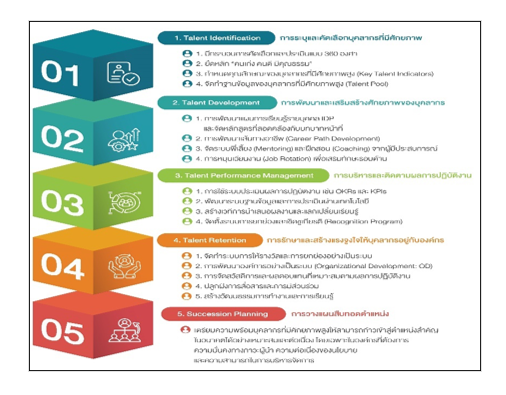
2. รูปแบบประกอบด้วย 5 องค์ประกอบ ได้แก่ การระบุและคัดเลือก (Talent Identification) การพัฒนาและเสริมสร้างศักยภาพ (Talent Development) การบริหารและติดตามผลการปฏิบัติงาน (Talent Performance Management) การรักษาและสร้างแรงจูงใจ (Talent Retention) และการวางแผนสืบทอดตำแหน่ง (Succession Planning)
3. การประเมินคุณภาพโดยผู้เชี่ยวชาญพบว่ารูปแบบมีคุณภาพโดยรวมระดับมากที่สุด (M = 4.67, SD = 0.05) โดยความเหมาะสม (M = 4.83, SD = 0.41) ความเป็นไปได้ ความถูกต้อง และความมีประโยชน์ในระดับมากที่สุด (M = 4.67, SD = 0.52) และความครบถ้วนในระดับมาก (M = 4.50, SD = 0.55)
รูปแบบที่พัฒนาสามารถนำไปใช้เป็นกรอบแนวคิดเชิงระบบในการบริหารจัดการบุคลากรที่มีศักยภาพสูงได้ อย่างไรก็ตาม ควรมีการนำรูปแบบไปทดลองใช้ในสถานการณ์จริงเพื่อศึกษาประสิทธิผลและสนับสนุนการนำไปใช้ในระดับนโยบายต่อไป
เอกสารอ้างอิง
Allan, S. (2010). Talent Management Systems: Best Practices in Technology Solutions for Recruitment, Retention and Workforce Planning. In L. A. Berger & D. R. Berger (Eds.), The Talent Management Handbook: Creating a Sustainable Competitive Advantage by Selecting, Developing, and Promoting the Best People (2nd ed., pp. 381–392). McGraw-Hill.
Angsuchot, S. (2013). Research Data Analysis for Teaching Development. In Research Documents for Teaching Development: Unit 6. Charoen Dee Man Kong Printing. (in Thai)
Armstrong, M. (2011). Strategic Human Resource Management: A Guide to Action. (3rd ed.).London: Kogan Page. Cappelli, P. (2008). Talent management for the twenty first century. Harvard Business Review, 86(3), 74-81.
Collings, D. G., & Mellahi, K. (2009). Strategic talent management: A review and research agenda. Human Resource Management Review, 19(4), 304–313.
Crabtree, B. F., & Miller, W. L. (1992). Doing Qualitative Research. Sage Publications, Inc. HREX.asia. (2019). Talent Management. Retrieved January 14, 2025 from https://th.hrnote.asia/ orgdevelopment/190114-thtalentmanagement/?utm_ source=chatgpt.com (in Thai)
HumanSoft. (2024). Talent Management: Effectively Managing Talented People in the Organization. Retrieved January 14, 2025 from https://www.humansoft.co.th/th/blog/talent-management (in Thai)
Lewis, R. E., & Heckman, R. J. (2006). Talent management: A critical review. Human Resource Management Review, 16(2), 139–154.
Pitipornwiwat, M. (2024). 'Inner Talent', A New Framework for Looking at Talent to its Core. Retrieved May 30, 2024 from https://www.baseplayhouse.co/blog/inner-talent-framework. (in Thai)
Srisaat, B. (2010). Basic Reasearch. (8th ed.) Bangkok: Suwiriyasan. (in Thai)
Srisaat, B. (2013). Preliminary Research. Bangkok: Suwiriyasan. (in Thai)
Supharatmi, R. (2020). Core competencies for senior government executives in Thailand in the 21st century. Civil Service Journal, 62(2), 4-9. (in Thai)
United Nations. (2023). Guidebook on Promoting Good Governance in Public-Private Partnerships. New York: United Nations.
ดาวน์โหลด
เผยแพร่แล้ว
ฉบับ
ประเภทบทความ
สัญญาอนุญาต
ลิขสิทธิ์ (c) 2026 วารสารการพยาบาลและการศึกษา

อนุญาตภายใต้เงื่อนไข Creative Commons Attribution-NonCommercial-NoDerivatives 4.0 International License.


