
ผลของโปรแกรมส่งเสริมสมรรถนะแห่งตนของผู้ดูแลในการจัดการ อาการเตือนโรคหลอดเลือดสมองของผู้สูงอายุกลุ่มเสี่ยงสูง
คำสำคัญ:
โปรแกรมส่งเสริมการรับรู้สมรรถนะแห่งตน , การจัดการอาการเตือนโรคหลอดเลือดสมอง , ผู้ดูแลของ ผู้สูงอายุกลุ่มเสี่ยงสูงบทคัดย่อ
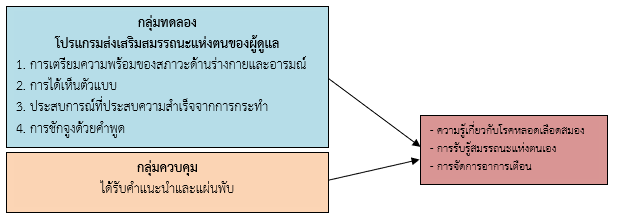
การวิจัยกึ่งทดลองแบบ 2 กลุ่มวัดผลก่อนและหลังมีวัตถุประสงค์เพื่อศึกษาผลของโปรแกรมส่งเสริมสมรรถนะแห่งตนของผู้ดูแลในการจัดการอาการเตือนโรคหลอดเลือดสมองของผู้สูงอายุกลุ่มเสี่ยงสูง ซึ่งพัฒนาขึ้นตามแนวคิดทฤษฎีสมรรถนะแห่งตน กลุ่มตัวอย่างเป็นผู้ดูแลของผู้สูงอายุกลุ่มเสี่ยงสูงที่ได้คัดเลือกแบบเจาะจงตามคุณสมบัติที่กำหนด จำนวน 60 ราย กลุ่มควบคุม 30 ราย ได้รับข้อมูลและคำแนะนำด้านสุขภาพตามปกติ กลุ่มทดลอง 30 ราย ได้รับโปรแกรมส่งเสริมสมรรถนะแห่งตนฯ ซึ่งผ่านการตรวจสอบจากผู้ทรงคุณวุฒิ 3 ท่าน มีค่าความตรงตามเนื้อหาเท่ากับ 1.00 ส่วนเครื่องมือเก็บรวบรวมข้อมูล ได้แก่ 1) แบบสอบถามข้อมูลส่วนบุคคลและการเจ็บป่วยของผู้สูงอายุ 2) แบบสอบถามข้อมูลส่วนบุคคลของผู้ดูแลผู้สูงอายุ 3) แบบวัดความรู้เกี่ยวกับโรคหลอดเลือดสมองในผู้สูงอายุและการจัดการอาการเตือนโรคหลอดเลือดสมอง 4) แบบสอบถามการรับรู้สมรรถนะแห่งตนในการจัดการอาการเตือนโรคหลอดเลือดสมอง 5) แบบสังเกตการจัดการอาการเตือนโรคหลอดเลือดสมอง มีค่าความตรงตามเนื้อหาเท่ากับ 1.00 และเครื่องมือฉบับที่ 3 ฉบับที่ 4 และฉบับที่ 5 มีค่าความเที่ยงเท่ากับ .73, .93 และร้อยละ 100.0 ตามลำดับ วิเคราะห์ข้อมูลด้วยสถิติเชิงพรรณนาและเปรียบเทียบด้วยสถิติ Fisher’s Exact Test, Chi-Square, Wilcoxon Ranks test และ Mann-Whitney U test ผลการศึกษา พบว่า
1. หลังเข้าร่วมโปรแกรมส่งเสริมสมรรถนะแห่งตนฯ กลุ่มทดลองมีคะแนนความรู้สูงกว่าก่อนได้รับโปรแกรมอย่างมีนัยสำคัญทางสถิติ (p-value < .01) และมีคะแนนการรับรู้สมรรถนะแห่งตนและคะแนนการจัดการอาการเตือนโรคหลอดเลือดสมองสูงกว่าก่อนได้รับโปรแกรมอย่างมีนัยสำคัญทางสถิติ (p-value < .001)
2. หลังเข้าร่วมโปรแกรมส่งเสริมสมรรถนะแห่งตนฯ กลุ่มทดลองมีคะแนนความรู้สูงกว่ากลุ่มควบคุมอย่างมีนัยสำคัญทางสถิติ (p-value < .01) และมีคะแนนการรับรู้สมรรถนะแห่งตนและคะแนนการจัดการอาการเตือนโรคหลอดเลือดสมองสูงกว่ากลุ่มควบคุมอย่างมีนัยสำคัญทางสถิติ (p-value < .001)
การศึกษาครั้งนี้แสดงถึงประสิทธิผลของโปรแกรมส่งเสริมสมรรถนะแห่งตนฯ ต่อการเพิ่มความเชื่อมั่นในตนเองของผู้ดูแลในการสังเกตอาการเตือนโรคหลอดเลือดสมอง ให้การดูแลและจัดการนำส่งผู้สูงอายุกลุ่มเสี่ยงสูงเข้ารับการรักษาได้อย่างมีประสิทธิภาพ
เอกสารอ้างอิง
Bandura, A. (1997). Self-Efficacy: The Exercise of Control. New York: H. Freeman & Co.
Feigin, V. L., Brainin, M., Norrving, B., Martins, S., Sacco, R. L., Hacke, W., et al. (2022). World stroke organization (WSO): Global stroke fact sheet 2022. International Journal of Stroke, 17(1), 18-29.
Fillit, H. M., Rockwood, K., & Young, J. (2017). Brocklehurst’s Textbook of Geriatric Medicine and Gerontology. Elsevier: Saunders.
Kitrungrote, L., & Phromnoi, C. (2020). The Development of Model for Accessibility to EMS of Older Persons with Stroke: Spearhead Project. Songkhla: Faculty of Nursing, Prince of Songkla University. (in Thai)
Kittiboonthawal, P., Yingrengreung, S., & Srithanya, S. (2013). Perceptions of stroke warning signs among risk patients. Nursing Journal of The Ministry of Public Health, 23(3), 132-141. (in Thai)
Lorlowhakarn, S., Narintharaksa, P., Tiratuntayaporn, R., & Romin, J. (2021). Effectiveness of perception and prevention program with five bases on stroke in the life of hypertensive patients in Sub-district health promoting hospital, Phuket Province. Journal of Health Science of Thailand, 30(6), 1091-1100. (in Thai)
Majavong, M. (2019). Stroke in the elderly. Journal of Thai Stroke Society, 18(1), 59-74. (in Thai) Nilnate, N. (2019). Risk factors and prevention of stroke in hypertensive patients. Journal of the Royal Thai Army Nurses, 20(2), 51-57. (in Thai)
Noommeechai, N., Samartkit, N., & Masingboon, K. (2017). Factors related to response to stroke symptoms in family members of patients with acute ischemic stroke. Journal of Nursing and Education, 10(3), 23-38. (in Thai)
Phoonphoerm, M., Apinundecha, C., & Limtoprasert, S. (2021). The effectiveness of self-efficacy program on diabetes preventing behaviors of the risk groups. UMT Poly Journal, 18(2), 277-289. (in Thai)
Piyahirun, J., Kasipol, T., & Prasertsomg, C. (2018). Effects of a self-efficacy promotion program for stroke caregivers. Journal of Health Sciences and Wellness, 22(43-44), 130-142. (in Thai)
Powers, W. J., Rubinstein, A. A., Ackerson, T., Adeoye, O. M., Bambakidis, N. C., Becker, K., et al. (2019). Guidelines for the early management of patients with acute ischemic stroke: 2019 update to the 2018 guidelines for the early management of acute ischemic stroke.Stroke, 50: e344–e418. doi: 10.1161/STR.0000000000000211.
Puthasna, T. (2024). The effectiveness of the stroke assessment skill development program of village volunteers on access to the Stroke Fast Track service system in stroke patients. Journal of Environmental and Community Health, 9(1), 690-698. (in Thai)
Rattanachan, P. (2023). The factors related to seeking treatment at the hospital in stroke patients at Uthai Hospital, Phra Nakhon Sri Ayuthaya. Journal of Environmental and Community Health, 9(1), 37-45. (in Thai)
Saguaunsuk, P., & Mekrungrongwong, S. (2022). The effectiveness of a self-efficacy building program on stroke prevention behaviors among elderly patients with chronic illness in Khlong Khlung District, Kampaengphet Province. The Southern College Network Journal of Nursing and Public Health, 9(2), 122-37. (in Thai)
Suwintrakorn, C., Kalampakorn, S., & Rawiworraku, T. (2019). The effects of self-efficacy enhancement program for health volunteers on stroke surveillance and prevention. Thai Journal of Nursing, 68(1), 39-48. (in Thai)
Theamkou, S. (2022). Incidence of stroke in Thailand. Thai Journal of Neurology, 39(2), 39-46. (in Thai)
Vipaksongkhro, S., Kensaku, T., Takthaweephon, S., Supat, J., Boonthong, J., & Kosimongkol, S. (2024). Clinical Nursing Practice Guideline for Stroke. (5th Ed.). Bangkok: Thana Press. (in Thai)
Wanna, A., Kimsungnoen, N., & Namchanthra, R. (2020). Perceptions and management of warning signs among persons at risk of stroke. APHEIT Journal of Nursing and Health, 2(1), 30-44. (in Thai)
Wongrattana, C. (2009). Statistics for Research. (7th Ed.). Bangkok: Thaineramit Interprogrssive. (in Thai)
Yiadthaisong, K., Wngpiriryayothar, A., & Kuleelung, P. (2019). Factors predicting prehospital time of patients with acute ischemic stroke in acute phase. Journal of Nursing and Health, 37(1), 148-156. (in Thai)
ดาวน์โหลด
เผยแพร่แล้ว
ฉบับ
ประเภทบทความ
สัญญาอนุญาต
ลิขสิทธิ์ (c) 2025 วารสารการพยาบาลและการศึกษา

อนุญาตภายใต้เงื่อนไข Creative Commons Attribution-NonCommercial-NoDerivatives 4.0 International License.


