
ผลของโปรแกรมศิลปะบำบัดต่อความเครียดของผู้ป่วยยาเสพติด กลุ่มบังคับบำบัดแบบไม่ควบคุมตัว
Effect of Art Therapy on Stress of Non-control Treatment of Compulsory Drug Addicted Patients
Keywords:
stress, art therapy, Drug addicted patientsAbstract
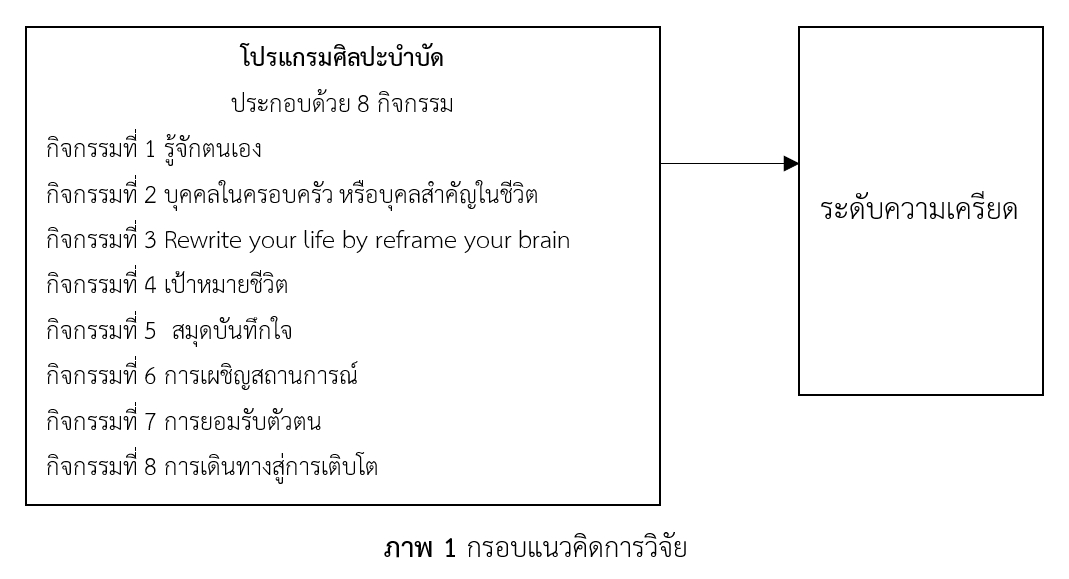
The purpose of this quasi-experimental research was to compare stress levels of non-control compulsory treatment in drug-addicted patients before and after using art therapy program. The samples were 12 patients undergoing treatment and rehabilitation at KhokPho hospital. The experimental tool was the art therapy program consisting of eight activities provided by Thanyarak Songkhla hospital. The stress self-assessment form, developed by the Department of Mental Health, Ministry of Public Health, was used to collect data. Wilcoxon Signed Rank Test was employed to compare the stress levels of drug addicted patients before and after participating in the art therapy program. The results showed that after using the art therapy program, the patients' stress level reduced significantly (p < 0.001) illustrating as having the mean score of stress before participating in the art therapy = 18.08 (SD = 2.96) and after participating in the art therapy = 8.42 (SD = 2.81). Therefore, it indicates that the use of art therapy to reduce stress in the non-control compulsory treatment group of drug addicted patients can be an appropriate alternative treatment approach and can be used as a guideline to reduce stress in other groups of patients.
References
Cohen, J. (1988). Statistical Power Analysis for the Behavioral Sciences (2nd ed.). New York: Routledge.
Faul, F., Erdfelder, E., Lang, A.-G., & Buchner, A. (2007). G*Power 3: A flexible statistical power analysis program for the social, behavioral, and biomedical sciences. Behavior Research Methods, 39(2), 175–191.
Urbinner. (2021). Art Therapy. Urbinner. Retrieved June 19, 2023, from https://www.urbinner.com/post/what-is-art-therapy
ทวีศักดิ์ สิริรัตน์เรขา. (2564). ศิลปะบำบัด ศาสตร์และศิลป์แห่งการบำบัด. Retrieved June 19, 2023, from https://www.happyhomeclinic.com/alt02-arttherapy_artandscience.htm
พรนภา สุขมูลศิริ, และ รุ่งนภา สุวรรณศรี. (2564). การออกแบบสื่อศิลปะบำบัดความเครียดเพื่อส่งเสริม
สุขภาวะจิตในวัยทำงาน. วารสารศิลปกรรมศาสตร์วิชาการ วิจัย และงานสร้างสรรค์, 8(2), 95–133.
พวงทิพย์ สังเกตุใจ, สุนภาวรานนท์ กิ่งกาญจน์, นิลมล สุพัฐชญา, และ โชติกาญน์ชยเกษม ดวงใจ. (2563). การศึกษาประสิทธิผลการจัดการความเครียดด้วยกิจกรรมศิลปะและดนตรีบำบัด ในผู้ป่วยยาเสพติด โรงพยาบาลธัญญารักษ์แม่ฮ่องสอน. โรงพยาบาลธัญญารักษ์แม่ฮ่องสอน กรมการแพทย์ กระทรวงสาธารณสุข.
พันธิพา ทองสลับ, และ ฟัลซานา อับดุลรอมัน. (2562). ศึกษานำร่องผลการศิลปะบำบัดต่อความวิตกกังวลของผู้ป่วยยาเสพติดที่มีอาการทางจิตเวชจากการใช้ยาเสพติด กรณีศึกษาโรงพยาบาลธัญญารักษ์ปัตตานี. กรมการแพทย์ โรงพยาบาลธัญญารักษ์ปัตตานี.
พันธิภา ทองสลับ, และ ฟัลซานา อับดุลรอมัน. (2566). การศึกษาเบื้องต้น: ผลของโปรแกรมกลุ่มศิลปะบำบัดต่อความวิตกกังวลของผู้ป่วยยาเสพติดที่มีอาการทางจิตเวชจากการใช้ยาเสพติด โรงพยาบาลธัญญารักษ์ ปัตตานี. วารสารจิตวิทยาคลินิกไทย (Online), 54(2), 56–66.
ภิรญา ราชสันเทียะ. (2563). ผลของการใช้ศิลปะบำบัดที่มีต่อภาวะซึมเศร้าของผู้บำบัดยาเสพติดในระบบ Matrix ในโรงพยาบาลพิจิตร. วารสารสุขภาพและสิ่งแวดล้อมศึกษา, 5(4), 94–98.
โรงพยาบาลธัญญารักษ์สงขลา. (2561). ศิลปะบำบัดสำหรับผู้ป่วยยาเสพติด. โรงพยาบาลธัญญารักษณ์สงขลา กรมการแพทย์ กระทรวงสาธารณสุข.
สมชาย จักรพันธุ์. (2542). การพัฒนาแบบประเมินและวิเคราะห์ความเครียดด้วยตนเองสำหรับประชาชนไทยด้วยคอมพิวเตอร์: รายงานการวิจัย. พิมพ์ครั้งที่ 2. กรุงเทพฯ: กรมสุขภาพจิต.
สายอักษร รักคง. (2563). การเยียวยาสภาวะทางจิตด้วยศิลปะบำบัด. วารสารศิลป์ พีระศรี, 7(2), 65–84.
Downloads
Published
Issue
Section
License
Copyright (c) 2024 Journal of Council of Community Public Health

This work is licensed under a Creative Commons Attribution-NonCommercial-NoDerivatives 4.0 International License.
- บทความหรือข้อคิดเห็นใด ๆ ที่ปรากฏในวารสารสภาการสาธารณสุขชุมชน ที่เป็นวรรณกรรมของผู้เขียน บรรณาธิการ ไม่จำเป็นต้องเห็นด้วย
- บทความที่ได้รับการตีพิมพ์ถือเป็นลิขสิทธิ์ของ วารสารสภาการสาธารณสุขชุมชน


