
การพัฒนารูปแบบการส่งเสริมความรอบรู้ด้านสุขภาพและพฤติกรรมสุขภาพตามหลัก 3อ. 2ส. ของประชาชนวัยทำงานในพื้นที่หมู่บ้านปรับเปลี่ยนพฤติกรรมสุขภาพ เขตสุขภาพที่ 6
คำสำคัญ:
ความรอบรู้ด้านสุขภาพ, พฤติกรรมสุขภาพ, ประชาชนวัยทำงาน, หมู่บ้านปรับเปลี่ยนพฤติกรรมสุขภาพบทคัดย่อ
การวิจัยเชิงปฏิบัติการนี้มีวัตถุประสงค์เพื่อพัฒนาและประเมินผลรูปแบบการส่งเสริมความรอบรู้ด้านสุขภาพและพฤติกรรมสุขภาพตามหลัก 3อ. 2ส. ของประชาชนวัยทำงานในพื้นที่หมู่บ้านปรับเปลี่ยนพฤติกรรมสุขภาพ เขตสุขภาพที่ 6 การศึกษาแบ่งเป็น 3 ระยะ ได้แก่ ระยะที่ 1 วิเคราะห์สภาพการณ์และบริบทพื้นที่ สุ่มตัวอย่างแบบหลายขั้นตอนในประชาชนอายุ 15-59 ปี จำนวน 1,920 คน ระยะที่ 2 พัฒนารูปแบบฯ โดยการมีส่วนร่วมของผู้มีส่วนได้ส่วนเสียจำนวน 26 คน และระยะที่ 3 ประเมินรูปแบบฯ ตรวจสอบคุณภาพเครื่องมือโดยผู้เชี่ยวชาญจำนวน 3 คน ได้ค่าความเที่ยงตรงเชิงเนื้อหา เท่ากับ 1.00 วิเคราะห์ข้อมูลด้วยสถิติเชิงพรรณนาและสถิติ Paired t-test ข้อมูลเชิงคุณภาพใช้วิธีการวิเคราะห์เชิงเนื้อหา ผลการวิจัยพบว่า
- 1. ความรอบรู้ด้านสุขภาพภาพรวมอยู่ในระดับดีมากร้อยละ 37.6 และพฤติกรรมสุขภาพตามหลัก 3อ. 2ส. ภาพรวมอยู่ในระดับดีมากร้อยละ 59.2
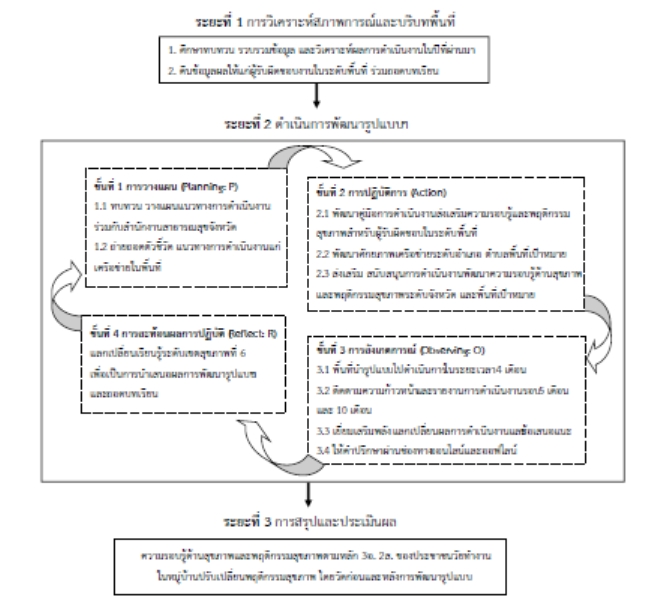
- 2. รูปแบบการส่งเสริมความรอบรู้ด้านสุขภาพและพฤติกรรมสุขภาพตามหลัก 3อ. 2ส. ประกอบ 5 ขั้นตอน ได้แก่ 1) วิเคราะห์ปัญหาแบบมีส่วนร่วม คืนข้อมูลและถอดบทเรียนร่วมกัน 2) สร้างคู่มือและสื่อการสอนที่มีคุณภาพในรูปแบบรูปเล่มและสื่อออนไลน์ 3) ดำเนินการพัฒนาความรอบรู้และพฤติกรรมสุขภาพ โดยการอบรมเชิงปฏิบัติการแบบมีส่วนร่วมเพื่อพัฒนาศักยภาพผู้รับผิดชอบงานให้สามารถถ่ายทอดความรู้สู่กลุ่มเป้าหมายได้ 4) ติดตามความก้าวหน้าและเยี่ยมเสริมพลังการดำเนินงานในพื้นที่พร้อมจัดระบบให้คำปรึกษา 5) สร้างพื้นที่ต้นแบบเพื่อแลกเปลี่ยนเรียนรู้และถอดบทเรียน
- 3. หลังดำเนินการพัฒนารูปแบบฯ พบว่า กลุ่มตัวอย่างมีคะแนนความรอบรู้ด้านสุขภาพเพิ่มขึ้นจากก่อนดำเนินการพัฒนารูปแบบอย่างมีนัยสำคัญทางสถิติที่ระดับ .001 และมีคะแนนพฤติกรรมสุขภาพเพิ่มขึ้นจากก่อนดำเนินการพัฒนารูปแบบอย่างมีนัยสำคัญทางสถิติที่ระดับ .001
สรุปได้ว่า รูปแบบการส่งเสริมความรอบรู้ด้านสุขภาพและพฤติกรรมสุขภาพสามารถพัฒนาความรอบรู้ด้านสุขภาพและพฤติกรรมสุขภาพให้ดีขึ้นได้
เอกสารอ้างอิง
กรมอนามัย กระทรวงสาธารณสุข. (2564). ปิรามิดประชากร เขตสุขภาพที่ 6: DOH dashboard. ค้นเมื่อ 9 กรกฎาคม 2564 จาก https://dashboard.anamai.moph.go.th/dashboard.
กองกิจกรรมทางกายเพื่อสุขภาพ กรมอนามัย กระทรวงสาธารณสุข. (2562). รอบรู้...สุขภาพวัยทำงาน. นนทบุรี: บริษัท คิวคัมเบอร์ (ประเทศไทย) จำกัด.
กองยุทธศาสตร์และแผนงาน กระทรวงสาธารณสุข. (2562). แผนยุทธศาสตร์กระทรวงสาธารณสุข ปีงบประมาณ 2562. นนทบุรี: กระทรวงสาธารณสุข.
กองสุขศึกษา กรมสนับสนุนบริการสุขภาพ กระทรวงสาธารณสุข. (2561ก). หมู่บ้านปรับเปลี่ยนพฤติกรรมลดโรคมะเร็ง โรคความดันโลหิตสูง โรคหัวใจและหลอดเลือด เส้นทางสู่ความรอบรู้ด้านสุขภาพของคนไทย. กรุงเทพฯ: บริษัท สามเจริญพาณิชย์ (กรุงเทพ) จำกัด.
กองสุขศึกษา กรมสนับสนุนบริการสุขภาพ กระทรวงสาธารณสุข. (2561ข). การเสริมสร้างและประเมินความรอบรู้ด้านสุขภาพและพฤติกรรมสุขภาพ กลุ่มเด็กและเยาวชน อายุ 7-14 ปีและกลุ่มประชาชนที่มีอายุ 15 ปีขึ้นไป(ฉบับปรับปรุง ปี 2561). นนทบุรี: โรงพิมพ์กองสุขศึกษา กระทรวงสาธารณสุข.
กองสุขศึกษา กรมสนับสนุนบริการสุขภาพ กระทรวงสาธารณสุข. (2562). แนวทางการดำเนินงานสุขศึกษา เพื่อเสริมสร้างความรอบรู้ด้านสุขภาพและพฤติกรรมสุขภาพ ประจำปีงบประมาณ 2563. นนทบุรี: โรงพิมพ์กองสุขศึกษา กระทรวงสาธารณสุข.
กองสุขศึกษา กรมสนับสนุนบริการสุขภาพ กระทรวงสาธารณสุข. (2563ก). เครื่องมือประเมินความรอบรู้และพฤติกรรมของประชาชนในหมู่บ้านปรับเปลี่ยนพฤติกรรมสุขภาพ. นนทบุรี: กรมสนับสนุนบริการสุขภาพ กระทรวงสาธารณสุข.
กองสุขศึกษา กรมสนับสนุนบริการสุขภาพ กระทรวงสาธารณสุข. (2563ข). แนวทางการพัฒนาชุมชนรอบรู้ด้านสุขภาพ. กรุงเทพฯ: บริษัท 25 มีเดีย จำกัด.
กองโรคไม่ติดต่อ กรมควบคุมโรค กระทรวงสาธารณสุข. (2562). รายงานสถานการณ์โรค NCDs เบาหวาน ความดันโลหิตสูง และปัจจัยเสี่ยงที่เกี่ยวข้อง พ.ศ. 2562. นนทบุรี: สำนักพิมพ์อักษรกราฟฟิคแอนด์ดีไซน์.
กองโรคไม่ติดต่อ กรมควบคุมโรค กระทรวงสาธารณสุข. (2563). รายงานประจำปี 2563. นนทบุรี: สำนักพิมพ์อักษรกราฟฟิคแอนด์ดีไซน์.
บังอร กลิ่นสุวรรณ์ และคณะ. (2564). การพัฒนารูปแบบโรงเรียนรอบรู้ด้านสุขภาพ เขตสุขภาพที่ 7. วารสารสำนักงานป้องกันควบคุมโรคที่ 7 ขอนแก่น, 28(2), 95-105.
รุ่งนภา อาระหัง. (2560). ผลของโปรแกรมการส่งเสริมความรอบรู้ด้านสุขภาพต่อพฤติกรรมการป้องกันโรคความดันโลหิตสูงสำหรับกลุ่มเสี่ยงโรคความดันโลหิตสูงที่ชุมชนแห่งหนึ่งในจังหวัดนครปฐม. วารสารแพทย์นาวี, 45(3), 509-526.
วรรณศิริ นิลเนตร และวาสนา เรืองจุติโพธิ์พาน. (2562). ความรอบรู้ด้านสุขภาพกับวิชาชีพพยาบาล. วารสารคุณภาพชีวิตกับกฎหมาย, 15(2), 1-18.
ศูนย์สนับสนุนบริการสุขภาพที่ 6 กระทรวงสาธารณสุข (2564) รายงานผลการดำเนินงานหมู่บ้านปรับเปลี่ยนพฤติกรรม ศูนย์สนับสนุนบริการสุขภาพที่ 6 ประจำปี 2564. ศูนย์สนับสนุนบริการสุขภาพที่ 6 กรมสนับสนุนบริการสุขภาพ กระทรวงสาธารณสุข.
สำนักงานเขตสุขภาพที่ 6 กระทรวงสาธารณสุข. (2564). สถิติข้อมูลพื้นฐานทั่วไป เขตสุขภาพที่ 6. สืบค้นเมื่อ 9 กรกฎาคม 2564 จาก http://region6.cbo.moph.go.th/r6/HRP.php
อภิญญา เนียมเล็ก และคณะ. (2563). การพัฒนารูปแบบการดูแลผู้ป่วยเบาหวานในชุมชน ภายใต้สถานการณ์ การระบาดของเชื้อ C0VID-19. พัทลุง: ศูนย์แพทย์ชุมชนโรงพยาบาลควนขนุน อำเภอควนขนุน จังหวัดพัทลุง.
อรุณ จิรวัฒน์กุล. (2542). ชีวสถิติ. พิมพ์ครั้งที่ 3. ขอนแก่น: ภาควิชาชีวสถิติและประชากรศาสตร์ คณะสาธารณสุขศาสตร์ มหาวิทยาลัยขอนแก่น.
อารยา เชียงของ. (2561). ผลการพัฒนาความรอบรู้ด้านสุขภาพด้วยการจัดการเรียนรู้เพื่อการเปลี่ยนแปลงที่มีต่อพฤติกรรมการควบคุมระดับน้ำตาลในเลือดของผู้ป่วยโรคเบาหวาน. ปรัชญาดุษฎีบัณฑิต สาขาการวิจัยพฤติกรรมศาสตร์ประยุกต์ มหาวิทยาลัยศรีนครินทร์วิโรฒ.
เอื้อจิต สุขพูล, ชลดา กิ่งมาลา, ภาวิณี แพงสุข, ธวัชชัย ยืนยาว และวัชรีวงค์ หวังมั่น. (2563). ผลของโปรแกรมการพัฒนาความรอบรู้ด้านสุขภาพและพฤติกรรมสุขภาพของประชาชนกลุ่มวัยทำงาน. วารสารวิชาการสาธารณสุข, 29(3), 419-429.
Berkman, N. D., Sheridan, S.L., Donahue, K. E., Halpern, D. J., & Crotty, K. (2011). Low health literacy and health outcomes: an updated systematic review. Annals of Internal Medicine, 155(2), 97-107.
Kemmis, S & McTaggart, R. (1988). The Action Research Planer (3rd ed.). Victoria: Deakin University.
Nutbeam, D. (2008). The evolving concept of health literacy. Social Science & Medicine, 67(12), 2072-2078.
Taggart J, Williams A, Dennis S, Newall A, Shortus T, Zwar N, et al. (2012). A systematic review of interventions in primary care to improve health literacy for chronic disease behavioral risk factors. BMC Fam Pract, 1, 13-49.
World Health Organization. (1998). Health Promotion Glossary. World Health Organization. Geneva: WHO/HPR/HEP/98.1.
World Health Organization. (2009). Health Literacy and Health Promotion. Definitions, Concepts and Examples in the Eastern Mediterranean Region. Individual Empowerment Conference Working Document. 7th Global Conference on Health Promotion Promoting Health and Development. Nairobi, Kenya, 26-30.
ดาวน์โหลด
เผยแพร่แล้ว
ฉบับ
ประเภทบทความ
สัญญาอนุญาต
ลิขสิทธิ์ (c) 2023 วารสารสภาการสาธารณสุขชุมชน

อนุญาตภายใต้เงื่อนไข Creative Commons Attribution-NonCommercial-NoDerivatives 4.0 International License.
- บทความหรือข้อคิดเห็นใด ๆ ที่ปรากฏในวารสารสภาการสาธารณสุขชุมชน ที่เป็นวรรณกรรมของผู้เขียน บรรณาธิการ ไม่จำเป็นต้องเห็นด้วย
- บทความที่ได้รับการตีพิมพ์ถือเป็นลิขสิทธิ์ของ วารสารสภาการสาธารณสุขชุมชน


