
Work readiness and educational environment factors related to work readiness of student at Sirindhorn college of public health khon kaen
Keywords:
Work readiness, Educational environment factors, StudentAbstract
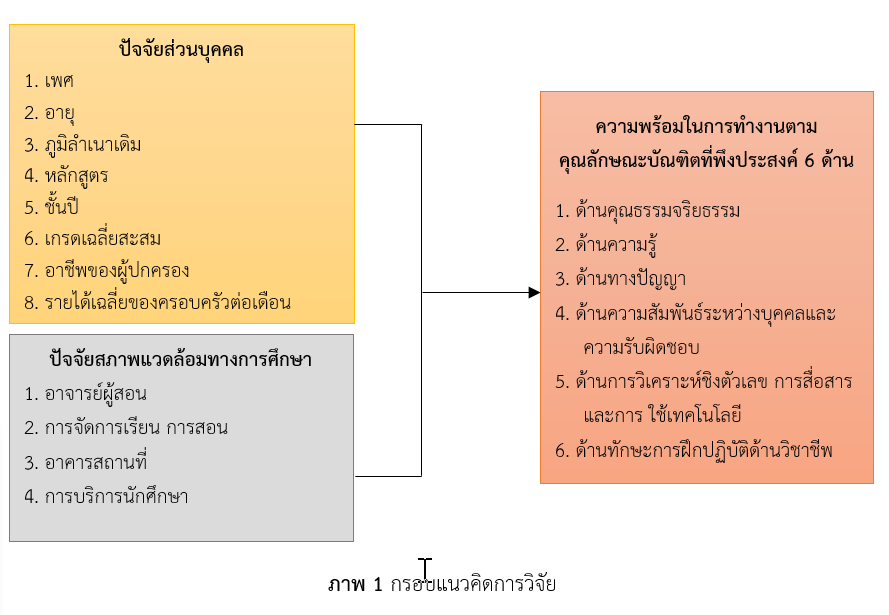
This cross-sectional descriptive research aimed to study levels of work readiness, comparison between work readiness and personal information, as well as factors associated with work readiness of students at Sirindhorn College of Public Health Khon Kaen. Participants were 151 students studying in four programs in the educational year of 2019. Data were collected by questionnaire with its content validity (IOC) = 0.67 - 1.00 and its reliability (Cronbach’s alpha coefficient) = 0.95. Data were analyzed by descriptive statistics linked to frequency, percentage, mean, standard deviation, minimum – maximum, by t-test and One-way ANOVA for comparing work readiness and personal information, and also by Pearson Correlation Coefficient: (r) for analyzing factors associated with work readiness of students.
The results revealed that: 1) the overall of work readiness of the participants was at a high level (=4.11, SD= 0.43); 2) the readiness to work classified by personal factors, covering gender, age, cumulative grade point and year of study had no statistically significant differences (p=0.192, 0.735, 0.334 and 0.520 respectively); 3) the educational environment factors related to instructor, teaching organization, places and buildings and student service had significantly positive relationship with work readiness of students at moderate levels (r=0.539, p<0.001; r=0.565, p<0.001; r=0.405, p<0.001 and r=0.369, p<0.001 respectively). Therefore, for further investigation, other variables linked to work readiness and finding and analyzing others appropriate educational environment factors according to the college’s context should be considered.
References
บุษกร จินตธนาวัฒน์. (2557). แนวทางการเตรียมความพรอมในการประกอบอาชีพของนักศึกษา มหาวิทยาลัยศิลปากร เพื่อรองรับการเขาสูประชาคมเศรษฐกิจอาเซียน. วารสารวิทยาการจัดการ, 2(2), 13-30.
พีรพัฒน์ เพชรแก้ว และศิริวัฒน์ เปลี่ยนบางยาง. (2561). ความพร้อมในการเป็นองค์การแห่งการเรียนรู้ ของมหาวิทยาลัยมหามกุฏราชวิทยาลัย. วารสาร“ศึกษาศาสตร์ มมร” คณะศึกษาศาสตร์ มหาวิทยาลัยมหามกุฏราชวิทยาลัย, 6(1), 314-322.
ไพรินทร์ สุคนธ์ตระกูล. (2561). ความสัมพันธ์ระหว่างการรับรู้ของนักศึกษาพยาบาลในความพร้อมของการเรียนรู้ด้วยตนเอง ความพร้อมในการทำงานเป็นกลุ่ม และผลสัมฤทธิ์ในการเรียนวิชาการพยาบาลมารดา-ทารกและการผดุงครรภ์. โรงเรียนพยาบาลรามาธิบดี คณะแพทยศาสตร์โรงพยาบาลรามาธิบดี มหาวิทยาลัยมหิดล, 25, 195-204.
สำนักงานเลขาธิการสภาการศึกษา กระทรวงศึกษาธิการ. (2557). การกำหนดแนวทางการพัฒนาการศึกษาไทย กับการเตรียมความพร้อมสู่ศตวรรษที่ 21. สถาบันบัณฑิตบริหารธุรกิจ ศศินทร์ แห่งจุฬาลงกรณ์มหาวิทยาลัย.
อรุณ จิรวัฒน์กุล. (2556). สถิติทางวิทยาศาสตร์สุขภาพเพื่อการวิจัย. พิมพ์ครั้งที่2. กรุงเทพฯ: วิทยพัฒน์.
อาทิตยา ดวงมณี. (2560). ความสัมพันธ์ระหว่างปัจจัยด้านสภาพแวดล้อมทาง การเรียนกับความพร้อมในการเรียนรู้ ด้วยการนำตนเองของนักเรียนพยาบาลศาสตร์ วิทยาลัยพยาบาลกองทัพเรือ. วารสารแพทย์นาวี, 44(2), 19-20.
อารี ผสานสนิธุวงศ์. (2559). ความพร้อมในการประกอบอาชีพของนักศึกษา คณะมนุษยศาสตร์และสังคมศาสตร์ มหาวิทยาลัยราชภัฏบ้านสมเด็จเจ้าพระยา เพื่อรองรับการเข้าสู่ประชาคมอาเซียน. วารสารวิชาการมหาวิทยาลัยธนบุรี, 10(23), 48.
Best, J.W. & Kahn, J.V. (1998). Research in education. 8th ed., Boston: Allyn & Bacon.
Pander, R. and Verma, M.R. (2008). Samples Allocation in Different Strata for Impact Evaluation of Developmental Programme. Rev. Bras. Biom., São Paulo, v.26, n.4, p.103-112.
Downloads
Published
Issue
Section
License
- บทความหรือข้อคิดเห็นใด ๆ ที่ปรากฏในวารสารสภาการสาธารณสุขชุมชน ที่เป็นวรรณกรรมของผู้เขียน บรรณาธิการ ไม่จำเป็นต้องเห็นด้วย
- บทความที่ได้รับการตีพิมพ์ถือเป็นลิขสิทธิ์ของ วารสารสภาการสาธารณสุขชุมชน


