
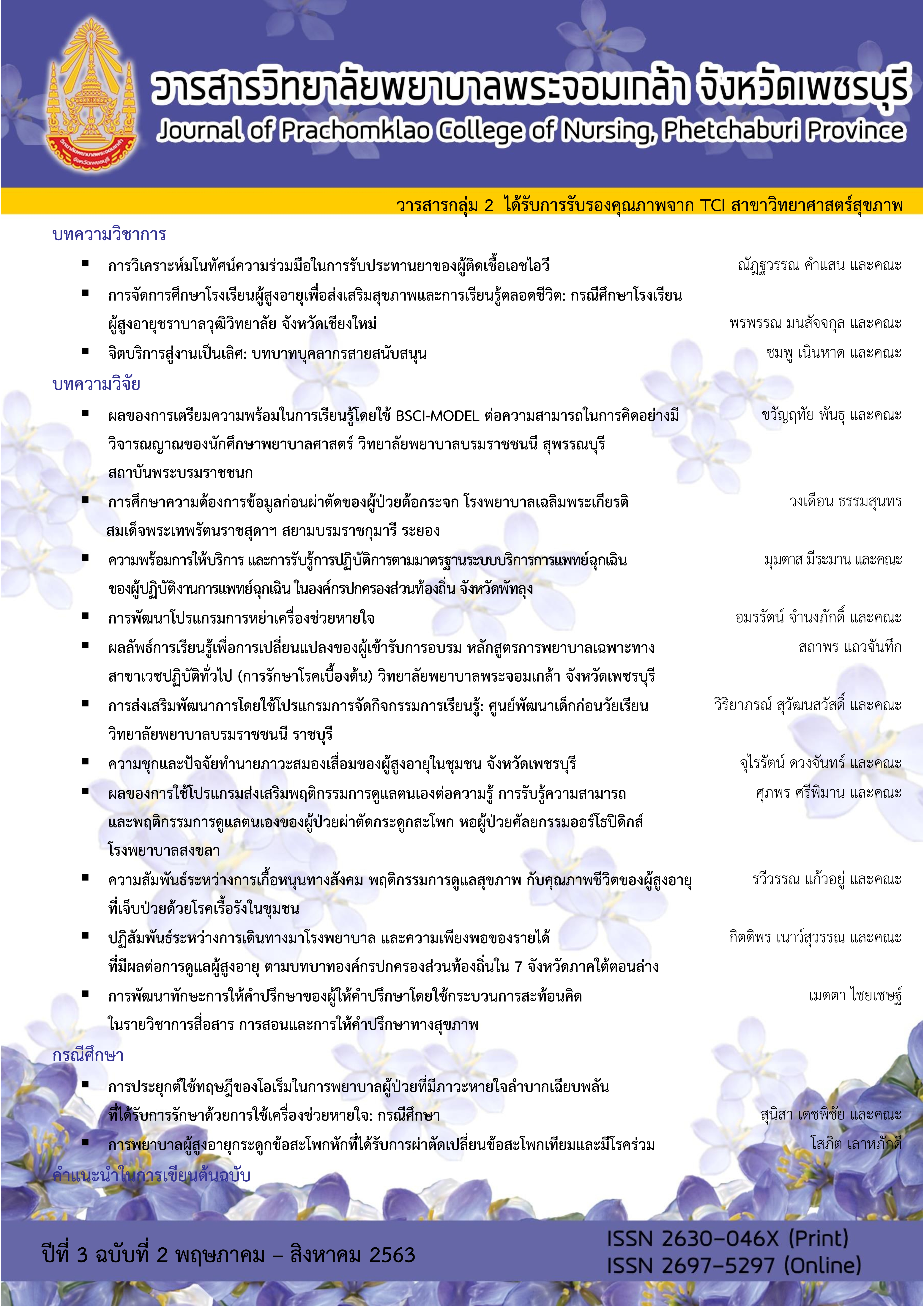
การประยุกต์ใช้ทฤษฎีของโอเร็มในการพยาบาลผู้ป่วยที่มีภาวะหายใจลำบากเฉียบพลัน ที่ได้รับการรักษาด้วยการใช้เครื่องช่วยหายใจ: กรณีศึกษา
Article Sidebar
Main Article Content
บทคัดย่อ
กลุ่มผู้ป่วยวิกฤตที่มีภาวะหายใจลำบากเฉียบพลัน ที่จำเป็นต้องได้รับการรักษาร่วมกับการใส่ท่อหลอดลมคอและใช้เครื่องช่วยหายใจ พยาบาลมีบทบาทสำคัญในการดูแลผู้ป่วยกลุ่มนี้เพื่อป้องกันภาวะแทรกซ้อนที่อาจจะเกิดขึ้น และลดอัตราการเสียชีวิตลงได้
การศึกษาครั้งนี้ นำกรอบแนวคิดทฤษฎีการพยาบาลของโอเร็มมาประยุกต์ใช้ในการพยาบาลผู้ป่วยวิกฤตที่มีภาวะหายใจลำบากเฉียบพลัน โดยใช้ทฤษฎีระบบการพยาบาล 3 ระยะ คือ 1) ระยะทดแทนทั้งหมด 2) ระยะทดแทนบางส่วน และ 3) ระยะการพยาบาลแบบสนับสนุนและให้ความรู้ โดยนำมาใช้ในการดูแลกรณีศึกษา 2 ราย เพศชาย อายุ 16 และ 39 ปี ได้รับการวินิจฉัยเป็นภาวะหายใจลำบากเฉียบพลัน ซึ่งมีสาเหตุจากการติดเชื้อในกระแสเลือดแบบรุนแรง ระยะเวลาการรักษาตัวในโรงพยาบาล 11 วัน และ 10 วัน ตามลำดับ ปัญหาทางการพยาบาลแบ่งเป็น ระยะแรกรับ ระหว่างการได้รับการใส่ท่อช่วยหายใจ การหย่าเครื่องช่วยหายใจ หลังหย่าเครื่องช่วยหายใจ และส่งต่อไปรับการรักษาอย่างต่อเนื่องเพื่อวางแผนจำหน่าย ผลลัพธ์ภายหลังการดูแลผู้ป่วยทั้งสองราย พบว่า ผู้ป่วยสามารถผ่านภาวะวิกฤตได้อย่างปลอดภัย ไม่เกิดภาวะแทรกซ้อนขณะรับการรักษาและฟื้นหายจากภาวะเจ็บป่วย สามารถจำหน่ายกลับบ้านได้
ข้อเสนอแนะที่ได้จากการศึกษาคือ พยาบาลวิชาชีพที่ปฏิบัติงานในหอผู้ป่วยหนักต้องมีความรู้ความเข้าใจในการนำทฤษฎีการพยาบาลของโอเร็มไปประยุกต์ใช้ในการดูแลผู้ป่วยที่มีภาวะวิกฤต โดยเฉพาะการประเมินภาวะสุขภาพ เพื่อกำหนดข้อวินิจฉัยทางการพยาบาลและใช้ทฤษฎีระบบการพยาบาลในการวางแผนและให้การพยาบาลอย่างเหมาะสม เพื่อให้ผู้ป่วยปลอดภัยจากโรคและภาวะแทรกซ้อน
Downloads
Article Details
เนื้อหาและข้อมูลที่เผยแพร่ในวารสารวิทยาลัยพยาบาลพระจอมเกล้า จังหวัดเพชรบุรี ถือเป็นข้อคิดเห็นและความรับผิดชอบของผู้นิพนธ์บทความโดยตรง บทความ เนื้อหา ข้อมูล รูปภาพ ฯลฯ ที่ได้รับการเผยแพร่ในวารสารนี้ ถือเป็นลิขสิทธิ์ของวารสารฯ หากบุคคลหรือหน่วยงานใดต้องการนำทั้งหมดหรือส่วนหนึ่งส่วนใดไปเผยแพร่หรือเพื่อกระทำการใด ๆ จะต้องอ้างอิงวิทยาลัยพยาบาลพระจอมเกล้า จังหวัดเพชรบุรี ทุกครั้ง
เอกสารอ้างอิง
ฉันชาย สิทธิพันธุ์ (2559). How to manage ARDS. ใน อำนาจ ชัยประเสริฐ, ต้นตนัย นำเบญจพล, สิริกานต์ เตชะวณิช, จันทราภา ศรีสวัสดิ์, และวิชัย ประยุรวิวัฒน์ (บ.ก.), Emergency Medicine (น. 107-116). กรุงเทพฯ: นำอักษรการพิมพ์.
ธนรัตน์ พรศิริรัตน์, และสุรัตน์ ทองอยู่. (2559). การพยาบาล ผู้ป่วยภาวะหายใจล้มเหลวเฉียบพลันที่ใช้เครื่องพยุงการทำงานของหัวใจและปอด ECMO, เวชบันทึกศิริราช, 9(1), 44-50.
บดินทร์ ขวัญนิมิตร (2560). Sepsis 2017: Their guideline vs my practice ใน: ดุสิต สถาวร, ครรชิต ปิยะเวชวิรัตน์, สหดล ปุญญถาวร (บ.ก.), The Best ICU (น. 156-162). กรุงเทพฯ: บียอนด์เอ็นเทอร์ไพรซ์.
พารุณี วงษ์ศรี, และทีปทัศน์ ชินตาปัญญากุล. (2561). การประยุกต์ใช้ทฤษฎีของโอเร็มกับการดูแลและการให้คำแนะนำผู้ป่วยที่มีภาวะหัวใจล้มเหลว. วารสารพยาบาลตำรวจ, 10(1), 209-219.
พิมพ์ลักษณ์ รังษีภโนดร, ชัชวาล วงค์สํารี และอัมพร เจียงวิริชัยกูร. (2561). การประยุกต์ใช้ทฤษฎีการดูแลตนเองของโอเร็มในการดูแลป้องกันการเกิดแผลที่เท้าของผู้ป่วยโรคเบาหวาน. วารสารวิชาการมหาวิทยาลัยอีสเทิร์นเอเชียฉบับวิทยาศาสตร์และเทคโนโลยี, 12(3), 89-100.
พร้อมจิตร ห่อนบุญเหิม (2553). ทฤษฎีการพยาบาลองโอเร็มแนวคิดและการประยุกต์. มหาสารคาม: อภิชาติการพิมพ์.
พุทธพงศ์ นิภัสตรา (2561). กลุ่มอาการหายใจลำบากเฉียบพลัน: การรักษาตามหลักฐานเชิงประจักษ์. พุทธชินราชเวชสาร, 35(1), 116-128.
ฟาริดา อิบราฮิม (2546). ปฏิบัติการพยาบาลตามกรอบทฤษฎีการพยาบาล. กรุงเทพฯ: สามเจริญพานิชย์.
เยาวรัตน์ มัชฌิม, และธาวินี ช่วยแท่น (2562). สถานการณ์ตัวอย่างผู้ป่วยที่มีภาวะหายใจวายจากกลุ่มอาการหายใจลำบากเฉียบพลัน. ใน กันตพร ยอดใชย, ทิพมาส ชิณวงศ์, และเพลินพิศ ฐานิวัฒนานท์ (บ.ก.), การพยาบาลผู้ใหญ่และผู้สูงอายุทางอายุรศาสตร์ 2 เล่ม 2 (น. 49-64). สงขลา: โอน้อย.
ฝ่ายเวชระเบียน โรงพยาบาลตรัง. (2562). สถิติผู้ป่วยโรงพยาบาลตรัง. ตรัง: โรงพยาบาลตรัง.
วีรพงศ์ วัฒนาวนิช, และสุพัตรา อุปนิสากร (2560). การบริหารยาผู้ป่วยวิกฤตและฉุกเฉิน. กรุงเทพฯ: สหมิตรพัฒนา.
สมจิต หนุเจริญกุล. (2543). การพยาบาล: ศาสตร์ของการปฏิบัติ. กรุงเทพฯ: วี เจ พริ้นติ้ง.
อนัฆพงษ์ พันธุ์มณี (2559). Acute respiratory distress syndrome. ใน อนุพล พาณิชย์โชติ, ปณิตา ลิมปะวัฒนะ, ศิรภพ สุวรรณโรจน์, และจิตติมา ศิริจีระชัย (บ.ก.), อายุรศาสตร์ฉุกเฉิน Emergency medicine (น. 173-178). ขอนแก่น: คลังนานาวิทยา.
อมรชัย เลิศอมรพงษ์. (2559). Acute respiratory distress syndrome. ใน อำนาจ ชัยประเสริฐ, ต้นตนัย นำเบญจพล, สิริกานต์ เตชะวณิช, จันทราภา ศรีสวัสดิ์, และวิชัย ประยุรวิวัฒน์ (บ.ก.), Emergency Medicine (น. 107-116). กรุงเทพฯ: นำอักษรการพิมพ์.
อัสมา นวสกุลพงศ์. (2562). Ventilatory management in acute respiratory distress syndrome. ใน ดวงกมล เอี่ยวเรืองสุรัติ, และพัฒน์ ก่อรัตนคุณ (บ.ก.), อายุรศาสตร์สงขลานครินทร์ เล่ม 1: การดูแลผู้ป่วยวิกฤตและฉุกเฉินทางอายุรศาสตร์ (น. 2-17). กรุงเทพฯ: ภาควิชาอายุรศาสตร์ คณะแพทยศาสตร์ มหาวิทยาลัยสงขลานครินทร์.
Berbiglia, V. (2014). Orem’s self-care deficit theory in nursing practice. In M. R. Alligood. (Ed.), Nursing theory utilization & application (5th ed.) (p. 222-244). St. Louis: Mosby.
Carlucci, M., Graf, N., Simmons, J. Q., & Crbridge, S. J. (2014). Effective management of ARDS. Nurse Practitioner, 39(12), 35-40. DOI: 10.1097/01.NPR.0000454981.96541.e6
Marion, B. S. A. (2001). Turn for the Better: Prone Positioning of Patients with ARDS: A guide to the physiology and management of this effective, underused intervention. American Journal of Nursing, 101(4): 26-34.
Matthay, M. A., & Zemans, R. L. (2011). The Acute respiratory distress syndrome: Pathogenesis and treatment. Annual Review of Pathology, 28(6), 147-163.
Orem, D. E., Taylor, S. G., & Renpenning, K. M. (2001). Nursing: Concepts of practice (6th ed.). St. Louis: Mosby.
