
Level Up Nursing Skills through Game-Based Learning
Keywords:
Game-Based Learning, nursing education, blended learningAbstract
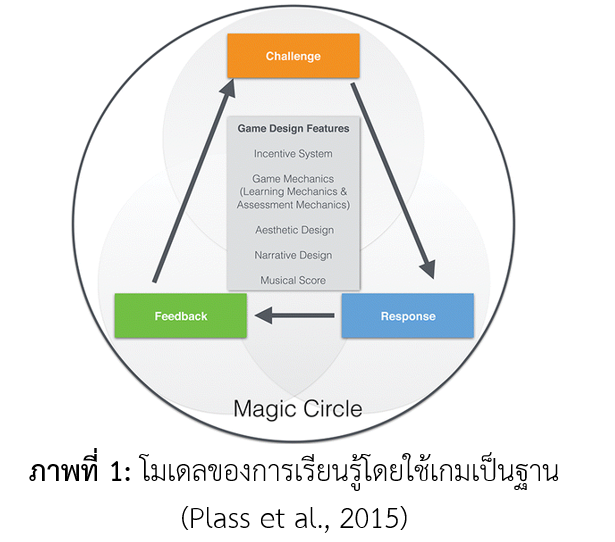
Game-Based Learning (GBL) is gaining attention as a highly effective teaching tool, particularly in nursing education, which requires the development of both theoretical knowledge and practical skills. GBL enhances essential competencies such as critical thinking, decision-making, and teamwork through a Challenge-Response-Feedback process. The approach offers immediate feedback for improving the development of skills and knowledge while helping students to participate in simulated scenarios in a safe environment without risks associated with real patients.
However, GBL has limitations, such as expensive costs for development, the requirement for interpersonal skills training in real-life situations, and a lack of realism in some circumstances. This article suggests integrating GBL with blended learning methods to develop an improved educational framework that includes contextual awareness and the development of practical skills. With an appropriate structure and support, GBL could significantly improve nursing students' efficiency and awareness, giving them the self-assurance and skills their require for effective clinical practice.
References
จุฑามาศ ทองประดับ, สุจรรยา โลหาชีวะ, และลิขิต ปรียานนท์. (2565). ผลของการเรียนรู้โดยใช้เกมเป็นฐานต่อความรู้ของนักศึกษาพยาบาล เกี่ยวกับคำศัพท์ภาษาอังกฤษด้านจิตเวช. วารสารสภาการพยาบาล, 37(4), 111–124. https://he02.tci-thaijo.org/index.php/TJONC/article/view/257405
ปาริชาติ วงศ์ก้อม, บุษบา สมใจวงษ์, สุขุมาล หอมวิเศษวงศา, วิภาวดี โพธิโสภา, อรวี ช่างเรือง, วาสนา รวยสูงเนิน, ดลวิวัฒน์ แสนโสม, มะลิวรรณ ศิลารัตน์, และ นงลักษณ์ เมธากาญจนศักดิ์. (2566). ผลของการจัดการเรียนรู้ในการดูแลผู้ป่วยที่ใส่ท่อระบายทรวงอก โดยใช้เกมเป็นฐานต่อความรู้ ทักษะและความพึงพอใจของนักศึกษาพยาบาล. วารสารสภาการพยาบาล, 38(04), 358–372. https://doi.org/10.60099/jtnmc.v38i04.265587
Cheng, A., Nadkarni, V. M., Mancini, M. B., Hunt, E. A., Sinz, E. H., Merchant, R. M., Donoghue, A., Duff, J. P., Eppich, W., Auerbach, M., Bigham, B. L., Blewer, A. L., Chan, P. S., & Bhanji, F. (2018). Resuscitation Education Science: Educational Strategies to Improve Outcomes from Cardiac Arrest: A Scientific Statement from the American Heart Association. Circulation, 138(6). https://doi.org/10.1161/cir.0000000000000583
Choosang, S., Chai-ngam, N., & Pongkiatchai, R. (2023). Instructional design: Under the concept of game-based learning for nursing education. Journal of Food Health and Bioenvironmental Science, 16(1), 60–70. https://li01.tci-thaijo.org/index.php/sdust/article/view/260656
Nasirzade, A., Deldar, K., Froutan, R., & Shakeri, M.T. (2024). Comparison of the effects of burn assessment mission game with feedback lecture on nursing students’ knowledge and skills in the burn patients’ assessment: a randomized clinical trial. BMC Medical Informatics and Decision Making, 24(1). https://doi.org/10.1186/s12911-024-02558-4
Foronda, C. L., Fernandez-Burgos, M., Nadeau, C., Kelley, C. N., & Henry, M. N. (2020). Virtual Simulation in Nursing Education. Simulation in Healthcare: The Journal of the Society for Simulation in Healthcare, 15(1), 46–54. https://doi.org/10.1097/sih.0000000000000411
Havola, S., Koivisto, J.-M., Mäkinen, H., & Haavisto, E. (2020). Game Elements and Instruments for Assessing Nursing Students’ Experiences in Learning Clinical Reasoning by Using Simulation Games: An Integrative Review. Clinical Simulation in Nursing, 46, 1–14. https://doi.org/10.1016/j.ecns.2020.04.003
Ozdemir, E. K., & Dinc, L. (2022). Game-based learning in undergraduate nursing education: A systematic review of mixed-method studies. Nurse Education in Practice, 62, 103375. https://doi.org/10.1016/j.nepr.2022.103375
Ma, D., Shi, Y., Zhang, G., & Zhang, J. (2021). Does theme game-based teaching promote better learning about disaster nursing than scenario simulation: A randomized controlled trial. Nurse Education Today, 103, 104923. https://doi.org/10.1016/j.nedt.2021.104923
Plass, J. L., Homer, B. D., & Kinzer, C. K. (2015). Foundations of game-based learning. Educational Psychologist, 50(4), 258–283. https://doi.org/10.1080/00461520.2015.1122533
Verkuyl, M., Romaniuk, D., Atack, L., & Mastrilli, P. (2017). Virtual Gaming Simulation for Nursing Education: An Experiment. Clinical Simulation in Nursing, 13(5), 238–244. https://doi.org/10.1016/j.ecns.2017.02.004
Downloads
Published
How to Cite
Issue
Section
License
Copyright (c) 2025 Journal of Nursing, Siam University

This work is licensed under a Creative Commons Attribution-NonCommercial-NoDerivatives 4.0 International License.
Content and information published in the Journal of Nursing, Siam University is the comment and responsibility of the authors.
Articles, information, images, etc. published in the Journal of Nursing. Siam University is the copyright of the Journal of Nursing, Siam University. If any person or entity wants to take all or part of it for publication for any purposes, please reference the Journal of Nursing, Siam University.

