
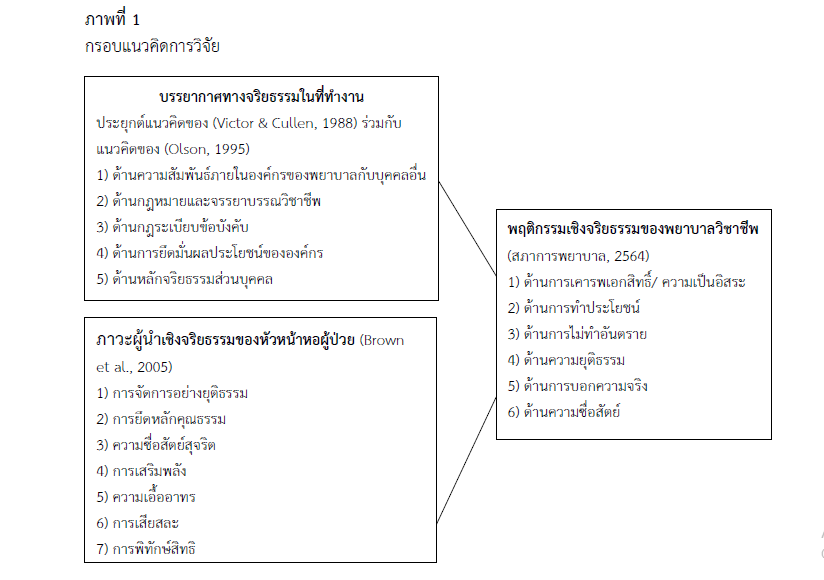
ความสัมพันธ์ระหว่างบรรยากาศทางจริยธรรมในที่ทำงาน ภาวะผู้นำเชิงจริยธรรมของ หัวหน้าหอผู้ป่วยกับพฤติกรรมเชิงจริยธรรมของพยาบาลวิชาชีพโรงพยาบาลตติยภูมิภาคใต้
คำสำคัญ:
บรรยากาศทางจริยธรรม , ภาวะผู้นำเชิงจริยธรรม , พฤติกรรมเชิงจริยธรรมบทคัดย่อ
การวิจัยเชิงสหสัมพันธ์ครั้งนี้มีวัตถุประสงค์เพื่อศึกษาความสัมพันธ์ระหว่างบรรยากาศทางจริยธรรมในที่ทำงาน และภาวะผู้นำเชิงจริยธรรมของหัวหน้าหอผู้ป่วยกับพฤติกรรมเชิงจริยธรรมของพยาบาลวิชาชีพในโรงพยาบาลตติยภูมิภาคใต้ กลุ่มตัวอย่าง คือ พยาบาลวิชาชีพโรงพยาบาลตติยภูมิภาคใต้ จำนวน 120 คน สุ่มตัวอย่างแบบหลายขั้นตอน เก็บรวบรวมข้อมูลระหว่างเดือนกันยายนถึงพฤศจิกายน 2567 เครื่องมือที่ใช้ในการวิจัย ได้แก่ แบบสอบถามข้อมูลทั่วไป แบบวัดพฤติกรรมเชิงจริยธรรม แบบวัดบรรยากาศทางจริยธรรม และแบบวัดภาวะผู้นำเชิงจริยธรรม ตรวจสอบความตรงด้านเนื้อหา ได้ค่า 0.91, 1.00 และ 0.98 ตามลำดับ และค่าความเชื่อมั่นของแบบสอบถาม ได้ค่า 0.95, 0.96 และ 0.98 ตามลำดับ วิเคราะห์ข้อมูลด้วยสถิติเชิงพรรณนา และสัมประสิทธิ์สหสัมพันธ์เพียร์สัน
ผลการวิจัย พบว่า พฤติกรรมเชิงจริยธรรมของพยาบาลวิชาชีพอยู่ในระดับดี (M = 4.13, SD = 0.25) โดยด้านที่มีคะแนนสูงสุดคือการซื่อสัตย์ (M = 4.20, SD = 0.43) ขณะที่บรรยากาศทางจริยธรรมในที่ทำงานอยู่ในระดับสูง (M = 4.07, SD = 0.28) และภาวะผู้นำเชิงจริยธรรมของหัวหน้าหอผู้ป่วยอยู่ในระดับสูง (M = 4.11, SD = 0.23) การวิเคราะห์ความสัมพันธ์ พบว่า บรรยากาศทางจริยธรรมในที่ทำงานมีความสัมพันธ์ทางบวกกับพฤติกรรมเชิงจริยธรรมในระดับต่ำมากอย่างไม่มีนัยสำคัญทางสถิติ (r=.10, p=.23) ขณะที่ภาวะผู้นำเชิงจริยธรรมของหัวหน้าหอผู้ป่วยมีความสัมพันธ์ทางบวกกับพฤติกรรมเชิงจริยธรรมในระดับต่ำมากอย่างมีนัยสำคัญทางสถิติ (r=.18, p=.04) ผลการศึกษานี้สามารถนำไปใช้กำหนดนโยบายเพื่อส่งเสริมให้หัวหน้าหอผู้ป่วยควรเป็นแบบอย่างด้านจริยธรรมในการบริหารและการทำงานร่วมกับทีม สนับสนุนการอบรมด้านจริยธรรมเพื่อเสริมสร้างทักษะและสร้างวัฒนธรรมองค์กรที่ยั่งยืน
เอกสารอ้างอิง
กนกวรรณ ฉันธนะมงคล. (2562). จริยธรรมทางการพยาบาล. สํานักพิมพ์จุฬาลงกรณ์มหาวิทยาลัย.
กลีบแก้ว สองเมือง, เพชรสุนีย์ ทั้งเจริญกุล, และอภิรดี นันท์ศุภวัฒน์. (2565). ภาวะผู้นำเชิงจริยธรรมของหัวหน้าหอผู้ป่วยและพฤติกรรมการเป็นสมาชิกที่ดีขององค์การตามการรับรู้ของพยาบาลในโรงพยาบาลศูนย์. พยาบาลสาร มหาวิทยาลัยเชียงใหม่, 49(3), 352–363.
จริยา สายวารี, ภมร แช่มรักษา, ประสบสุข อินทรักษา, และนิตยา ไกรวงศ์. (2560). บรรยากาศจริยธรรมในสถานที่ทำงานตามการรับรู้ของพยาบาลวิชาชีพที่ปฏิบัติงานในโรงพยาบาลสงขลานครินทร์. วารสารมหาวิทยาลัยนราธิวาสราชนครินทร์, 9(2), 52–64.
จุฑามาศ ทวีไพบูลย์วงษ์. (2554). ปัจจัยที่มีผลต่อการรับรู้บรรยากาศจริยธรรมในการทำงานและบทบาทของการจัดการทรัพยากรมนุษย์ที่มุ่งส่งเสริมจริยธรรมของพนักงาน. ใน มหาวิทยาลัยเกษตรศาสตร์, เรื่องเต็มการประชุมทางวิชาการของมหาวิทยาลัยเกษตรศาสตร์ ครั้งที่ 49: สาขาเศรษฐศาสตร์และบริหารธุรกิจ. (น. 10-18). เปเปอร์เมท (ประเทศไทย). https://kukr.lib.ku.ac.th/kukr_es/index.php?/SRC/search_detail/result/12845
ดุจดาว พูลติ้ม, ฉัตรสุมน พฤฒิภิญโญ, นิทัศน์ ศิริโชติรัตน์, และพัชราพร เกิดมงคล. (2559). พฤติกรรมเชิงจริยธรรมของพยาบาลวิชาชีพในโรงพยาบาลระดับตติยภูมิแห่งหนึ่ง. วารสารกฎหมายสุขภาพและสาธารณสุข, 2(1), 1-13.
ถนอม จันทกุล. (2546). พฤติกรรมเชิงจริยธรรมของพยาบาลจากประสบการณ์ของผู้ป่วยผู้ใหญ่ที่เข้ารับการรักษาในโรงพยาบาล. วารสารสภาการพยาบาล, 18(1), 16-29.
นภาพร ติคำ, บุญพิชชา จิตต์ภักดี, และสมใจ ศิรกมล. (2565). บรรยากาศจริยธรรมตามการรับรู้ของพยาบาล โรงพยาบาลมหาราชนครเชียงใหม่. วารสารการพยาบาลและการดูแลสุขภาพ, 40(1), 54-63.
มณี อาภานันทิกุล. วรรณภา ประไพพานิช, สุปาณี เสนาดิสัย, และพิศสมัย อรทัย. (2557). จริยธรรมในการปฏิบัติการพยาบาลของพยาบาลไทยตามการรับรู้ของผู้บริหารทางการพยาบาล. วารสารสภาการพยาบาล, 29(2), 5-20.
มณี อาภานันทิกุล, สุปาณี เสนาดิสัย, พิศมัย อรทัย, และวรรณา ประไพพานิช. (2556). จริยธรรมในวิชาชีพพยาบาล: รายงานวิจัยฉบับสมบูรณ์. สำนักงานคณะกรรมการส่งเสริมวิทยาศาสตร์ วิจัยและนวัตกรรม.
รัตนา ทองแจ่ม. (2564). การพัฒนาพฤติกรรมเชิงจริยธรรมของพยาบาลวิชาชีพ. [วิทยานิพนธ์ปริญญาดุษฎีบัณฑิต]. มหาวิทยาลัยมหาจุฬาลงกรณราชวิทยาลัย.
วลัยนารี พรมลา. (2561). การวิเคราะห์ความตรงเชิงโครงสร้างของภาวะผู้นำจริยธรรมของหัวหน้ากลุ่มงานการพยาบาล. วารสารวิชาการ สถาบันเทคโนโลยีแห่งสุวรรณภูมิ, 4(2), 158-170.
วีณา จีระแพทย์, เพ็ญพักตร์ อุทิศ, และสายสมร เฉลยกิตติ. (2563). ปัจจัยที่ทำให้เกิดคำร้องเรียนการประพฤติผิดจริยธรรมของผู้ประกอบวิชาชีพการพยาบาลที่เกิดขึ้นขณะปฏิบัติหน้าที่ตามความสัมพันธ์ของปรากฏการณ์ภายในและระหว่างมิติต่าง ๆ. วารสารพยาบาลตำรวจ, 12(2), 488-497.
ศิริมา ลีละวงศ์. (2560). แนวทางการวางแผนสืบทอดตำแหน่ง สายงานพยาบาลวิชาชีพตามหลักธรรมาภิบาล. สื่อตะวัน.
สภาการพยาบาล. (2562). คู่มือส่งเสริมจริยธรรมสำหรับองค์การพยาบาล : กลไกและการปฏิบัติ (พิมพ์ครั้งที่ 2). สภาการพยาบาล.
สภาการพยาบาล. (2564). คู่มือส่งเสริมจริยธรรมสำหรับองค์การพยาบาล : กลไกและการปฏิบัติ. สภาการพยาบาล.
สภาการพยาบาล. (2558). คู่มือจริยธรรมสำหรับองค์การพยาบาล: กลไกและการปฏิบัติ. สภาการพยาบาล.
สรชัย พิศาลบุตร. (2555). การทำวิจัยในชั้นเรียน เรียนรู้กันได้ใน 5 ชั่วโมง (พิมพ์ครั้งที่ 5). วิทยพัฒน์.
เสาวนีย์ วงษ์พัชรวรากูล, ศิวะนันท์ ศิวพิทักษ์, โสภณ แย้มกลิ่น, นิติ มุขยวงศา, และพิมญาดา ภางาม. (2561). ความสัมพันธ์ระหว่างภาวะผู้นำของพยาบาลวิชาชีพกับประสิทธิผลการปฏิบัติงานในโรงพยาบาลจุฬาภรณ์. วารสารสุทธิปริทัศน์, 33(105), 76-89.
Borhani, F., Abbaszadeh, A., Bahrampour, A., Ameri, G. F., & Aryaeenezhad, A. (2021). Investigating the relationship between the ethical atmosphere of the hospital and the ethical behavior of Iranian nurses. Journal of Education and Health Promotion, 10(1), 193. https://doi.org/10.4103/jehp.jehp_891_20
Brown, M. E., Treviño, L. K., & Harrison, D. A. (2005). Ethical leadership: A social learning perspective for construct development and testing. Organizational Behavior and Human Decision Processes, 97(2), 117–134. https://doi.org/10.1016/j.obhdp.2005.03.002
El-Gazar, H. E., & Zoromba, M. A. (2021). Ethical Leadership, Flourishing, and Extra-Role Behavior Among Nurses. SAGE Open Nursing, 7, 23779608211062669. https://doi.org/10.1177/23779608211062669
Elsayed, B. K. M., Awad, N. H. A., & Bialy, G. G. E. (2020). The relationship between nurses’ perception of ethical leadership and anti-social behavior through ethical climate as a mediating factor. International Journal of Novel Research in Healthcare and Nursing. 7(2), 471-484. https://www.noveltyjournals.com/upload/paper/paperpdf-1595325334.pdf
Loe, T. W., Ferrell, L., & Mansfield, P. M. (2000). A review of empirical studies assessing ethical decision making in business. Journal of Business Ethics, 25(3), 185-204. https://doi.org/10.1023/A:1006083612239
Mostafa, A. M. S. (2018). Ethical leadership and organizational citizenship behaviours: The moderating role of organizational identification. European Journal of Work and Organizational Psychology, 27(4), 441–449. https://doi.org/10.1080/1359432X.2018.1470088
Numminen, O., Leino-Kilpi, H., Isoaho, H., & Meretoja, R. (2015). Ethical climate and nurse competence - newly graduated nurses' perceptions. Nursing Ethics, 22(8), 845–859. https://doi.org/10.1177/0969733014557137
Olson, L. (1995). Ethical climate in health care organizations. International Nursing Review, 42(3), 85–90.
Ulrich, C. M., Hamric, A. B., & Grady, C. (2010). Moral distress: A growing problem in the health professions?. The Hastings Center report, 40(1), 20–22. https://doi.org/10.1353/hcr.0.0222
Victor, B., & Cullen, J. B. (1988). The organizational bases of ethical work climates. Administrative Science Quarterly, 33(1), 101-125. https://doi.org/10.2307/2392857
ดาวน์โหลด
เผยแพร่แล้ว
เวอร์ชัน
- 2025-12-13 (2)
- 2025-12-12 (1)
รูปแบบการอ้างอิง
ฉบับ
ประเภทบทความ
สัญญาอนุญาต
ลิขสิทธิ์ (c) 2025 ราชาวดีสาร วิทยาลัยพยาบาลบรมราชชนนี สุรินทร์

อนุญาตภายใต้เงื่อนไข Creative Commons Attribution-NonCommercial-NoDerivatives 4.0 International License.
เนื้อหาและข้อมูลในบทความที่ตีพิมพ์ในราชาวดีสาร วิทยาลัยพยาบาลบรมราชชนนี สุรินทร์ ถือเป็นข้อคิดเห็นและความรับผิดชอบของผู้เขียนบทความโดยตรง ซึ่งกองบรรณาธิการวารสารไม่จำเป็นต้องเห็นด้วย หรือร่วมรับผิดชอบใดๆ
บทความ ข้อมูล เนื้อหา รูปภาพ ฯลฯ ที่ได้รับการตีพิมพ์ในราชาวดีสาร วิทยาลัยพยาบาลบรมราชชนนี สุรินทร์ หากบุคคลหรือหน่วยงานใดต้องการนำทั้งหมดหรือส่วนหนึ่งส่วนใดไปเผยแพร่หรือกระทำการใดๆ จะต้องได้รับอนุญาตเป็นลายลักษณ์อักษรจากราชาวดีสาร วิทยาลัยพยาบาลบรมราชชนนี สุรินทร์ ก่อนเท่านั้น