
The Development of Nursing System for Pediatric Patients with Epilepsy
DOI:
https://doi.org/10.14456/jhealthscibcnsp.2026.1Keywords:
caring theory, pediatric epilepsy, nursing system, case management, tele-healthAbstract
Background: Epilepsy in children is a complex health issue that requires continuous and effective care to prevent severe complications. This research aims to develop a nursing care system for pediatric epilepsy patients and to study the effectiveness of the system at Sunpasitthiprasong Hospital.
Methods: This was an action research study, applying Swanson’s Theory of Caring and the clinical practice guidelines of the Neurological Institute as the conceptual framework, with systems theory serving as the operational framework. The purposive sample consisted of 45 children with epilepsy, 45 primary caregivers, and 55 nurses. Data were collected from July 1, 2024, to June 20, 2025. Research instruments included nursing practice guidelines, a caring-based nursing plan, and a follow-up system via telemedicine. Data were analyzed using descriptive statistics and paired t-tests.
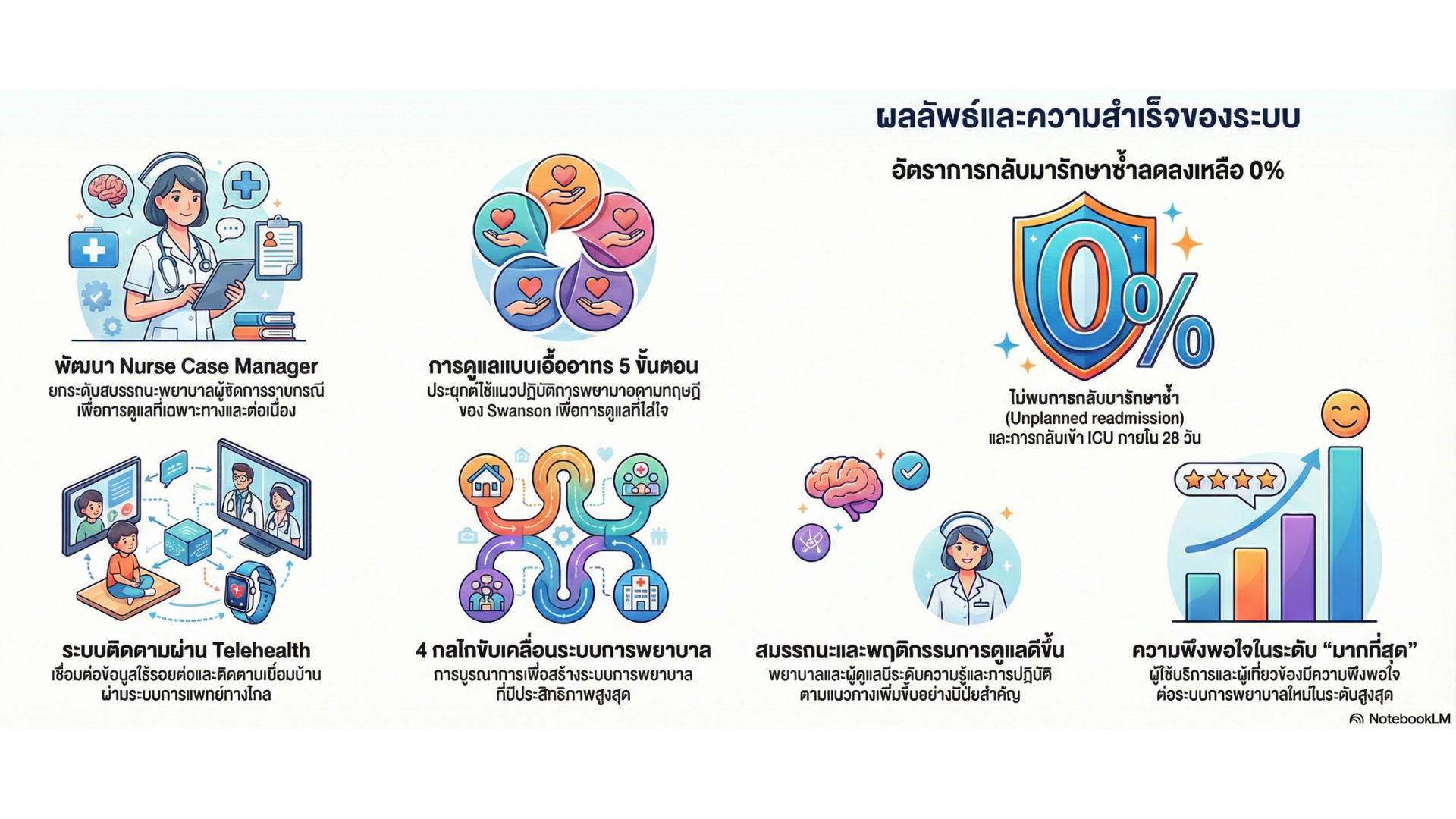
Results: The developed nursing care system comprised four key components: enhancing the competency of case manager nurses, implementing the 5-step caring intervention, establishing a seamless information transfer system, and conducting home follow-ups through telemedicine. Outcome evaluation revealed that, after implementing the system, nurses’ adherence to the guidelines improved from a moderate level to the highest level (p < .001). Caregivers’ knowledge and caregiving behaviors also increased significantly (p < .001), and satisfaction was at the highest level. Notably, the 28-day readmission rate and the rate of intensive care unit readmissions decreased from 8.7 percent to zero.
Conclusion: The pediatric epilepsy nursing care system effectively enhances quality of care and caregiver competency for children with epilepsy. It may serve as a model for administrators to develop care for children with chronic diseases and to sustainably expand the approach across health service networks.
References
Eslamian M, Shafiei H, Mojahed F, Bahreini A. Prevalence of epilepsy in children and adolescents worldwide: a literature overview. Health Providers. 2024;4:99–108.
Al-Harrasi M, Al-Siyabi W, Al-Busaidi M, Al-Adawi S. Caregivers’ knowledge on epilepsy and its relationship with quality of life. Eur J Med Health Sci. 2023;5:1–5.
โรงพยาบาลสรรพสิทธิประสงค์. สถิติผู้ป่วยเด็กโรคลมชัก โรงพยาบาลสรรพสิทธิประสงค์ จังหวัดอุบลราชธานี ปี 2562–2564. อุบลราชธานี: กลุ่มงานเวชระเบียน โรงพยาบาลสรรพสิทธิประสงค์; 2564.
ทินนกร ยาดี, บรรณาธิการ. แนวทางเวชปฏิบัติในการรักษาโรคลมชัก สำหรับแพทย์. กรุงเทพฯ: สถาบันประสาทวิทยา กรมการแพทย์; 2565.
ศักดิ์ขรินทร์ นรสาร, วิไลวรรณ วัฒนานนท์. พยาบาลผู้จัดการรายกรณี: บทบาทการดูแลผู้สูงอายุที่มีภาวะพึ่งพาในชุมชน. วารสารพยาบาลศาสตร์และสุขภาพ 2560;40:138-145.
Swanson KM. Empirical development of a middle range theory of caring. Nursing Research 1991;40:161-6.
Tharakum E, Wisoon C. Implementing nurse-led case management guideline for vulnerable children and their families. J Thailand Nurs Midwif Counc 2024;39:64–82.
นุษพร ทองคำ, สุรศักดิ์ ตรีนัย. ผลของโปรแกรมการพยาบาลโดยใช้รูปแบบการดูแลของสแวนสันต่อพฤติกรรมการบริหารยาของผู้ปกครองเด็กวัยเรียนโรคลมชัก.วารสารกรมการแพทย์ 2564;46:15–23.
วรรษา แซ่อุ่ย. ประสิทธิผลของโปรแกรมการให้ความรู้โรคลมชักโดยใช้สื่อวีดีทัศน์ภาพการ์ตูนเคลื่อนไหวสำหรับผู้ดูแลเด็กโรคลมชัก. วารสารกรมการแพทย์ 2565;47:53-60.
ฤดีพร เพียสุพรรณ์, ชลิดา ธนัฐธีรกุล. ผลของโปรแกรมสนับสนุนและให้ความรู้ด้วยวีซีดี และคู่มือสุขภาพ ต่อพฤติกรรมการดูแลเด็กวัยเรียนโรคลมชักของผู้ดูแล.วารสารพยาบาลศาสตร์และสุขภาพ 2560;40:11-21.
ยุภา เชิดโคกสูง. การพัฒนารูปแบบการดูแลผู้ป่วยเด็กโรคปอดอักเสบ โรงพยาบาลสีคิ้ว จังหวัดนครราชสีมา. วารสารสุขศึกษา 2568;48:74-87.
ศิริรัตน์ วงศ์ประกรณ์กุล. ยุคใหม่ของการดูแลสุขภาพด้วยระบบนิเวศทางธุรกิจและเทเลเฮลธ์. Mahidol R2R e-Journal 2563;4:1-15.
Klotz KA, Borlot F, Scantlebury MH, Payne ET, Appendino JP, Schönberger J, Jacobs J. Telehealth for children with epilepsy is effective and reduces anxiety independent of healthcare setting. Front Pediatr 2021;9:642381.
พัชรีภรณ์ สุรนาทชยานันท์, วนิดา เคนทองดี, สุพัตรา กมลรัตน์. การพัฒนาระบบการพยาบาลผู้ป่วยภาวะติดเชื้อในโรงพยาบาลเลย. วารสารการพยาบาลและการดูแลสุขภาพ 2561;36:207–15.
Downloads
Published
How to Cite
Issue
Section
License
Copyright (c) 2026 Boromarajonani College of Nursing Sunpasitthiprasong

This work is licensed under a Creative Commons Attribution-NonCommercial-NoDerivatives 4.0 International License.
บทความที่ได้รับการตีพิมพ์เป็นลิขสิทธิ์ของวารสารวิทยาศาสตร์สุขภาพ วิทยาลัยพยาบาลบรมราชชนนี สรรพสิทธิประสงค์ ข้อความที่ปรากฏในบทความแต่ละเรื่องเป็นความคิดเห็นส่วนตัวของผู้เขียนแต่ละท่านไม่เกี่ยวข้องกับวิทยาลัยพยาบาลบรมราชชนนี สรรพสิทธิประสงค์ และคณาจารย์ท่านอื่นๆ ในวิทยาลัยพยาบาลฯ ความรับผิดชอบเกี่ยวกับบทความแต่ละเรื่องผู้เขียนจะรับผิดชอบของตนเอง