
Factors Influencing Child Compliance in Deep Bite Correction with a Removable Anterior Bite Plane
Article Sidebar
Main Article Content
Abstract
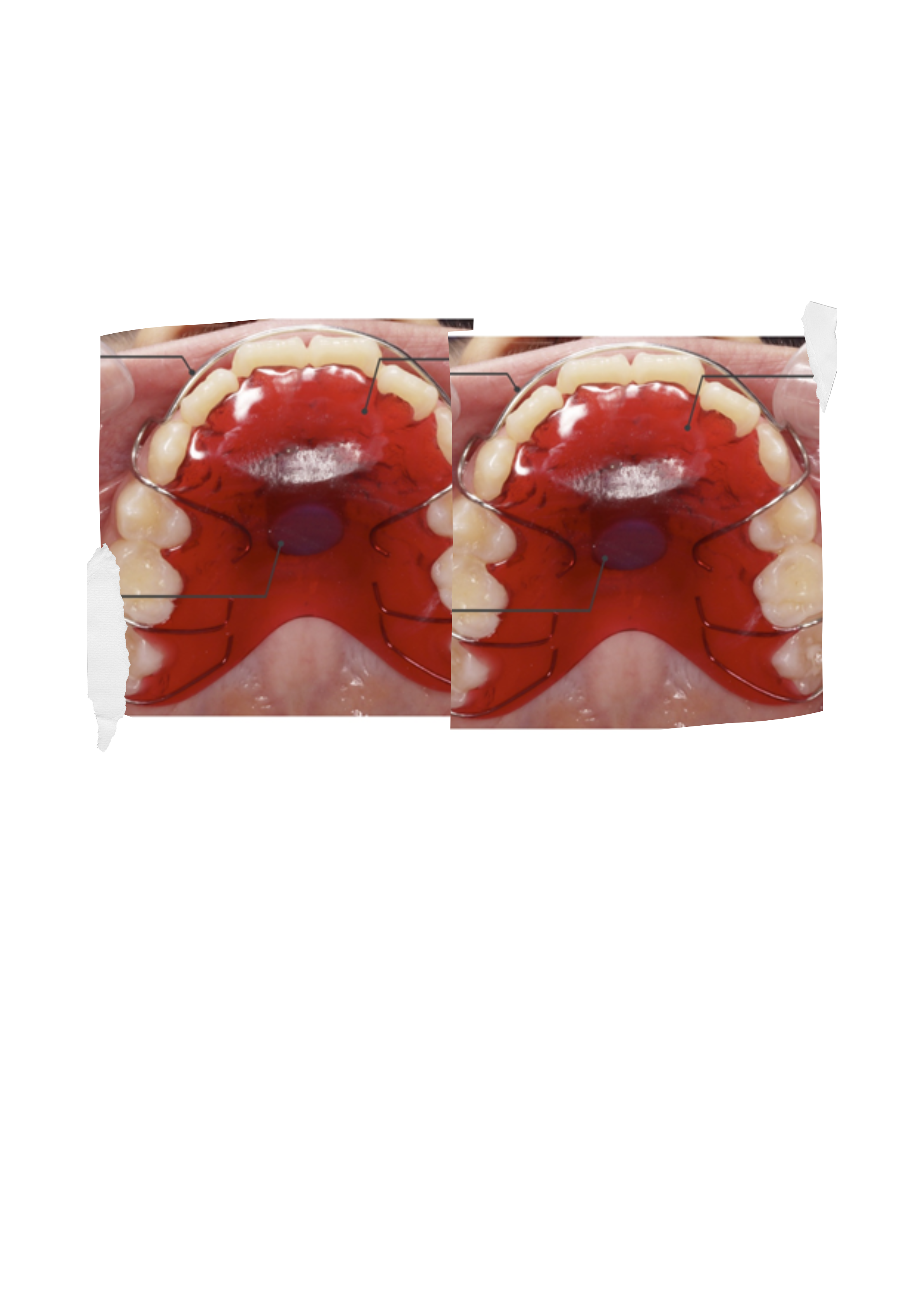
Background: An important factor that influences the treatment success of deep bite correction using a removable anterior bite plane (RABP) is patient compliance. To date no studies have reported on the factors that influence patient compliance during treatment with an RABP, especially the wearing protocols. Objective: To investigate and compare patient compliance between two RABP wearing protocols: full-time wear with RABP on during meals (F+M), and RABP off during meals (F-M) and to evaluate possible factors that might affect patient compliance. Materials and methods: Thirty-three participants with deep bite (mean age 10.88 ± 2.16 years) were randomly assigned to either the F+M (n = 18) or F-M group (n =15). The ActualWear was individually recorded by a TheraMon microsensor embedded in the RABP for the duration of six months. This study defined compliance as the ratio of actual duration of wearing an RABP (ActualWear) and the recommended duration of wear (RecommendedWear). The RecommendedWear was based on the ideal, but sensible, expected wearing duration of each wearing protocol. The Mann-Whitney U test compared between-group differences of compliance, age, gender, wearing protocol, type of motivation, type of school, and parental occupation (α = 0.05). Results: Patient compliance was significantly influenced by age and type of motivation (P < 0.001), but not by the wearing protocol, gender, type of school, or parental occupation (P ≥ 0.05). Conclusion: The RABP wearing protocols did not affect patient compliance. However,age and type of motivation affected patient compliance during RABP use for deep bite correction.
Article Details

This work is licensed under a Creative Commons Attribution-NonCommercial-NoDerivatives 4.0 International License.
References
Ghafari JG, Macari AT, Haddad RV. Deep bite: treatment options and challenges. Semin Orthod 2013;19(4):253-66.
Dimberg L, Lennartsson B, Arnrup K, Bondemark L. Prevalence and change of malocclusions from primary to early permanent dentition: a longitudinal study. Angle Orthod 2015;85(5):728-34.
Watted N, Lone IM, Zohud O, Midlej K, Proff P, Iraqi FA. Comprehensive deciphering the complexity of the deep bite: insight from animal model to human subjects. J Pers Med 2023;13(10):1472.
Sangwattanarat T, Thongudomporn U. Effectiveness of removable anterior bite planes with varied mealtime protocols in correcting deep bites among growing patients: a randomized clinical trial. Angle Orthod 2024;94(6):615-22.
Baccetti T, Franchi L, Giuntini V, Masucci C, Vangelisti A, Defraia E. Early vs late orthodontic treatment of deepbite: a prospective clinical trial in growing subjects. Am J Orthod Dentofacial Orthop 2012;142(1):75-82.
Pairatchawan N, Viteporn S, Thongudomporn U. Mandibular incisor root volume changes between anterior bite planes fabricated from acrylic resin and thermoplastic materials: a prospective randomized clinical trial. Angle Orthod 2022;92(6):755-63.
Marwah N. Textbook of pediatric dentistry. 4 th ed. London, United Kingdom: JP Medical Ltd; 2018.p. 454-62.
Hutami IR, Novianty SI, Indrawati SV, Rinaryo AD, Rahadian A, Christiono S, et al. The effects of anterior bite plane on temporomandibular joint and mandibular morphology. Saudi Dent J 2023;35(6):720-6.
Adams CP, Kerr WJS, Adams CP. The design, construction, and use of removable orthodontic appliances. 5th ed. London; Boston: Butterworth-Heinemann; 1990.p.144.
Ciavarella D, Laurenziello M, Guida L, Montaruli G, Gallo C, Tepedino M, et al. Dentoskeletal modif ications in Class II deep bite malocclusion treatment with anterior bite plane functional appliance. J Clin Exp Dent 2017;9(8):e1029-34.
Nahajowski M, Lis J, Sarul M. The use of microsensors to assess the daily wear time of removable orthodontic appliances: a prospective cohort study. Sensors 2022;22(7):2435.
Moreno-Fernández A, Iranzo-Cortés JE, Paredes-Gallardo V, García-Sanz V, Tarazona-Álvarez B, Almerich-Silla JM, et al. Effectiveness of removable appliances with temperature sensors in orthodontic patients: a systematic review and meta-analysis. Eur J Orthod 2022;44(2):134-45.
Sodor-Botezatu A, Anistoroaei D, Cernei ER, Golovcencu L, Stan AN, Zegan G, editors. Assessment of factors influencing orthodontic patient cooperation. Iasi, Romania; IEEE 2022.p.1-4.
Charavet C, Le Gall M, Albert A, Bruwier A, Leroy S. Patient compliance and orthodontic treatment eff icacy of Planas functional appliances with TheraMon microsensors. Angle Orthod 2018;89(1):117-22.
Thompson P. Foundations of educational technology. Oklahoma: Oklahoma State University Libraries; 2018.p.9-17.
Proff it WR, Fields HW, Larson B, Sarver DM. Contemporary orthodontics. Philadelphia: Elsevier Health Sciences; 2018.p.54-5.
Wijaya JA, Girsang E, Nasution AN. Internal and external factors that affect employee motivation at Materna Medan Hospital. Contag: Sci Period J Public Health Coast Health 2023;5(4):1318.
Creeth JE, Gallagher A, Sowinski J, Bowman J, Barrett K, Lowe S, et al. The effect of brushing time and dentifrice on dental plaque removal in vivo. J Dent Hyg 2009;83(3):111-6.
Hamrick K, Andrews M, Guthrie J, Hopkins D, McClelland K. How much time do Americans spend on food? Washington: U.S. department of agriculture; 2011. EIB-86. Economic Research Service.
Timm LH, Farrag G, Baxmann M, Schwendicke F. Factors influencing patient compliance during clear aligner therapy: a retrospective cohort study. J Clin Med 2021;10(14):3103.
Albino J, Tedesco L, Phipps G. Social and psychological problems of adolescence and their relevance to dental care. Int Dent J 1982;32(2):184-93.
Friedman IM, Litt IF. Adolescents’ compliance with therapeutic regimens: psychological and social aspects and intervention. J Adolesc Health Care 1987;8(1):52-67.
Bartsch A, Witt E, Sahm G, Schneider S. Correlates of objective patient compliance with removable appliance wear. Am J Orthod Dentofacial Orthop 1993;104(4):378-86.
Sergl HG, Zentner A. Predicting patient compliance in orthodontic treatment. Semin Orthod 2000;6(4):231-6.
Cucalon A, III, Smith RJ. Relationship between compliance by adolescent orthodontic patients and performance on psychological tests. Angle Orthod 1990;60(2):107-14.
Albino JEN. Factors influencing adolescent cooperation in orthodontic treatment. Semin Orthod 2000;6(4):214-23.
Boonchuay N, Thongudomporn U, Leethanakul C, Lindauer SJ, Youravong N. Overbite recognition and factors affecting esthetic tolerance among laypeople. Angle Orthod 2023;93(2):205-12.
Firth F, Bennani F, Stacknik S, Farella M. Orthodontic patient co-operation: a review of the clinician’s role in predicting and improving patient compliance. Australas Orthod J 2019;35(1):5-12.
Dai L, Wu T, Hu Y, Li S, Liu W. Does the eff icacy of behavior management techniques differ between children from single-child and multi-child families?: a quasiexperimental study. Front Public Health 2022;10: 840483.
Perillo L, d’Apuzzo F, De Gregorio F, Grassia V, Barbetti M, Cugliari G, et al. Factors affecting patient compliance during orthodontic treatment with aligners: motivational protocol and psychological well-being. Turk J Orthod 2023;36(2):87-93.
Jeamkatanyoo L, Suntornlohanakul S. Compliance in retainer wearing after orthodontic treatment. Thai J Orthod 2022;12(2):44-50.
Jeamkatanyoo L, Suntornlohanakul S, Tianviwat S. Factors influencing orthodontic patient compliance with removable retainers. Thai J Orthod 2024;14(2):36-44.
Tsomos G, Ludwig B, Grossen J, Pazera P, Gkantidis N. Objective assessment of patient compliance with removable orthodontic appliances: a cross-sectional cohort study. Angle Orthod 2014;84(1):56-61.
Abdulraheem S, Bondemark L. Hawthorne effect reporting in orthodontic randomized controlled trials: truth or myth? Blessing or curse? Eur J Orthod 2018;40(5):475-9.
