
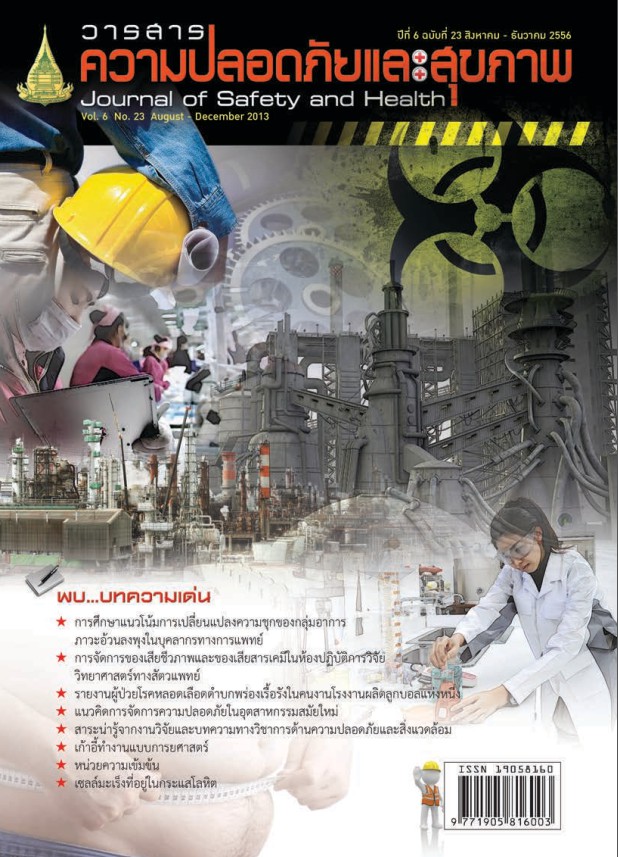
Biohazardous and Chemical Waste Management in Veterinary Science Research Laboratory, the Faculty of Veterinary Science, Mahidol University
Article Sidebar
Main Article Content
Abstract
The objectives of this survey research were to analyse the current situation and set up guidelines for biohazardous and chemical waste management including collection, transportation, treatment and disposal. The study was conducted at seven laboratories, located in two veterinary science research centres, namely the Centre for Veterinary Diagnosis and the Monitoring and Surveillance Centre for Zoonotic Diseases in Wildlife and Exotic Animals, Faculty of Veterinary Science, Mahidol University. The study population was 31 persons including the board, operator and housekeeper. Research tools used were a questionnaire, survey form, and an observation form. The quantitative data was analysed using descriptive statistics, i.e. percentage and mean, whereas the qualitative data was analysed using content analysis. Biohazardous and chemical wastes were generated at a total amount of 205.5 and 322.6 kilograms per month. The major component of each type of waste was 54.01 percent of specimens from animal and 82.52 percent of flammable waste, respectively. The problems and obstacles concerning biohazardous and chemical waste management were the lack of clear communication regarding waste management policy, the absence of a waste management guidelines, the lack of equipment such as secondary containers and spill kits, the absence of statistical data regarding waste type and amount, irregular use of personal protective equipment, and the lack of any waste management training program for operators and housekeepers. In order to establish the participatory agreement and develop guidelines, the results of this study, comprised with the theory of waste management, was set up as a draft guideline, which was then proposed to and discussed with all staff. Appropriate biohazardous and chemical waste management guidelines, for veterinary science research laboratories, Faculty of Veterinary Science, Mahidol University, suggested from this study were used to establish the policy and set up standard operating procedures. This included the allocation of resources for storage rooms, utilisation of a budget for essential equipment, provision of a training program to all operators and housekeepers, along with regular and continuous monitoring of waste management
Article Details
Journal of Safety and Health is licensed under a Creative Commons Attribution-NonCommercial-NoDerivatives 4.0 International (CC BY-NC-ND 4.0) licence, unless otherwise stated.
