
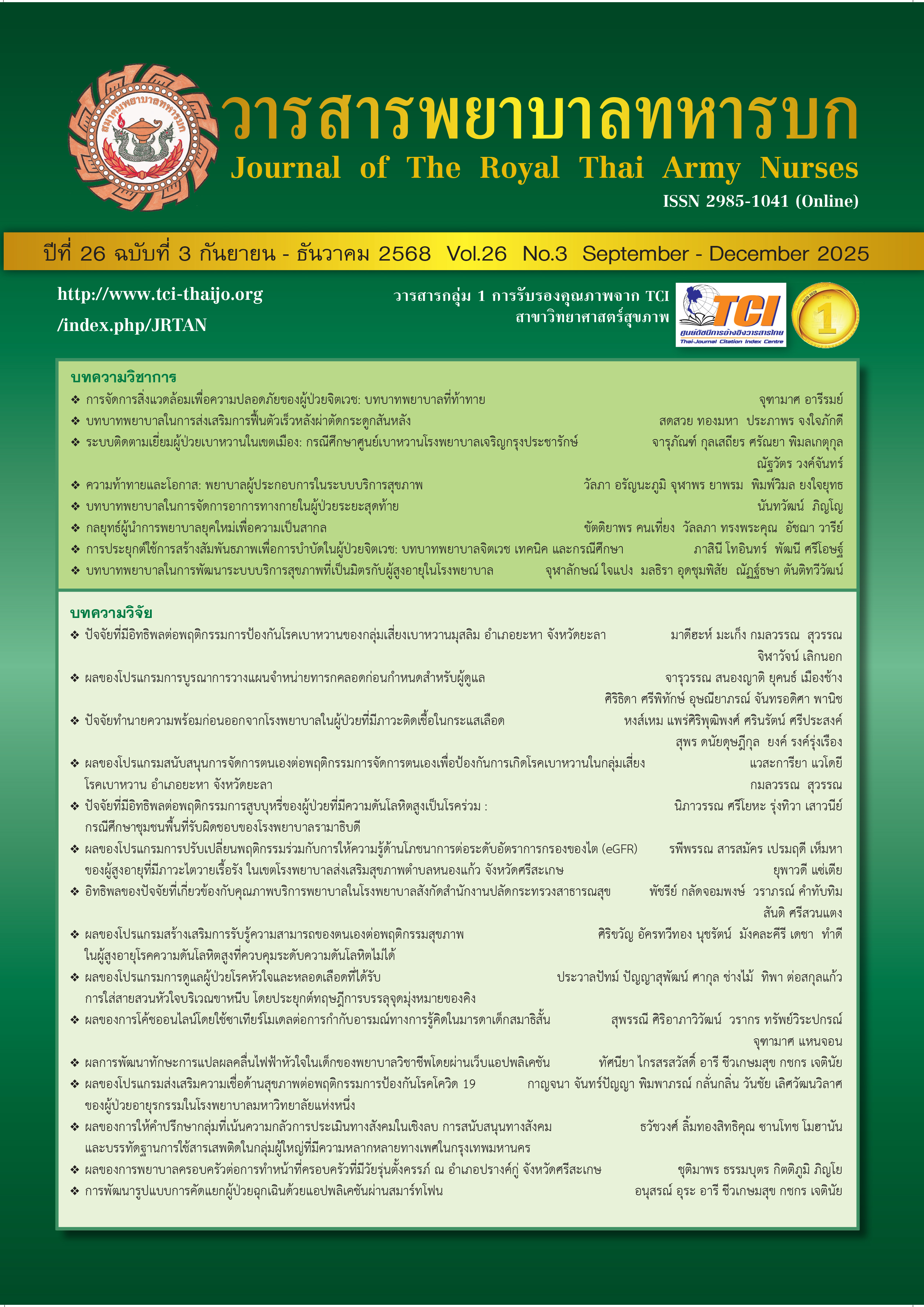
บทบาทพยาบาลในการจัดการอาการทางกายในผู้ป่วยระยะสุดท้าย
คำสำคัญ:
บทบาทพยาบาล, การจัดการอาการทางกาย, ผู้ป่วยระยะสุดท้ายบทคัดย่อ
ผู้ป่วยระยะสุดท้ายเป็นผู้ที่มีการดำเนินของโรคเข้าสู่ระยะสุดท้าย ซึ่งเป็นระยะที่ไม่สามารถรักษาให้หายขาดได้ ในระยะนี้ร่างกายของผู้ป่วยจะมีการเปลี่ยนแปลงทางด้านสรีรวิทยา อวัยวะที่สำคัญของร่างกายเริ่มมีการสูญเสียหน้าที่การทำงาน ในที่สุดอวัยวะเหล่านั้นก็จะไม่สามารถทำงานได้อีก ส่งผลให้ผู้ป่วยระยะสุดท้ายต้องเผชิญกับความทุกข์ทรมานทางด้านร่างกายโดยเฉพาะในช่วงวาระสุดท้ายของชีวิต ผู้ป่วยระยะสุดท้ายจึงจำเป็นต้องได้รับการจัดการอาการทางกาย พยาบาลในฐานะบุคลากรทางการแพทย์ที่มีความใกล้ชิดผู้ป่วยมากที่สุดจึงมีบทบาทสำคัญในการจัดการอาการทางกายในผู้ป่วยระยะสุดท้าย เพื่อบรรเทาความทุกข์ ทรมาน เพิ่มคุณภาพชีวิตของผู้ป่วยในระยะสุดท้ายของชีวิต และให้ผู้ป่วยจากไปอย่างสงบ บทความวิชาการนี้จึงมีจุดมุ่งหมาย เพื่อนำเสนออาการทางกายที่พบได้บ่อยในผู้ป่วยระยะสุดท้าย บทบาทพยาบาลในการจัดการอาการทางกายในผู้ป่วยระยะสุดท้าย และอุปสรรคต่อบทบาทพยาบาลในการจัดการอาการทางกายในผู้ป่วยระยะสุดท้าย เพื่อเป็นข้อมูลในการดูแลผู้ป่วยระยะสุดท้ายอย่างมีประสิทธิภาพ
Downloads
เอกสารอ้างอิง
Chimchalong R. Palliative nurse specialist competencies and the role of nurse in palliative care. Royal Thai Army Medical Journal. 2021;74(3):233-9. (in Thai)
World Health Organization. Palliative care. Geneva: World Health Organization; 2020.
Pinyo N. Factors influencing caring behaviors for end-of-life patients of registered nurses in a university hospital. (thesis). Phitsanulok: Naresuan University; 2023. (in Thai)
Hallet J, Davis LE, Mahar AL, Isenberg-Grzeda E, Bubis LD, Myrehaug S, et al. Symptom burden at the end of life for neuroendocrine tumors: An analysis of 2579 prospectively collected patient-reported outcomes. Annals of Surgical Oncology. 2019;26(9):2711–21.
Çamcı G, & Oğuz S. The effect of palliative care training on symptom management, rehospitalization and quality of life in chronic heart failure: A randomized controlled trial. Mediterranean Nursing and Midwifery. 2023; 3(2):81-9.
Sriratanaban J, Chatrkaw P, Sriratanaban P, Ngamkiatphaisan S, Manaswanit P, Rattananupong T, et al. Strategic development of hospice care in Thailand: An alternative for improving quality of life in terminally ill patients. https://kb.hsri.or.th/dspace/handle/ 11228/4922?locale-attribute=th (in Thai)
International Association for the Study of Pain. IASP announces revised definition of pain. Washington DC: International Association for the Study of Pain; 2020.
Henson LA, Maddocks M, Evans C, Davidson M, Hicks S, & Higginson IJ. Palliative care and the management of common distressing symptoms in advanced cancer: pain, breathlessness, nausea and vomiting, and fatigue. Journal of Clinical Oncology. 2020; 38(9):905-14.
Ijaopo EO, Zaw KM, Ijaopo RO, & KhawandAzoulai M. A review of clinical signs and symptoms of imminent end-of-life in individuals with advanced illness. Gerontology and Geriatric Medicine. 2023;9(1):233372 14231183243.
Rosser M, & Walsh HC. Fundamentals of palliative care for student nurses. Singapore: Markono Print Media; 2014.
McGuire DB, Kaiser KS, Haisfield-Wolfe ME, & Iyamu F. Pain assessment in noncommunicative adult palliative care patients. The Nursing clinics of North America, 2016;51(3):397-431.
American Thoracic Society. Dyspnea: mechanisms, assessment, and management: a consensus statement. American Journal of Respiratory and Critical Care Medicine. 1999;159(1):321-40.
Shreves A, & Pour TR. Emergency department management of dyspnea in the dying patient. Emergency Medicine Practice, 2018;20(7):1-20.
Parshall MB, Schwartzstein RM, Adams L, Banzett RB, Manning HL, Bourbeau J, et al. An official American Thoracic Society statement: update on the mechanisms, assessment, and management of dyspnea. American Journal of Respiratory and Critical Care Medicine. 2012;185(4):435-52.
Crombeen AM, & Lilly EJ. Management of dyspnea in palliative care. Current Oncology. 2020; 27(3):142-5.
Kreher M. Symptom control at the end of life. Medical Clinics of North America. 2016;100(5): 1111-22
Cancer Council Australia. Facing end of life: a guide for people dying with cancer, their families and friends. New South Wales: IVE Group; 2023.
Thanasilp S. Holistic care for terminal cancer patients. Bangkok: Chulalongkorn University;
(in Thai)
Albert RH. End-of-life care: managing common symptoms. American Family Physician. 2017; 95(6):356-61.
Leach C. Nausea and vomiting in palliative care. Clinical Medicine. 2019;19(4):299–301.
Boland JW, & Boland EG. Constipation and malignant bowel obstruction in palliative care. Medicine. 2022;50(12):775-9.
Wickham RJ. Managing constipation in adults with cancer. Journal of Advanced Practitioner in Oncology. 2017;8(2):149-61.
European Delirium Association, & American Delirium Society. The DSM-5 criteria, level of arousal and delirium diagnosis: inclusiveness is safer. BMC Medicine. 2014;12:141.
Azhar A, & Hui D. Management of physical symptoms in patients with advanced cancer during the last weeks and days of life. Cancer Research and Treatment. 2022; 54(3):661-70.
Bramati P, & Bruera E. Delirium in palliative care. Cancers (Basel). 2021;13(23):5893.
Hagan TL, Xu J, Lopez RP, & Bressler T. Nursing’s role in leading palliative care: a call to action. Nurse Education Today. 2018;61:216-9.
Nacak UA, & Erden Y. End-of-life care and nurse’s roles. The Eurasian Journal of Medicine. 2022;54(Suppl1):141-4.
González-Rincón M, Díaz de Herrera-Marchal P, & Martínez-Martín ML. The role of the nurse at the end of the life of a critically ill patient. Enfermería Intensiva (English Edition). 2019; 30(2):78-91
Subwongcharoen N, & Chintapanyakun T. Role of palliative care nurses in tertiary hospitals. Journal of The Royal Thai Army Nurses. 2020;21(1):26-34. (in Thai)
Gerber K, Willmott L, White B, Yates P, Mitchell G, Currow DC, et al. Barriers to adequate pain and symptom relief at the end of life: a qualitative study capturing nurses’ perspectives. Collegian. 2022;29(1):1-8.
Rubbai YS, Chong MC, Tang LY, Abdullah KL, Mohammad WT, Mohajer S, et al. Barriers in providing quality end-of-life care as perceived by nurses working in critical care units: an integrative review. BioMed Central Palliative Care. 2024;23(1):217-30.
Alsaiari S, Alhofaian A, & Tunsi A. Nurses’ knowledge, perceived barriers and practices regarding cancer pain management: a coping review. Indian Journal of Palliative Care. 2023;30(1):1-9.
Maeroh N, Kongsuwan W, & Yodchai K. Barriers in providing palliative care in intensive care units: nurses’ experiences. Songklanagarind Journal of Nursing. 2017;37(3):74-82. (in Thai)
Saikaew S, Tanatwanit Y, & Kunsongeit W. Effective communication between nurses and advanced cancer patients. Journal of The Royal Thai Army Nurses. 2020;21(2):93-101. (in Thai)
Hamdan KM, Al-Bashaireh AM, Al-Dalahmeh M, Saifan AR, Albqoor MA, & Shaheen AM. Palliative care knowledge and attitudes toward end-of-life care among intensive care unit nurses in Jordan. Acute and Critical Care. 2023;38(4):469-78.
Bekelman DB, Feser W, Morgan B, Welsh CH, Parsons EC, Paden G, et al. Nurse and social worker palliative telecare team and quality of life in patients with COPD, heart failure, or interstitial lung disease: The ADAPT randomized clinical trial. The Journal of the American Medical Association. 2024;331(3): 212–23.
ดาวน์โหลด
เผยแพร่แล้ว
รูปแบบการอ้างอิง
ฉบับ
ประเภทบทความ
สัญญาอนุญาต
ลิขสิทธิ์ (c) 2025 วารสารพยาบาลทหารบก

อนุญาตภายใต้เงื่อนไข Creative Commons Attribution-NonCommercial-NoDerivatives 4.0 International License.
บทความหรือข้อคิดเห็นใดใดที่ปรากฏในวารสารพยาบาลทหารบกเป็นวรรณกรรมของผู้เขียน ซึ่งบรรณาธิการหรือสมาคมพยาบาลทหารบก ไม่จำเป็นต้องเห็นด้วย
บทความที่ได้รับการตีพิมพ์เป็นลิขสิทธิ์ของวารสารพยาบาลทหารบก
The ideas and opinions expressed in the Journal of The Royal Thai Army Nurses are those of the authors and not necessarily those
of the editor or Royal Thai Army Nurses Association.