
รายงานประจำปีการลงทะเบียนบำบัดทดแทนไตของประเทศไทยปี 2566 ถึงผู้ให้บริการศูนย์ฟอกไตในประเทศไทย
Article Sidebar
Main Article Content
บทคัดย่อ
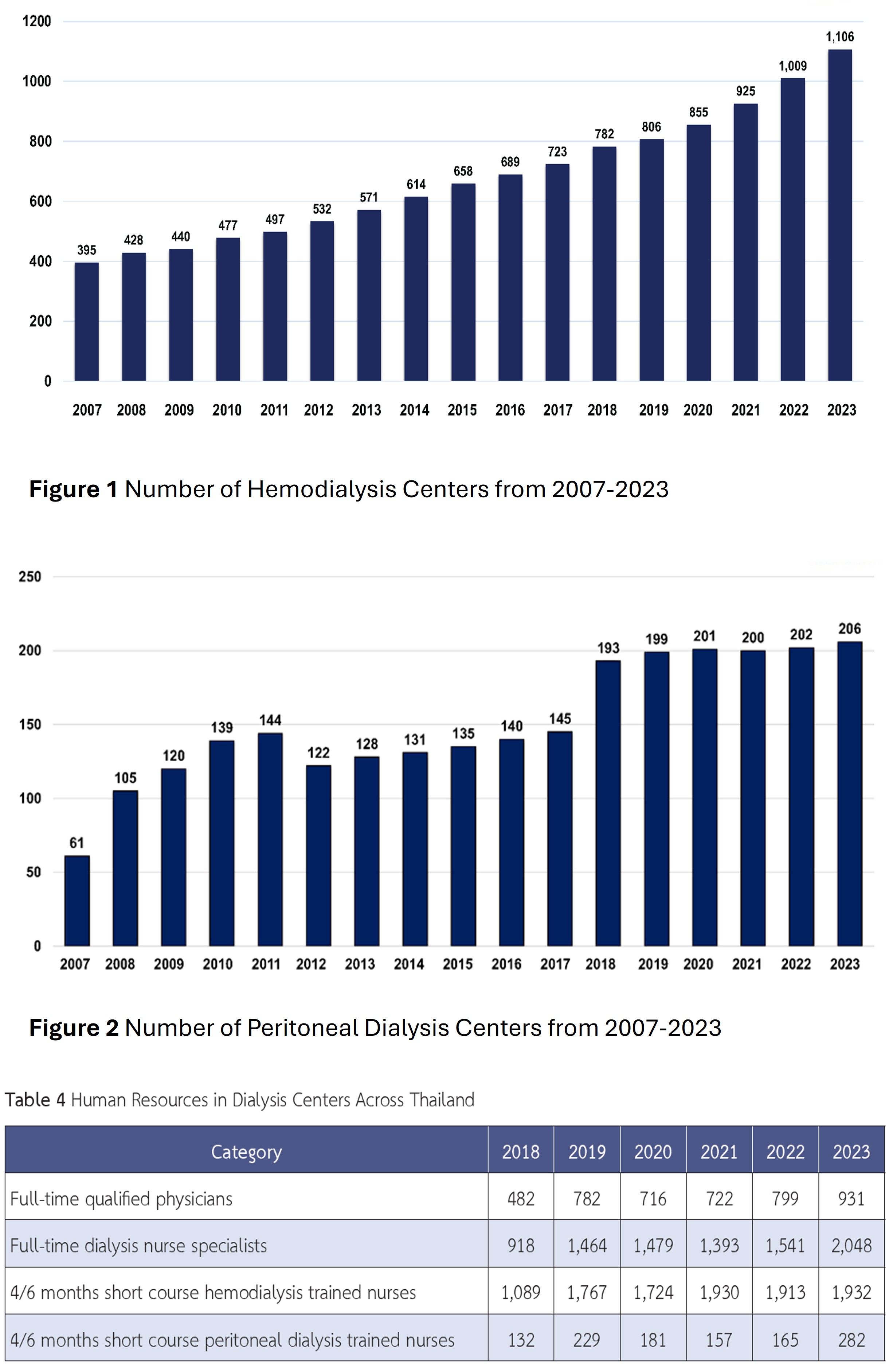
โรคไตวายระยะสุดท้ายได้กลายเป็นปัญหาสาธารณสุขที่สำคัญในประเทศไทย โดยจำนวนผู้ป่วยที่ต้องการการบำบัดทดแทนไตมีแนวโน้มเพิ่มขึ้นอย่างต่อเนื่องในช่วงทศวรรษที่ผ่านมา แนวโน้มนี้สะท้อนถึงการเพิ่มขึ้นของความชุกของโรคไตเรื้อรัง และโรคไตวายระยะสุดท้ายทั้งในระดับภูมิภาคและระดับโลก ซึ่งเกิดจากปัจจัยต่าง ๆ เช่น อัตราการรอดชีวิตที่ดีขึ้น การเปลี่ยนแปลงโครงสร้างประชากรและการเข้าถึงการบำบัดทดแทนไตที่เพิ่มขึ้น เพื่อตอบสนองต่อสถานการณ์ดังกล่าว ประเทศไทยได้ดำเนินการปรับปรุงนโยบายฟอกเลือดด้วยเครื่องไตเทียมภายใต้โครงการประกันสุขภาพถ้วนหน้าเพื่อมุ่งเน้นการดูแลผู้ป่วยอย่างมีประสิทธิภาพมากขึ้น งานวิจัยนี้วิเคราะห์ข้อมูลจากฐานข้อมูลการบำบัดทดแทนไตของประเทศไทย โดยศึกษาเกี่ยวกับการเติบโตของศูนย์ฟอกเลือดด้วยเครื่องไตเทียมและการล้างไตทางช่องท้อง การขยายตัวของจำนวนเครื่องฟอกไต และการเพิ่มจำนวนบุคลากรทางการแพทย์เฉพาะทาง ข้อมูลเชิงลึกจากการวิเคราะห์นี้มีความสำคัญต่อการเข้าใจความท้าทายในปัจจุบัน และช่วยกำหนดกลยุทธ์ด้านสุขภาพในอนาคตเพื่อตอบสนองความต้องการบริการฟอกไตที่เพิ่มขึ้นในประเทศไทย
Article Details

อนุญาตภายใต้เงื่อนไข Creative Commons Attribution-NonCommercial-NoDerivatives 4.0 International License.
บทความนี้ตีพิมพ์ภายไต้การอนุญาต CC BY-NC-ND 4.0 ซึ่งอนุญาตให้สามารถใช้บทความนี้พื่อวัตถุประสงค์ใดๆ ก็ตามที่ไม่ใช่เชิงพาณิชย์ โดยต้องมีการอ้างถึงที่มาของบทความอย่างครบถ้วน ใครก็ตามสามารถคัดลอกและแจกจ่ายทุกส่วนของบทความนี้โดยไม่ต้องขออนุญาตจากผู้ประพันธ์หรือสมาคมโรคไตแห่งประเทศไทย
เอกสารอ้างอิง
Chuengsaman P, Kasemsup V. PD First Policy: Thailand’s Response to the Challenge of Meeting the Needs of Patients With End-Stage Renal Disease. Semin Nephrol 2017;37:287-95.
Thurlow JS, Joshi M, Yan G, et al. Global Epidemiology of End-Stage Kidney Disease and Disparities in Kidney Replacement Therapy. Am J Nephrol 2021;52:98-107.
Premprasong A, Nata N, Tangwonglert T, Supasyndh O, Satirapoj B. Risk factors associated with mortality among patients on maintenance hemodialysis: The Thailand Renal Replacement Therapy registry. Ther Apher Dial 2024;28:839-54.
Kanjanabuch T, Takkavatakarn K. Global Dialysis Perspective: Thailand. Kidney360 2020;1:671-5.
Yeung EK, Khanal R, Sarki A, et al. A global overview of health system financing and available infrastructure and oversight for kidney care. Nephrol Dial Transplant 2024;39:ii3-ii10.
Gray NA, Wolley M, Liew A, Nakayama M. Natural disasters and dialysis care in the Asia-Pacific. Nephrology (Carlton) 2015;20:873-80.
Tang SCW, Yu X, Chen HC, et al. Dialysis Care and Dialysis Funding in Asia. Am J Kidney Dis 2020;75:772-81.
Bayani DBS, Almirol BJQ, Uy GDC, et al. Filtering for the best policy: An economic evaluation of policy options for kidney replacement coverage in the Philippines. Nephrology (Carlton) 2021;26:170-7.
Afiatin, Khoe LC, Kristin E, et al. Economic evaluation of policy options for dialysis in end-stage renal disease patients under the universal health coverage in Indonesia. PLoS One 2017;12:e0177436.
Sangthawan P, Ingviya T, Thokanit NS, Janma J, Changsirikulchai S. Time-dependent incidence rates and risk factors for transferring to hemodialysis in patients on peritoneal dialysis under the Thai PD-First Policy. Perit Dial Int 2023;43:64-72.
Supaporn T. The Professor Emeritus Sa-nga Nilvarangkun, MD, Endowed Lectureship: National Policy & Sustainability on Thailand Dialysis Program. J Nephrol Soc Thail. 2025;30(4): 241-7.
Morad Z, Choong HL, Tungsanga K, Suhardjono. Funding renal replacement therapy in southeast Asia: building public-private partnerships in Singapore, Malaysia, Thailand, and Indonesia. Am J Kidney Dis 2015;65:799-805.
