
ผลของการใช้บทเรียนออนไลน์ต่อพฤติกรรมการบริการพยาบาลในงานการพยาบาลผู้ป่วยพิเศษ
คำสำคัญ:
พฤติกรรมการบริการพยาบาล, งานการพยาบาลผู้ป่วยพิเศษ, บทเรียนออนไลน์บทคัดย่อ
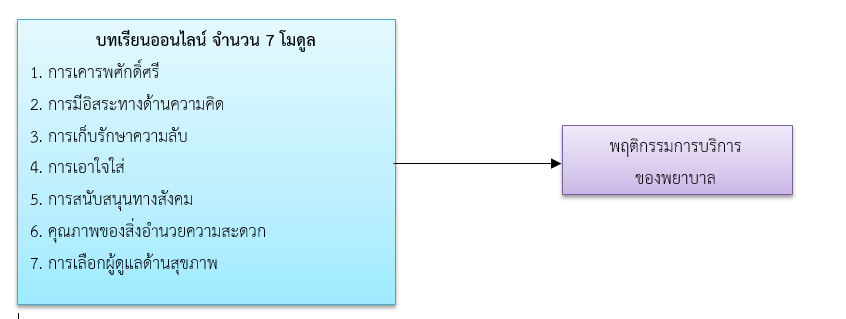
การวิจัยแบบกึ่งทดลองนี้ มีวัตถุประสงค์เพื่อเปรียบเทียบพฤติกรรมการบริการพยาบาลของพยาบาลก่อนและหลังการศึกษาบทเรียนออนไลน์เพื่อพัฒนาพฤติกรรมการบริการพยาบาล กลุ่มตัวอย่าง คือ พยาบาลวิชาชีพ งานการพยาบาลผู้ป่วยพิเศษ โรงพยาบาลระดับตติยภูมิแห่งหนึ่ง จำนวน 55 คน เครื่องมือในการวิจัยซึ่งผู้วิจัยพัฒนาขึ้น ได้แก่ 1) บทเรียนออนไลน์เพื่อพัฒนาพฤติกรรมการบริการ สร้างขึ้นตามแนวคิดการตอบสนองความต้องการของผู้รับบริการขององค์การอนามัยโลก (WHO, 2005) จำนวน 7 โมดูล ได้แก่ 1) การเคารพศักดิ์ศรี 2) การมีอิสระทางความคิด 3) การรักษาความลับของผู้ป่วย 4) การเอาใจใส่ 5) การสนับสนุนทางสังคม 6) คุณภาพสิ่งอำนวนความสะดวก และ 7) การเลือกผู้ดูแลด้านสุขภาพ และแอพพลิเคชั่นไลน์ แต่ละโมดูลประกอบด้วย 3 ขั้นตอน ได้แก่ ขั้นเตรียมผู้เรียน ขั้นเรียนรู้ ขั้นการประเมินผล และ 2) แบบประเมินพฤติกรรมการบริการพยาบาล ผ่านการตรวจสอบความตรงตามเนื้อหาโดยผู้ทรงคุณวุฒิ 5 ท่าน ค่าดัชนีความตรงตามเนื้อหาของบทเรียนออนไลน์เท่ากับ 0.95 และ แบบประเมินพฤติกรรมบริการพยาบาล เท่ากับ 0.98 และมีค่าสัมประสิทธิ์แอลฟาของครอนบาค 0.86 วิเคราะห์ข้อมูลโดยใช้สถิติพรรณนา สถิติการทดสอบแบบทีไม่อิสระ และการวิเคราะห์เนื้อหา ผลการวิจัยพบว่า
หลังการทดลองพฤติกรรมการบริการพยาบาลสูงกว่าก่อนการทดลองอย่างมีนัยสำคัญทางสถิติทั้งโดยรวม และรายด้าน (p< .001) โดยด้านที่มีคะแนนเปลี่ยนแปลงสูงสูด คือ ด้านการเอาใจใส่ (t=9.418, p< .001) และด้านที่มีคะแนนเปลี่ยนแปลงน้อยที่สุด คือ ด้านการเลือกผู้ดูแลสุขภาพ (t=3.681, p< .001)
ควรศึกษาวิธีการพัฒนาบุคลากรพยาบาลด้วยบทเรียนออนไลน์เพื่อให้สอดคล้องกับความต้องการของพยาบาล ซึ่งมีความสามารถในการใช้อุปกรณ์เทคโนโลยีสื่อสารไร้สาย รวมทั้ง ยังเหมาะสมกับบริบท และสถานการณ์แพร่ระบาดของเชื้อไวรัสโคโรนา (COVID-19) ในปัจจุบัน
เอกสารอ้างอิง
Department of Mental Health. (2020). Gen Y Gen Me, the Group That Rules the World. Mental Health Articles. Retrieved May 9, 2021 from https://shorturl.asia/9KP2C. (in Thai)
Duangchan, C., Siritharangsri, B., Sornsathaporn, S. & Pinyophasakul, W. (2019). The Development of Nursing Handoff Communication Competency. Songklanagarind Journal of Nursing, 39(2), 98-112. (in Thai)
Hew, K. F., Jia, C., Gonda, D. E. & Bai, S. (2020). Transitioning to the “New Normal” of Learning in Unpredictable Times: Pedagogical Practices and Learning Performance in Fully Online Flipped Classrooms. Int J Educ Technol High Educ 17, 57. Retrieved May 9, 2021 from https://doi.org/10.1186/s41239-020-00234-x.
Jindakorn, N., Suwanpukdi, S. & Chantra, R. (2011). Ethical Behavior of the Nursing Profession. Suratthani: Boromarajonani College of Nursing, Suratthani. (in Thai)
Maesincee, S. (2020). Paradiam 7 Shifts the World Towards a Driving Agenda country after Covid. Naewna. Retrieved April 15, 2021 from https://www.naewna.com/local/489861. (in Thai)
Maltz, M., (2013). 21 Days Habit Theory. Retrieved January 23, 2020 from http://www.amazon.com/PsychoCybernetics-Maxwell-maltz/dp/0671780921.
Mokcharoenpong, C. (2020). Palliative Care Consult Pandemic Palliative Care: Beyond Ventilators and Saving Lives. Thai Journal of Critical Care Medicine, 28(1), 14-16. (in Thai)
Office of the National Economic and Social Development Council. (2021). Thai Society in the Second Quarter of 2021. Social Situation and Outlook, 19(3), 1-52. (in Thai)
Pojamanphong, P., Sukthongsa, D., Trakulngamden, B. & Wongsatri, Y. (2019). Factors Associated with Delayed Access to Hospital Services for Patients with STyok Myocardial Infarction at Hospitals. under the medical office Bangkok. Journal of Cardiovascular and Thoracic Nurses, 30(2), 159-175. (in Thai)
Rakdee, R. (2013). Professional Nurses’ Service Behavior Perceived by Inpatients of Charoensin Hospital, Sakon Nakhon Provice: Burapha University. (in Thai)
Siriraj Hospital, Private Patient Nursing Division (2019). Survey Report on Satisfaction of Using Special Patient Services for the Year 2019. Bangkok: Private Patient Nursing Division, Siriraj Hospital. (in Thai)
Sutantawiboon, W. (2018). Penetrating Gen Y Behavior. Business Nation. Retrieved April 15, 2020 from https://www.prachachat.net/finance/news-211619. (in Thai)
Thongpradith, P. (2009). The Influence of Selected Factors and Characteristics corresponding to the Four Paths of Accomplishments on Service Behaviors of Professional Nurses at Private Hospitals in Bangkok Metropolitan Area. Nonthaburi: Sukhothai Thammathirat Open University. (in Thai)
Wengroff, J. (2019). What is ADDIE?. Retrieved April 14, 2020 from https://getsynapse.com/blog/what-is-addie/.
World Health Organization. (2005). The Health Systems Responsiveness Analytical Guidelines for Surveys in the Multi-Country Survey Study. Geneva: WHO.
ดาวน์โหลด
เผยแพร่แล้ว
ฉบับ
ประเภทบทความ
สัญญาอนุญาต
ลิขสิทธิ์ (c) 2022 วารสารการพยาบาลและการศึกษา

อนุญาตภายใต้เงื่อนไข Creative Commons Attribution-NonCommercial-NoDerivatives 4.0 International License.


